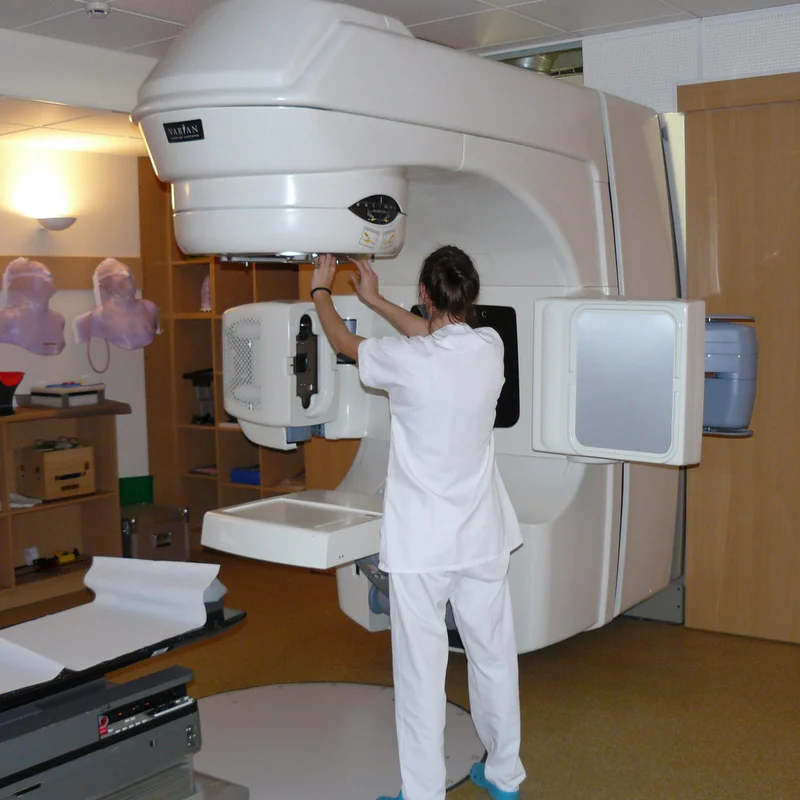
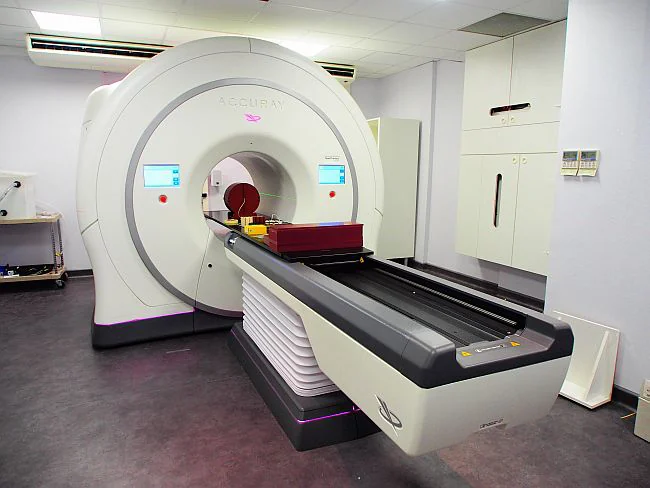
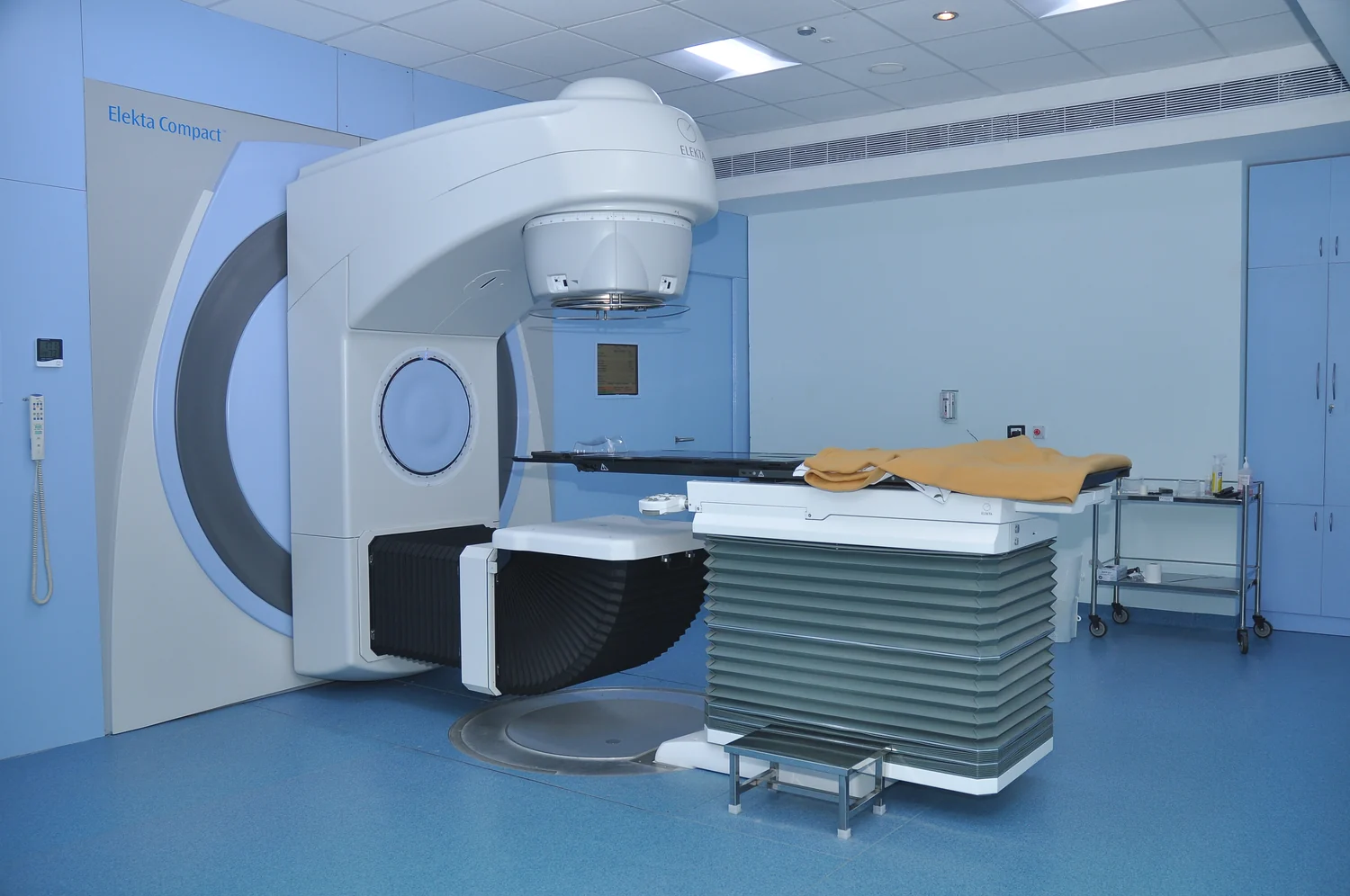
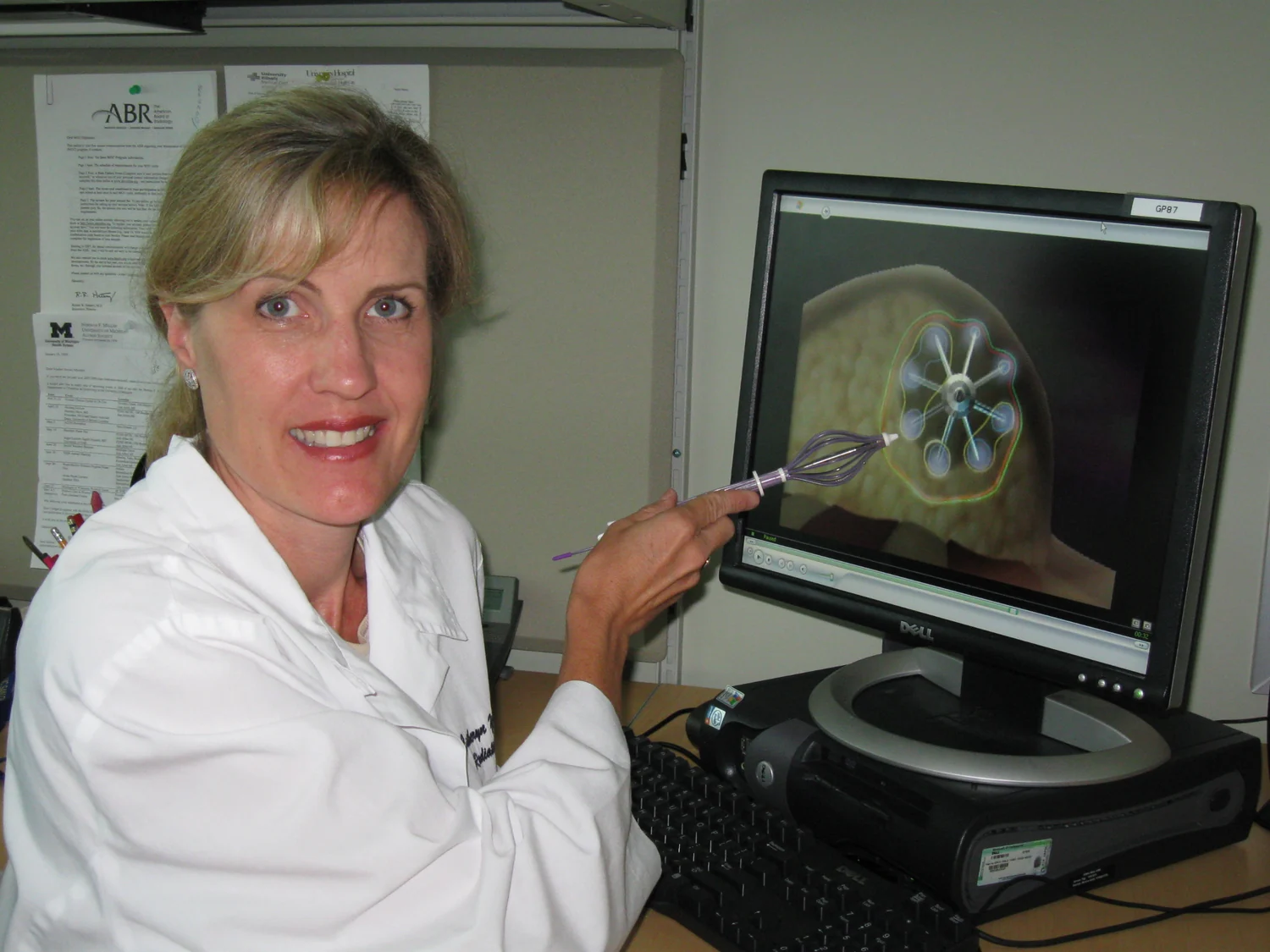
Radiation planning balances dose at a target against exposure along the beams’ paths. Multiple directions can concentrate overlapping contributions at a tumor while limiting the dose any one path delivers to nearby tissue.
Heating tissue can damage cancer cells and may make radiation or chemotherapy more effective. How heat is delivered and measured shapes the treatment, while availability, side effects and outcome evidence limit what can be concluded.
Radiation treatment planning turns scans into a coordinate map, while positioning and repeat imaging help align the intended target on treatment day. The beam’s path and surrounding anatomy both matter.
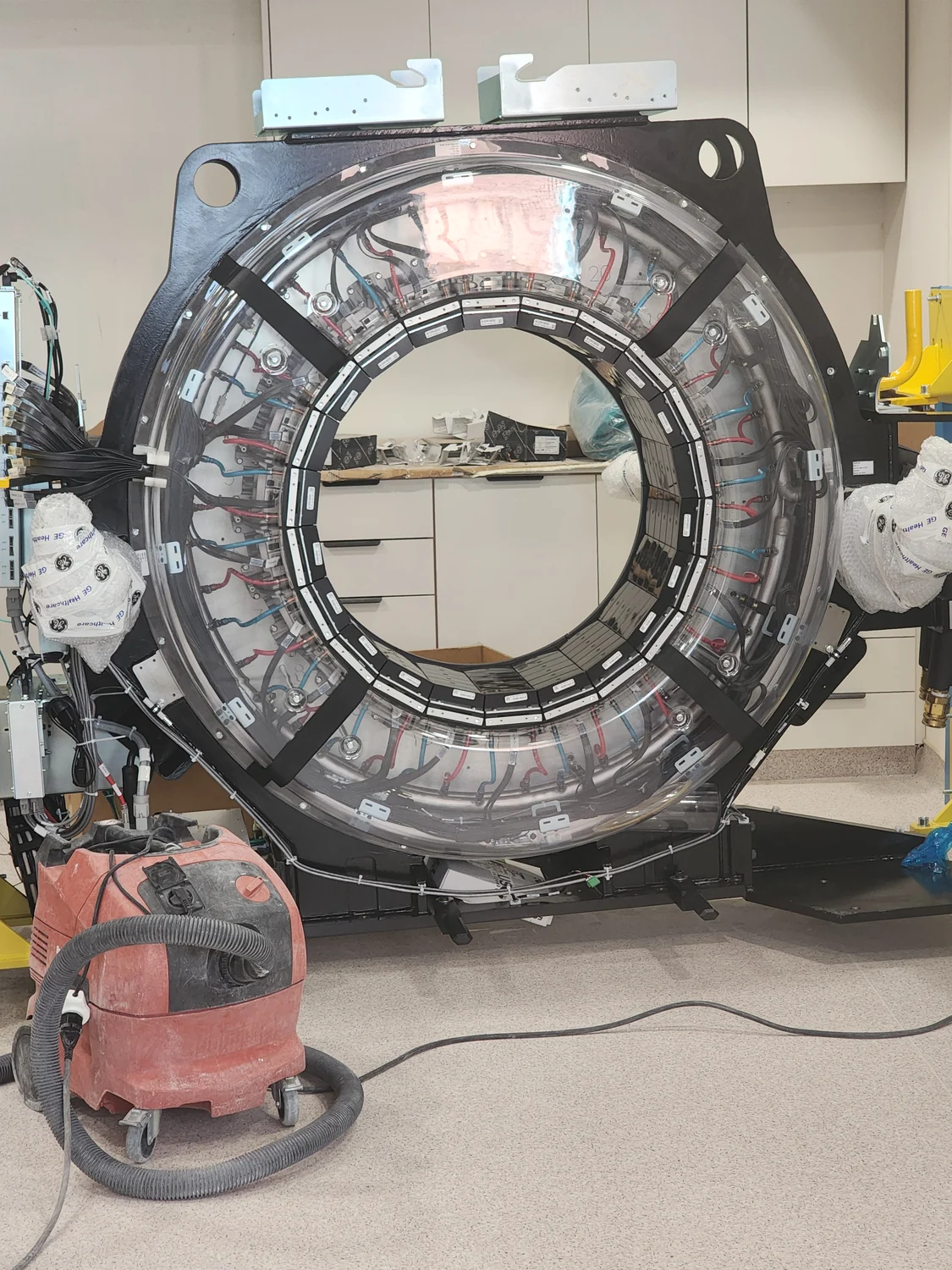
External beam treatment uses imaging, positioning, and planned beam directions to concentrate a prescribed radiation dose in a target. Photons and protons travel differently, while normal tissue exposure remains part of planning.
Radiation therapy damages cancer-cell DNA, but effects unfold over days, weeks, and months as cells stop dividing and the body clears damaged cells. Nearby healthy tissue can also be affected.