What happens after radiation reaches a tumor: does it destroy cancer cells instantly, or does the damage unfold over time? Radiation therapy works mainly by damaging DNA, the molecule cells use to store instructions. A cell may stop dividing or die only after it can no longer repair that damage. The body then breaks down and removes dead cells, so the biological response continues after a treatment session ends.
Energy meets a cell’s instructions
Radiation is energy traveling through space or matter. In cancer treatment, high doses of ionizing radiation can damage DNA. Ionizing radiation has enough energy to remove electrons from atoms; that physical interaction can disrupt molecules, including DNA. The goal is to damage cancer cells enough to stop their growth or cause their death. Radiation therapy does not make the tumor vanish at the moment energy is delivered. [1]
A cell’s response depends on the damage and its ability to repair it. If DNA damage is beyond repair, a cancer cell may stop dividing or die. The National Cancer Institute notes that this process takes days or weeks, and cancer cells can continue dying for weeks or months after treatment ends. The delay reflects biology: radiation creates the injury, while cell processes and tissue clearance play out over time. [1]
The body clears damaged cells
When damaged cells die, the body breaks them down and removes them. This cleanup is part of ordinary tissue maintenance, though the scale and location of treatment affect what follows. A shrinking tumor can reflect many cells losing the ability to keep dividing and then being cleared gradually, rather than a single instant change in the mass.
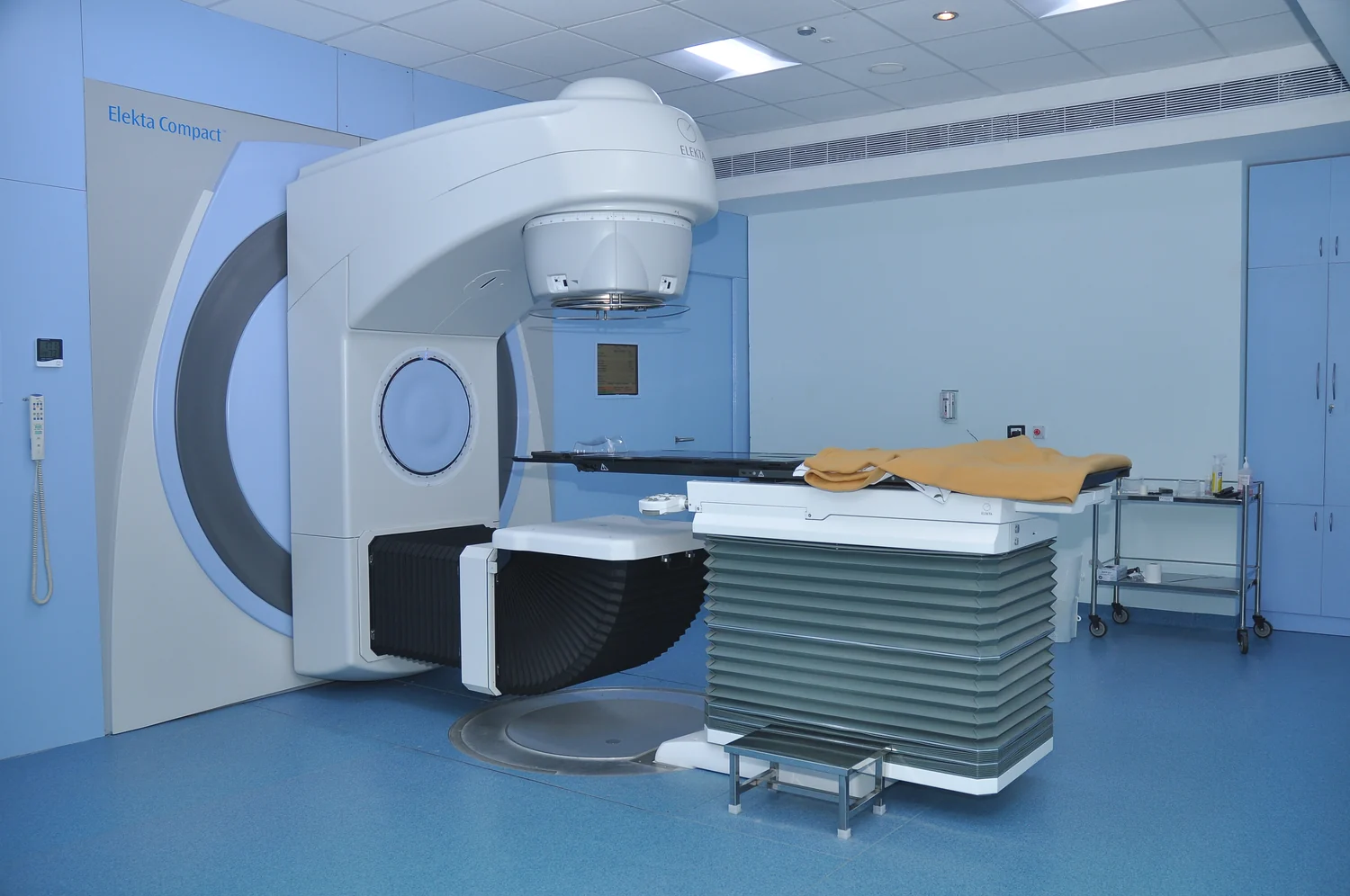
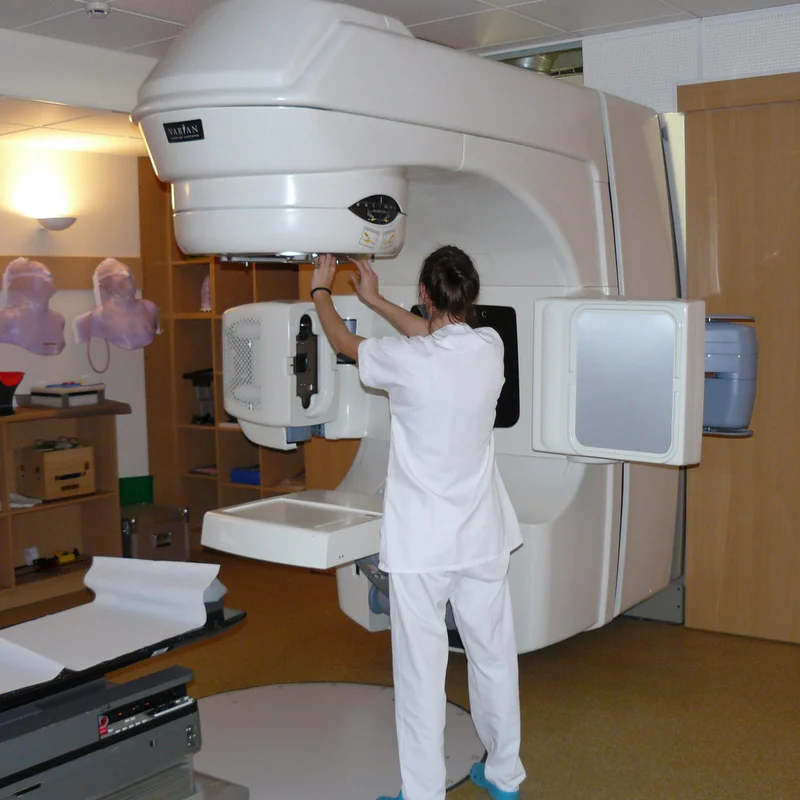
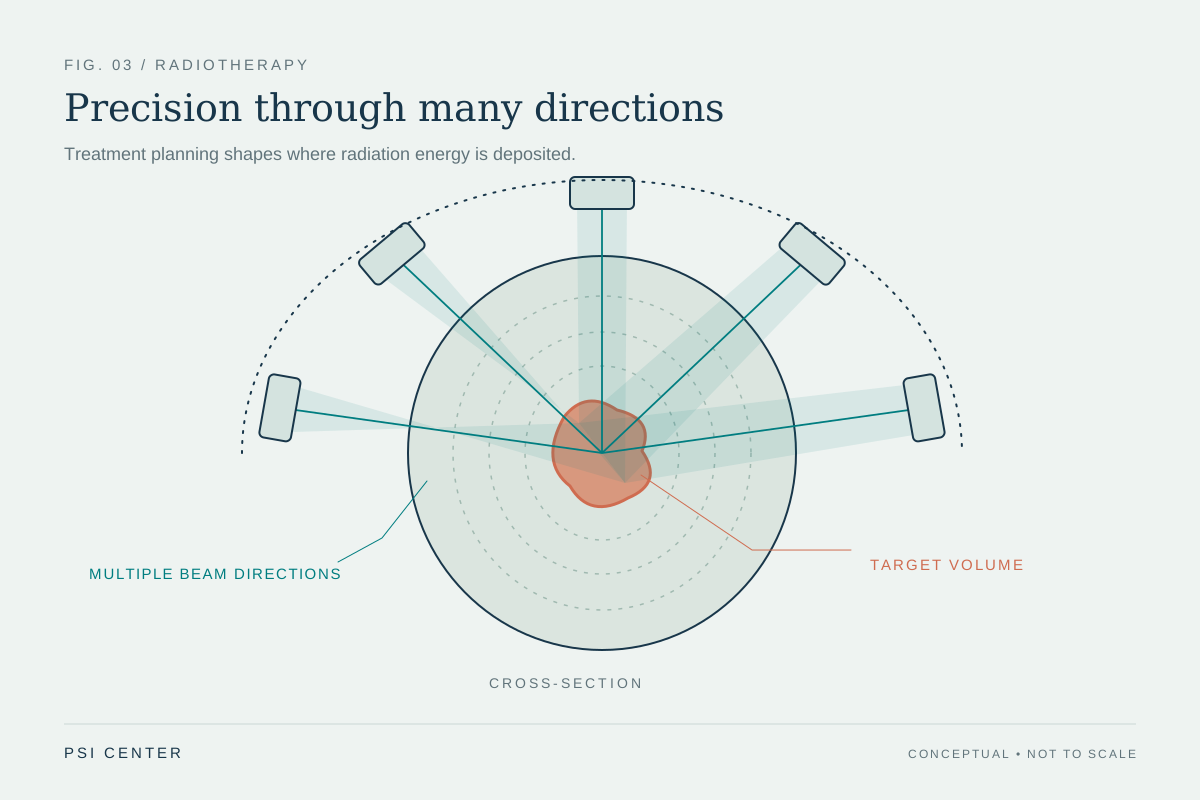
Radiation can also affect nearby healthy cells. Their injury can produce side effects, and normal tissues vary in sensitivity and capacity to recover. The treatment plan therefore considers the tumor’s location and proximity to sensitive tissue. External beam therapy directs radiation from a machine, which can send beams from multiple directions; internal approaches place a radiation source in or near a target, or deliver radioactive material through the body for systemic treatment. [1]
Local beams and different pathways
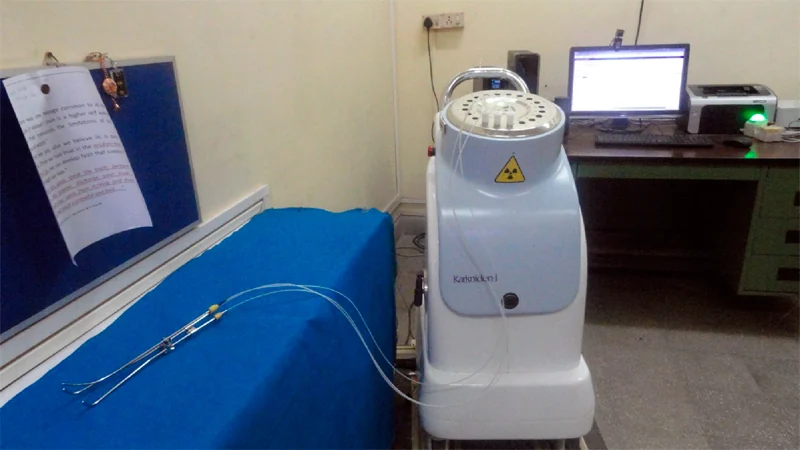
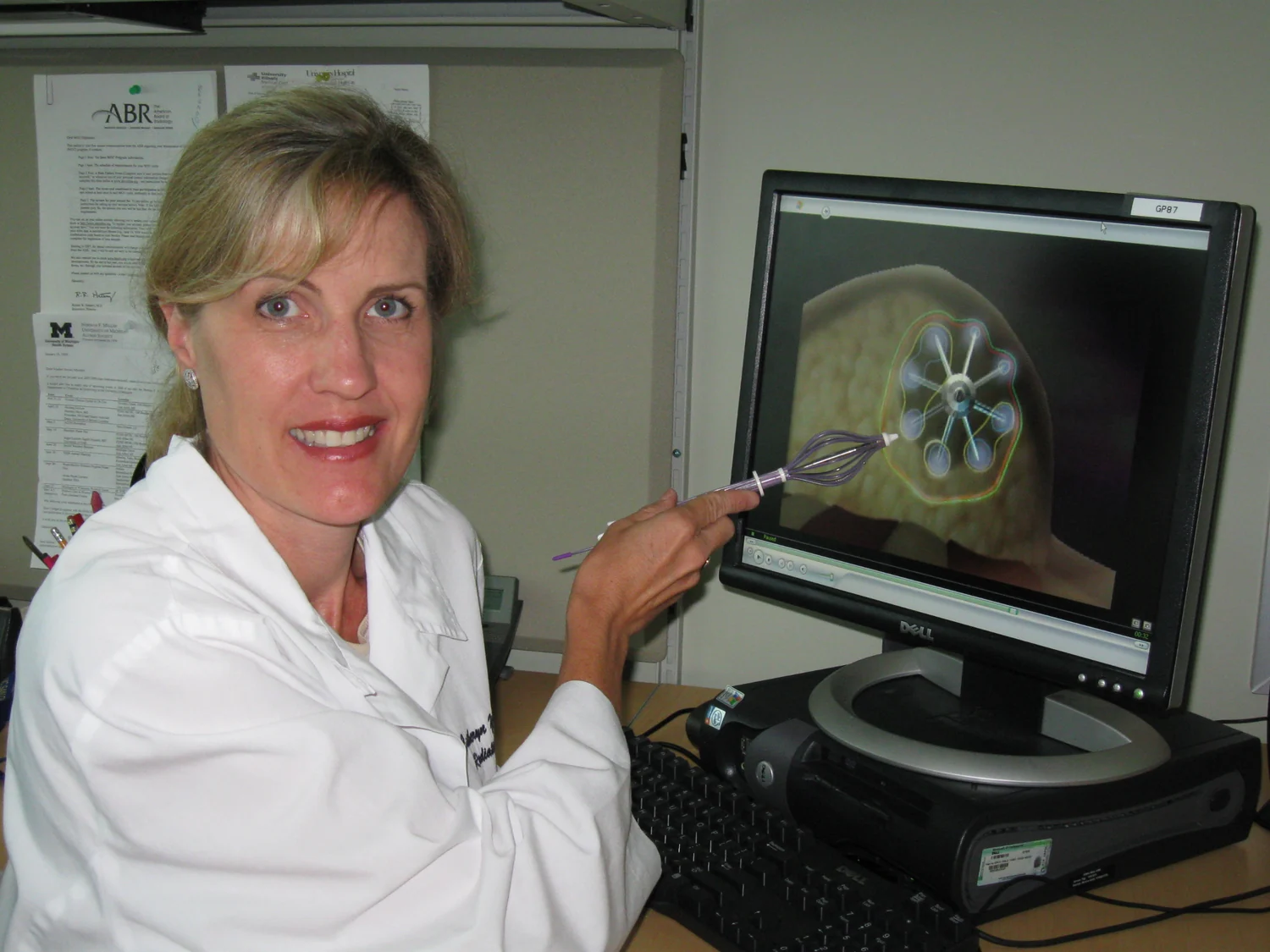
External beam radiation is a local treatment: for a lung tumor, treatment is directed to the chest rather than the whole body. Brachytherapy also treats a localized region by placing a solid source in or near the tumor. By contrast, some systemic radiation treatments travel through the blood to seek cancer cells. These routes differ in how energy reaches tissue, but all depend on radiation’s interactions with cells and the body’s subsequent response. [1]
Not all radiation has the same energy or biological effect. X-rays and gamma rays are ionizing; visible light and radio waves are non-ionizing. MRI, for example, uses magnetic fields and radio waves rather than ionizing x-rays. This distinction prevents a common confusion: the word radiation describes a broad range of energy, while the ability to ionize atoms depends on the radiation’s energy and type. [2]
Repair, timing, and treatment design
A simple mental experiment helps: imagine two tissues receiving the same kind of damage, one with cells that repair successfully and another with cells that cannot. Their outcomes diverge even though the initial energy exposure was similar. Cancer radiation treatment aims to exploit differences in vulnerability while limiting harm to normal tissue. The balance depends on tumor type, size, location, nearby structures, health history, and other treatments. [1]
Because tissue response unfolds over time, treatment effects and side effects may not appear all at once. NCI notes that fatigue and other effects can persist after treatment, with recovery varying from weeks to months. The physical dose initiates a chain of biological events; cell repair, cell death, and clearance determine how that chain appears in the body. [1]
Explore the physics: an explanatory diagram
Sources & further reading
- Radiation Therapy to Treat Cancer National Cancer Institute
- Radiation National Cancer Institute
Prepared for the independent PSI Center reading library. About edition dates and source checking.
This explainer describes scientific principles. It does not assess individual treatment choices.