How can a beam that cannot be seen or felt help ease pain or make breathing less difficult? Radiation therapy can shrink a tumor that is pressing on nearby tissue. The relief is not an instant mechanical release: radiation damages cellular DNA, and affected cancer cells stop dividing or die over days, weeks, and sometimes months. The goal may be symptom control rather than cure.
The beam delivers energy locally
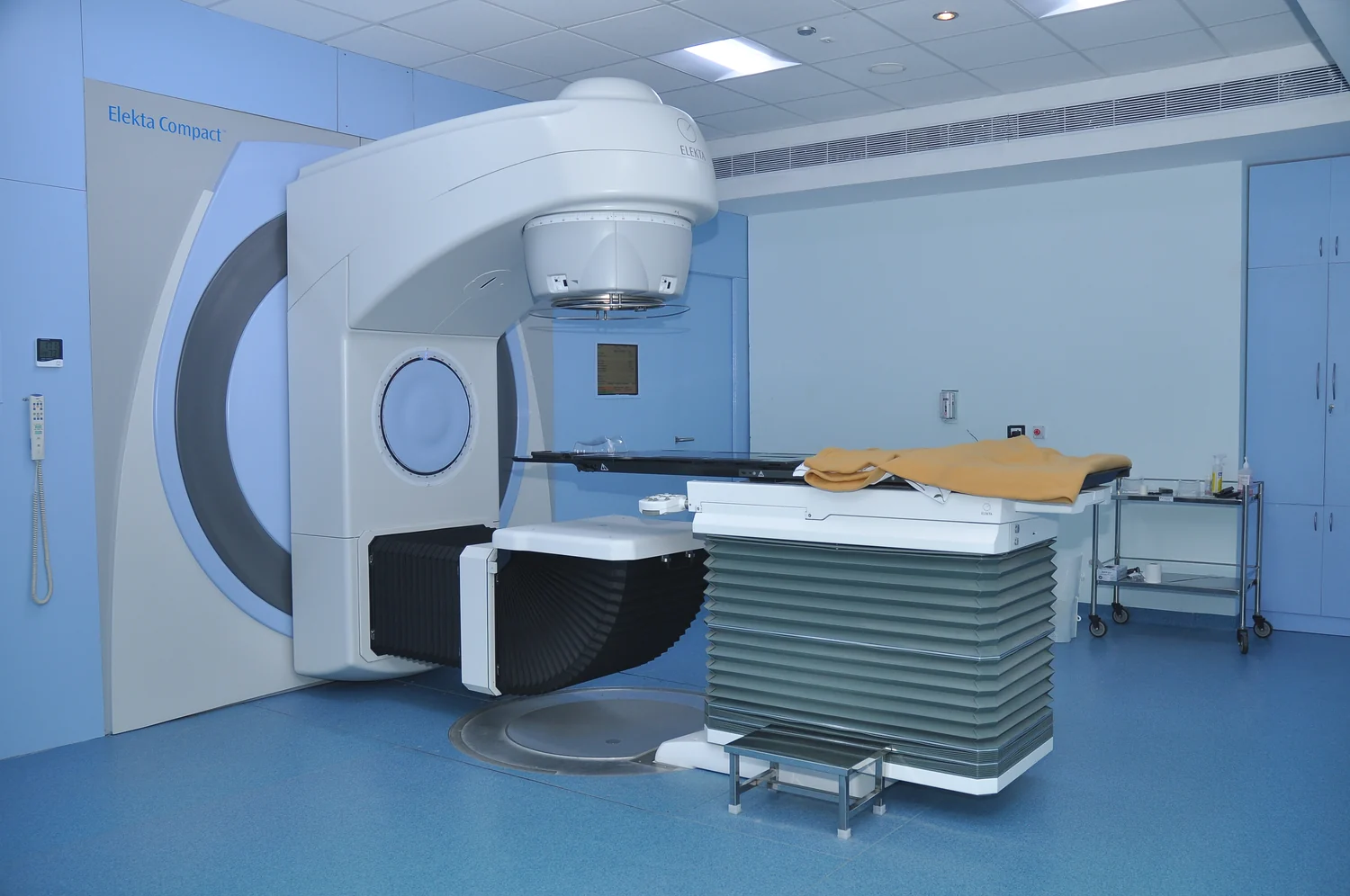
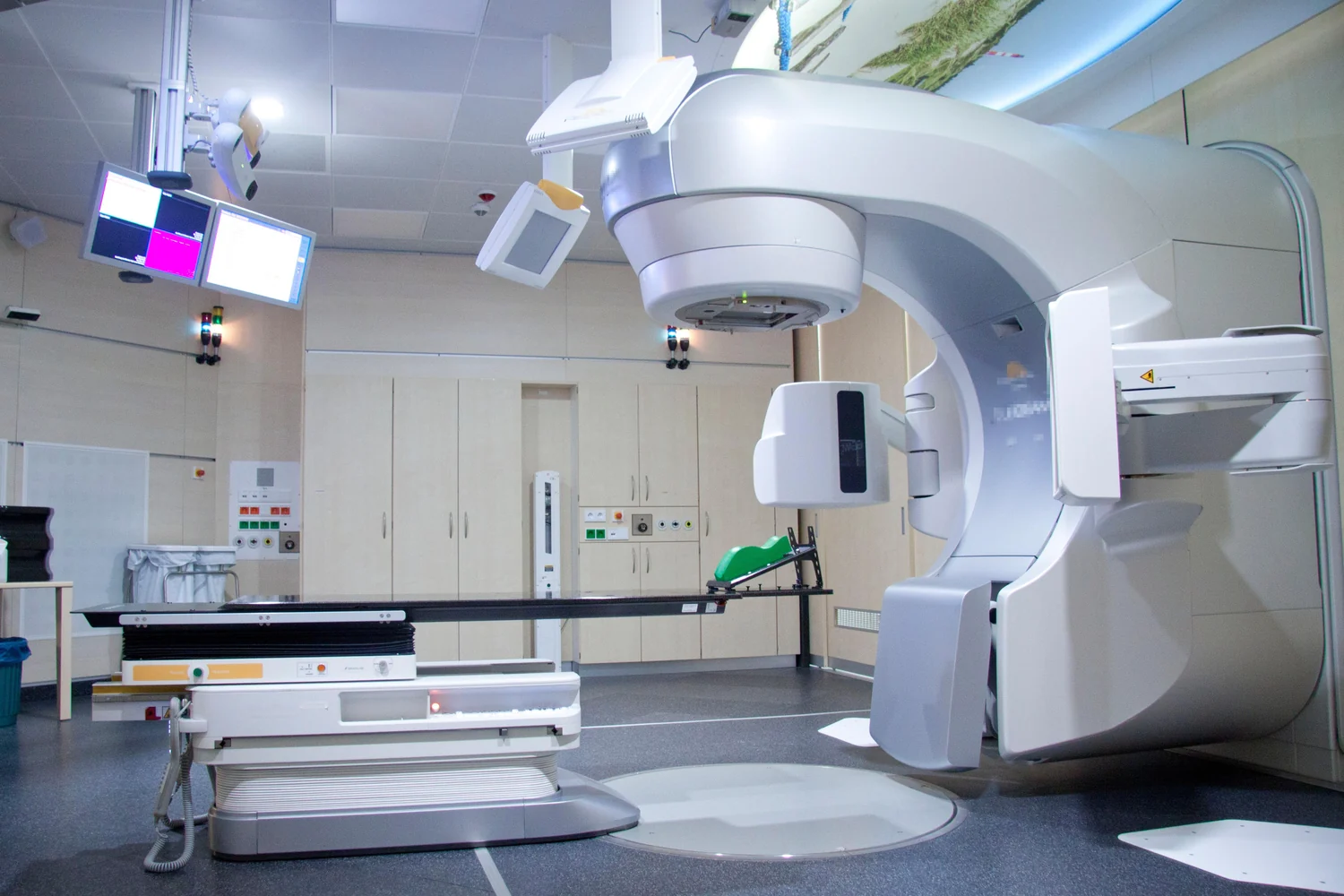
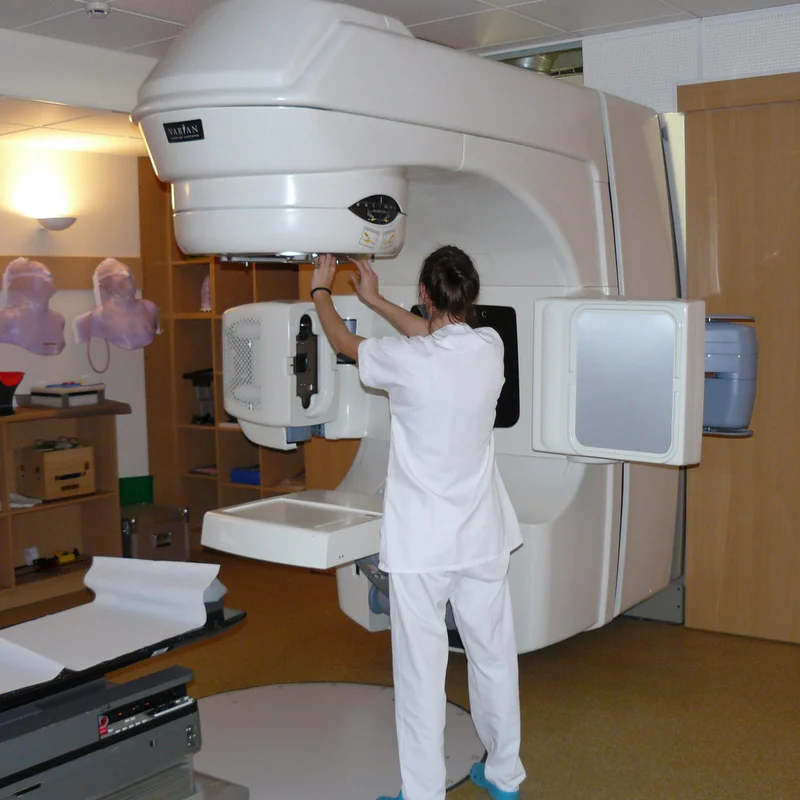
External beam radiation comes from a machine that aims radiation at a specific part of the body. It is a local treatment: for a lung tumor, the intended treatment area is the chest rather than the whole body. A machine can send beams from different directions, helping concentrate the planned dose around the target while limiting exposure to nearby normal tissue [1].
Radiation is energy carried by particles or waves. In common external-beam treatment, photon beams can reach deep tumors, but some radiation is scattered along the path and continues beyond the tumor. Treatment planning uses images and computer calculations to shape the beam arrangement. The physical aim is to deliver a prescribed dose to the tumor while sparing surrounding tissue as much as possible [2].
DNA damage takes time
At high doses, radiation damages DNA, the molecule cells use to store instructions. Cancer cells with damage beyond repair stop dividing or die. But the beam does not instantly erase the tumor. The body takes time to break down and clear dead cells; the effects can unfold over days or weeks of treatment and continue for weeks or months afterward [1].
This delay helps explain why symptom relief may also take time. If a tumor is narrowing an airway, pressing on a nerve, or causing pain by occupying space, shrinkage may reduce that pressure. The treatment does not directly numb the affected area. Instead, it aims to change the tumor that is producing the symptom. Whether it does so, and how quickly, depends on the tumor and the treatment plan.
Palliation is a treatment goal
When treatment is intended to ease symptoms or improve quality of life, it is called palliative treatment. External beam radiation may shrink tumors to relieve pain or problems such as difficulty breathing or loss of bowel or bladder control [1]. Palliative use is still active cancer treatment; its purpose is defined by the outcome sought, not by whether the therapy acts on cancer.
The same technology can have other aims in other circumstances, including curing cancer, reducing the chance it returns, or slowing its growth. Those goals should not be collapsed into one another. A treatment plan is shaped by the cancer’s type, size, location, nearby sensitive tissues, overall health, and other therapies. The fact that radiation can relieve symptoms does not mean every symptom or tumor is suited to it.
Precision includes trade-offs
Radiation can affect healthy cells near the target, and that damage can cause side effects. Planning and image guidance help locate the tumor and reduce unnecessary exposure, but they cannot make treatment entirely selective. Some tumors also move with breathing or digestion, so positioning and repeated imaging can matter for accurate delivery [2].
A beam can be invisible to the patient, yet its consequences arise through ordinary physical and biological steps: energy reaches tissue, DNA is damaged, cells lose the ability to divide, and the body gradually clears them. For symptom relief, the desired chain is tumor reduction followed by less pressure or disruption. Understanding that chain clarifies both the promise and the limits: radiation may relieve a problem caused by a tumor, but it is not an immediate painkiller and can itself affect healthy tissue.
Sources & further reading
- Radiation Therapy to Treat Cancer National Cancer Institute
- External Beam Radiation Therapy National Cancer Institute
Prepared for the independent PSI Center reading library. About edition dates and source checking.
This explainer describes scientific principles. It does not assess individual treatment choices.