Why might a course of radiation therapy involve repeated visits instead of one long exposure? Radiation damages DNA, but cells do not all respond or disappear at once. In external-beam treatment, a machine directs radiation toward a defined region, and a planned course is often divided into fractions—separate treatment sessions. The schedule is part of how clinicians manage the physical dose and the biological changes that continue after each session.
What a fraction delivers
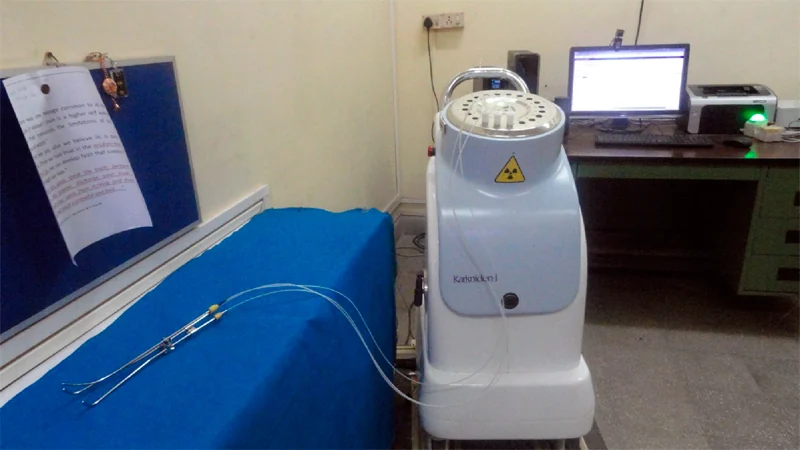
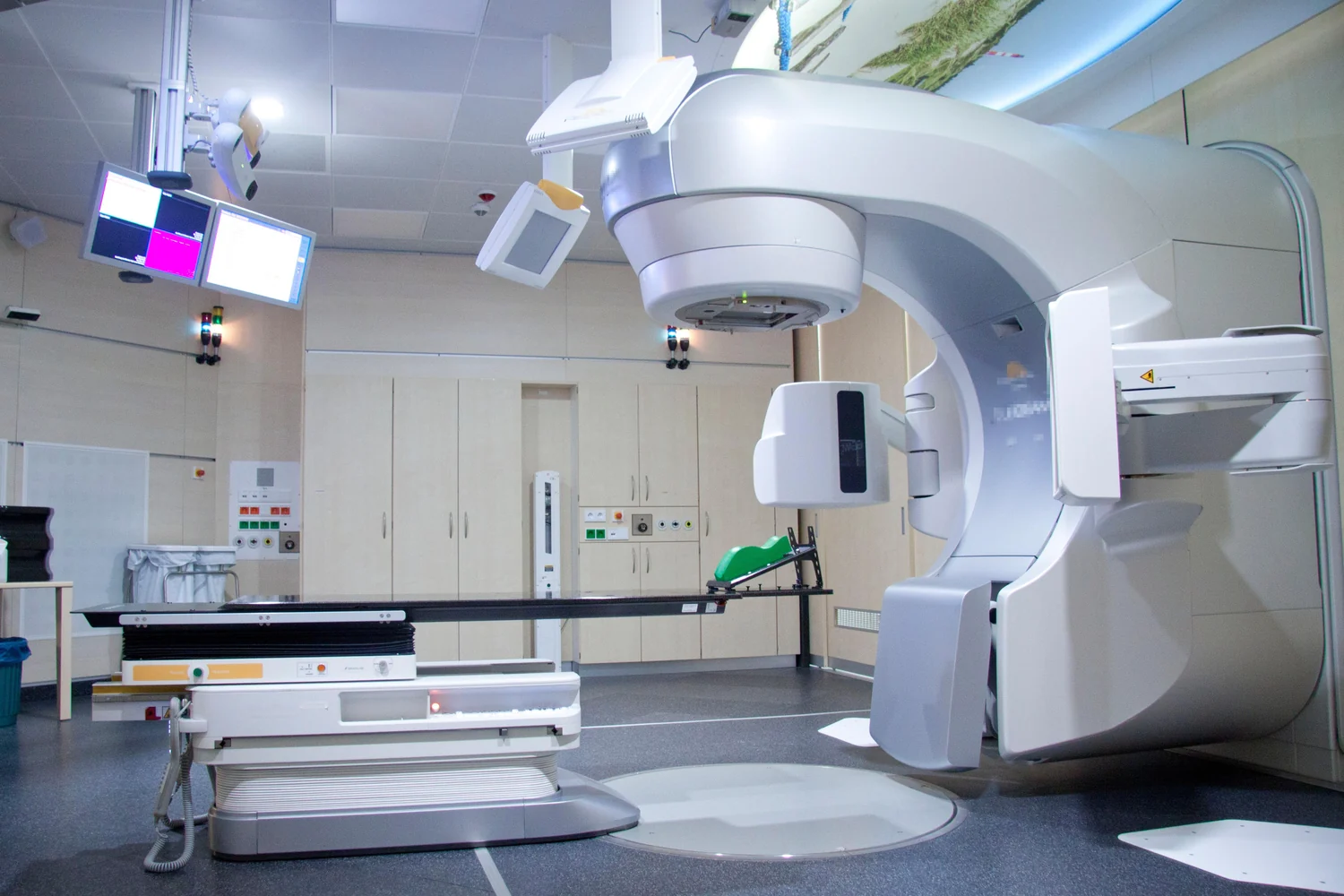
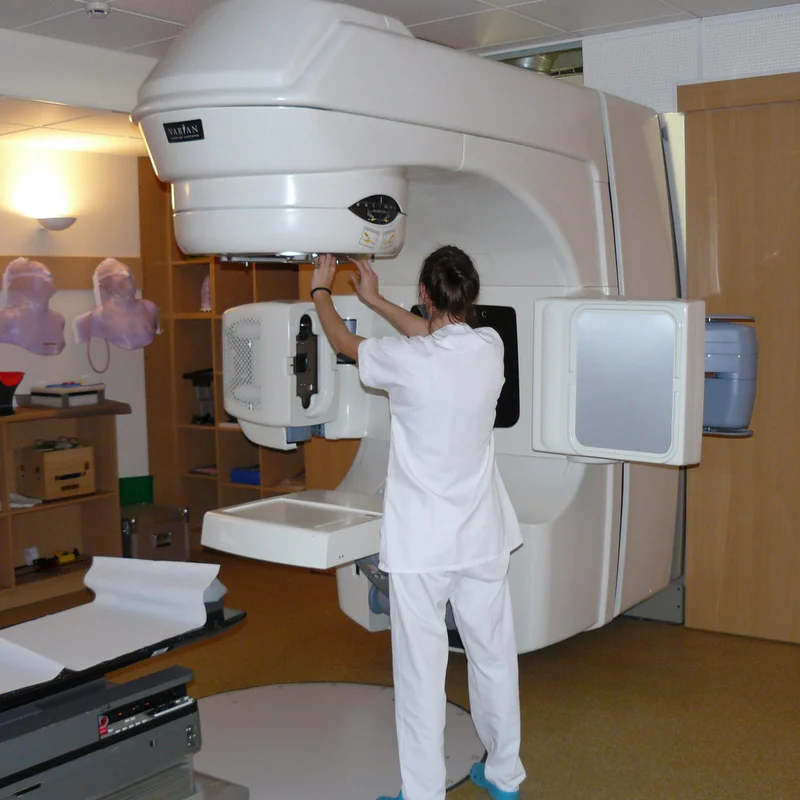
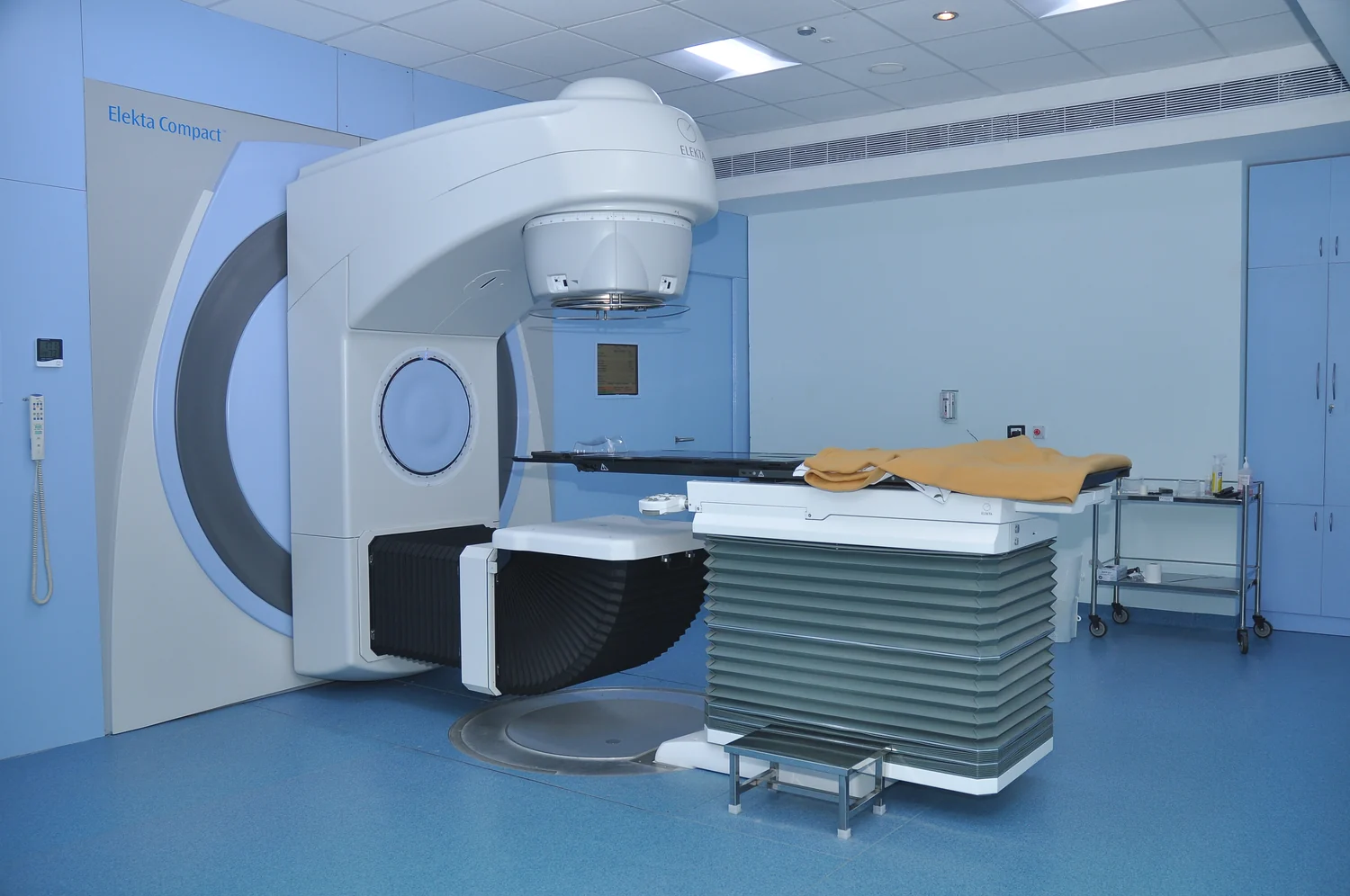
A radiation fraction is one portion of the total planned dose, delivered during a treatment session. External-beam radiation comes from a machine outside the body and is a local treatment aimed at a particular area. The beams may approach from several directions, helping concentrate dose at the target while limiting exposure to surrounding tissue [1] [2].
A useful mental picture is a set of overlapping spotlights. Each beam carries radiation through tissue on its way toward the target, but the planned paths converge so the target receives the intended treatment. This is not a perfect boundary: nearby healthy cells can also be affected, which is one reason the dose distribution and schedule matter [1].
DNA injury unfolds over days and weeks
At high doses, radiation can damage DNA enough that cancer cells stop dividing or die. The immediate session is only the beginning of the biological process. Damaged cells may take days or weeks to die, and their breakdown and removal can continue for weeks or months after the course ends [1].
That delay helps explain why treatment is evaluated over time rather than by what a patient feels during the beam. The radiation does not need to make a tumor vanish during each appointment. Instead, repeated sessions contribute to a total planned dose, while biological effects develop between and after them.
Intervals allow healthy tissue recovery
The National Cancer Institute describes treatment in a series partly to allow healthy cells to recover and to make radiation more effective [2]. The interval between sessions creates time for normal tissue to respond to and repair some injury. Tumor cells may also be affected by the radiation; fractionation is a way to manage the differing responses of tissues over a course, not a guarantee that healthy cells are untouched.
Consider a patch of skin near a target. If it receives some dose during one session, the next session is not necessarily delivered immediately; the schedule includes time between treatments. The plan must account for the target’s location, cancer type, dose, and the nearby sensitive tissues. Side effects can occur when healthy cells are damaged [1].
Schedules are tailored, not one-size-fits-all
Many people receiving external-beam therapy have sessions once a day on weekdays, but the number of treatments and total course length vary with the cancer and the treatment goal [2]. Some approaches alter the pattern: hyperfractionation uses smaller doses more than once a day, while hypofractionation uses larger doses less often. These are schedule strategies, not interchangeable recipes for every cancer.
The machine and planning system also shape where dose goes. Techniques can use imaging and computer calculations to conform beams to a target, and image-guided approaches can repeat scans during sessions to check position [2]. A schedule therefore combines biology with geometry: how much energy is delivered, where it is deposited, and how time separates exposures.
Sources & further reading
- Radiation Therapy to Treat Cancer National Cancer Institute
- External Beam Radiation Therapy National Cancer Institute
Prepared for the independent PSI Center reading library. About edition dates and source checking.
This explainer describes scientific principles. It does not assess individual treatment choices.