How can radiation treat one part of the body without turning the whole body into its target? The answer depends on where the radiation comes from and how it travels. External beams and implanted sources are local treatments in many settings: their energy is directed toward a defined region. Some radioactive medicines, by contrast, circulate through blood. Understanding that distinction makes “radiation therapy” a more precise phrase than it first appears.
A beam aimed at a region
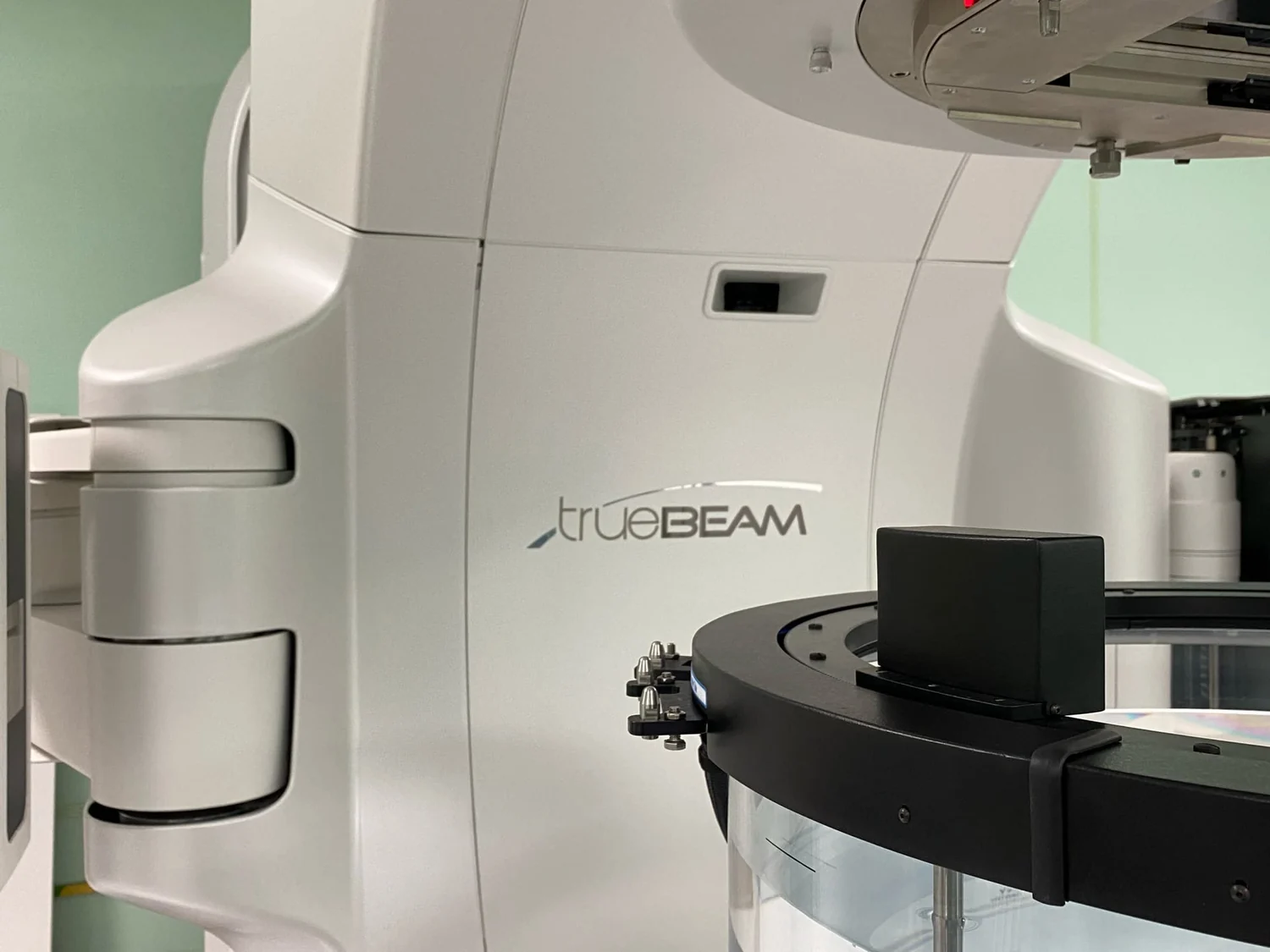
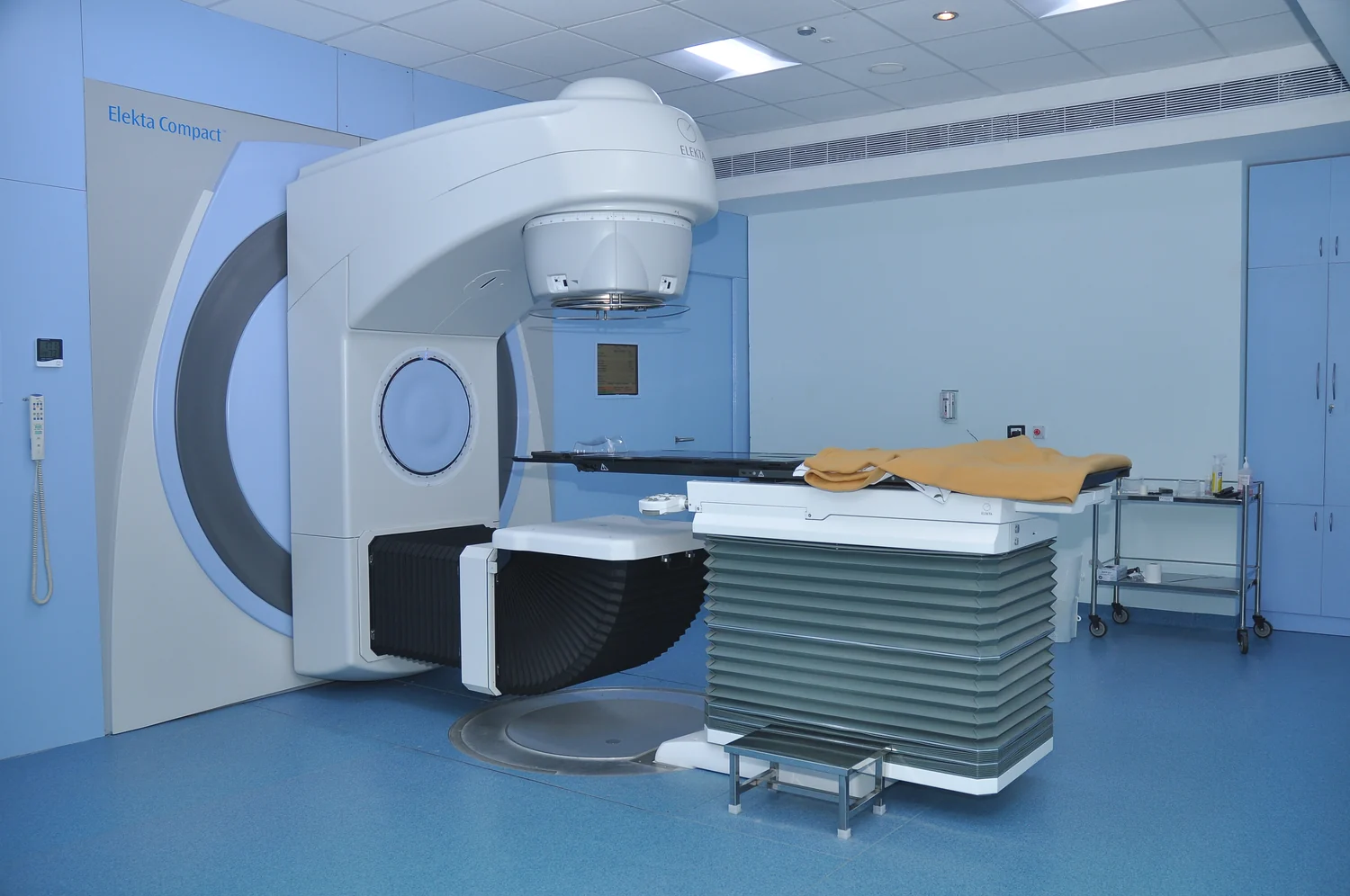
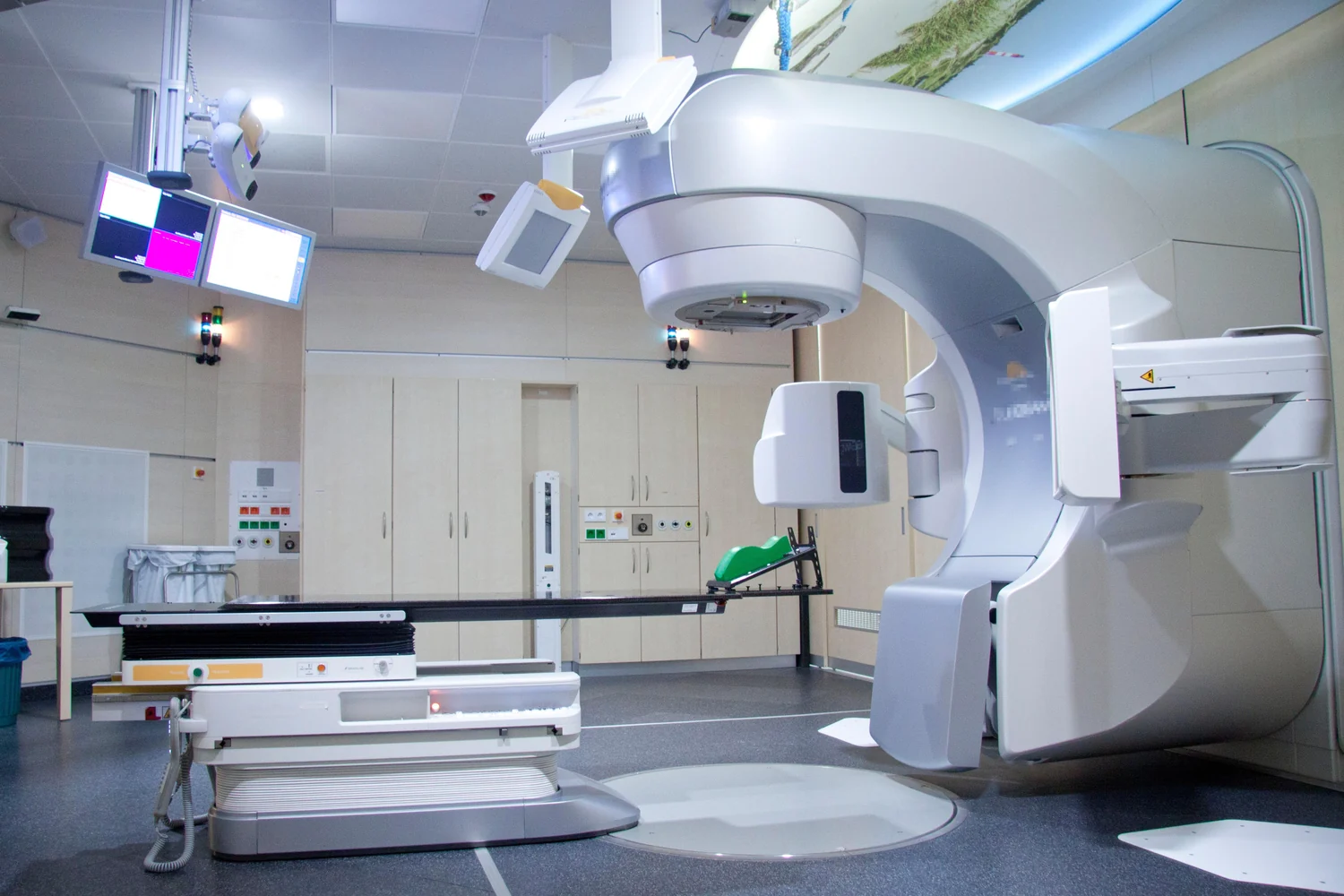
External beam radiation begins at a machine outside the body. The machine directs radiation toward a planned treatment area, or field. If the target is a lung tumor, for example, the intended field is the chest rather than the entire body. This is why external beam treatment is described as local [1] [2].
The beam itself still interacts with tissue along its path. Most machines use photons, which can reach deep tumors but scatter some radiation as they pass through and continue beyond the target. Planning therefore tries to deliver the prescribed dose to the tumor while limiting exposure to nearby healthy tissue. “Local” describes the intended region of treatment, not a claim that every other cell receives exactly zero radiation [2].
Many paths can meet at the target
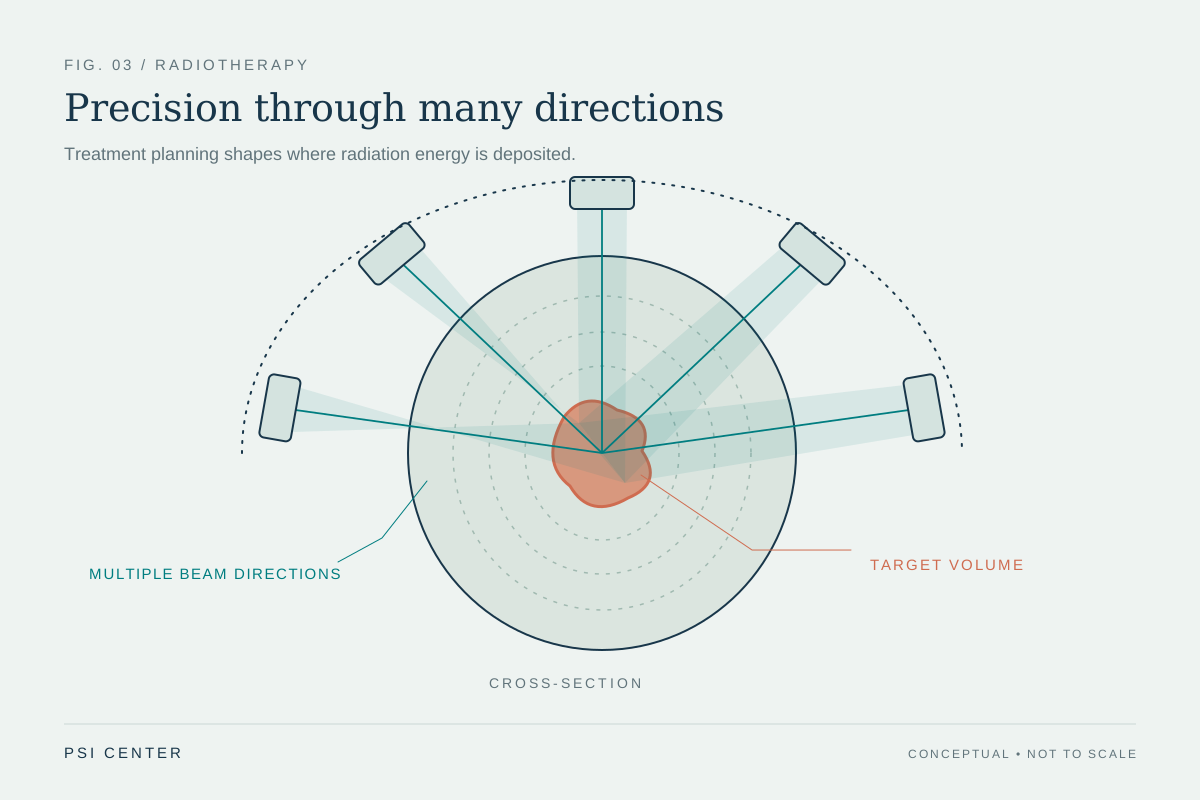
A useful mental picture is a set of narrow roads converging on one destination. In three-dimensional conformal treatment, images help shape beams from different directions around the tumor. Intensity-modulated radiation therapy divides the beam into smaller parts and varies their strength, allowing some regions of a tumor to receive more dose than others. Image-guided approaches add scans during treatment sessions, so position or dose can be adjusted when images show a change [2].
Stereotactic radiosurgery applies the same convergence idea to selected small, well-defined targets in the brain: many beams pass through different tissue, while their combined dose concentrates at the intended site. Despite its name, radiosurgery uses radiation rather than an incision. For tumors outside the brain, body motion such as breathing can complicate targeting, so stereotactic body radiation is commonly delivered over more than one session [2].
The source can be inside
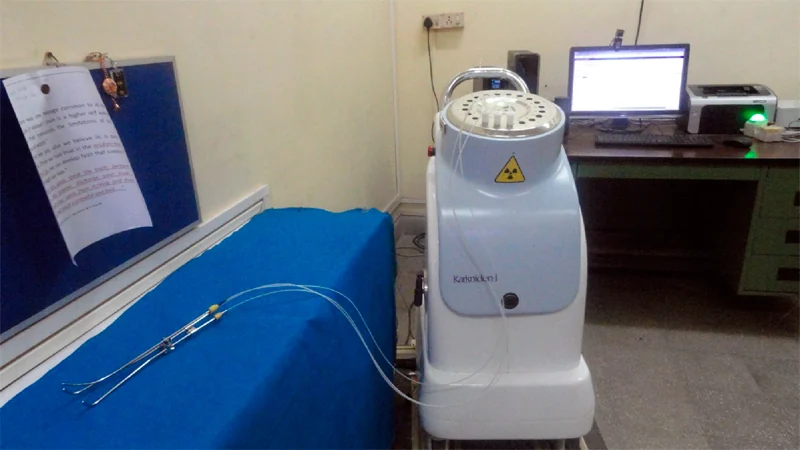
Internal radiation changes the geometry. With brachytherapy, a solid radioactive source such as a seed, ribbon, or capsule is placed in or near a tumor. Because the source is close to the target, the treatment remains local, though nearby tissues still matter when planning where it is placed and how long it remains there [1].
A liquid radioactive treatment follows a different route. Swallowed or injected into a vein, it can travel in the blood and expose tissues throughout the body. Some systemic approaches link a radioactive atom to a molecule that seeks particular cells; this targeting does not turn the treatment into a local beam. The distinction is between a source positioned at a region and a substance carried by circulation [1].
Biology unfolds after the beam
Radiation damages DNA, the molecule cells use to store instructions. Cancer cells with damage they cannot repair stop dividing or die, but they do not disappear instantly: cell death can continue for weeks or months after a course ends. The treatment’s physical delivery may be brief in a session, while its biological consequences unfold over time [1].
Healthy cells near the target can also be affected, which is one reason precision and treatment planning matter. Radiation may be used alone or alongside surgery, chemotherapy, or immunotherapy, and its purpose can be to treat cancer or ease symptoms. In many settings the treatment is local, but the phrase covers several methods; the location and route of the source determine what “local” means [1] [2].
Explore the physics: an explanatory diagram
Sources & further reading
- Radiation Therapy to Treat Cancer National Cancer Institute
- External Beam Radiation Therapy National Cancer Institute
Prepared for the independent PSI Center reading library. About edition dates and source checking.
This explainer describes scientific principles. It does not assess individual treatment choices.