Why can a pinch of fine powder expose so much more of itself to its surroundings than one solid lump of the same material? The answer is geometry. When an object is divided into smaller pieces, its total volume can stay fixed while the combined area of all the new surfaces grows. In medicine, that ratio can shape how biomaterials meet cells, carry drugs, or interact with bodily fluids.
The cube that becomes many cubes
Start with a cube whose side is one centimeter. It has six square faces and a volume of one cubic centimeter. Now imagine dividing it into eight equal cubes, each half a centimeter on a side. The total volume remains one cubic centimeter, but every small cube has its own six faces. Together, the eight cubes expose twice the area of the original: each face is smaller, yet the new internal cut faces add up. Divide again and the area grows further.
The pattern follows dimensions. For a cube, area scales with side length squared, while volume scales with side length cubed. Shrinking each side by a factor reduces volume faster than it reduces area. So surface area per unit volume rises as objects get smaller. This is why fine particles, fibers, and porous structures can present extensive interfaces even when they contain modest amounts of material.
An interface is where materials meet biology
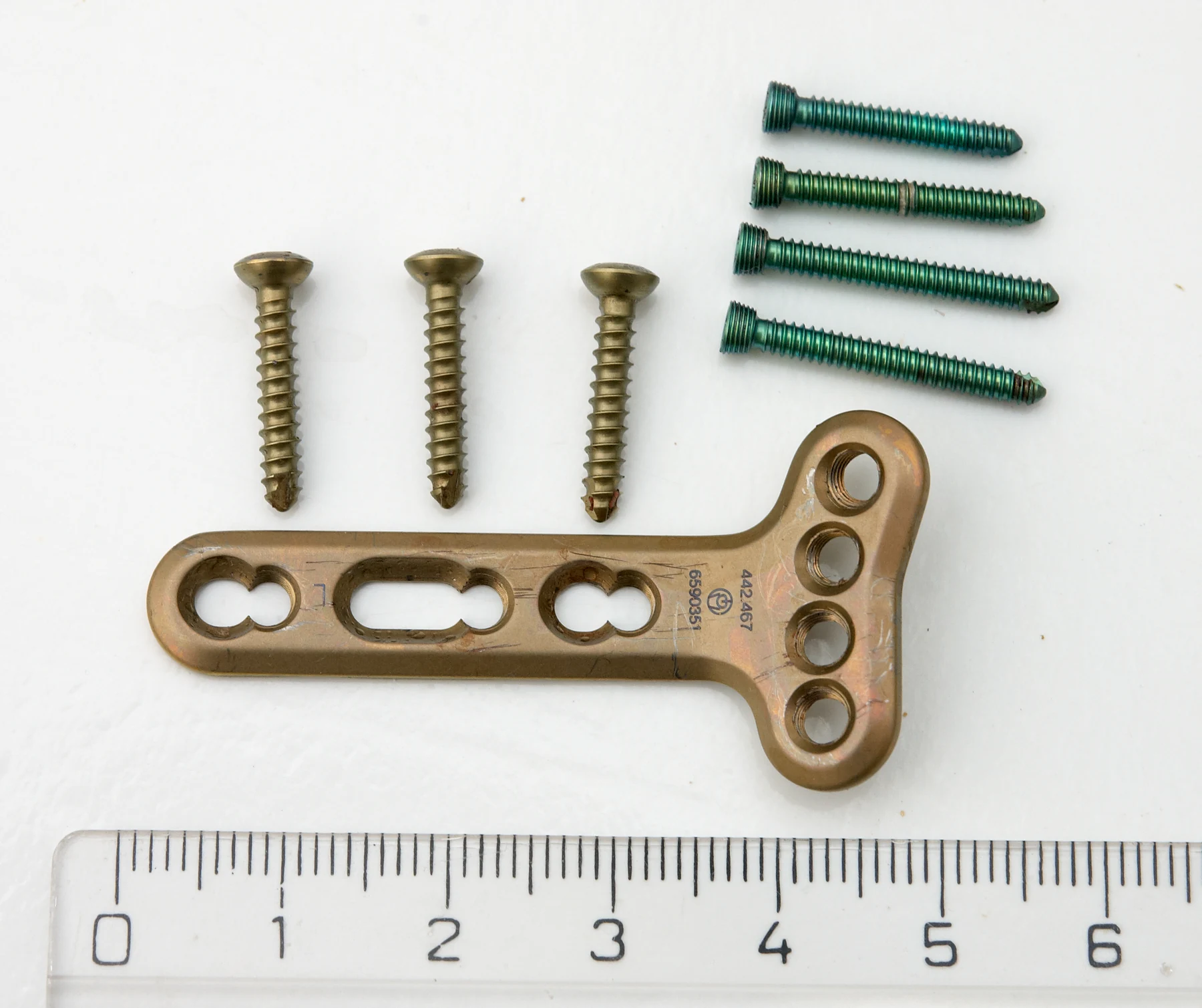
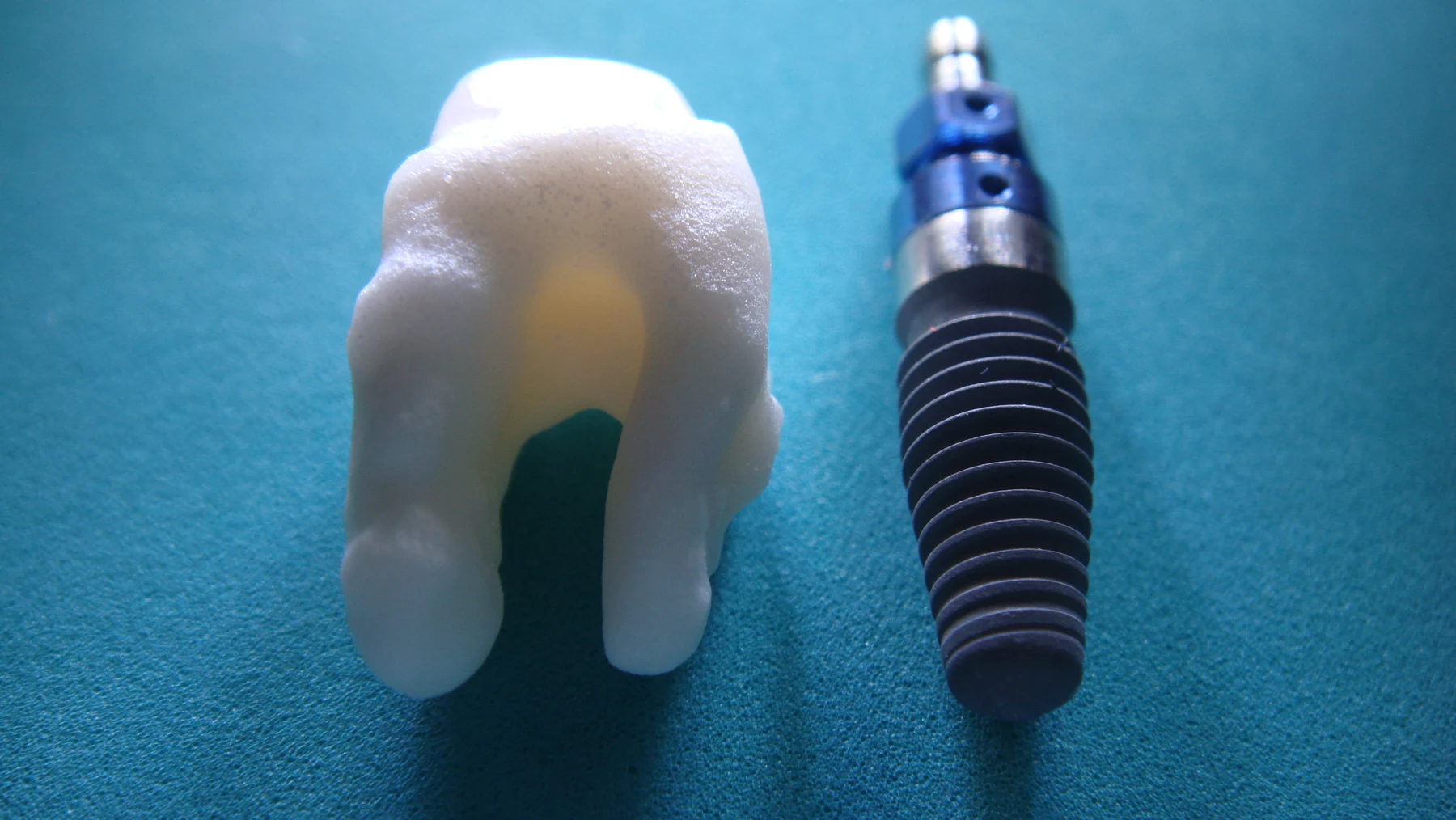
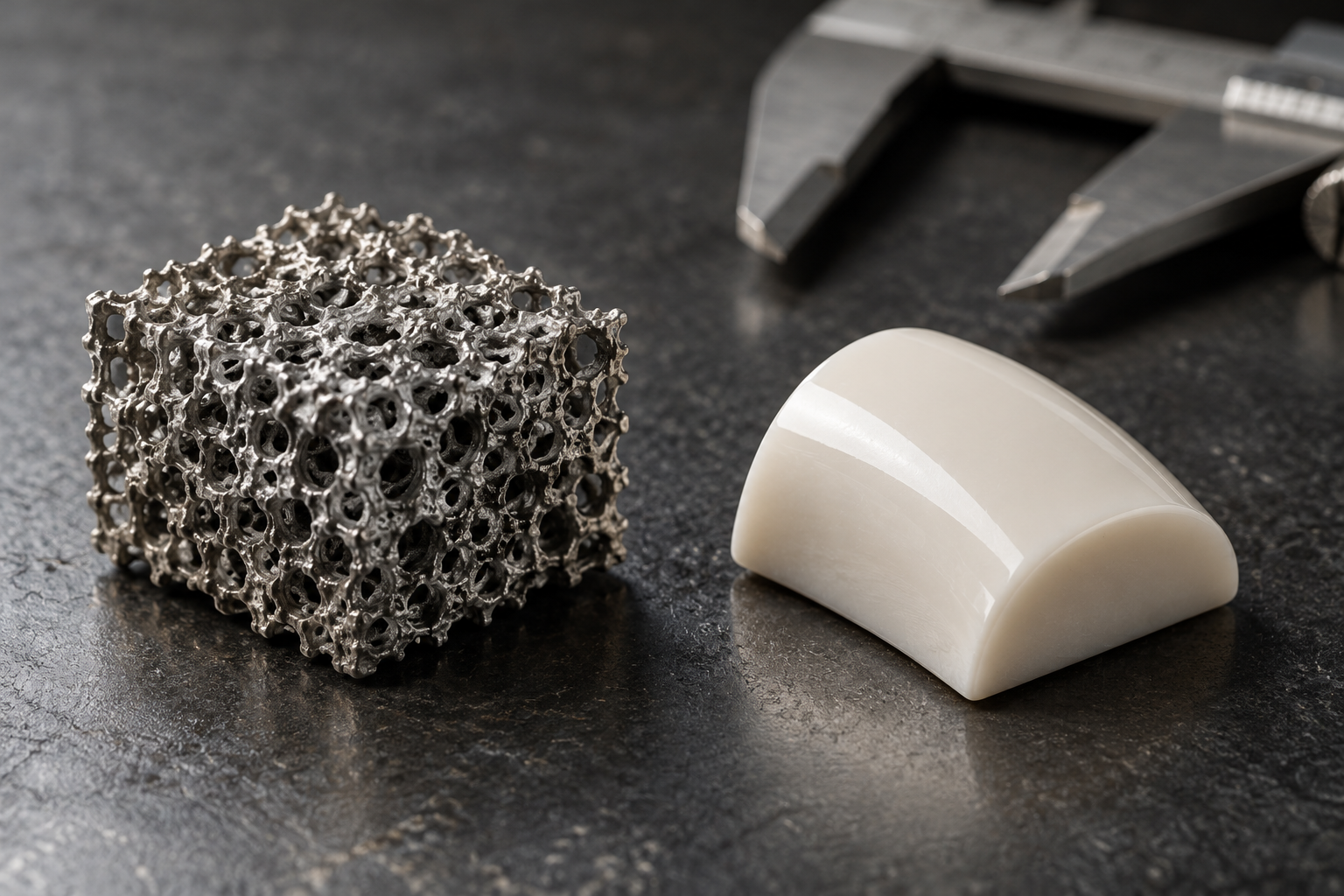
A biomaterial is a natural or synthetic material designed to interact with the body for a medical purpose. It may form a device, coating, fiber, film, or scaffold. The body encounters the material at its surface, where proteins and cells can attach, fluids can flow, and chemical signals can be exchanged. A larger area relative to volume can make more of that material available for such interactions. [1]
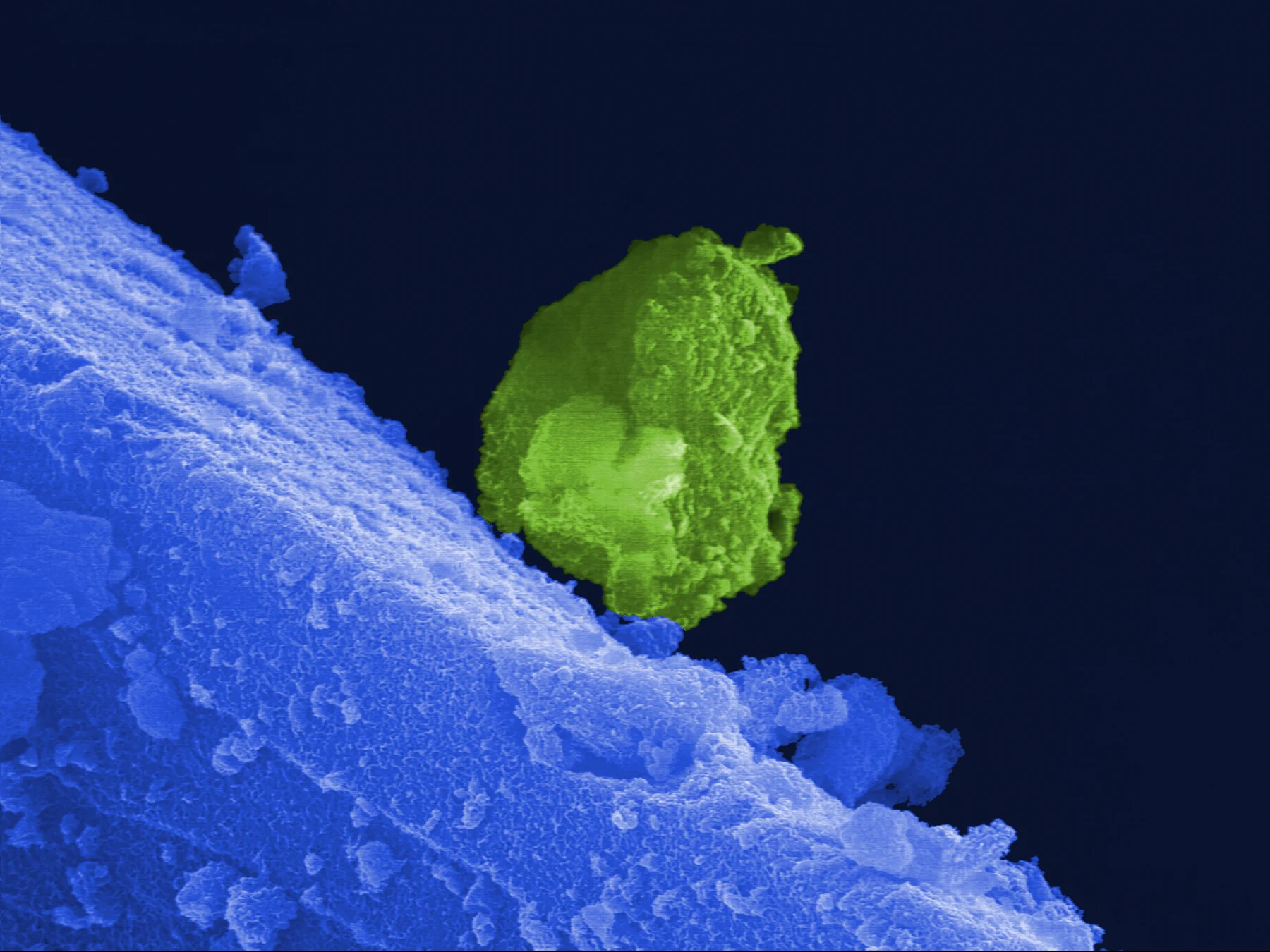
Consider a drug carrier made as a tiny particle. Its outer surface is the boundary through which it encounters blood and tissues; the interior may shelter a therapeutic. Biomaterials can encase some therapeutics to help protect them in circulation, and carriers may be modified to encourage uptake by certain cell populations. Geometry alone does not guarantee targeting or benefit, but it helps explain why particle size and surface design are important engineering variables. [1]
More surface can mean more response
The same expanded interface can affect how the body responds to an implant. Foreign materials may trigger a foreign body response: immune activity followed by tissue or scar encapsulation that can interfere with device function. Engineers may choose corrosion-resistant materials, biodegradable materials, or surfaces that mimic aspects of the extracellular matrix, the natural molecular scaffold around cells. The aim is to shape contact with tissue, not merely to make an object small. [1]
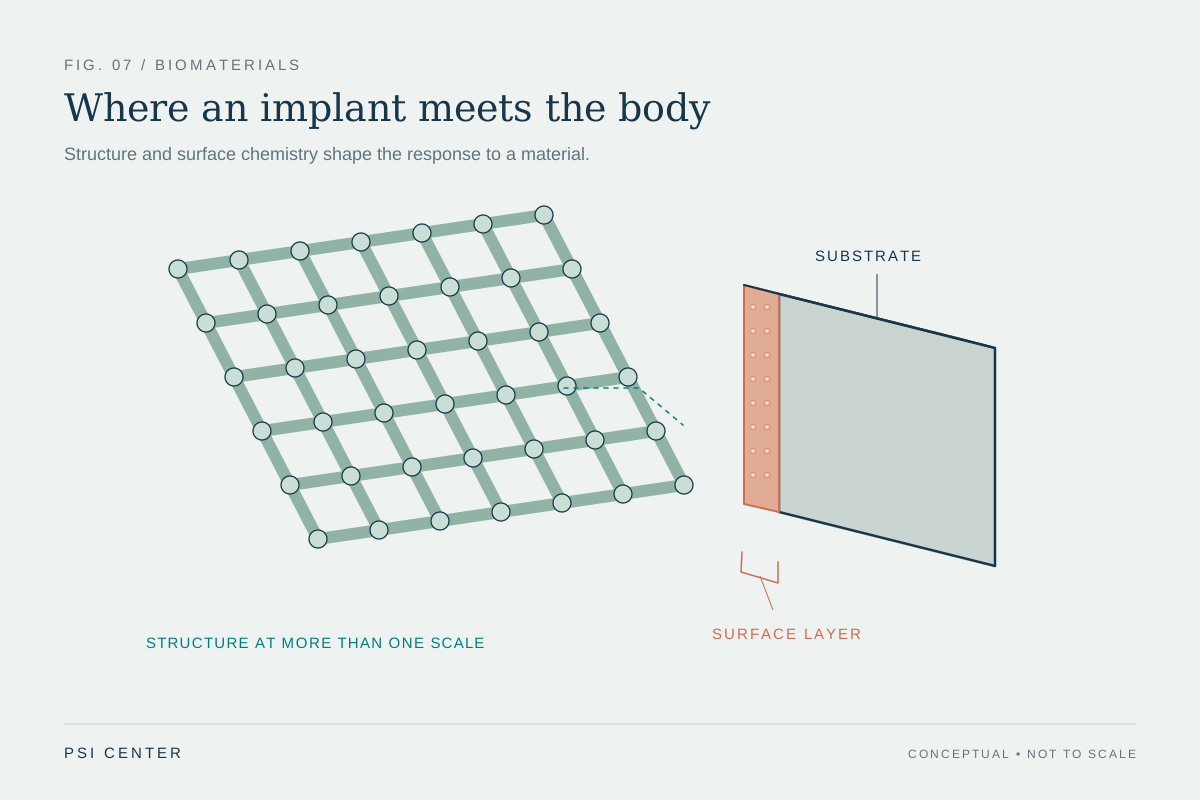
A scaffold for tissue engineering illustrates the design tradeoff. Cells need a framework to attach to and grow within, and a porous or fibrous structure offers many contact points. Yet the scaffold also has to maintain useful shape and mechanical properties and interact appropriately with tissue. The body does not respond to area in isolation: chemistry, stiffness, geometry, degradation, and the local biological environment all influence what follows. [1]
Small sensors meet large environments
Sensors also depend on interfaces. A sensor detects an input from its physical environment, and biomedical sensors may respond to chemical, optical, thermal, electrical, or mechanical signals. A glucose monitor, for example, uses enzymes to detect glucose in fluid between cells. A sensor’s active surface is where a sample or body fluid interacts with its sensing element, so geometry can influence how much material is exposed to that environment. [2]
But more exposed area is not automatically better. A larger interface might increase opportunities for interaction, while also increasing exposure to unwanted reactions or making a device harder to protect and calibrate. The cube thought experiment gives a useful first principle: dividing a fixed amount of material can increase the area available for contact. Whether that helps a particular medical material depends on what the surface is designed to do and how the body responds. [1] [2]
Explore the physics: an explanatory diagram
Sources & further reading
- Biomaterial Technologies NIBIB
- Sensors NIBIB
Prepared for the independent PSI Center reading library. About edition dates and source checking.
This explainer describes scientific principles. It does not assess individual treatment choices.