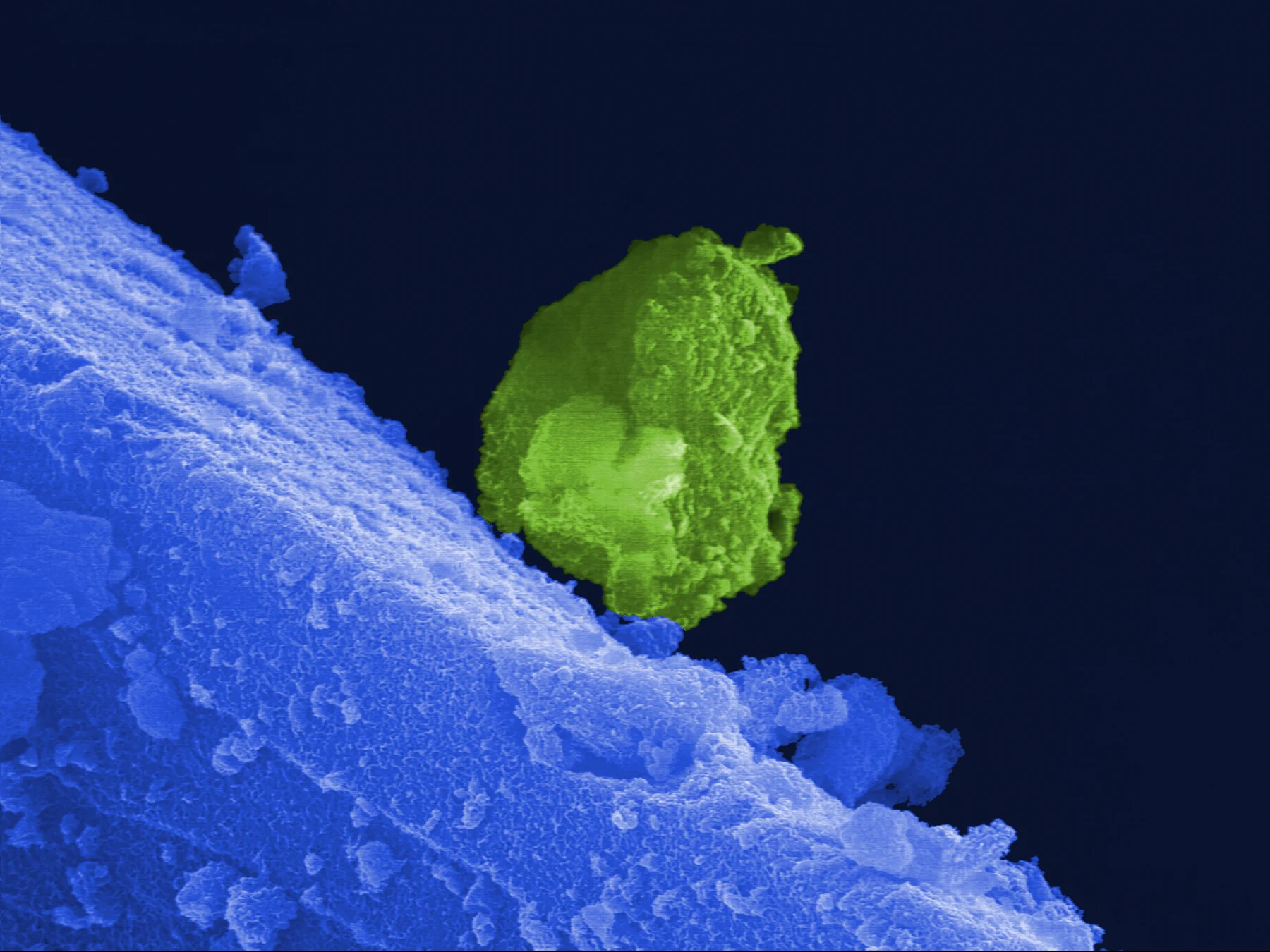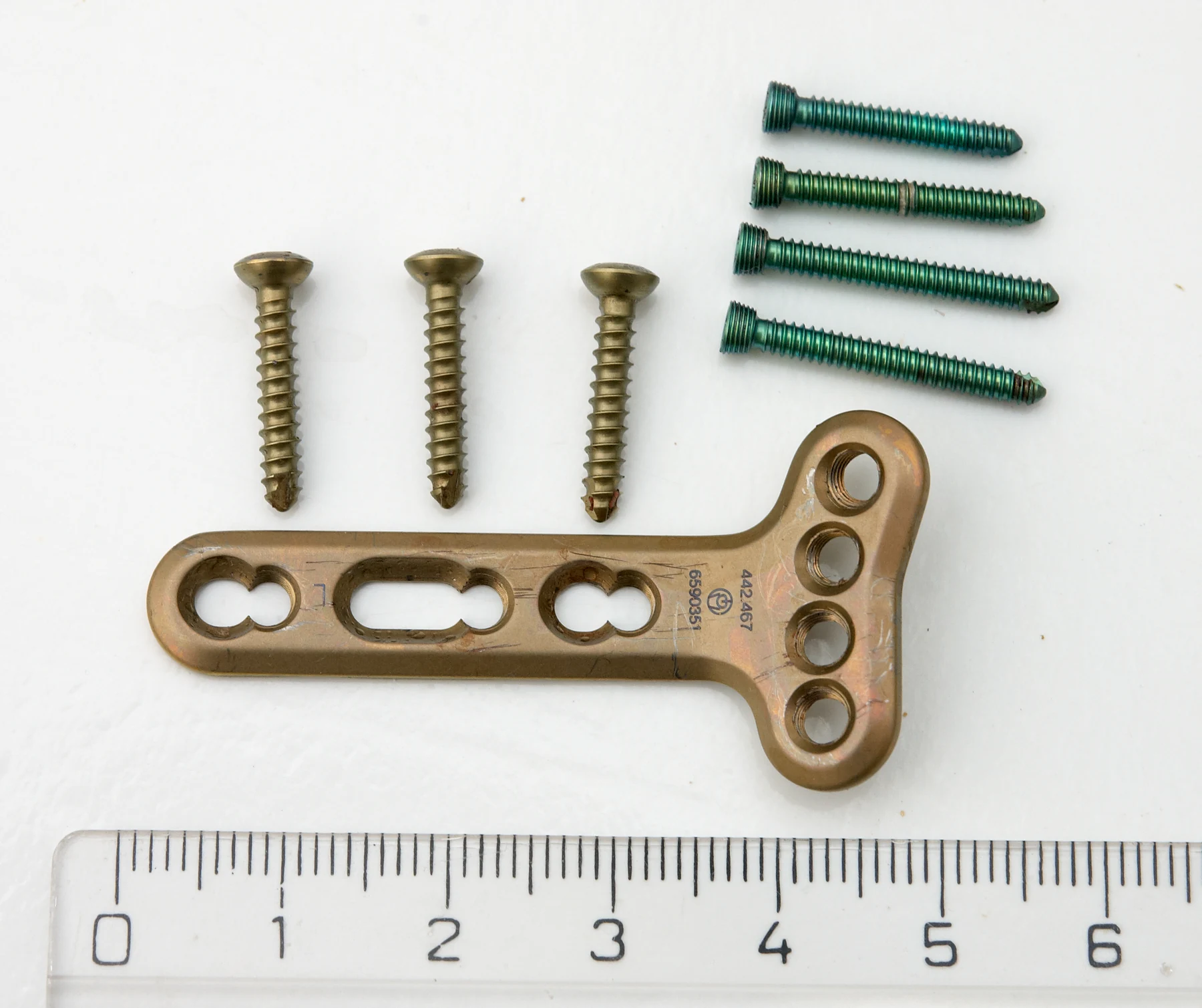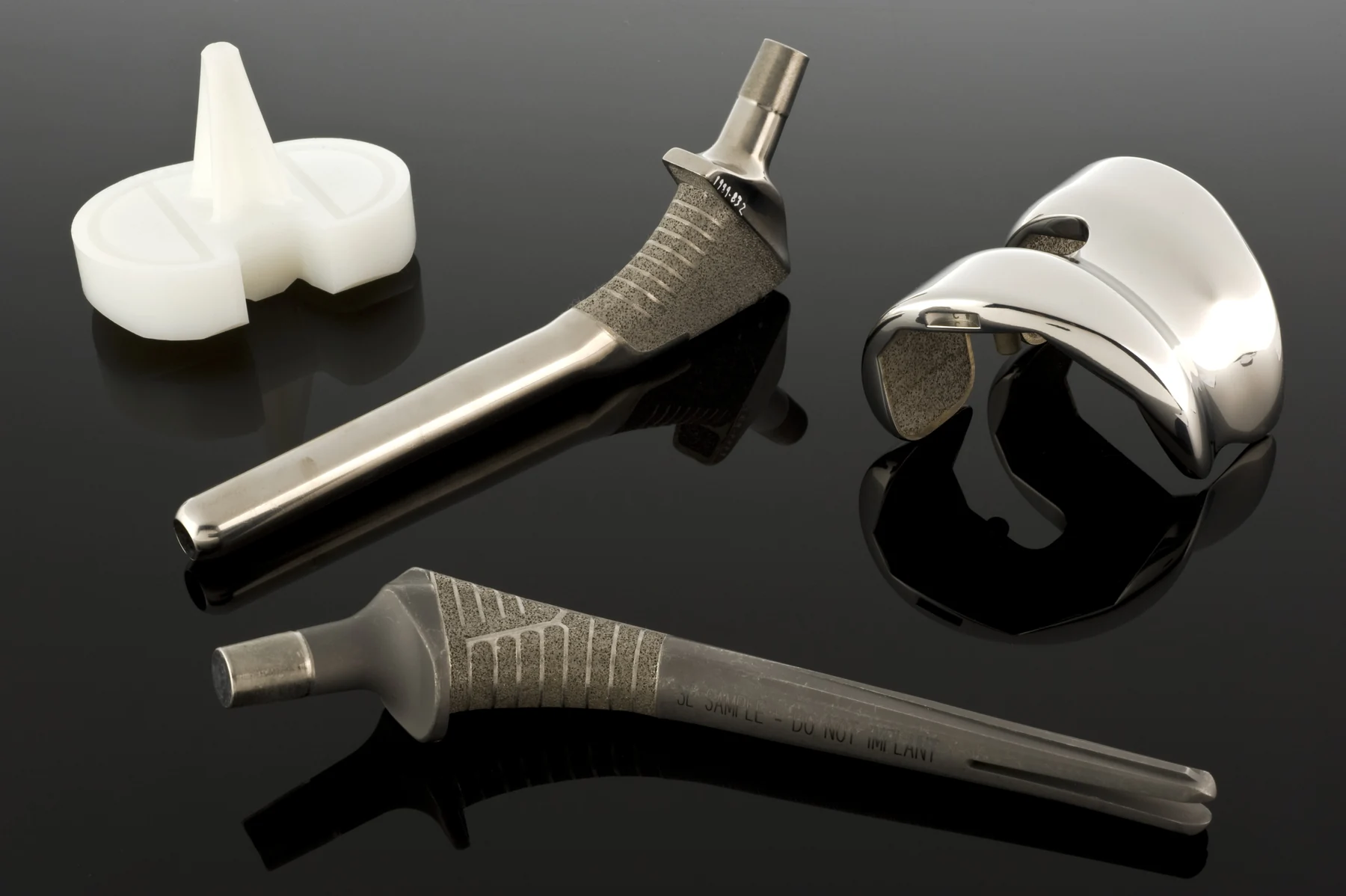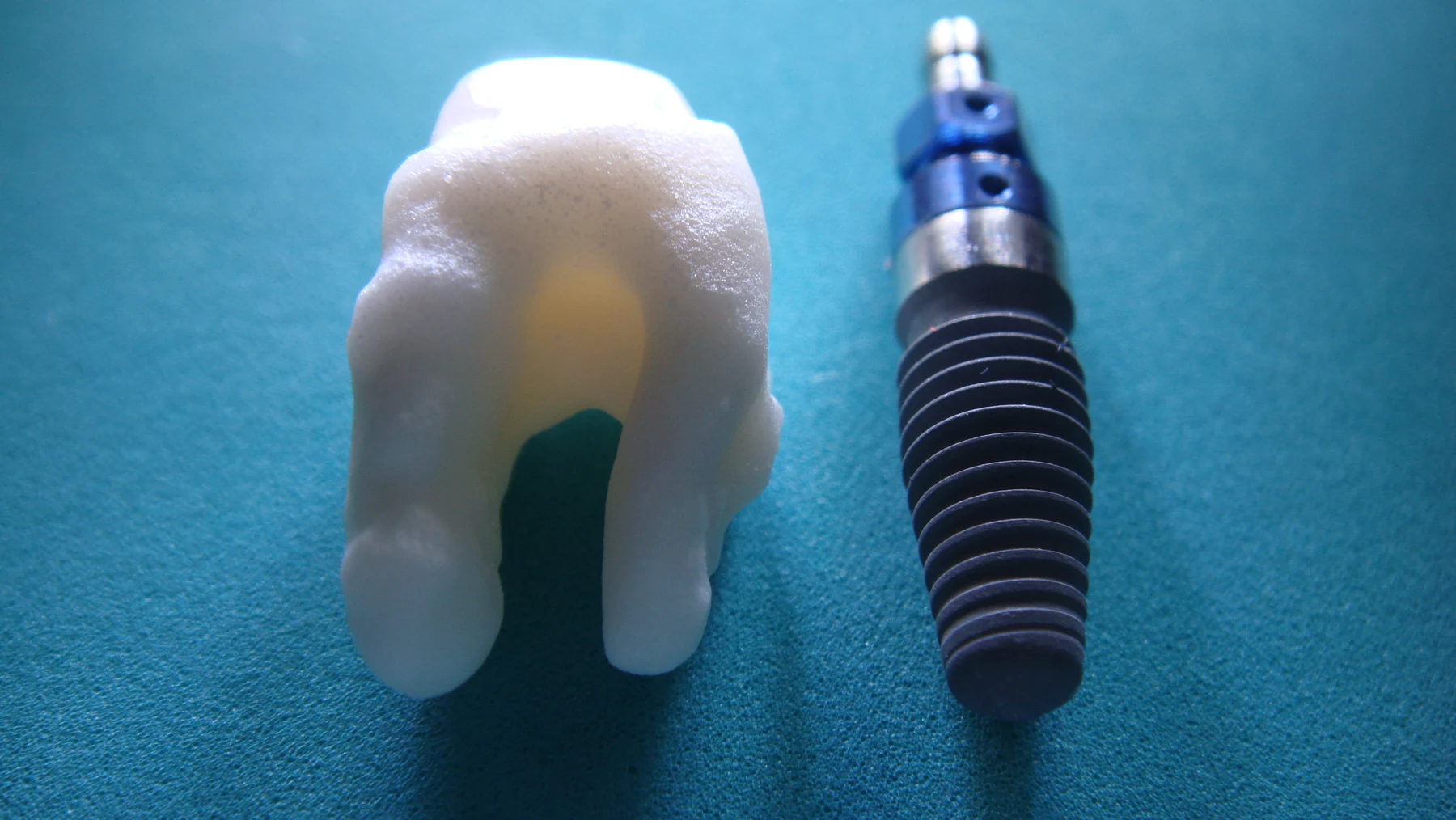
Why can two implants made from similar metals behave differently once they meet the body? The answer may lie partly at the surface. That boundary is where tissue, proteins, immune cells, and the device first interact. The bulk material determines much of an implant’s strength, but the outermost layer can influence corrosion, healing, and whether surrounding tissue integrates with the device or forms a barrier around it.
The body encounters a boundary
A biomaterial is a material used in a device that interacts with the body. Implants may use metals, polymers, or ceramics, selected for a particular function: a hip joint must bear repeated loads, while a blood-vessel device must accommodate flow. Yet the body does not respond to a material in the abstract. It encounters a specific manufactured device, in a specific location, for a particular duration. [1]
Imagine a sturdy bridge with a coating exposed to rain and salt. The structure may be strong, but the boundary layer affects how it weathers. Inside the body, fluids, proteins, and cells contact the implant surface. The local response can include inflammation and scar tissue; this foreign body response may impair device function or cause pain. Surface properties help shape that exchange. [1]
Chemistry and texture change the meeting
The surface can corrode or wear, releasing material into nearby tissue. Whether that matters depends on the device, the environment, and the biological response. The FDA evaluates material safety in relation to the material’s properties, intended use, and device function. Manufacturer assessments may consider manufacturing processes, anatomical location, and how long or how often the body contacts the device. [2]
A coating can also present cues that encourage tissue to attach or grow into an implant. Hydroxyapatite, a mineral abundant in bone, is used as a coating on some orthopedic implants to encourage tissue ingrowth. In principle, a surface that resembles aspects of the body’s own extracellular matrix—the scaffold surrounding cells—can support integration. That design goal does not mean every coating is proven effective in every implant or patient. [1]
Bulk still carries the load
A favorable surface cannot compensate for a device that is too weak or poorly matched to its job. Load-bearing implants need strength and resistance to wear; devices in soft tissue may need flexibility. Artificial hip joints commonly use durable metals and ceramics, while vascular stents and artificial vessels need to support blood flow while accommodating movement or pulsation. The required mechanical properties come from the whole device, not just its coating. [1]
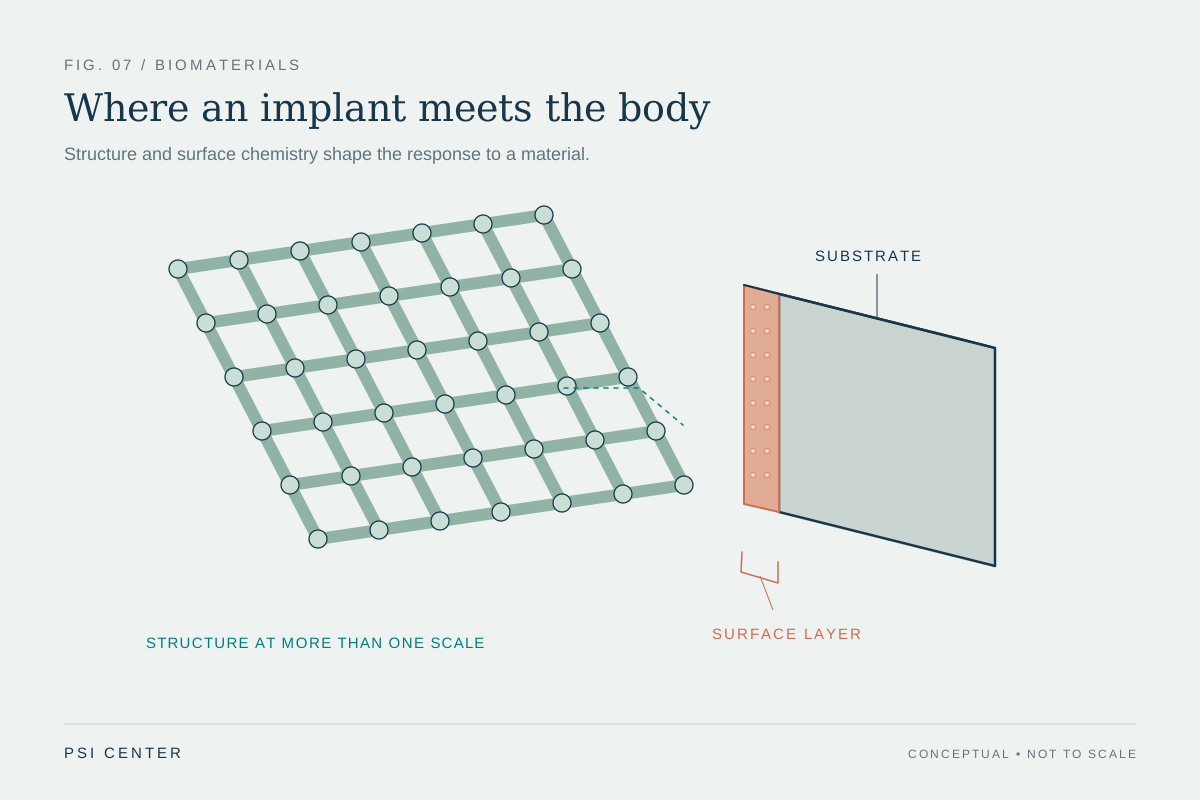
This division of labor helps explain why implant design is a materials problem at multiple scales. A surface may guide contact with cells, while the bulk supports forces; a coating may release a therapeutic, while the underlying structure holds its shape. But layers can wear, interact, or change in the body. A promising material in a dish is not automatically a clinically established implant.
Safety is device-specific
Biocompatibility means assessing how the body may respond to a material in its intended use. It is not a universal stamp saying that a substance is safe in every form and location. FDA review considers the complete device and its exposure conditions, and may include engineering tests for wear or corrosion in an environment such as a joint or blood vessel. [2]
The practical question is thus not simply “What is it made of?” It is also “What touches the body, where, for how long, and under what forces?” Surface and bulk answer different parts of that question. Understanding both helps explain why a successful implant is an engineered interface as much as a piece of durable material.
Explore the physics: an explanatory diagram
Sources & further reading
Prepared for the independent PSI Center reading library. About edition dates and source checking.
This explainer describes scientific principles. It does not assess individual treatment choices.