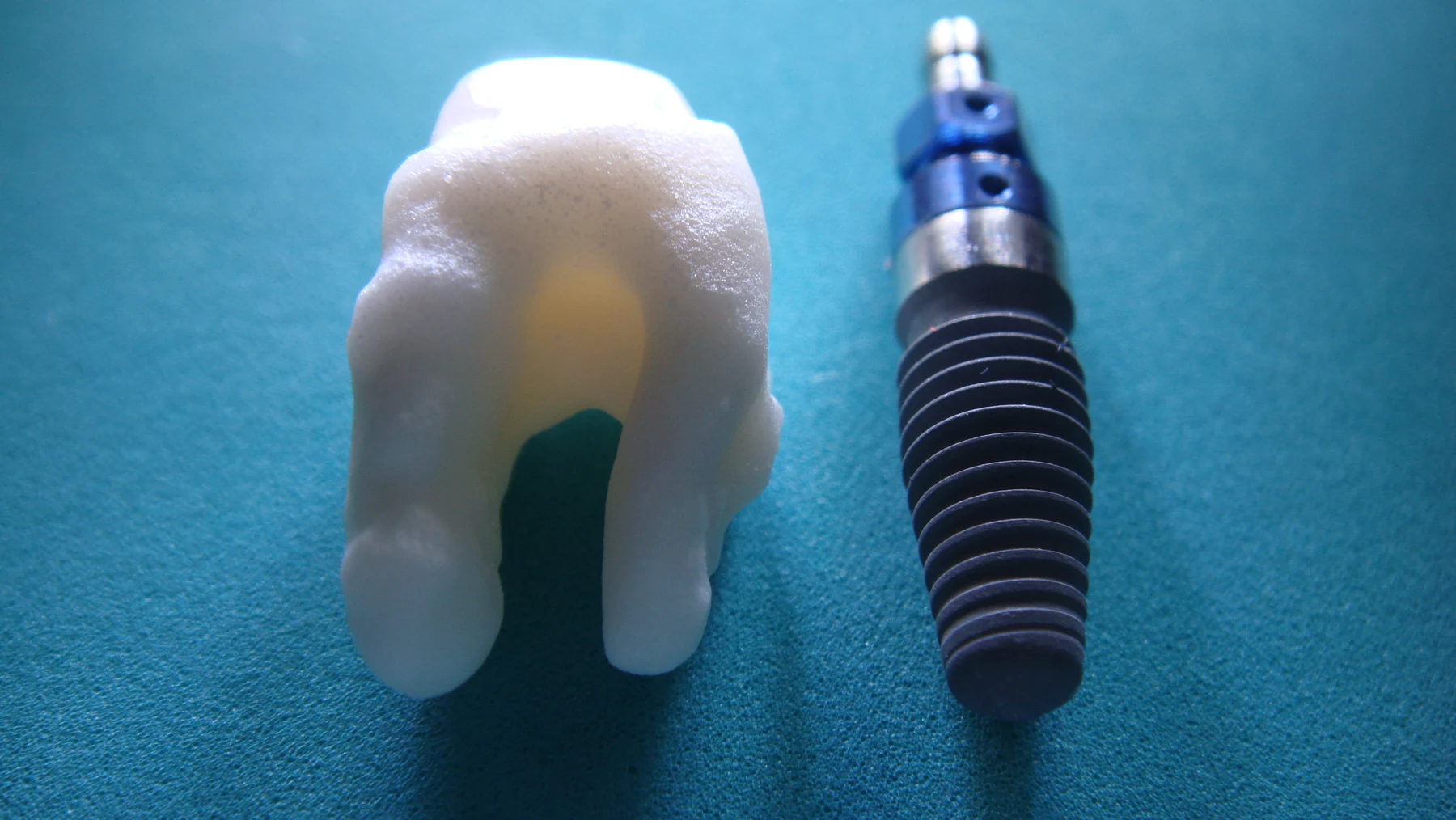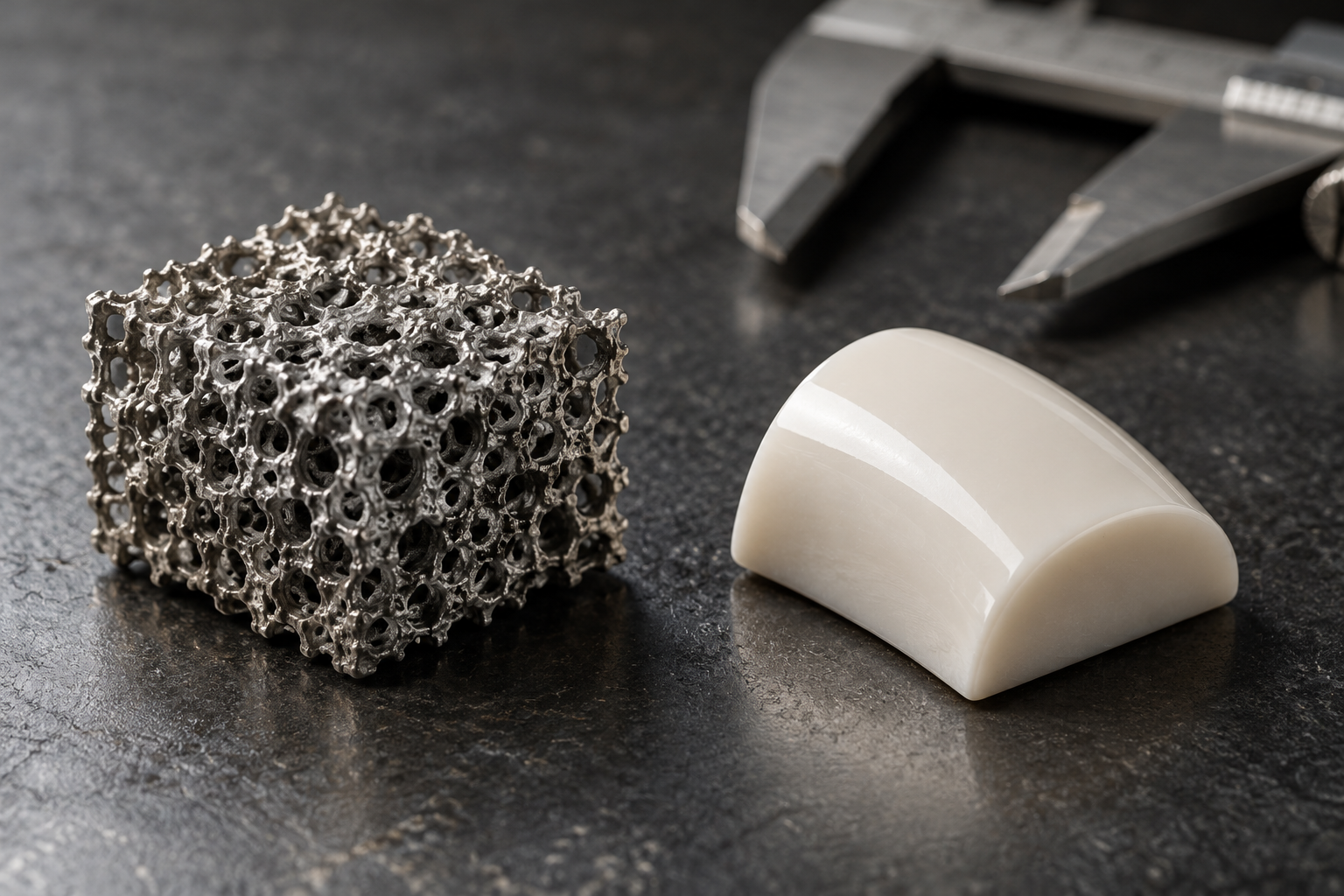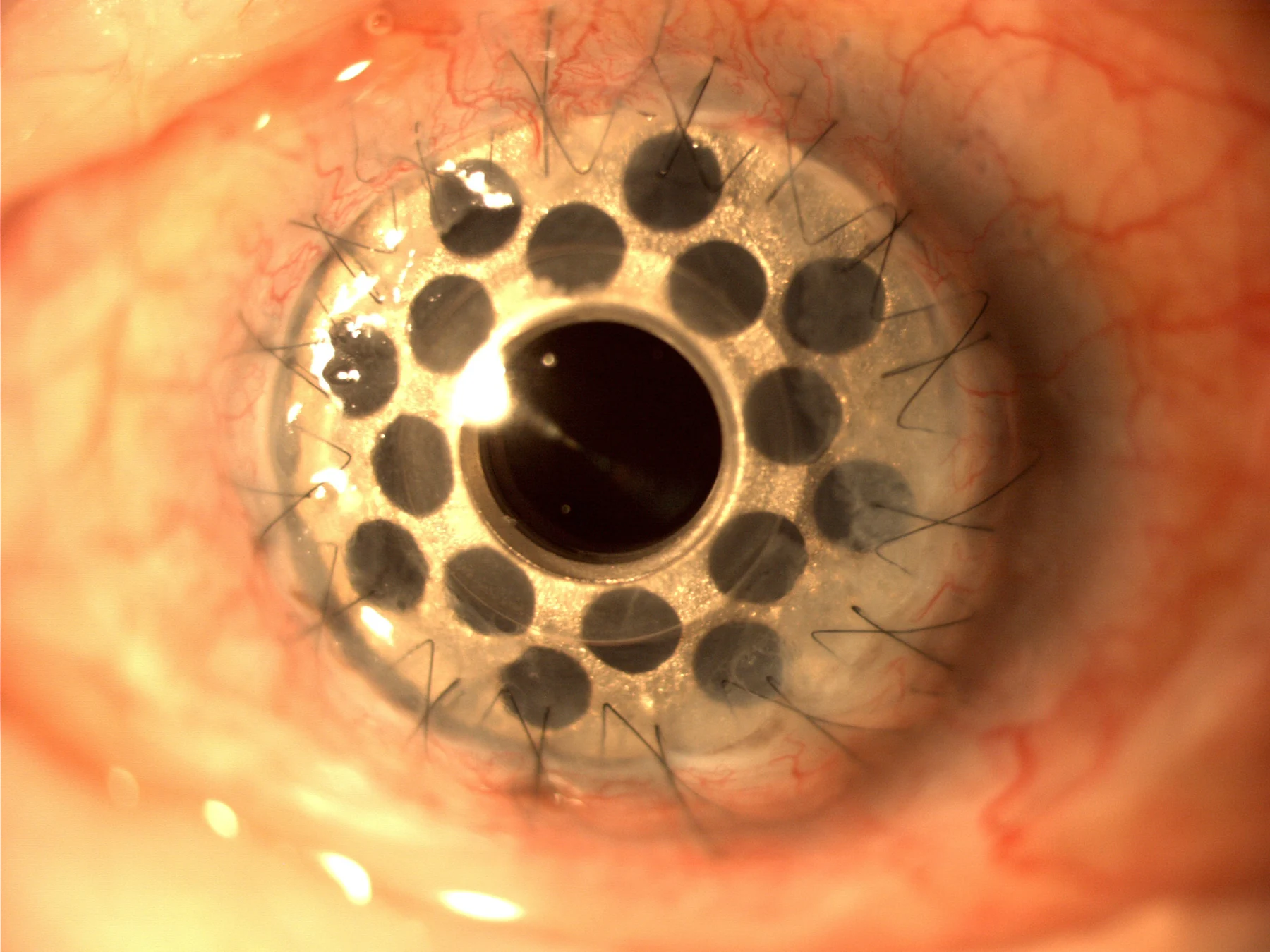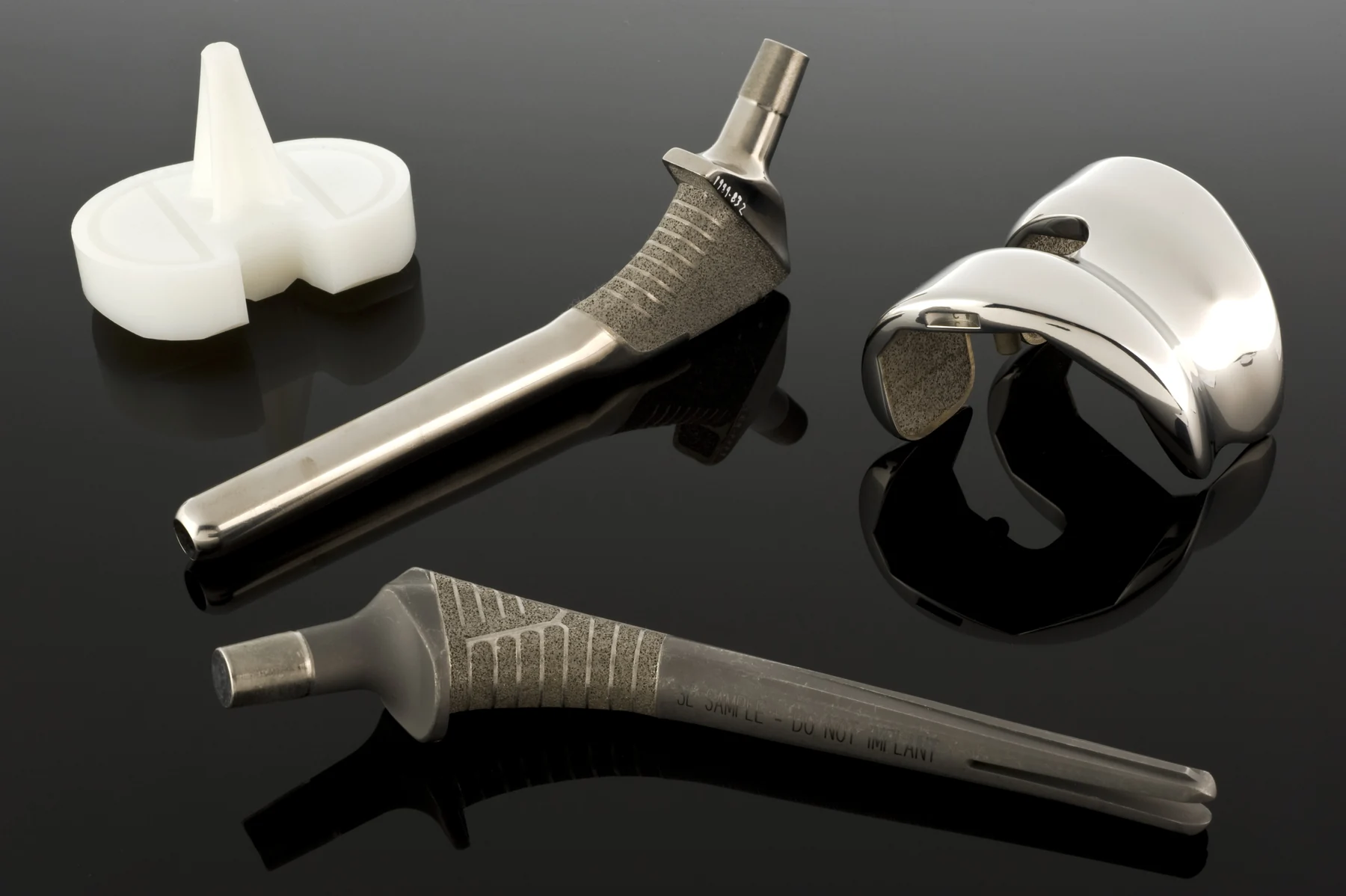
Why not make every implant from the metal that resists corrosion best? Because a medical device is not a metal coupon sitting in a beaker: it is a working structure in a particular place, under particular forces, for a particular span of time. A hip component must bear repeated loads; a small vascular device faces a different environment. Choosing materials means balancing the job the device must do with the ways its surface and the body can interact.
Corrosion is one part of a larger interaction
Corrosion is the gradual chemical or electrochemical change of a material. In an implant, body fluids and local conditions can influence whether a metal surface changes, and wear can expose fresh material as two components move against each other. The resulting particles or dissolved substances may matter biologically. But corrosion resistance alone cannot tell us how much material is released in a real device or what the clinical consequences will be.
The U.S. Food and Drug Administration evaluates device materials in the context of the device’s intended use and function. That includes considering the specific material properties, the manufacturing process, where the device contacts the body, and how often and how long that contact occurs [1]. A material that performs well in one setting cannot simply be assumed to behave identically in another.
Picture two devices with different jobs
Imagine a metal part in a joint, repeatedly loaded as a person walks, alongside a device in a blood vessel. The joint component faces mechanical wear as well as the surrounding biological environment. The vessel device has a different location, geometry, and pattern of exposure. A corrosion test can probe a possible failure mechanism, but it does not reproduce every combination of forces, fluids, manufacturing features, and tissue contact.
That is why manufacturers may use engineering tests to model wear and corrosion under conditions relevant to a particular device. The FDA describes such testing as one possible part of evaluating material behavior; it also reviews biocompatibility information, which considers how the body may respond to contact with the device’s materials [1]. These forms of evidence answer related but distinct questions.
The body response is not a simple material label
Biocompatibility means evaluating whether contact with a material may produce an adverse biological response and whether the associated risks are acceptable for the intended use. It is not a universal stamp that makes a substance harmless in every form. The same broad material category can be used in devices with different compositions, surfaces, shapes, manufacturing steps, anatomical locations, and exposure times, all of which can affect the assessment [1].
The FDA has identified gaps in understanding how people respond to metal-containing implants, including the roles of location and device characteristics, and how to predict or identify heightened responses. Its research agenda includes clinically relevant tests and methods to analyze corrosion and wear products [1]. This is a reminder that a plausible mechanism, such as particles provoking an immune response, does not by itself establish how often a particular outcome occurs.
Design is a benefit-and-risk decision
A device must meet its physical purpose as well as address biological risks. Medical devices can support or replace bodily functions, monitor them, or interact with anatomy; their design varies with that job [2]. For an implant, the question is not simply whether one metal corrodes less than another. A designer must consider strength, durability, geometry, manufacturing, the intended site, and the evidence about how the complete device behaves.
A useful mental model is a bridge: choosing a material for maximum resistance to one kind of damage would not settle whether the bridge’s shape, loads, joints, and surroundings make it safe. In medicine, the stakes include both reliable function and contact with living tissue. Better corrosion resistance can help address one concern, while the full device evaluation weighs several interacting properties and acknowledges where evidence remains incomplete [1].
Sources & further reading
Prepared for the independent PSI Center reading library. About edition dates and source checking.
This explainer describes scientific principles. It does not assess individual treatment choices.