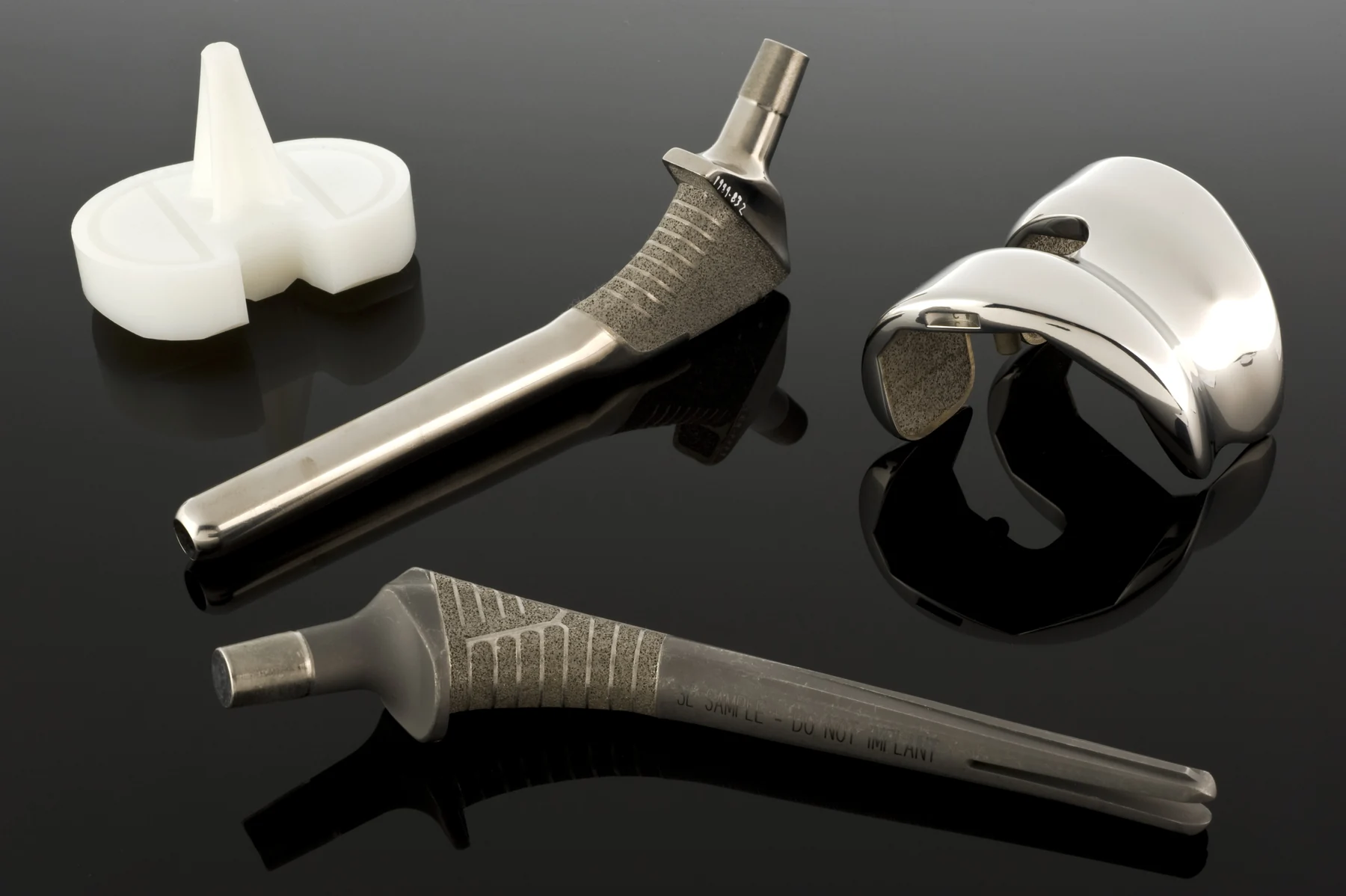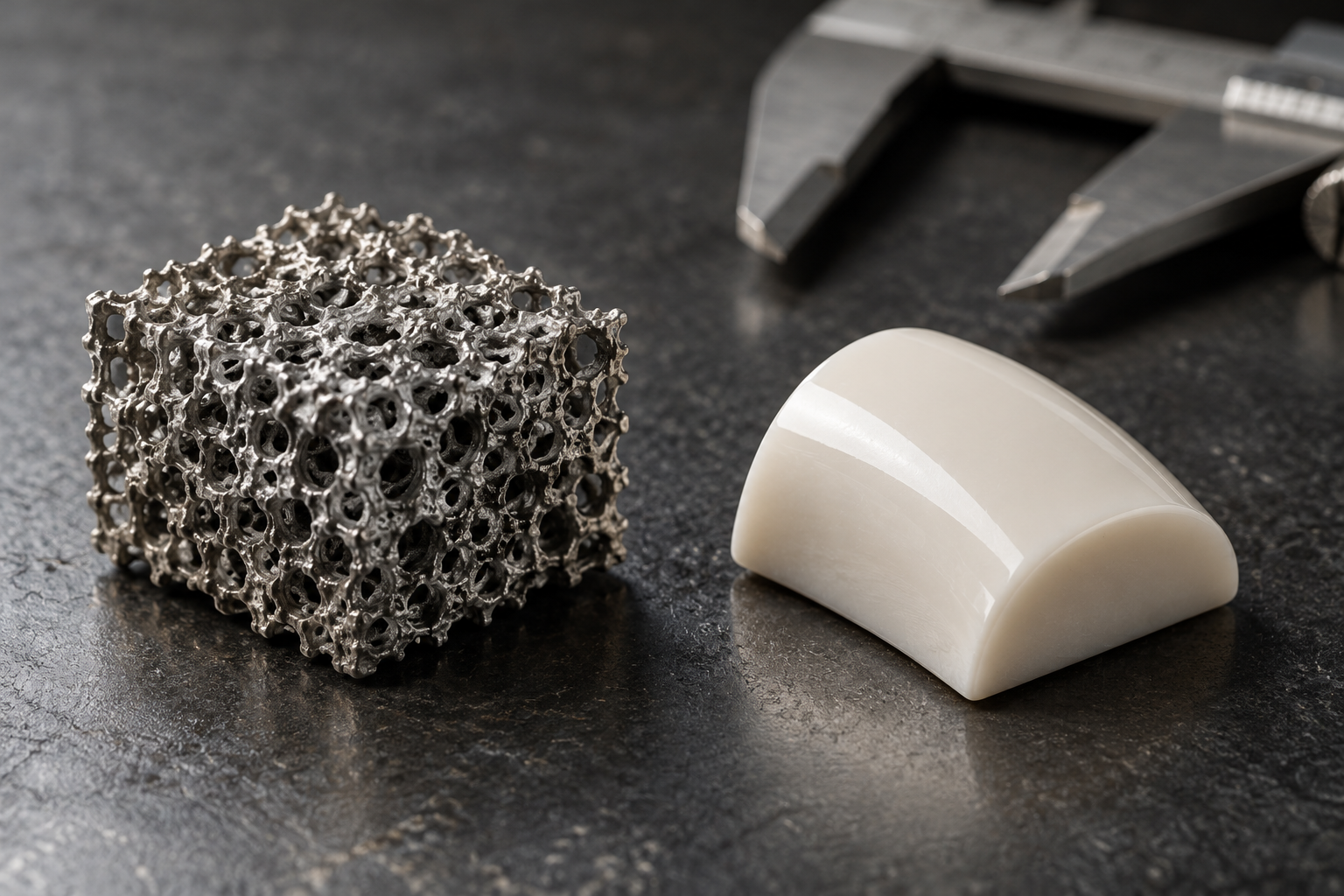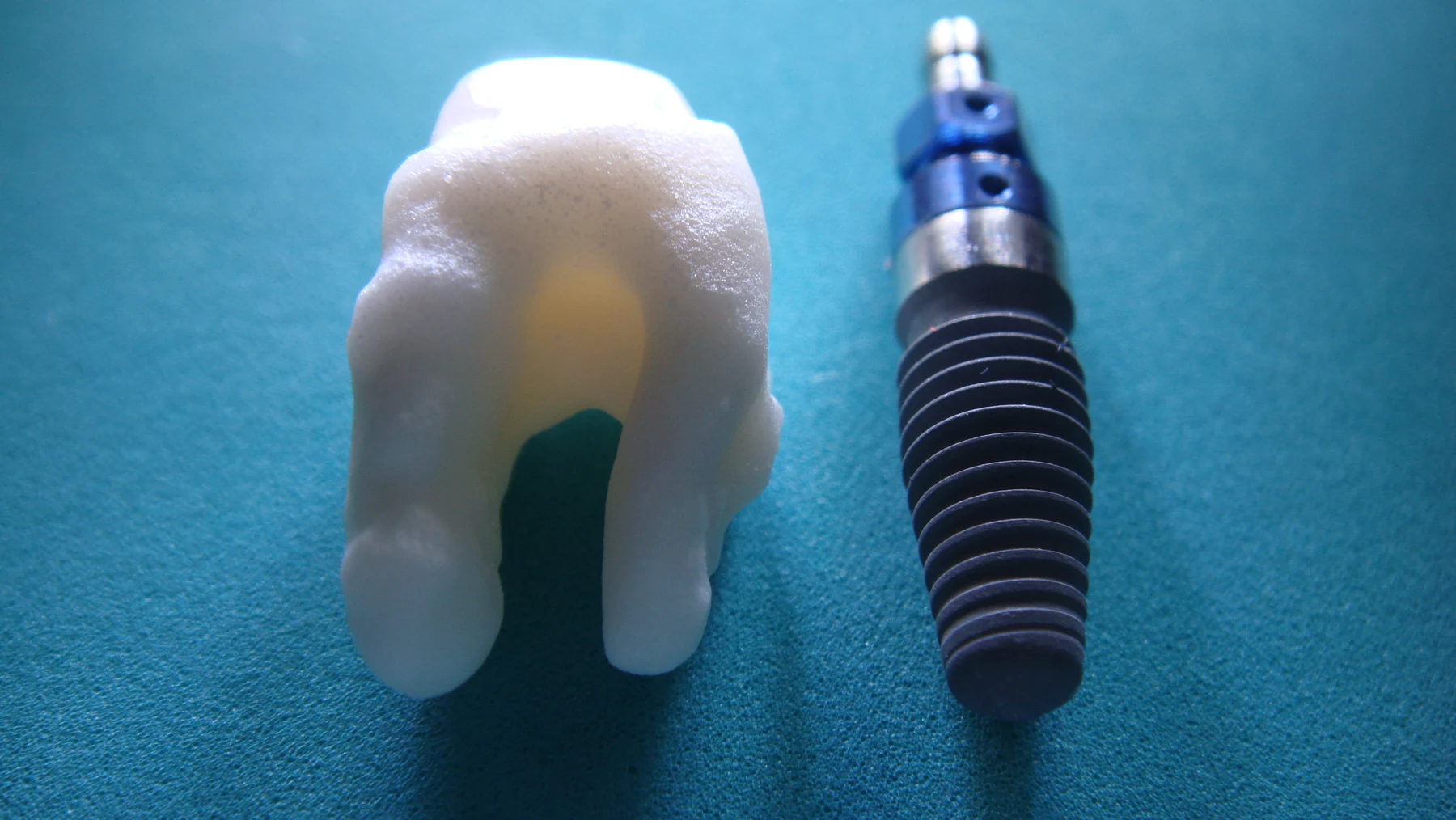
What changes when a metal device spends years inside the body instead of sitting on a shelf? The body is warm, wet, and chemically active, and an implant may experience motion, contact with tissue, and repeated loading. Corrosion—the chemical degradation of a material—can therefore matter both to the device’s performance and to the body’s response to material released from its surface.
A surface is part of the device
A medical device is not just its visible shape. Its surface meets fluids and tissues, and its composition and manufacturing affect that contact. Metals, polymers, and ceramics are all used in devices, including ones that remain in contact with the body for extended periods [1]. A material that performs well in one place or use cannot automatically be assumed to behave identically in another.
Corrosion is a set of processes in which a material changes through chemical interaction with its environment. Wear is physical material loss, often associated with friction or repeated movement. They can occur together: motion may expose fresh surface, while chemical conditions affect how that surface changes. The FDA notes that testing may model wear and corrosion for a specific device in its intended environment, such as a joint or blood vessel [1].
Why the body’s environment makes a difference
An implant is surrounded by fluid containing salts and biological molecules, while nearby tissues and cells can respond to the material or to products released from it. Its location matters: a joint experiences movement and load, whereas a device in a vessel faces different forces and tissue contacts. The FDA’s material review therefore considers the device’s intended use and function, along with the specific material properties [1].
Picture a small metal component in a moving joint. Repeated contact may gradually change the surface; corrosion can alter it chemically, and tiny particles or dissolved material may enter nearby tissue. That chain does not establish that a particular implant will cause harm. It explains why investigators examine both what a device is made of and how it is used, and why a material’s name alone cannot settle safety.
Biocompatibility is a risk assessment
Biocompatibility means evaluating how the body may respond to a device’s materials. Manufacturers assess the device, its components and manufacturing processes, the anatomical location, and the frequency and duration of exposure, then provide supporting information for regulatory review [1]. This is a risk-based evaluation rather than a claim that a material is universally harmless in every form or application.
Possible biological responses can involve immune or toxicological effects, but the relationship between a material, a released product, and a clinical outcome can be complex. The FDA has identified remaining knowledge gaps in understanding responses to metal-containing implants and in developing clinically relevant tests for corrosion and wear products [1]. A laboratory measure of a surface change is informative, but by itself it does not tell the whole story of a person’s response.
Sterilization plasma is a different use of chemistry
The word “plasma” can appear in discussions of both materials and medical equipment, but it describes different contexts. Hydrogen peroxide gas-plasma sterilization takes place in an enclosed chamber: radio-frequency energy excites the gas and generates reactive species that help inactivate microorganisms on compatible instruments [2]. It is a process for sterilizing devices outside the body, not a treatment that should be confused with an implant material or with plasma used in wound research.
The distinction matters because equipment sterilization and implant corrosion answer different questions. Sterilization asks whether a process can inactivate microbes on an instrument under specified conditions. Implant evaluation asks how a finished device’s materials behave in its intended bodily environment over time. The CDC notes that sterilization effectiveness can depend on factors such as narrow lumens and organic material, while the FDA’s device-material review considers wear, corrosion, biocompatibility, and biological response [2] [1]. Both involve materials science, but the mechanisms and purposes are separate.
Sources & further reading
Prepared for the independent PSI Center reading library. About edition dates and source checking.
This explainer describes scientific principles. It does not assess individual treatment choices.