What happens after a medical device enters the body and stays there? The material meets living tissue, which responds to the object as something foreign. That response is not a side issue separate from engineering: scar formation, inflammation, corrosion, or tissue integration can change how well the device works. A successful implant therefore depends on both its designed properties and the body’s reaction over time.
The body does not meet a material passively
Biomaterials include metals, polymers, and ceramics used in devices ranging from dental fillings to spinal cord stimulators [2]. When a foreign object enters the body, the immune system may attempt to degrade it and can eventually surround it with scar tissue. This foreign-body response, or FBR, can hinder device function, cause pain, and lead to additional surgeries [2]. The device’s physical presence changes the local environment, and the body’s response changes the conditions the device must operate within.
Think of a sensor placed in a stream. The sensor may be carefully calibrated in the lab, but deposits accumulating on its surface can change what it measures. In an implant, the biological coating is not simply dirt; it is tissue and immune activity. Still, the analogy shows why performance cannot be predicted from the bare material alone.
Material choices shape the interaction
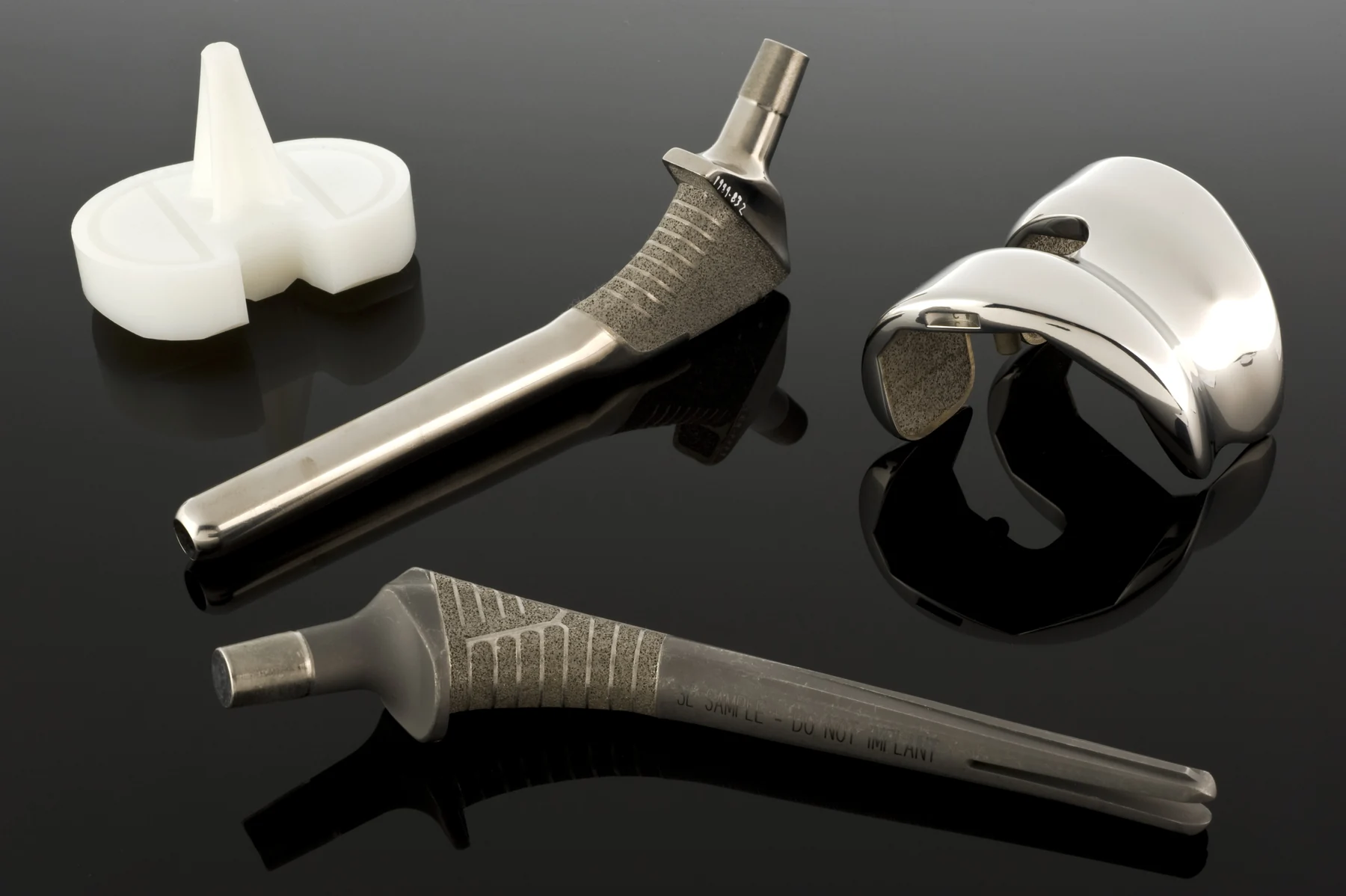
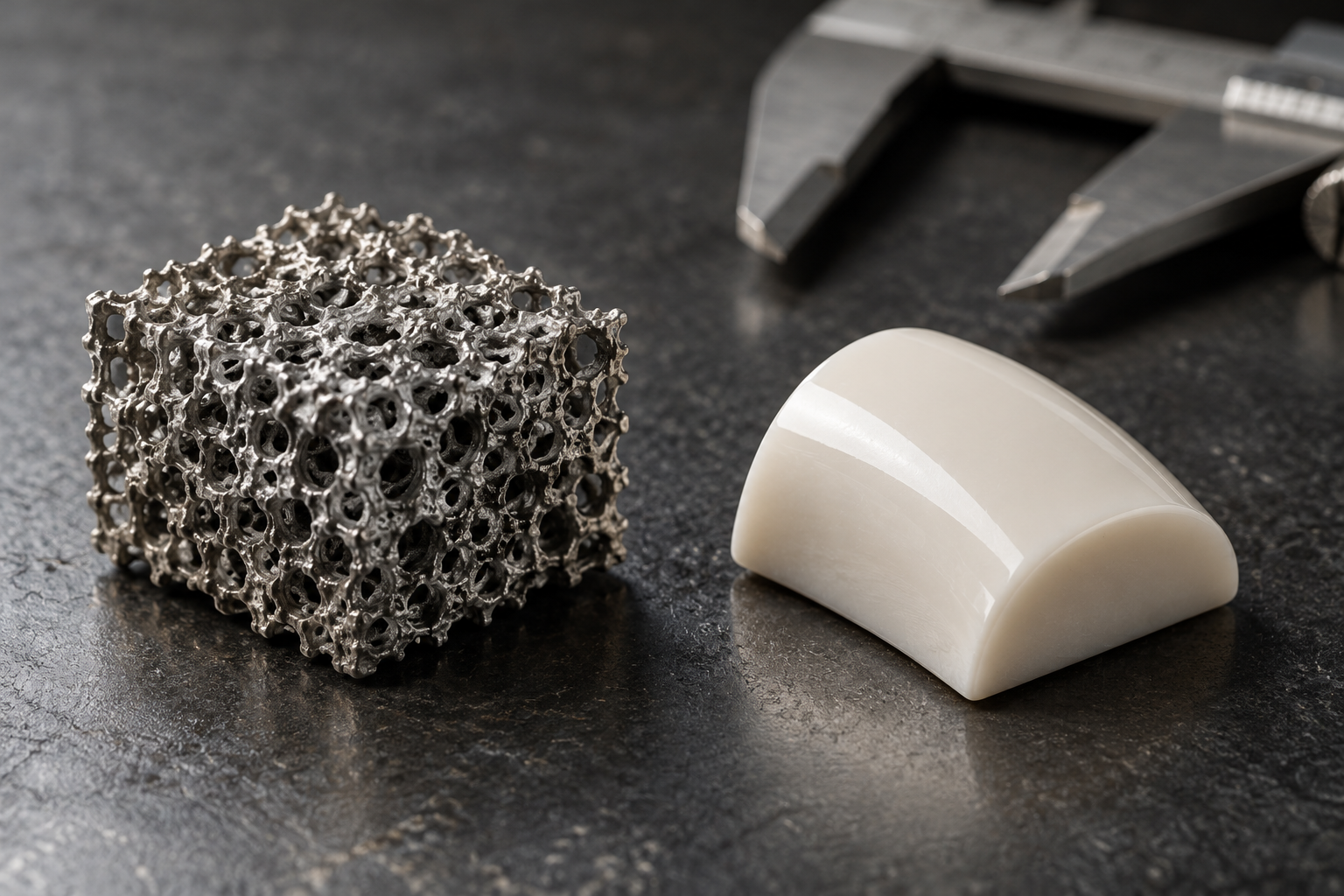
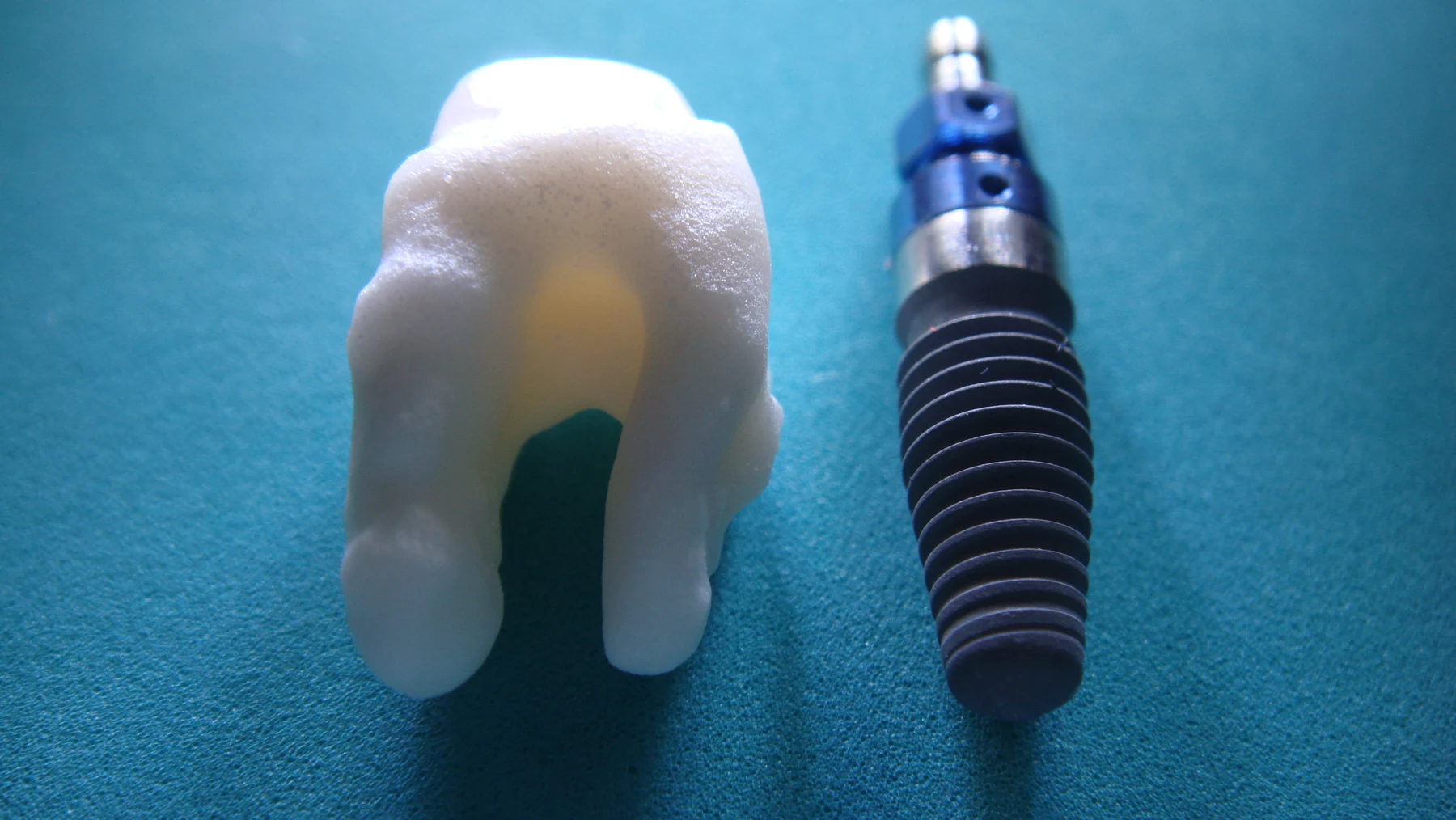
Some devices use corrosion-resistant and biologically inert materials such as titanium or silicone rubber to minimize the foreign-body response. Other strategies include biodegradable materials that break down before a chronic response becomes a problem, or materials designed to resemble aspects of the extracellular matrix—the scaffolding cells naturally grow within [2]. These approaches try to make the device’s surface and mechanics more compatible with its location and purpose.
The intended job matters. A hip replacement must bear loads and resist repeated wear; an artificial blood vessel needs flexibility for pulsating flow; an intraocular lens must transmit and refract light appropriately [2]. A material that is suitable for one function may fail at another. Mechanical strength, flexibility, optical behavior, chemical stability, and biological response are all part of the design problem.
Integration can help, but is not automatic
A biomaterial can sometimes encourage tissue to grow into or around it. Hydroxyapatite, a mineral abundant in bone, is used as a coating on some orthopedic implants to encourage tissue ingrowth and support device longevity [2]. That example illustrates a deliberate interaction: the material is chosen partly for the way it presents a familiar chemical environment to surrounding tissue.
But a promising design principle does not prove that every device using it will integrate successfully in every person. The body’s response depends on the device, its location, manufacturing, duration of exposure, and other features. Biomaterial research includes animal studies and experimental strategies; these should not be mistaken for evidence that all such technologies are proven clinical treatments [2].
Evaluation follows the device into use
The FDA considers a device’s specific material properties, intended use, and function when evaluating safety and effectiveness. Manufacturers assess possible adverse biological responses in the context of the device, its components and manufacturing, anatomical location, and frequency and duration of exposure [1]. For metals, engineering tests may examine wear and corrosion mechanisms under conditions relevant to the intended environment [1].
This is why a material name alone cannot summarize an implant’s safety. The same substance can be used in different forms, places, and durations, with different mechanical demands and biological contact. The body is part of the operating system: immune activity and tissue behavior influence whether a device remains functional. Device performance is therefore a relationship among material, design, use, and host response, assessed through evidence that matches the actual application.
Sources & further reading
Prepared for the independent PSI Center reading library. About edition dates and source checking.
This explainer describes scientific principles. It does not assess individual treatment choices.