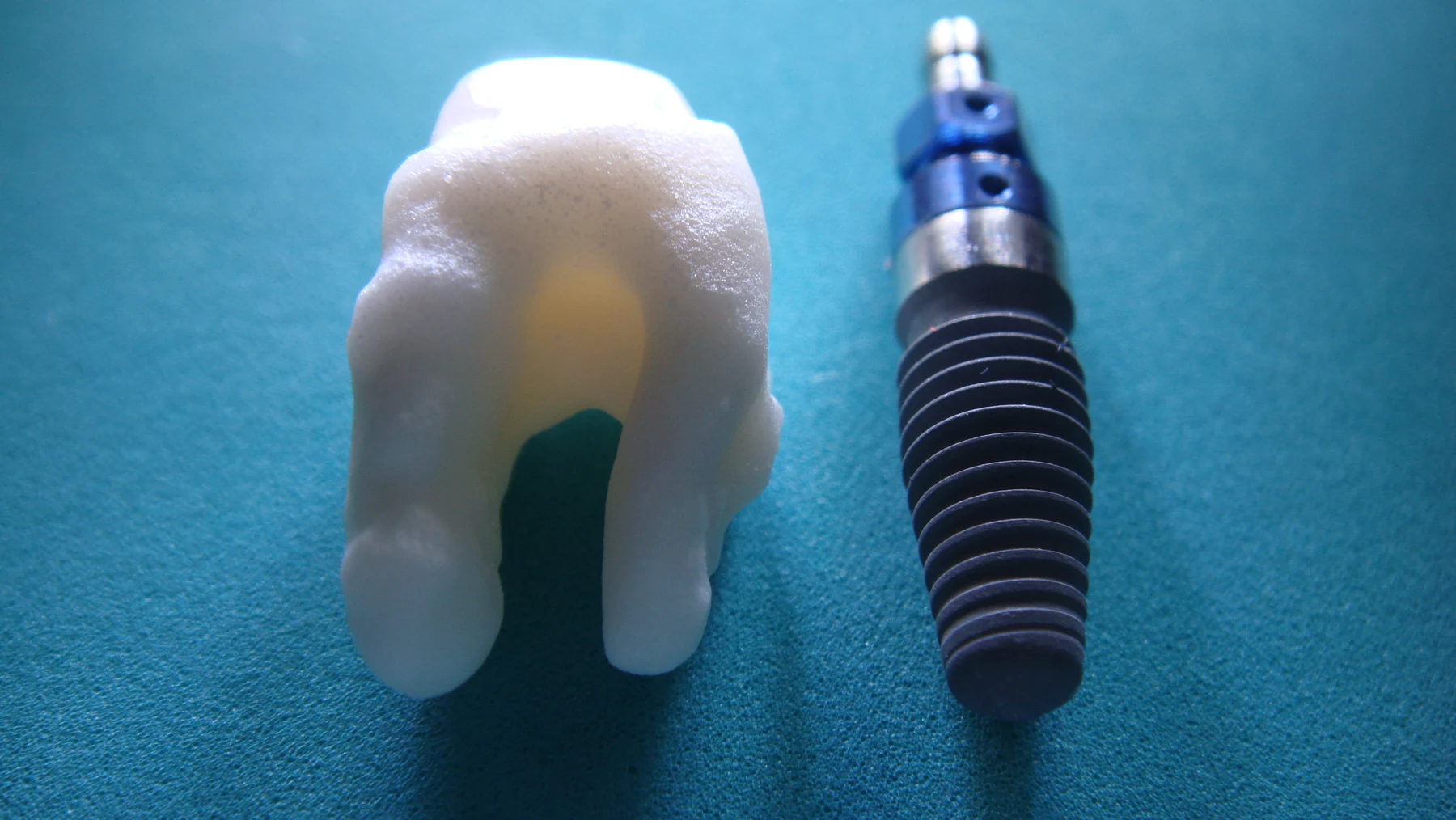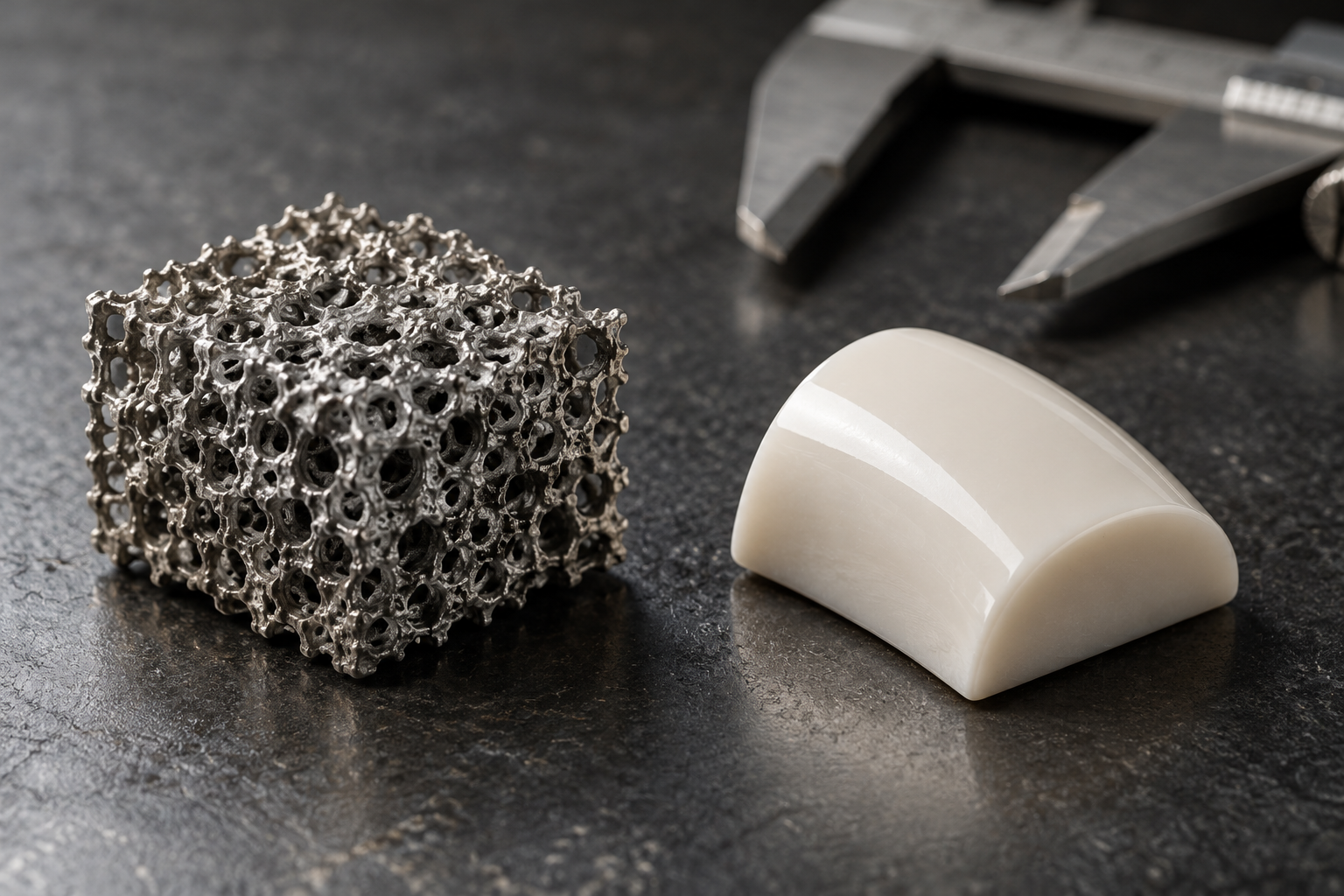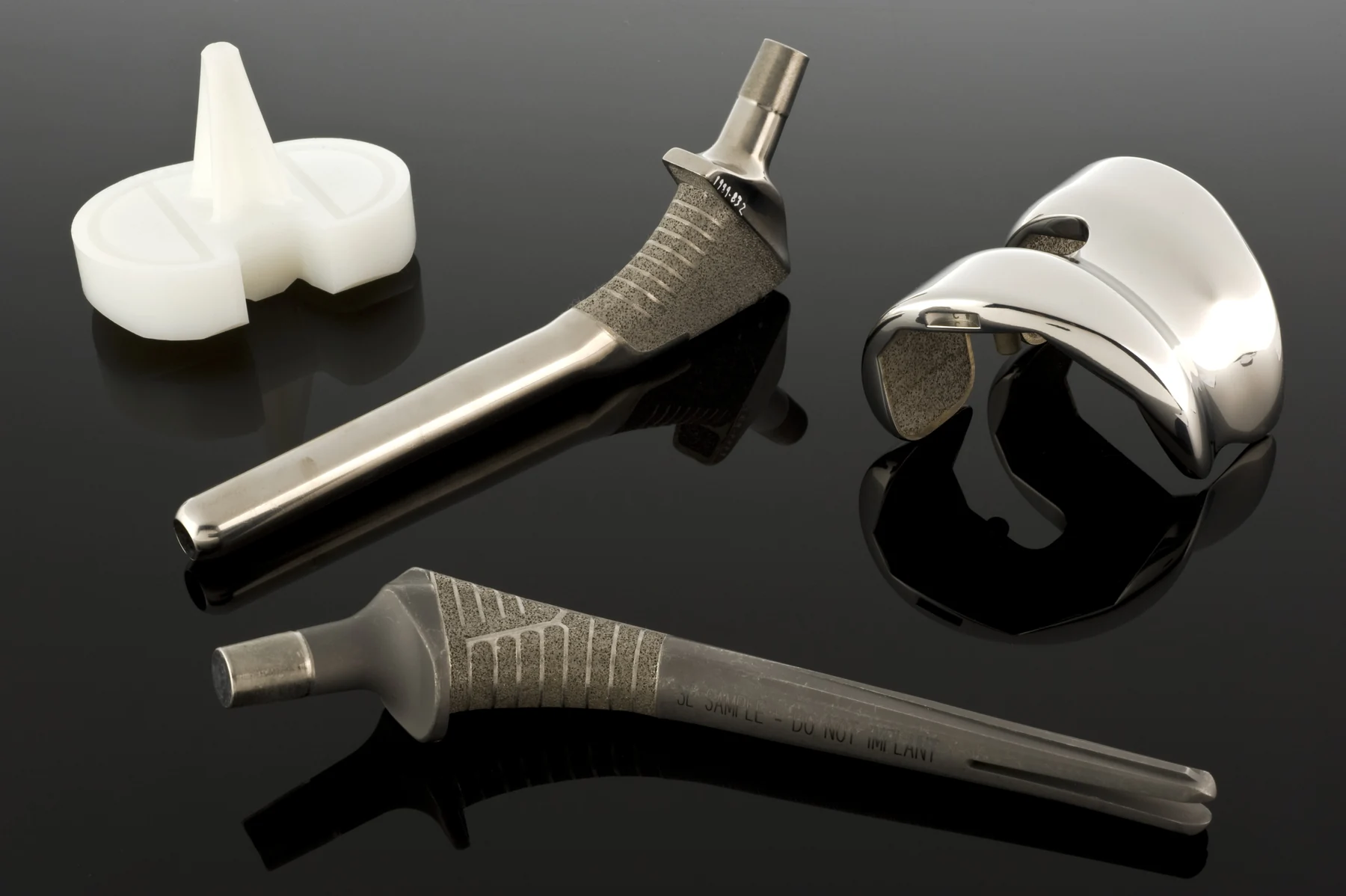
What happens when a metal implant gradually meets friction, fluid, and living tissue? The metal is not simply a fixed object once inside the body. Depending on its design and surroundings, wear or corrosion can release material that interacts with nearby biology. The response is not automatic or identical for everyone: it depends on the material, the device’s purpose, where it sits, and how long exposure continues.
A material meets a particular environment
Medical devices use metals, polymers, and ceramics, sometimes in contact with the body for long periods. In evaluating a device, the FDA considers material properties together with intended use and function; material safety is part of the broader assessment of whether the device is safe and effective [1].
A hip joint and a small implant in a blood vessel face different mechanical conditions. A load-bearing joint undergoes repeated motion and force, while a vascular device must coexist with flowing blood and flexible tissue. The same material may therefore encounter distinct stresses depending on anatomical location and device design. Biomaterials research emphasizes that metals and ceramics can be chosen for strength and wear resistance in load-bearing devices, while other applications need different properties [2].
Wear and corrosion can make particles
Wear is material loss associated with motion or contact; corrosion is chemical change in a material caused by its environment. The two processes can occur through different mechanisms, and a device’s surroundings influence which are relevant. FDA describes engineering tests that model potential wear and corrosion for a specific device in its intended environment [1].
A useful picture is a hinge moving repeatedly in a damp, salty setting. Its surfaces may gradually change through friction and chemistry. An implant is more complex: body fluids, tissue, forces, surface coatings, and manufacturing details all affect what is released and where it goes. This is why a general statement about “metal” cannot by itself predict the behavior of every implant.
The immune system responds to foreign materials
The body commonly reacts to foreign objects. The foreign body response can include efforts to degrade an object and eventual encasement in scar tissue; this process may hinder device function, cause pain, or contribute to additional surgery [2]. With metal-containing implants, the FDA notes that potential biological responses and their clinical manifestations are areas of continuing scientific attention [1].
A response can vary with the person and the implant. The FDA identifies open questions about systemic effects, factors shaping individual responses, and ways to predict or identify a heightened response. Its research agenda includes clinically relevant tests, the role of anatomical location and device characteristics, and standardized analysis of wear and corrosion products [1]. Such uncertainties are reasons for careful evaluation, not evidence that every implant causes harm.
Why safety assessment is device-specific
Biocompatibility means evaluating how the body may respond to the materials in a device. Manufacturers’ assessments can consider material components, manufacturing processes, the intended anatomical location, and the frequency and duration of exposure. The FDA describes this as a risk-based approach, with information submitted to support material safety [1].
Design can also shape the tissue interface. Biomaterials may be selected to resist corrosion, or engineered to resemble aspects of the extracellular matrix—the natural scaffold around cells—to encourage integration. For example, hydroxyapatite, a mineral found in bone, is used in some orthopedic implant coatings to encourage tissue ingrowth [2]. These strategies address particular design goals; they do not establish that every material or implant is suitable for every person.
Sources & further reading
Prepared for the independent PSI Center reading library. About edition dates and source checking.
This explainer describes scientific principles. It does not assess individual treatment choices.