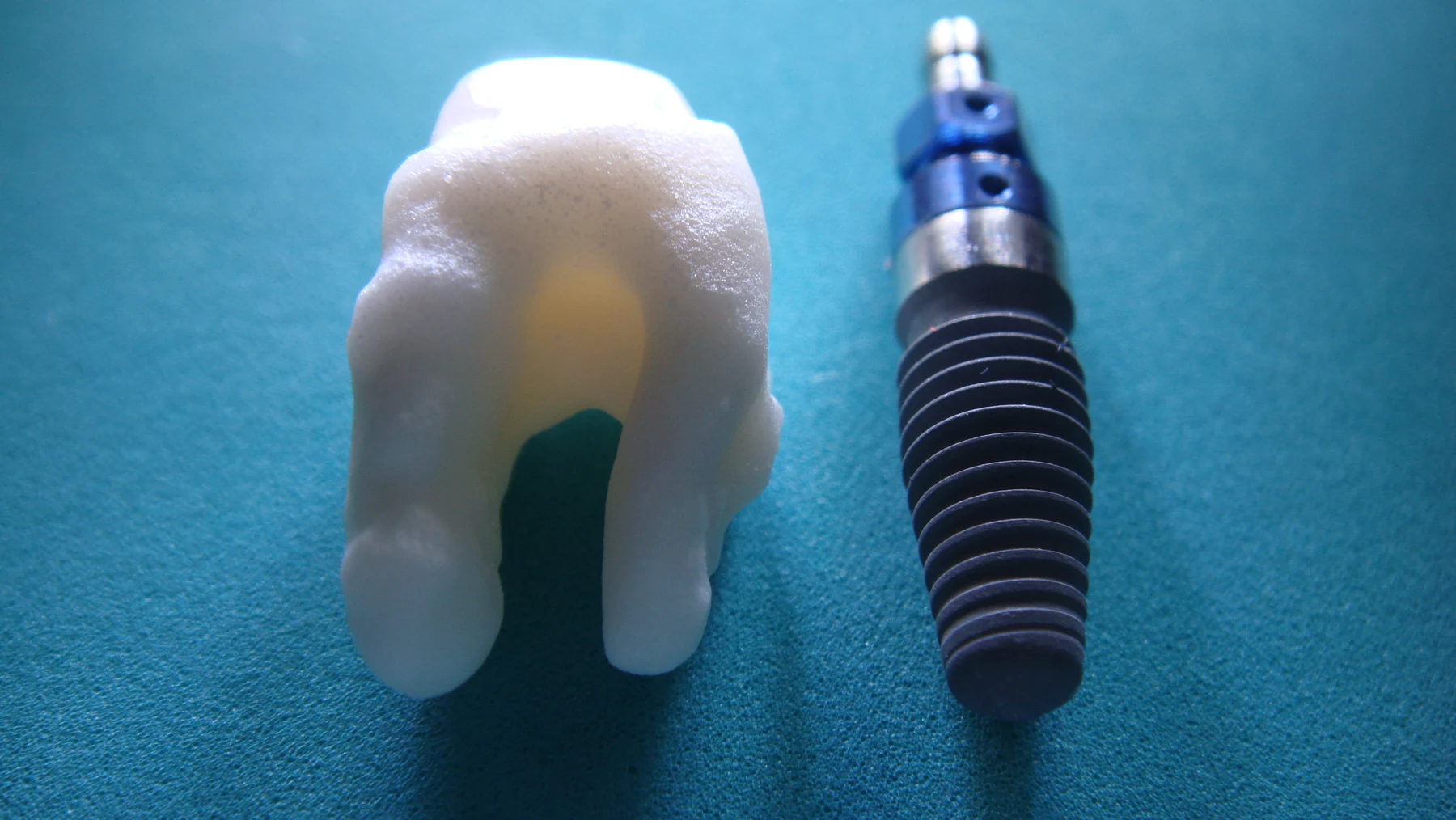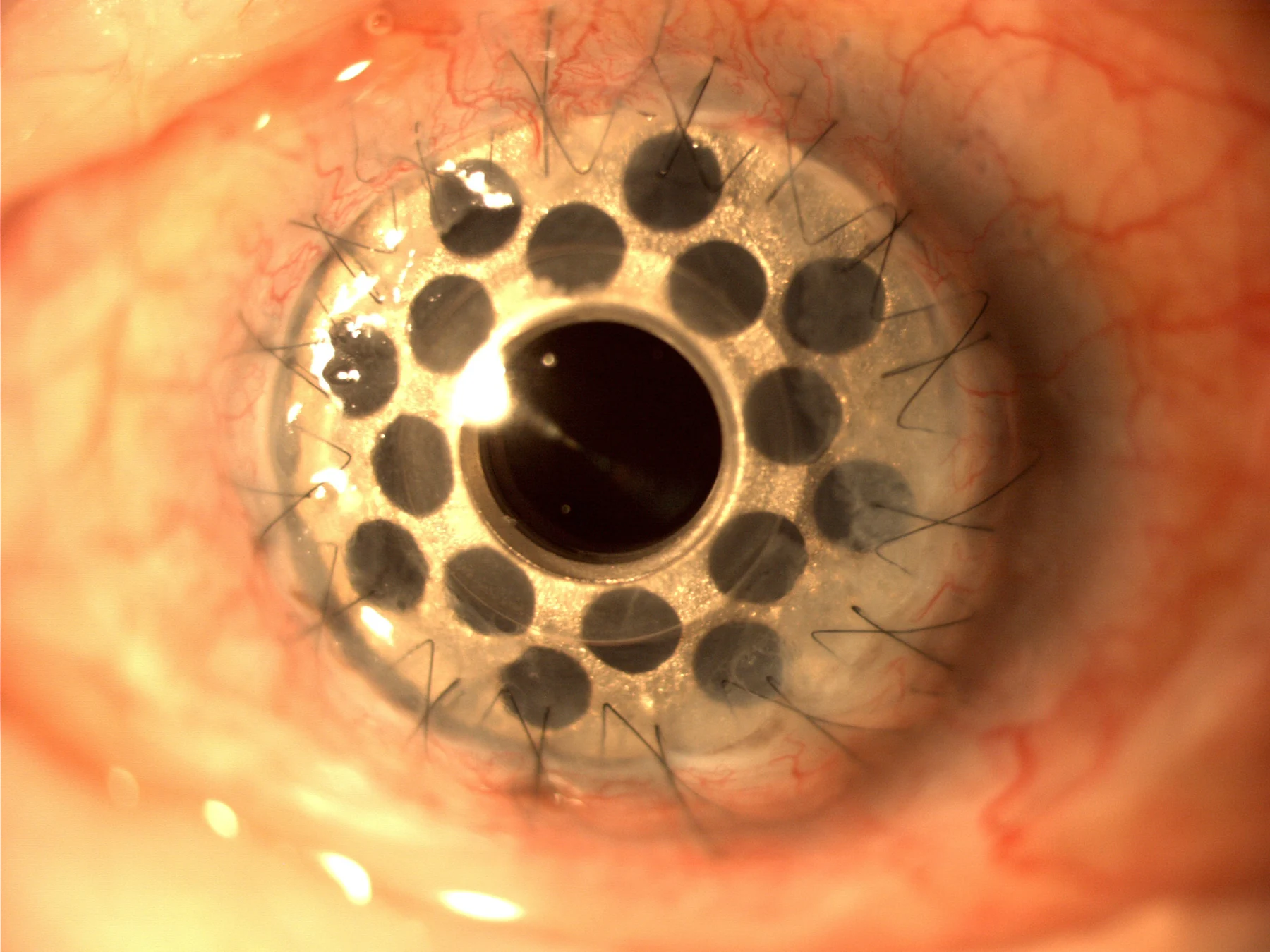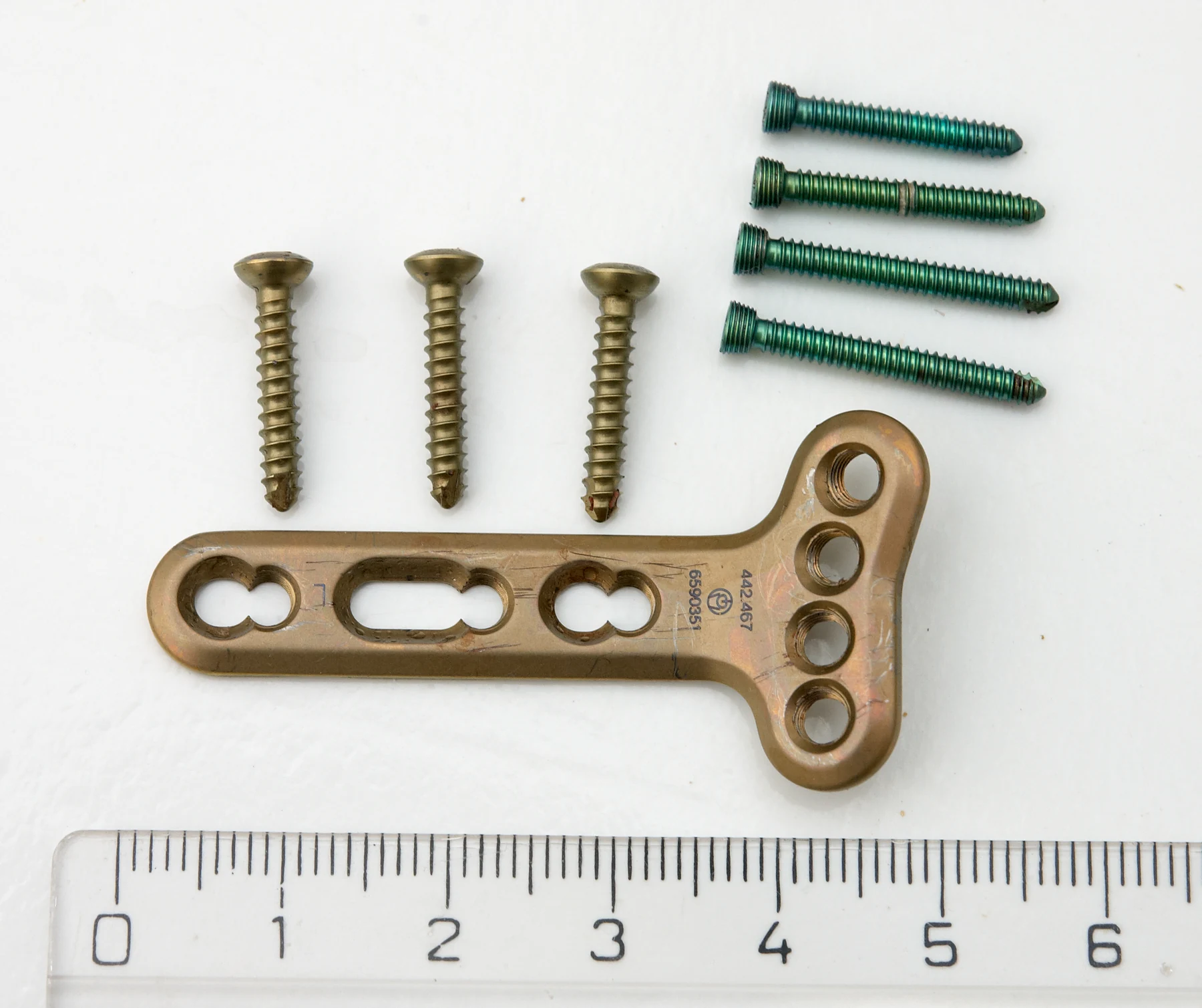
What should the surface of a metal hip implant offer to the bone surrounding it? The answer is not simply hardness. The surface is where an engineered object meets cells, fluid, and mechanical load, so its chemistry and texture can influence how tissue interacts with it. Hydroxyapatite, a mineral abundant in bone, is used as a coating on some orthopedic implants to shape that boundary.
The interface is part of the design
A biomaterial is a material used in a medical device or other health application that interacts with the body. It might be a metal, ceramic, polymer, or a combination arranged as a part, coating, film, or scaffold. The body does not encounter an implant as an abstract engineering specification; it encounters the actual exposed surface, where biological responses begin. [2]
That contact can bring a foreign-body response: the immune system may try to degrade an unfamiliar object and eventually surround it with scar tissue. For devices, this response can hinder function, cause pain, or contribute to further surgery. Designers therefore consider not only strength but also corrosion resistance, flexibility, surface structure, and how a material’s chemistry compares with the tissue around it. [2]
A mineral familiar to bone
Hydroxyapatite is a calcium phosphate ceramic and an abundant mineral in bone. A coating made from it can present a bone-like chemical cue at the surface of an implant. NIBIB describes hydroxyapatite coatings as one approach that can encourage tissue ingrowth and support implant longevity. This is a materials strategy: it changes the interface the body encounters, rather than turning the whole implant into bone. [2]
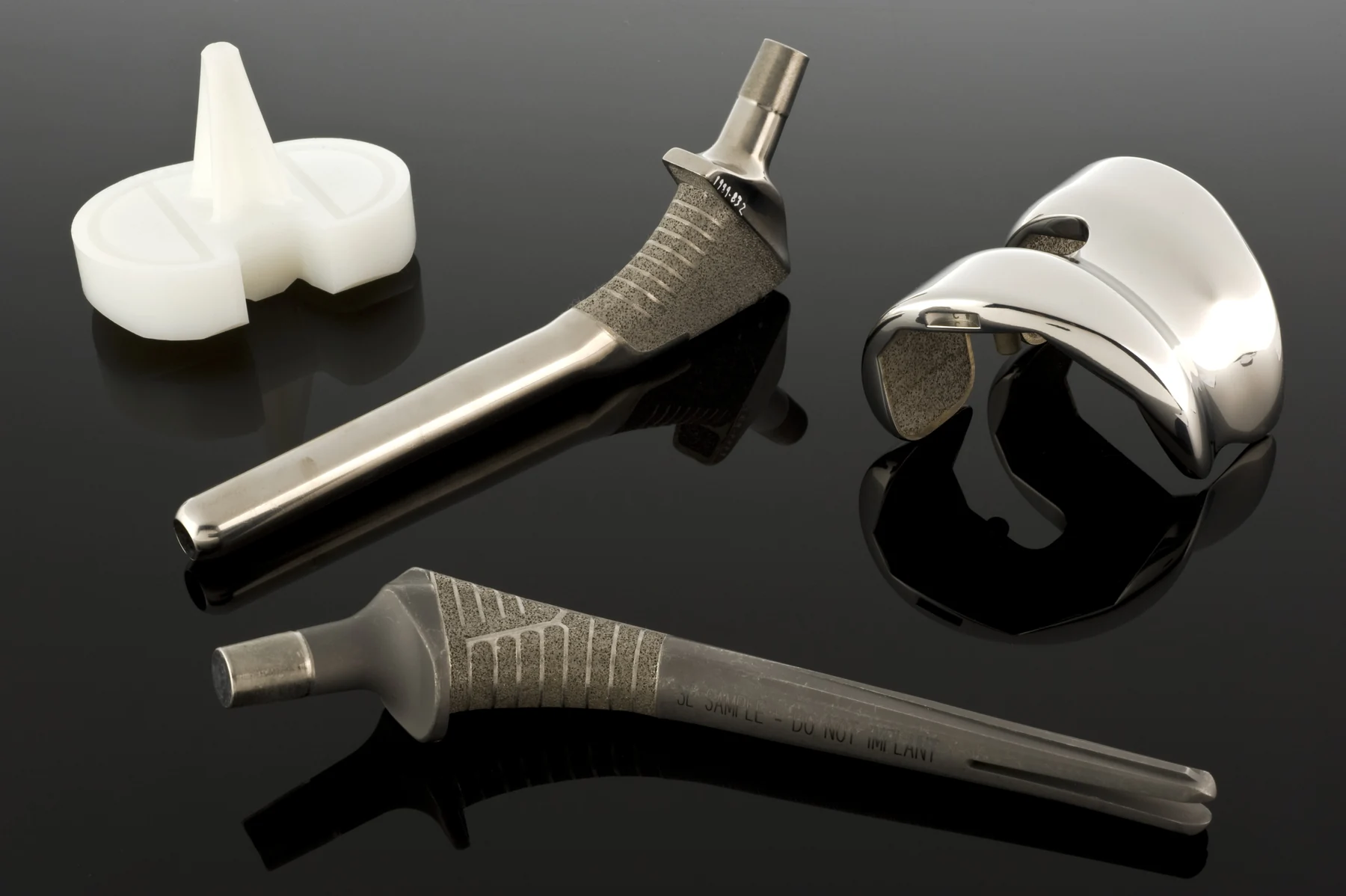
One FDA-cleared hip stem illustrates how multiple surface features can coexist. The Summit DuoFix stem is made from a titanium alloy, has a porous coating of sintered titanium beads over part of its surface, and carries a thin hydroxyapatite layer sprayed over that porous coating. The stem is a press-fit design, meaning it is seated without bone cement; the FDA document describes its intended use in hip replacement. [1]
Texture and chemistry do different jobs
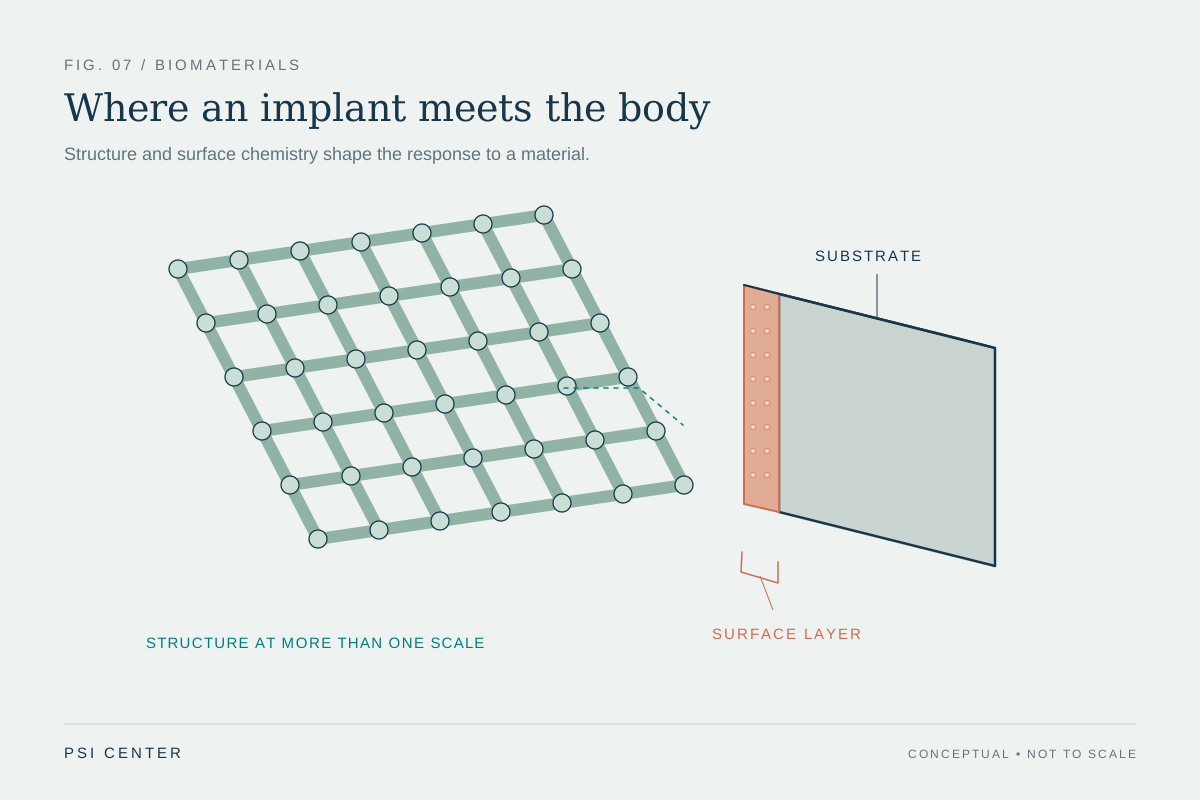
Imagine a smooth metal post and a roughened post made of the same alloy. Their bulk strength could be similar, yet their surfaces offer different landscapes to surrounding tissue. A porous layer adds physical structure; a mineral coating adds a chemical composition associated with bone. The distinction matters because an implant’s success depends on more than whether the material can bear force: the interface must remain compatible with repeated loading and the surrounding biology.
The coating in the cited hip device is applied by plasma spraying. In that manufacturing process, the powder is deposited as a thin layer over the porous surface. Here, plasma is a tool for applying a material coating; it is not a treatment delivered to a patient. The FDA summary identifies the coating’s composition and manufacturing arrangement, while NIBIB provides the broader rationale for using bone-related materials at orthopedic interfaces. [1] [2]
A coating is not a guarantee
An appealing biological rationale does not mean every coated implant performs identically or that every biomaterial is clinically proven for every use. The FDA document concerns one particular hip system and a specific regulatory submission; it describes nonclinical testing and substantial equivalence to predicate devices. It does not establish that a coating alone determines an individual’s outcome or that the same design applies to all implants. [1]
The broader engineering problem remains a balance. A hip stem must be strong and wear-resistant enough to support motion, while its bone-facing surface must interact appropriately with tissue. Hydroxyapatite offers one way to influence that local contact. Thinking of an implant as a structure plus an interface makes clear why a thin surface layer can be meaningful even when it forms only a small fraction of the device. [2]
Explore the physics: an explanatory diagram
Sources & further reading
Prepared for the independent PSI Center reading library. About edition dates and source checking.
This explainer describes scientific principles. It does not assess individual treatment choices.