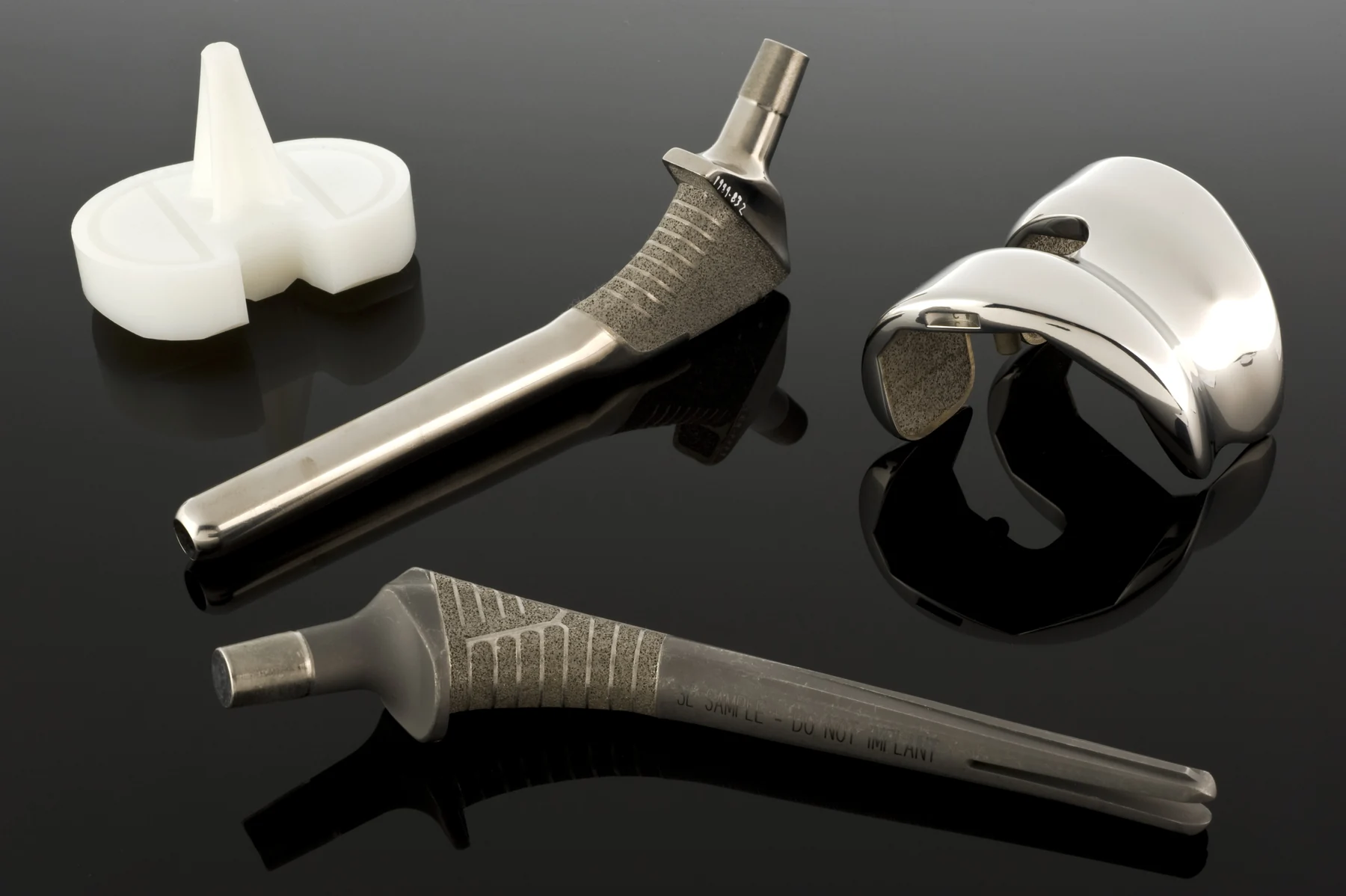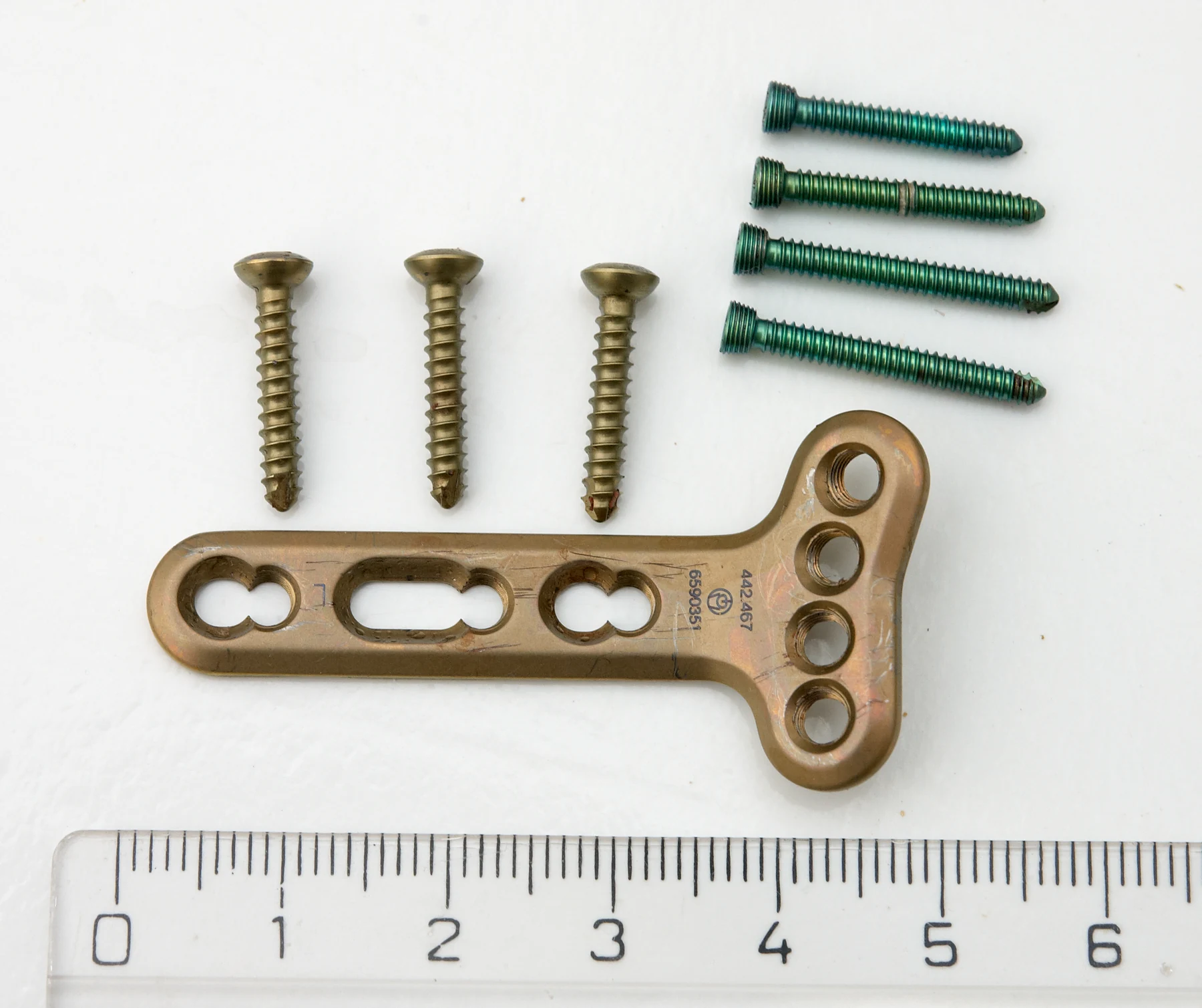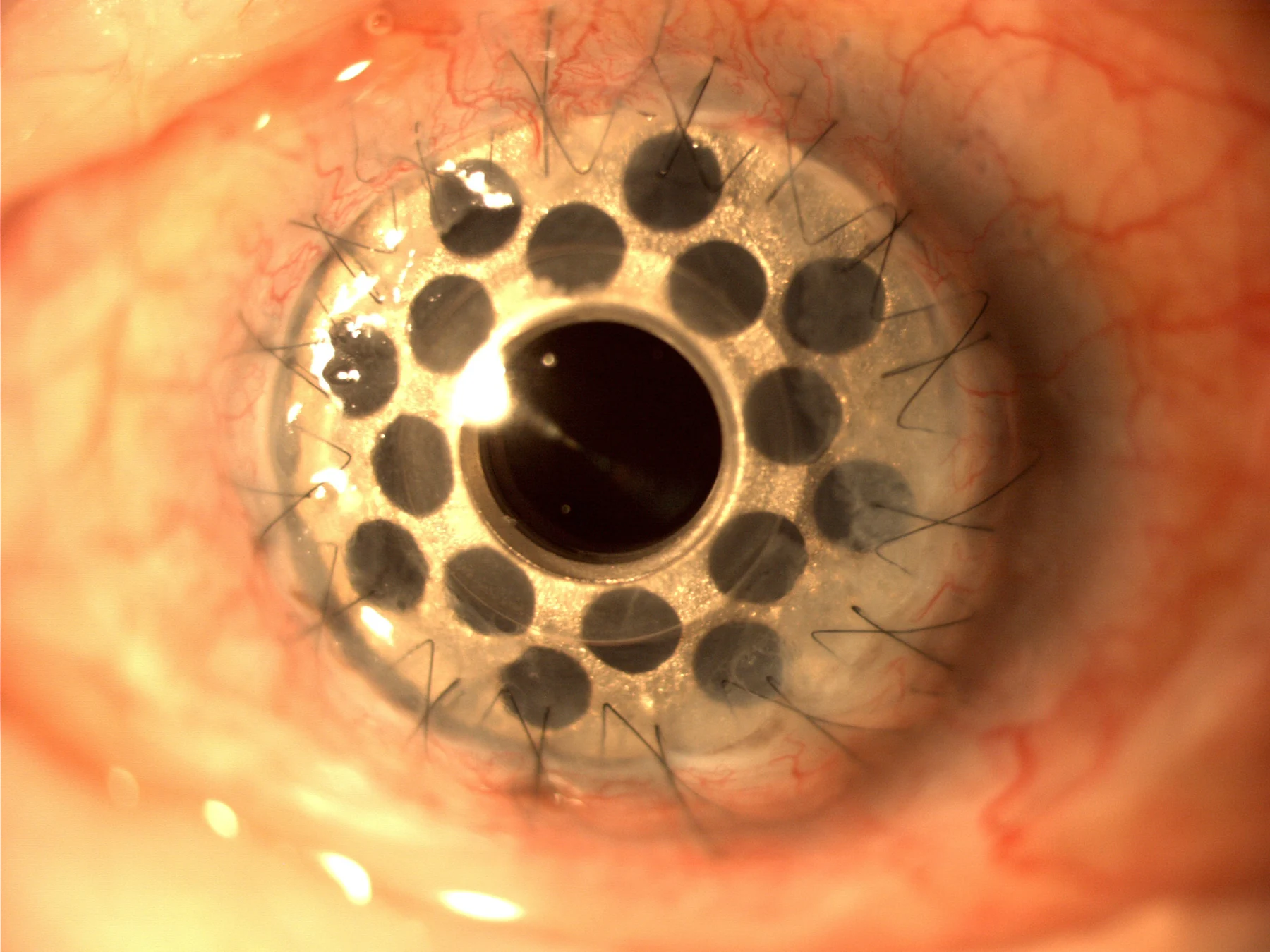
When a metal implant sits in bone, what does the surrounding tissue actually encounter: the bulk metal, or the surface facing it? Often the surface is the immediate interface. A thin coating can change that interface’s chemistry and structure, influencing how tissue and device meet. The effect depends on the coating, the underlying implant, and the biological setting, so a surface modification should be understood as a design choice with a specific purpose.
The interface is a living boundary
A biomaterial is a material designed to interact with the body for a medical purpose. Metals, polymers, ceramics, and natural materials can form devices such as joint replacements, heart valves, and dental implants [1]. Once implanted, a surface meets proteins, fluid, and cells before the material’s interior matters. The body may respond to a foreign object with inflammation and eventually scar tissue, a process called the foreign body response.
Surface properties can influence this response. Materials may be selected or modified to resist corrosion, reduce unwanted reactions, or encourage tissue integration. NIBIB describes hydroxyapatite, a mineral abundant in bone, as a common orthopedic coating intended to encourage tissue ingrowth [1]. That goal is about shaping the interface, not making the entire implant behave like natural bone.
A thin layer can have a specific job
Consider a cementless hip stem: it must be seated and supported by bone, while its surface contributes to the contact with that bone. In the FDA-cleared Summit DuoFix example, a titanium stem has a porous titanium surface with a thin hydroxyapatite layer applied over it by plasma spraying [2]. The coating changes the outermost material encountered at the surface while the stem’s underlying structure remains titanium.
The word “plasma” here names an industrial coating process, in which material is sprayed onto the component. It is unrelated to cold atmospheric plasma wound treatment. The FDA document describes the device configuration and its intended use as hip arthroplasty; it does not establish that every hydroxyapatite coating or coated implant produces the same result [2].
Structure and chemistry work together
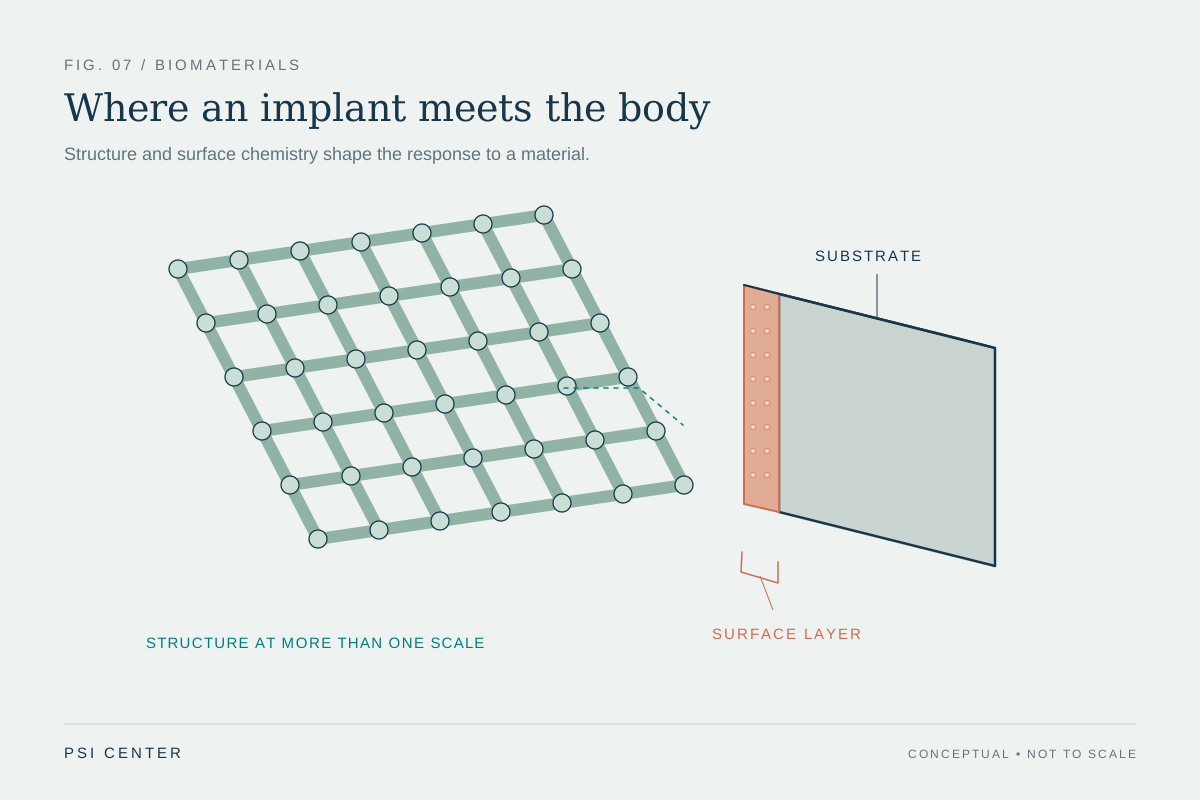
A surface is not only a chemical recipe. Porosity and roughness change the physical landscape available to cells and tissue. A porous layer can offer spaces for tissue to grow into, while a bone-like mineral may present a familiar chemical composition. These are distinct design features that can act together at the interface [1].
The same principle applies more broadly. Biomaterials can be engineered to match aspects of the extracellular matrix—the scaffolding around cells—in stiffness, structure, or composition. Such matching may provide signals that support integration, but the response depends on the tissue, implant use, and complete design. A coating alone cannot settle questions of durability, safety, or long-term performance.
A material claim needs its scope
Regulatory documents describe a particular device and its evidence. The Summit DuoFix FDA submission identifies a titanium hip stem with porous titanium and hydroxyapatite coating, and reports nonclinical testing such as biological safety and coating characterization [2]. Those details define the case; they should not be generalized into a claim that all biomaterials are clinically proven or that a coating guarantees tissue integration.
The useful way to think about a coating is as a carefully chosen boundary layer. It can alter what the body first encounters and may help guide the interaction, while the implant’s shape, mechanics, and use remain part of the picture. Surface engineering is therefore one lever in device design, with its value determined by evidence for the specific product and application.
Explore the physics: an explanatory diagram
Sources & further reading
Prepared for the independent PSI Center reading library. About edition dates and source checking.
This explainer describes scientific principles. It does not assess individual treatment choices.