How can a ceramic material be attached to the surface of a metal hip implant? One manufacturing route uses plasma spraying: a stream of hot, ionized gas carries coating material toward a prepared surface, where particles deposit as a layer. The word “plasma” can suggest a medical therapy, but here it names a state of matter used in fabrication. The goal is to engineer an interface between implant and surrounding bone.
What makes the spray a plasma
Plasma is a partially ionized gas containing free electrons, ions, and neutral atoms or molecules. Because charged particles can move, plasma can conduct electric current and respond to electric and magnetic fields [2]. This distinguishes it from an ordinary neutral gas, although both can flow through equipment as a stream.
In plasma spraying, energy creates a hot plasma that transfers heat to coating feedstock and propels material toward a component. The deposited material is distinct from the plasma itself: the gas supplies the conditions for processing, while the coating remains on the implant surface after manufacture. This is a materials process, not a treatment that exposes a patient’s tissue to plasma.
Building a layered surface
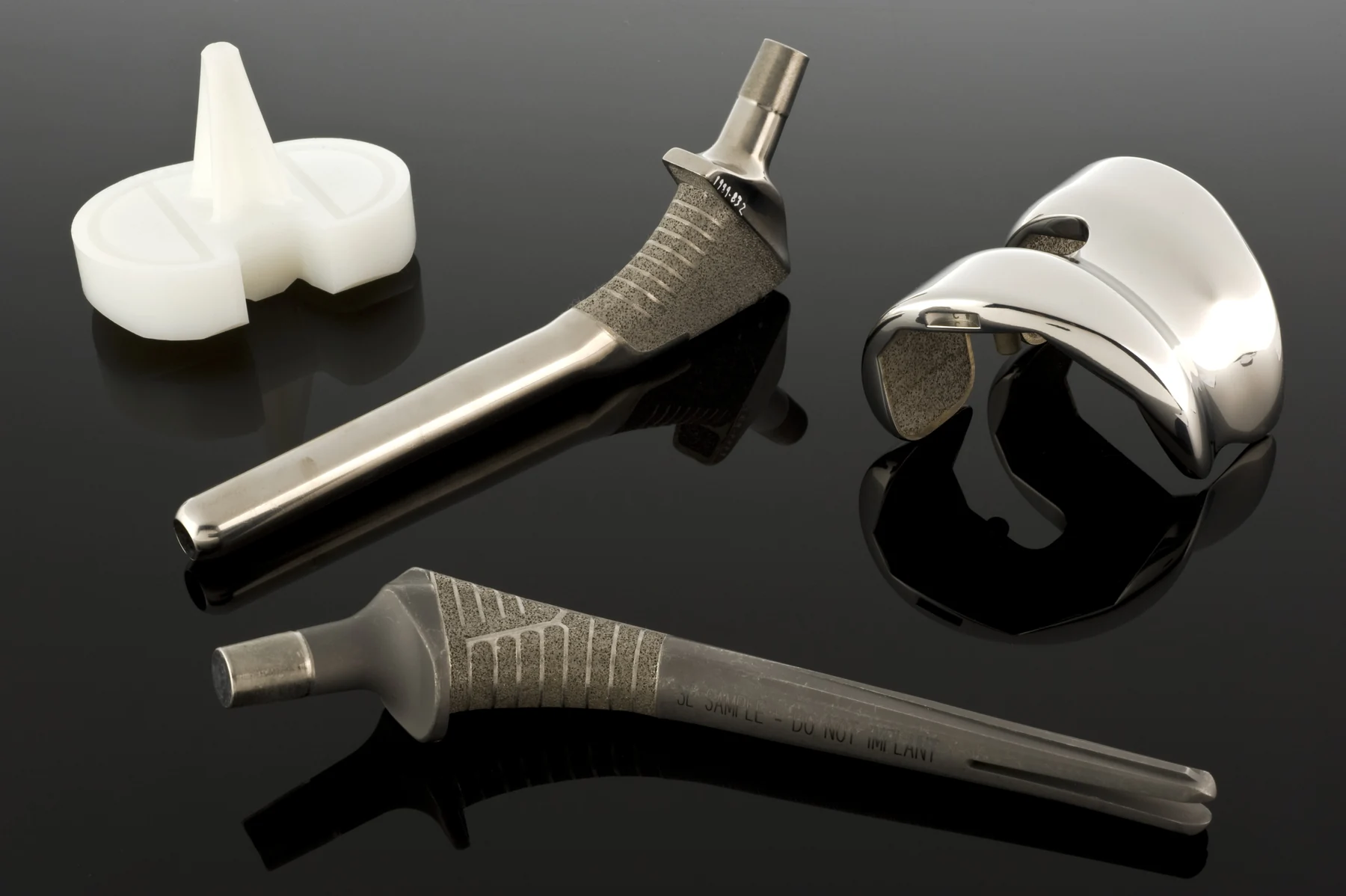
An FDA 510(k) document for a particular hip stem describes forged titanium with a sintered titanium-bead porous coating and a thin hydroxyapatite layer sprayed over it by a plasma-spray process [1]. Hydroxyapatite is a calcium phosphate ceramic related to the mineral component of bone. In this example, the coating sits above a porous metal surface, producing a layered interface rather than changing the entire implant into ceramic.
The sequence matters. The titanium structure provides the implant’s metal body; the porous region changes the surface texture; the hydroxyapatite layer adds another material at the boundary with tissue. A coating’s composition and placement are design features, but they do not by themselves tell us how an individual implant will perform in every patient or over every timescale.
The interface is the engineering question
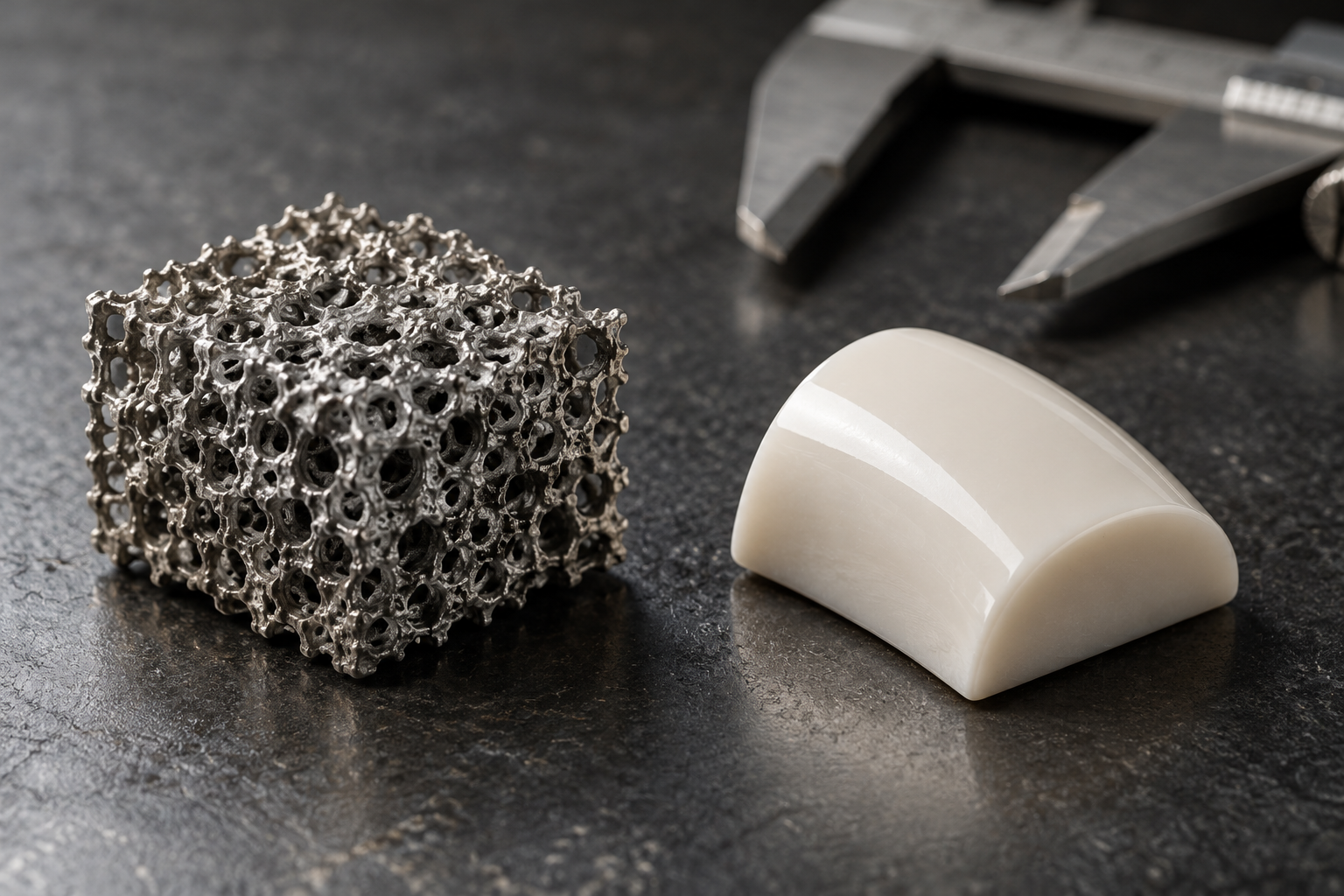
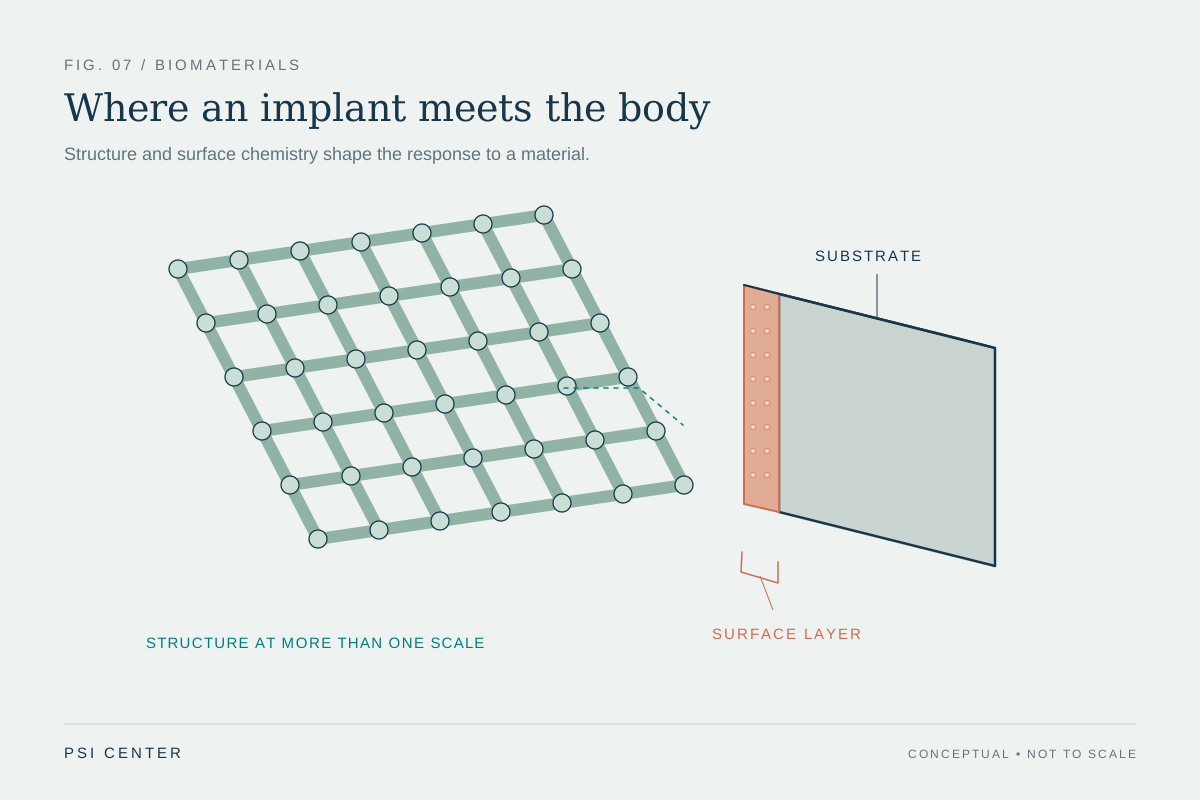
An implant must meet forces and tissues at its surface. A porous coating can create a textured region, while a ceramic coating can present a different chemistry from the underlying metal. Engineers therefore evaluate the coating as part of the whole device: its attachment, uniformity, material properties, and how the complete component is manufactured all matter.
The FDA document’s particular submission describes a manufacturing-site change and related process details for the named hip system, and reports nonclinical testing including biological safety, sterilization validation, and coating characterization [1]. Those details apply to that device record. They do not establish that every plasma-sprayed implant has the same coating or evidence, nor do they substitute for clinical outcome data.
Manufacturing plasma is not medical plasma
The same word labels different technologies. Plasma spraying uses hot plasma to process and deposit material during manufacturing [2][1]. Cold atmospheric plasma is investigated for biological effects on living tissue, while gas-plasma equipment sterilization has a separate purpose. Argon plasma coagulation is another distinct technology: it uses heat to coagulate tissue. Similar terminology does not make the mechanisms or clinical uses interchangeable.
A coating is one design element in a medical device, not proof of a guaranteed result. The useful question is what material was applied, to which surface, by what process, and what evidence supports the finished implant for its intended use. Keeping those details distinct prevents a manufacturing technique from being mistaken for a therapy or a universal claim about biomaterials.
Explore the physics: an explanatory diagram
Sources & further reading
- Summit DuoFix Hydroxyapatite Coating: FDA Clearance K193398 FDA
- About Plasmas and Fusion Princeton Plasma Physics Laboratory
Prepared for the independent PSI Center reading library. About edition dates and source checking.
This explainer describes scientific principles. It does not assess individual treatment choices.