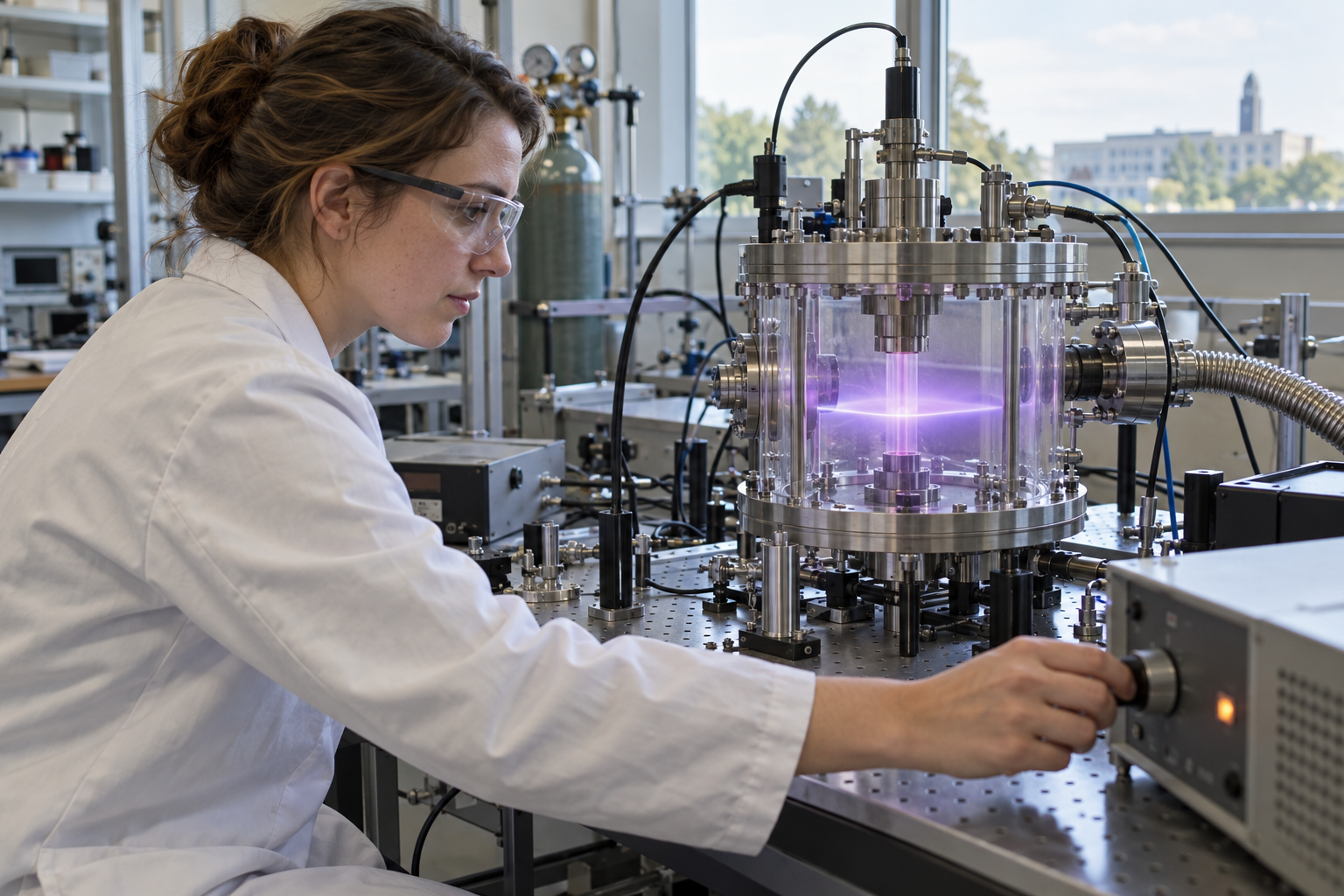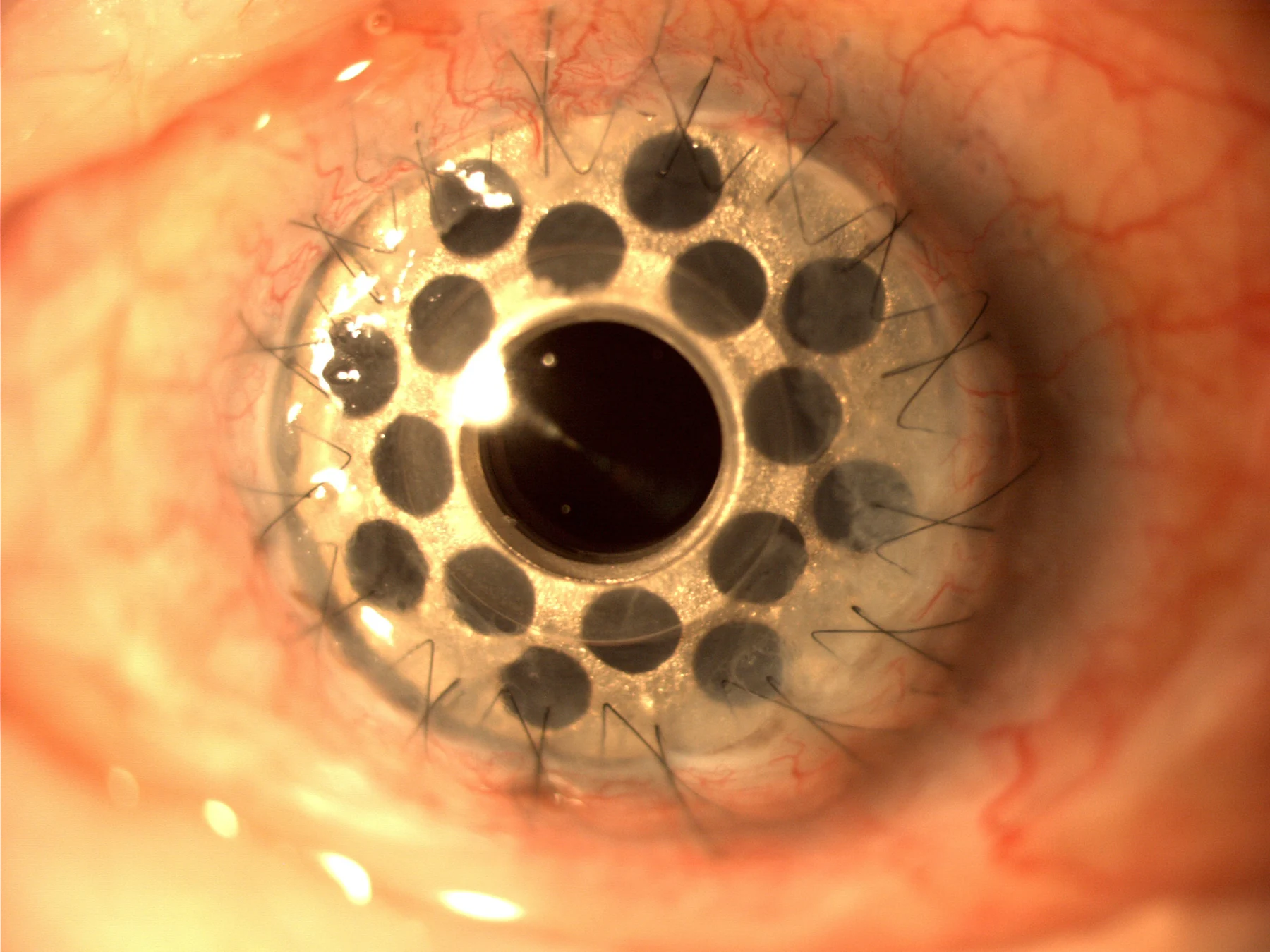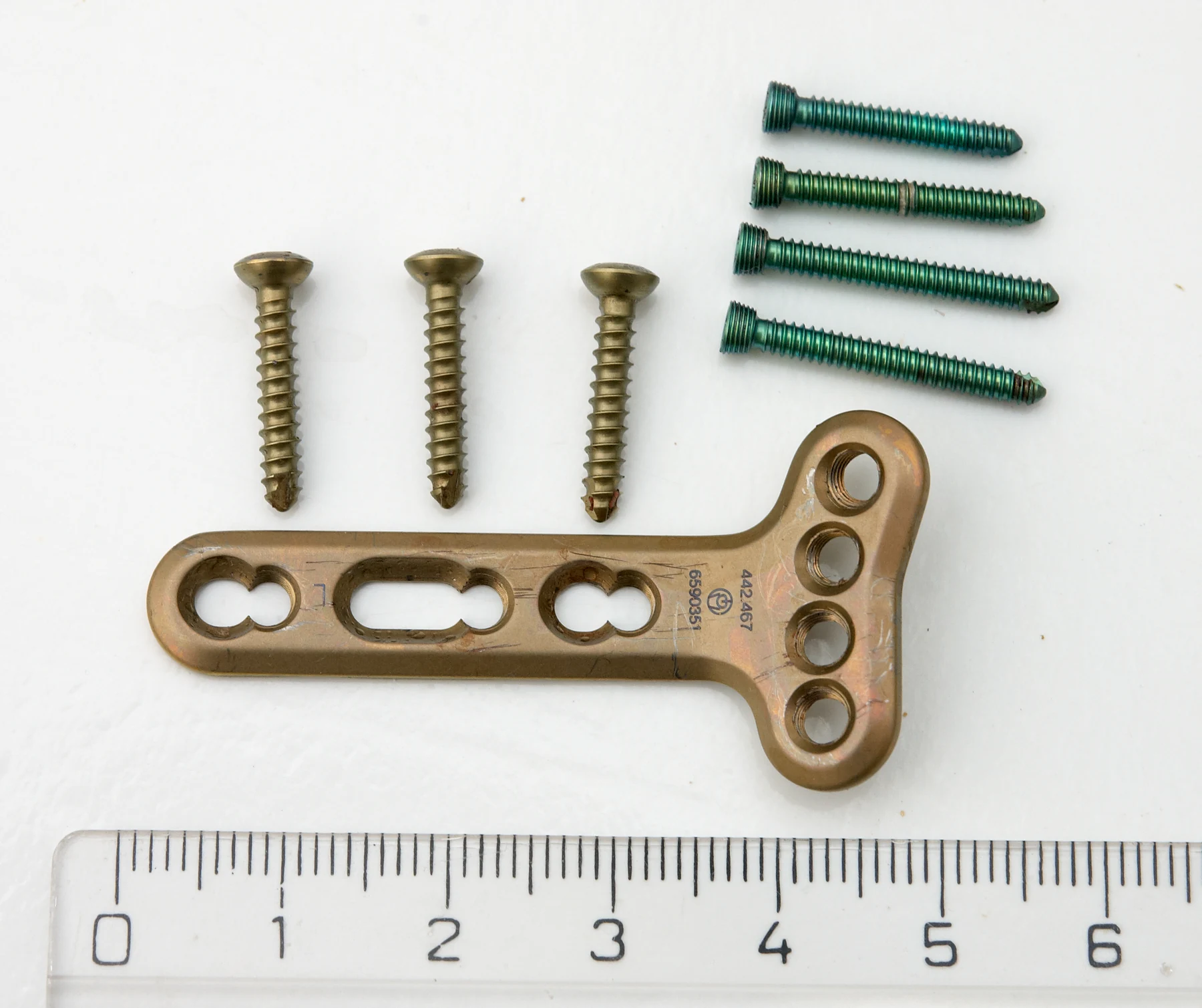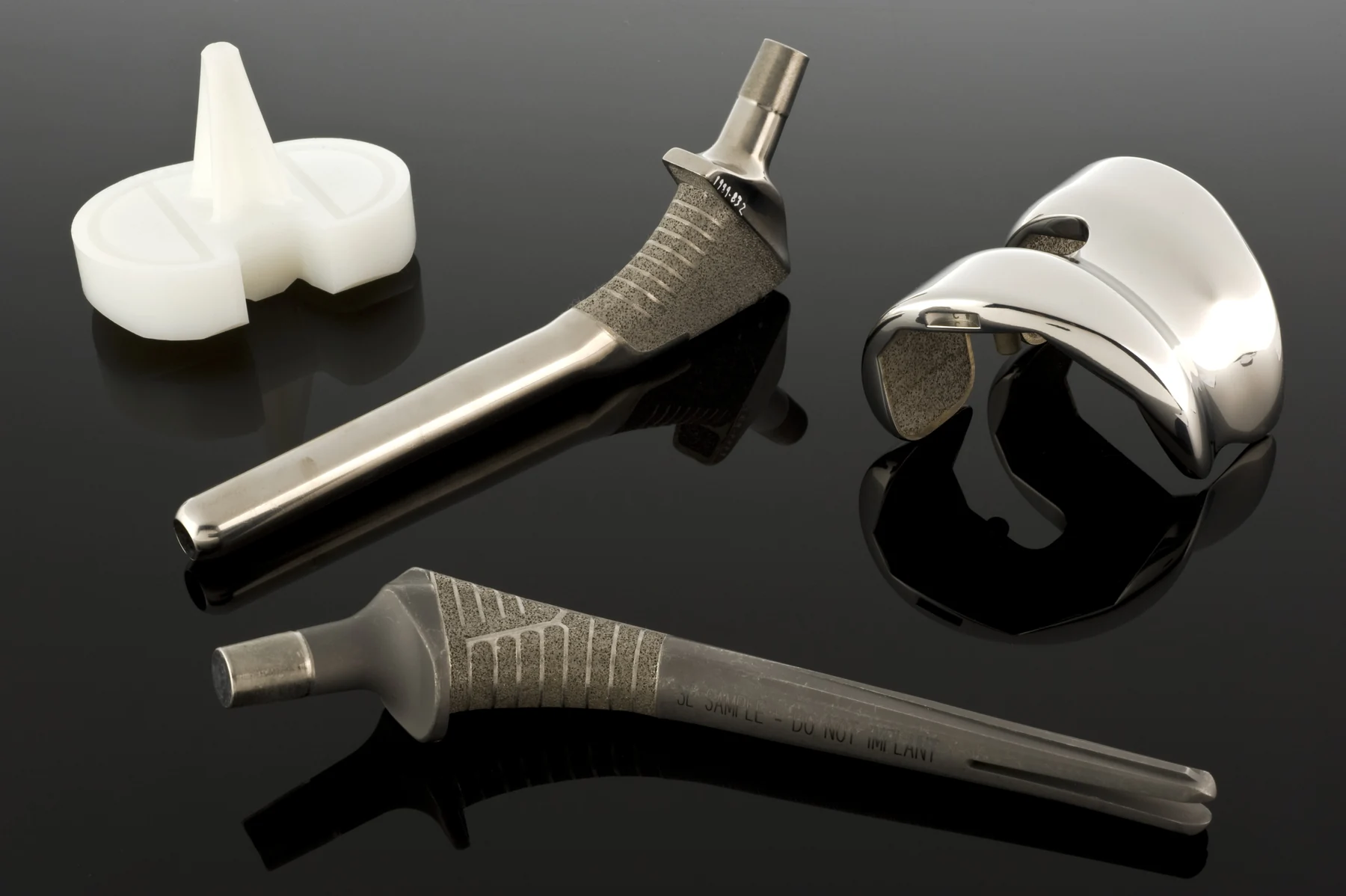
What does “plasma treatment” mean when one article describes an implant coating and another describes a wound? The word can refer to very different interactions. In manufacturing, a plasma spray can deposit a ceramic layer on a metal implant. In plasma medicine, cold atmospheric pressure plasma is applied to body surfaces or living tissue. The shared name reflects an ionized gas, but the target, process, and clinical question are not the same.
A coating is made on the implant
Consider a hip stem whose metal surface needs a layer with a different composition. In one FDA-cleared device description, hydroxyapatite, a calcium phosphate ceramic, is sprayed over a porous titanium coating using a plasma spray process. The implant is manufactured with that coating before it is used; the plasma is a tool for applying material to the device surface. [1]
The goal is a physical interface between implant and surrounding bone. The regulatory document describes the device’s materials, intended use, and manufacturing changes, including the coating process. That description does not mean plasma is being applied to a patient during surgery, and it does not show that any plasma exposure itself heals tissue. The finished coating remains part of the implant, while the manufacturing plasma has already done its job. [1]
Cold plasma acts at a living surface
Cold atmospheric pressure plasma is a different approach. It is generated at ordinary atmospheric pressure and used near body surfaces or living tissue, with applications under study or in clinical use that include disinfection and wound care. The gas contains reactive components that can interact chemically with a surface. Here, the target is the living tissue or microbes on it, rather than a metal object receiving a durable ceramic layer. [2]
The word “cold” distinguishes this treatment from a hot plasma spray in practical terms, but it does not mean that every biological effect is automatically beneficial or fully understood. Researchers investigate how these reactive species affect microbes and tissue, and whether that interaction can support repair. A plausible mechanism is not by itself proof of clinical benefit. Results depend on the device, treatment setting, wound type, and quality of the clinical evidence. [2]
Similar physics, different engineering
In both cases, plasma is an ionized gas: a gas in which some particles carry electrical charge. But that shared state of matter is not enough to make the treatments equivalent. A spray process is engineered to transfer coating material onto a component. Cold plasma treatment is designed to expose a biological surface to reactive species while limiting unwanted heat. Different equipment, operating conditions, and targets produce different interactions. [1] [2]
This distinction matters because a word can make unlike technologies sound interchangeable. A clinician considering a wound treatment is asking whether controlled exposure improves outcomes and is suitable for a particular setting. An engineer making an implant coating is asking whether a layer can be manufactured consistently and meet device requirements. One question concerns clinical effects on living tissue; the other concerns an engineered surface that later contacts tissue. [1]
Evidence must follow the intended use
Evidence for a device coating and evidence for a tissue treatment are gathered differently. A regulatory summary for a specific implant describes its design and testing in support of substantial equivalence; it is not a general claim about every plasma process or every coated implant. Likewise, a research or clinical description of cold plasma does not establish that every wound type benefits. [1] [2]
For cold plasma, guideline judgments can differ across settings, and wound-healing claims need to be checked against the relevant clinical evidence rather than inferred from laboratory mechanisms or one favorable report. The key questions are concrete: what exactly is being treated, how is the plasma generated, what outcome was measured, and in which patients? Holding those questions steady prevents the shared word “plasma” from obscuring the distinction between manufacturing a surface and treating a person. [2]
Explore the physics: an explanatory diagram
Sources & further reading
- Summit DuoFix Hydroxyapatite Coating: FDA Clearance K193398 FDA
- Wound Healing and Antisepsis Leibniz Institute for Plasma Science and Technology
Prepared for the independent PSI Center reading library. About edition dates and source checking.
This explainer describes scientific principles. It does not assess individual treatment choices.