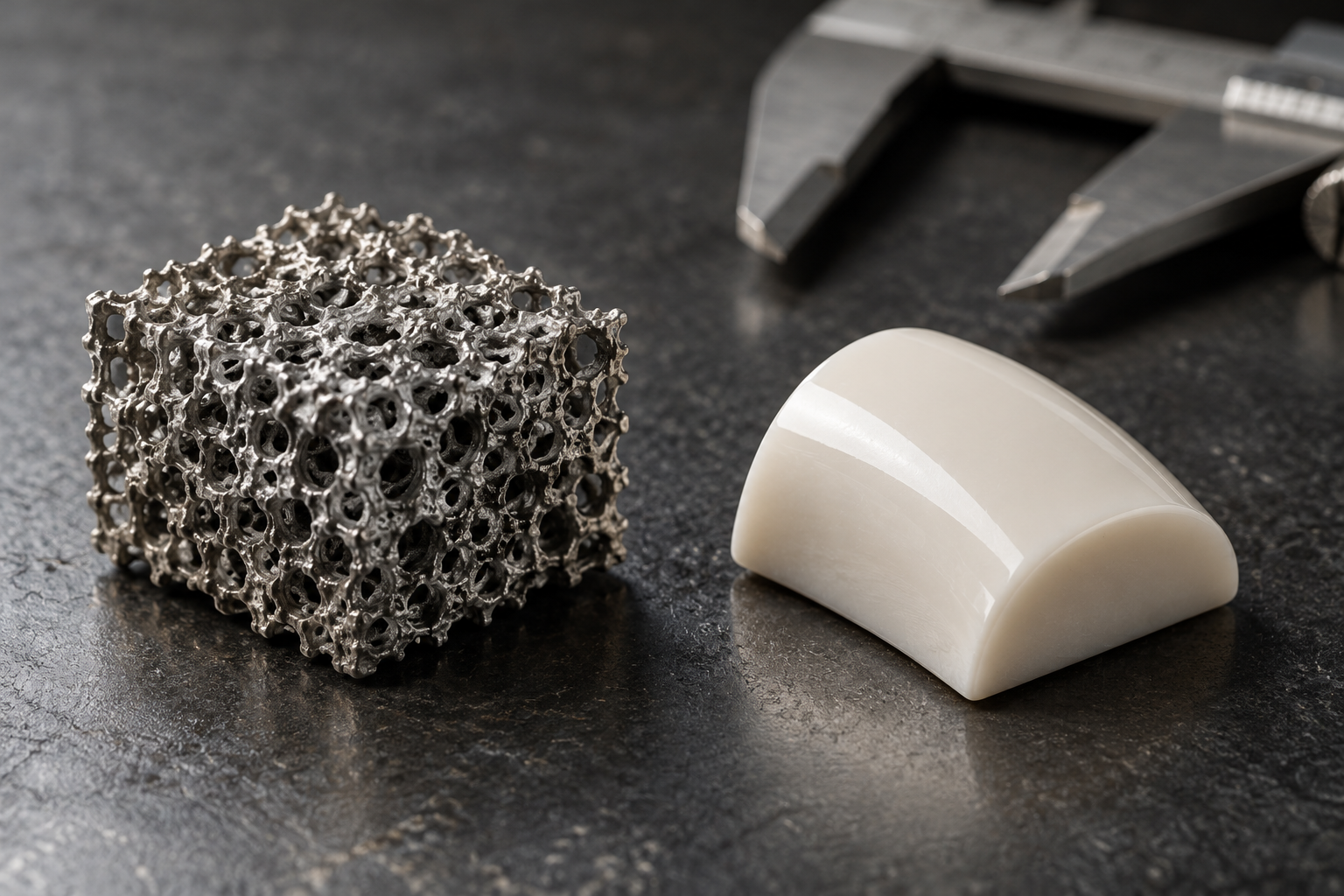
How can a single material help replace a joint, coat an implant, or carry a medicine through the body? The answer is that materials do not have one fixed medical job. Their performance comes from properties such as stiffness, surface chemistry, shape, and how they change over time. A polymer, metal, or ceramic can be fashioned into very different forms, and each form meets a different physical and biological challenge.
Start with the job, not the material name
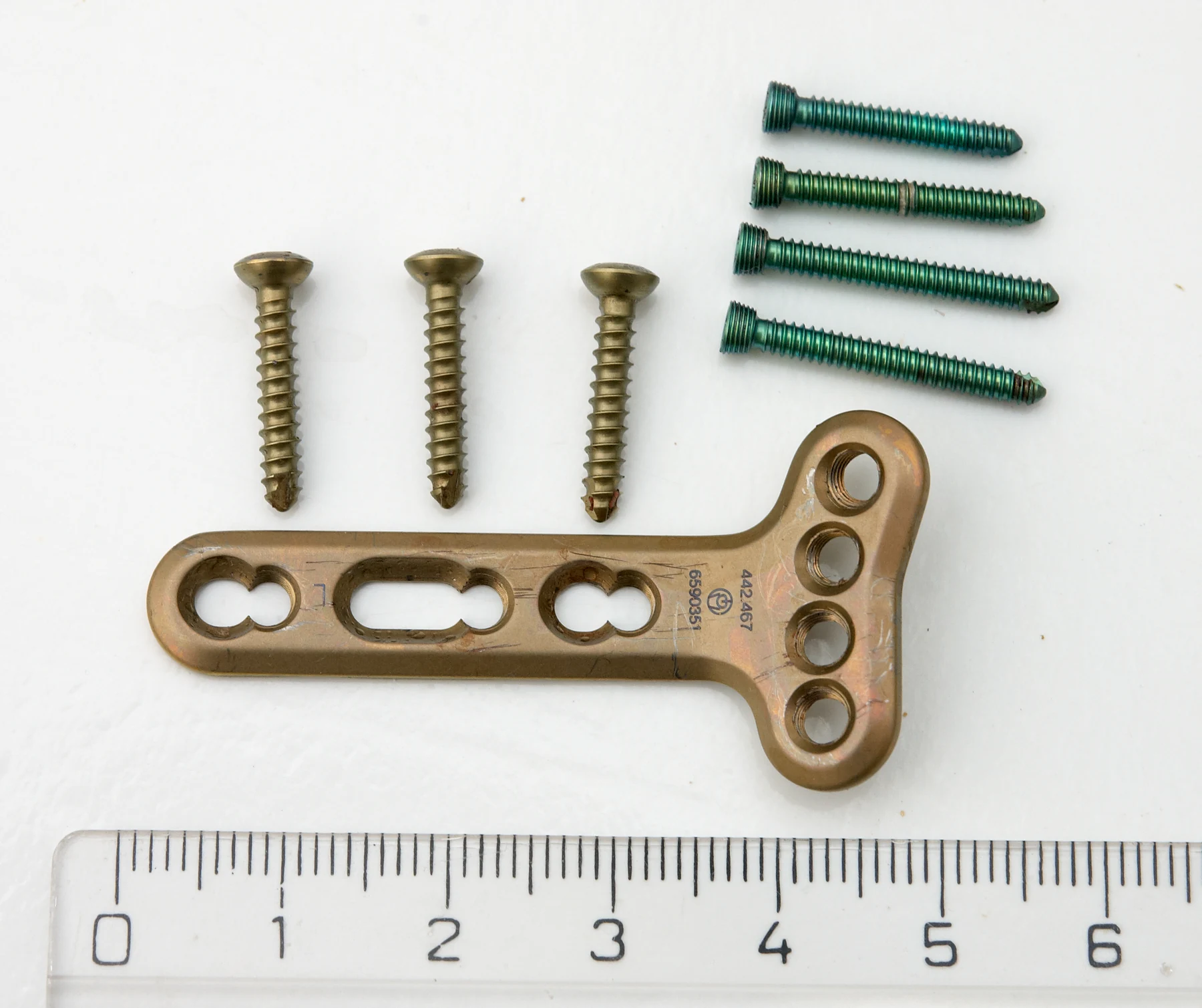
Imagine comparing a hip joint with a contact lens. The joint must support repeated loads and resist wear as two surfaces move against each other. A lens must bend light, remain transparent, and sit comfortably against the eye. Both are medical devices, but the demands on their materials are nearly opposite. Metals and ceramics can supply strength and wear resistance in load-bearing devices, while transparent polymers can provide the optical properties needed in lenses [1].
This is why the phrase “made of polymer” or “made of metal” cannot tell the whole story. A material’s role depends on its formulation and the form it takes: a molded part, a coating, a fiber, or a thin film. A flexible polymer may support blood flow in a vessel-like device; a carefully shaped polymer may instead focus light. In each case, engineers match physical properties to a specific task rather than assigning a material a universal medical identity [1].
The body responds to surfaces and surroundings
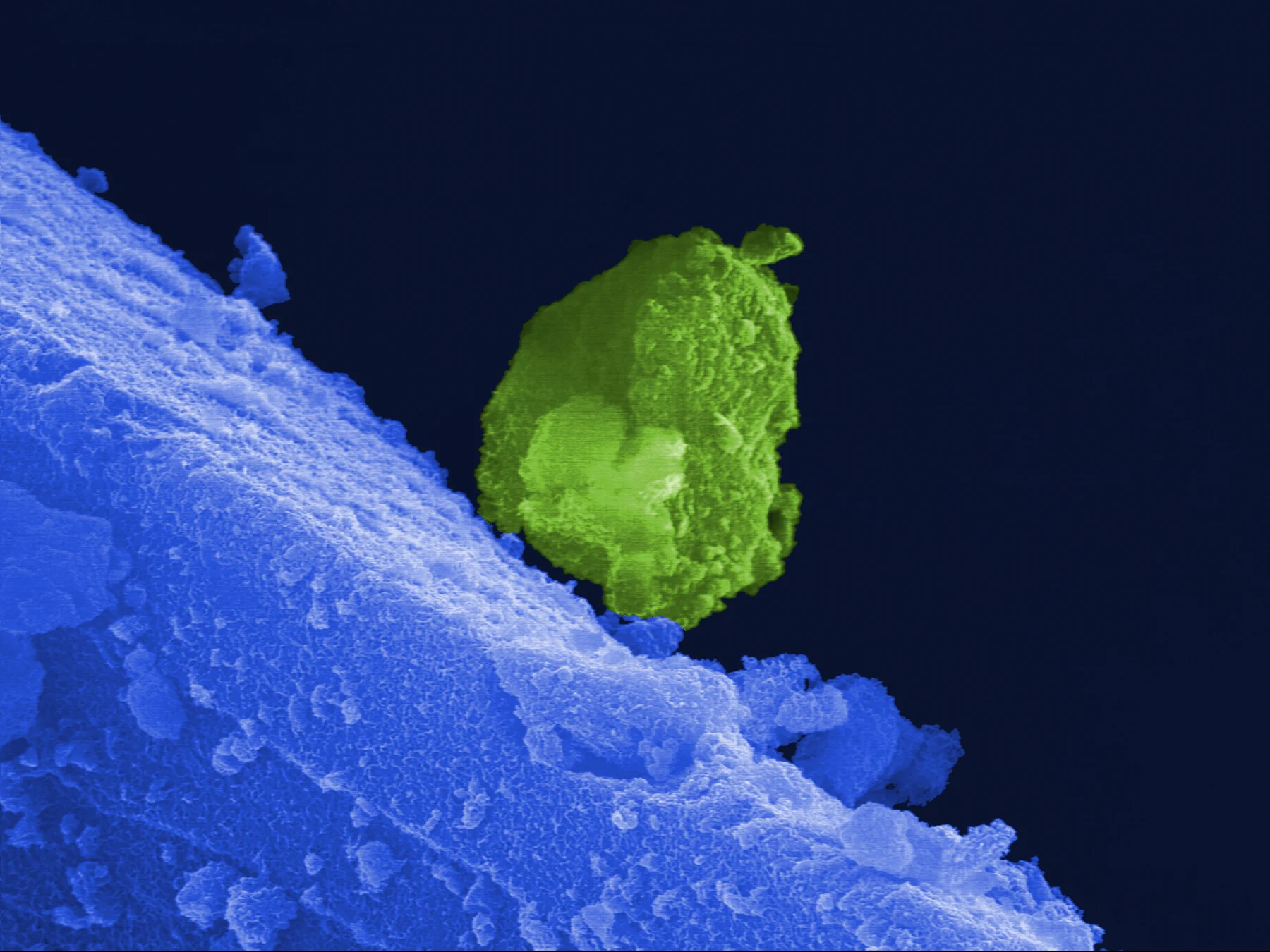
A device does not operate in an empty workshop. Once placed in or on the body, its surface meets fluids, cells, and immune defenses. The body may try to break down a foreign object and can surround it with scar tissue, a process called the foreign body response. That response can interfere with a device, so designers may use corrosion-resistant or biologically inert materials, or choose biodegradable materials intended to break down before a persistent response becomes a problem [1].
Surface design can also encourage a useful interaction. Hydroxyapatite, a mineral found in bone, is used as a coating on some orthopedic implants because it can encourage nearby tissue to grow into the implant surface. This example shows why a coating can matter as much as the bulk material: the core may carry force, while the outer layer guides contact with tissue. FDA material review likewise considers a device’s properties alongside its intended use and function [1] [2].
One structure can do more than hold its shape
A biomaterial can serve as a carrier as well as a component. Picture a medicine that would otherwise degrade before reaching its intended destination. A nanoparticle made from a synthetic or lipid polymer can encase the therapeutic and help protect it in the bloodstream. The carrier may also be modified to make uptake by selected cell populations more likely. The material is not simply packaging: its chemistry and structure influence how the medicine travels and is released [1].
Devices can also carry active substances. A tissue scaffold or vascular stent may be coated or loaded with a therapeutic that is released as the material biodegrades, or in response to a biological cue such as heat or acidity. That creates a combined role: the device provides structure while its material manages delivery over time. The design challenge is to make those functions compatible with the site and duration of exposure, rather than assuming that one release pattern suits every device [1].
Compatibility is a question about a device in use
“Biocompatible” does not mean that a substance behaves identically in every body location or device. FDA evaluation considers the material components, manufacturing processes, intended anatomical location, and frequency and duration of contact. Manufacturers may assess whether an adverse biological response is possible and whether the risks are acceptable; they may also examine device-specific wear or corrosion under conditions relevant to its use [2].
That is a practical way to think about the many roles of medical materials. Ask what the device must physically do, what part of the body it contacts, and whether the material stays put, wears, or disappears. A material can be useful in several roles because its properties can be shaped and combined with other design choices. But the evidence and safety questions belong to the particular device and use, not just to a material label [2].
Sources & further reading
Prepared for the independent PSI Center reading library. About edition dates and source checking.
This explainer describes scientific principles. It does not assess individual treatment choices.