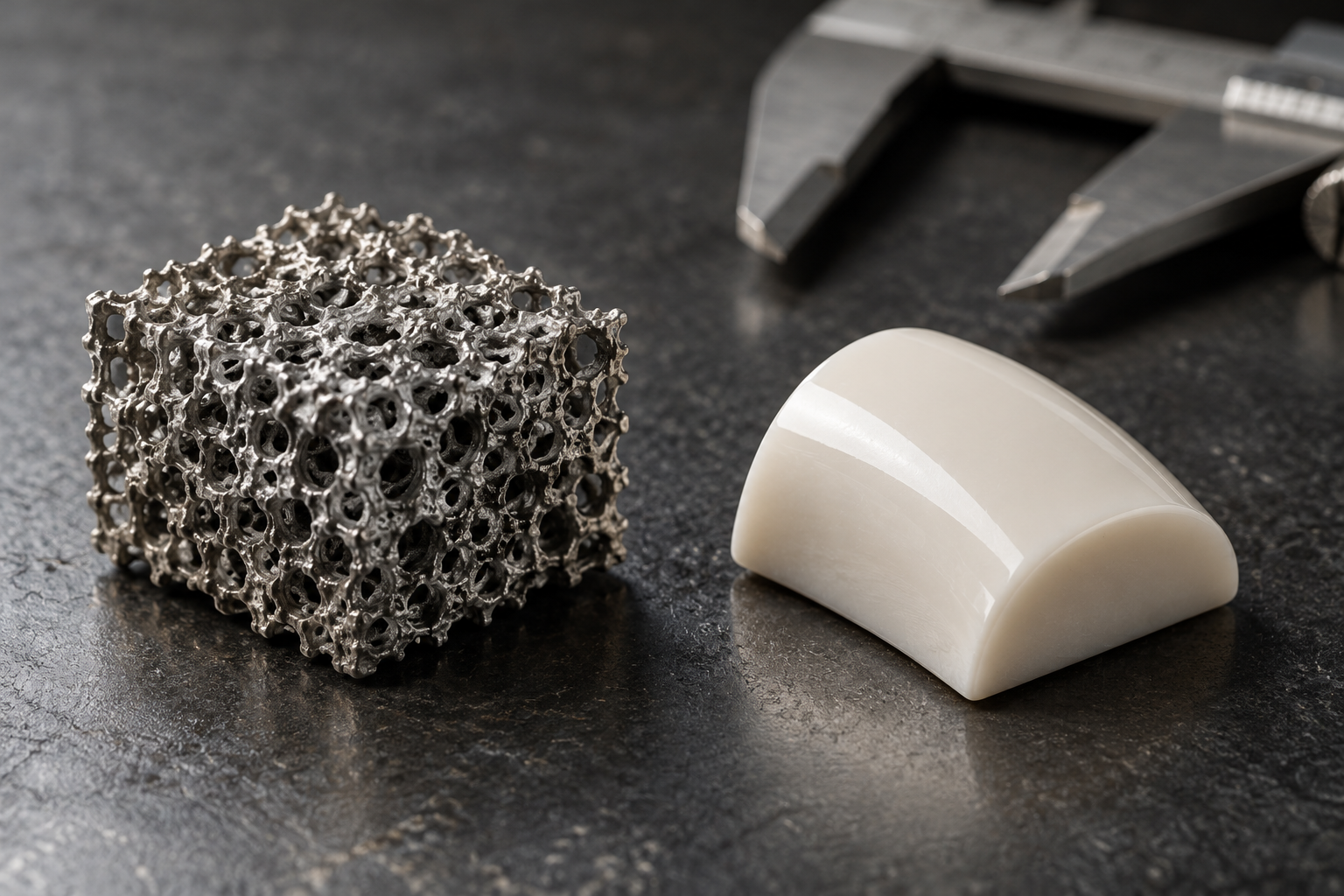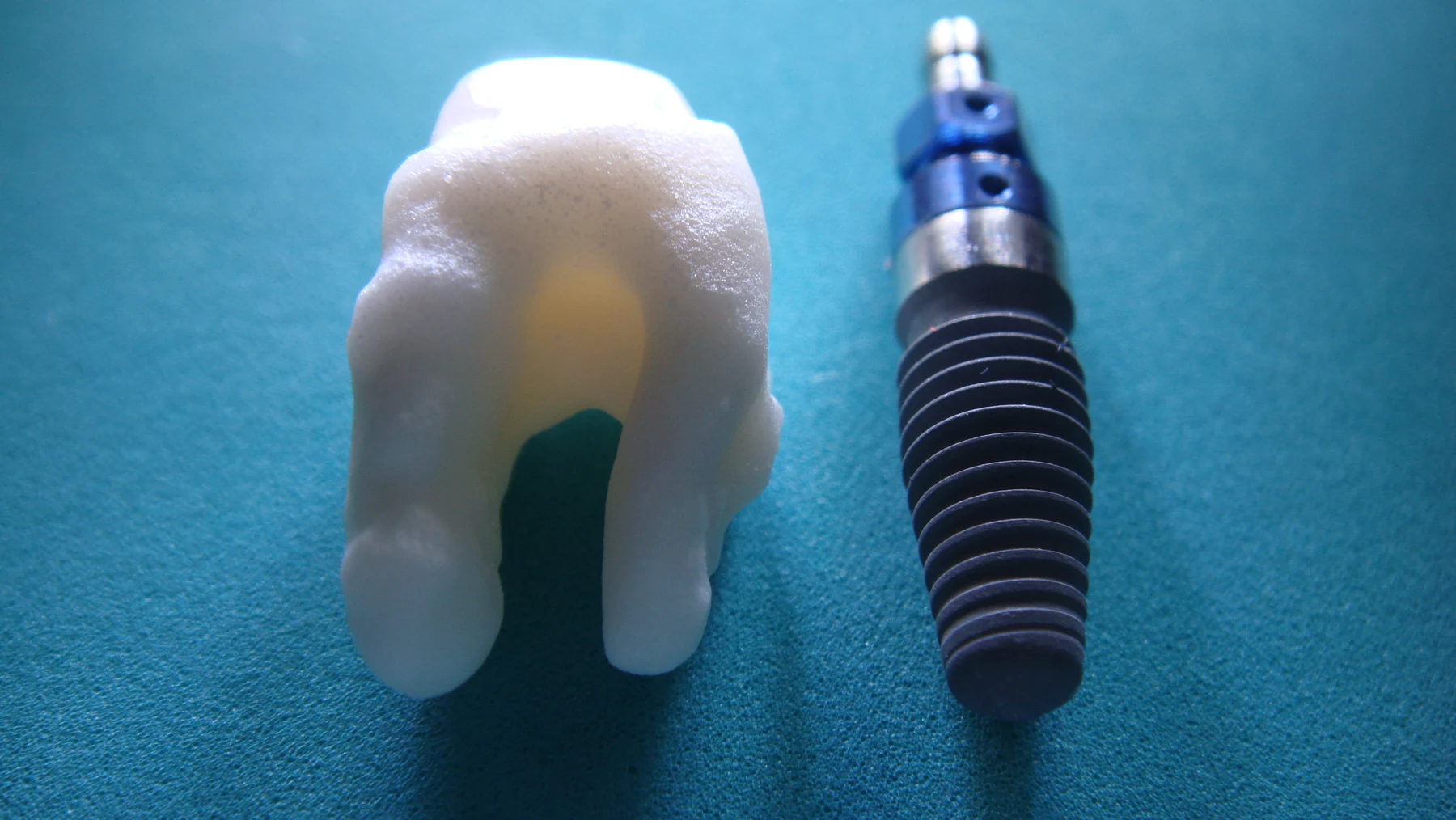
When does a piece of metal, polymer, or ceramic become a biomaterial? The answer is not hidden in a special ingredient. A material takes on that role when it is designed for a medical or biological purpose and interacts with the body as part of that job. A dental filling and an artificial joint may look unrelated, yet both depend on materials whose properties must suit a particular place, task, and duration of contact.
Purpose defines the material’s role
Biomaterials appear in devices as different as dental fillings and spinal cord stimulators. They may be natural or synthetic, and they can be fashioned into parts, coatings, fibers, films, foams, and other forms. Metals, polymers, and ceramics all have medical uses; the label describes their role in a biological setting rather than a single recipe [1].
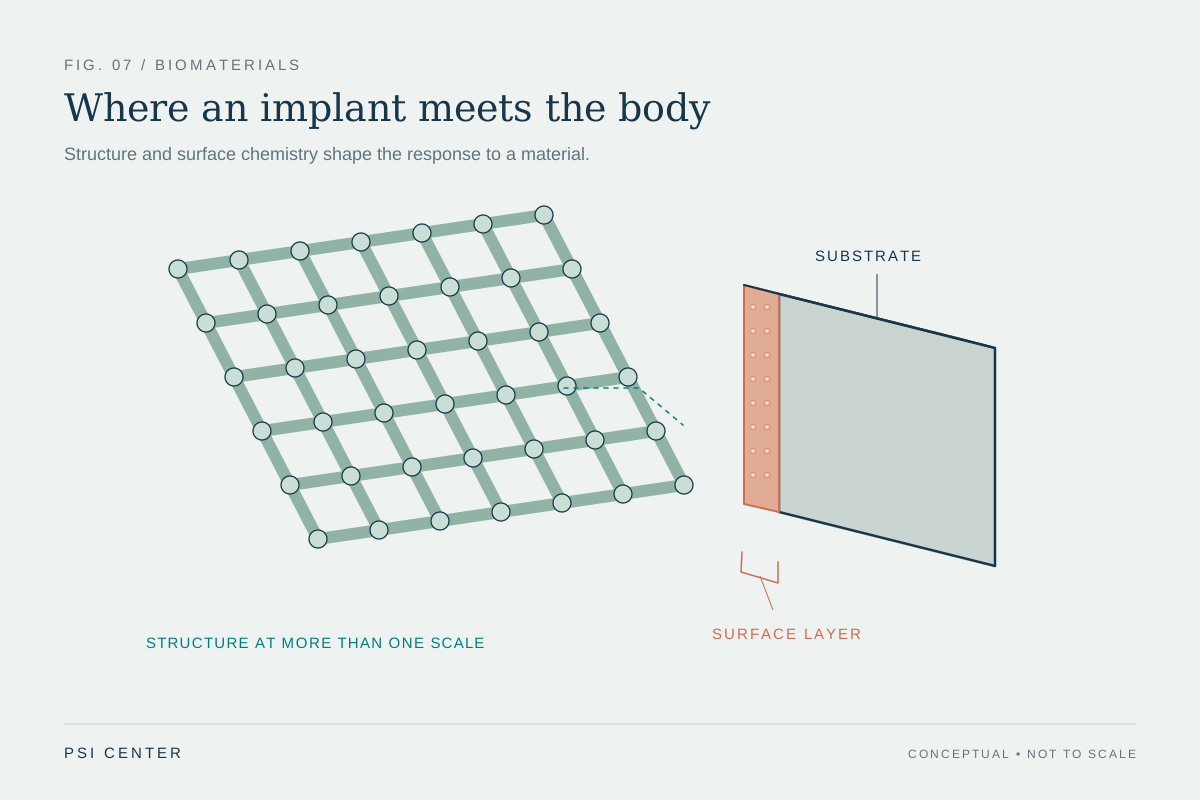
Consider a contact lens and a hip joint. A lens must transmit light and bend it appropriately, while a joint replacement must bear loads and tolerate repeated movement. The same broad family of materials can be adapted for different jobs, but a property useful in one setting may be irrelevant or harmful in another. Shape and surface matter too: a coating can change what cells encounter even when the underlying component stays the same.
The body responds to contact
The body does not treat every implanted object as invisible. The immune system may try to degrade a foreign object and can surround it with scar tissue, a process called the foreign body response. That reaction may interfere with a device’s function or cause problems. Designers can use corrosion-resistant materials, biodegradable materials that break down, or surfaces that mimic aspects of the body’s own extracellular matrix—the scaffold of molecules around cells [1].
No strategy is universally best. A material intended to remain in the body has different demands from one meant to disappear after serving a temporary purpose. Even an inert surface must be considered in context: the tissue it touches, its motion, its wear, and how long contact lasts all affect what matters. Biomaterial design is therefore a negotiation between the device’s task and the biological environment it enters.
Mechanical and chemical properties do different work
For a load-bearing implant, strength and resistance to wear are central. Artificial hip joints, for example, use strong metal alloys and ceramics to support tissue through repetitive motion. A vascular stent instead needs to support a vessel while accommodating pulsatile blood flow; flexibility becomes a key requirement. In an artificial blood vessel, a compliant polymer may serve a different purpose than a hard ceramic in a joint [1].
Materials can also carry medicines. A carrier may protect a therapeutic substance in the bloodstream, while coatings on devices can release drugs over time or in response to a biological condition such as acidity. These are design possibilities, not proof that every material or delivery system is clinically effective. Each proposed use has to be assessed for its actual function and the risks that come with it.
Safety belongs to the whole device
To evaluate material safety, it is not enough to ask whether a substance is generally described as safe. The FDA considers a device’s material properties, intended use, and function. Evaluations can consider the material components, manufacturing processes, location in the body, and frequency and duration of exposure [2]. Wear and corrosion testing may also matter for a particular metal device in its expected environment.
This explains why a material’s reputation cannot replace evidence about the device made from it. A metal alloy in a moving joint faces different conditions from the same alloy in another location; processing and surface finish can also change what the body encounters. A biomaterial is best understood as part of a designed relationship: material, device, use, and biological response together determine whether it can do its intended job.
Explore the physics: an explanatory diagram
Sources & further reading
Prepared for the independent PSI Center reading library. About edition dates and source checking.
This explainer describes scientific principles. It does not assess individual treatment choices.