What makes a material suitable for a hip implant: refusing to bend, or resisting breakage? Those questions sound similar, but they describe different properties. Stiffness measures how much a material deforms under a load; strength describes how much load it can withstand before permanent damage or failure. A successful device needs the right combination, shaped by where it sits, what it touches, and how it is used.
Two different questions about a material
Imagine pressing on two rods of the same length and thickness. One bends only a little; the other bends noticeably. The first is stiffer. Now keep increasing the force. The force at which either rod cracks, yields, or otherwise fails tells you about its strength. A very stiff material is not automatically very strong: stiffness concerns deformation, while strength concerns the limit before damage.
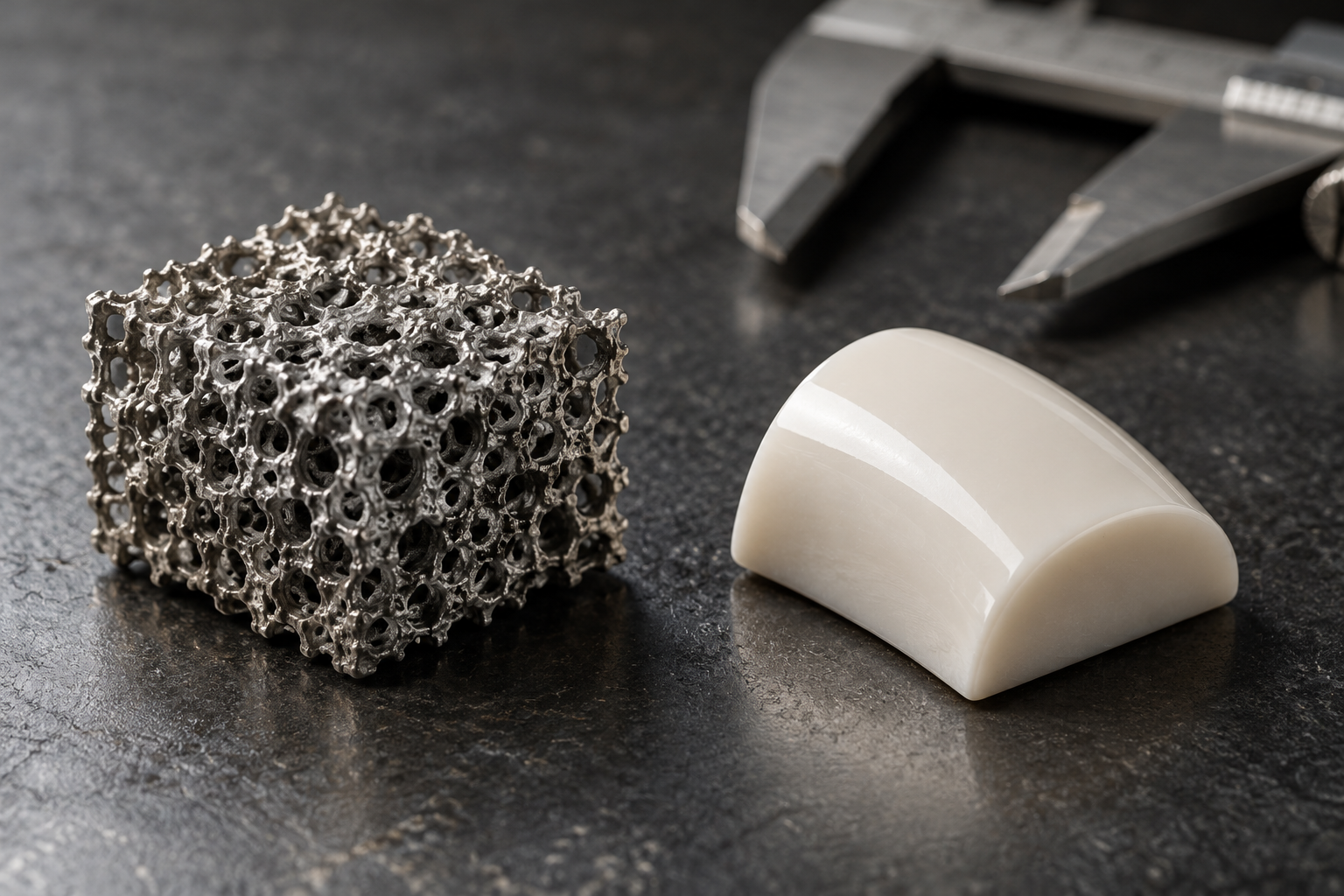
In engineering, stiffness can refer to a material property such as elastic modulus, or to the stiffness of a whole component. The component’s shape matters: a thick beam may bend less than a thin beam made from the same material. Strength also depends on the kind of loading, the geometry, and the conditions around the component. Thus “strong” and “stiff” are not complete descriptions without specifying what is being tested.
A device meets a body, not a textbook
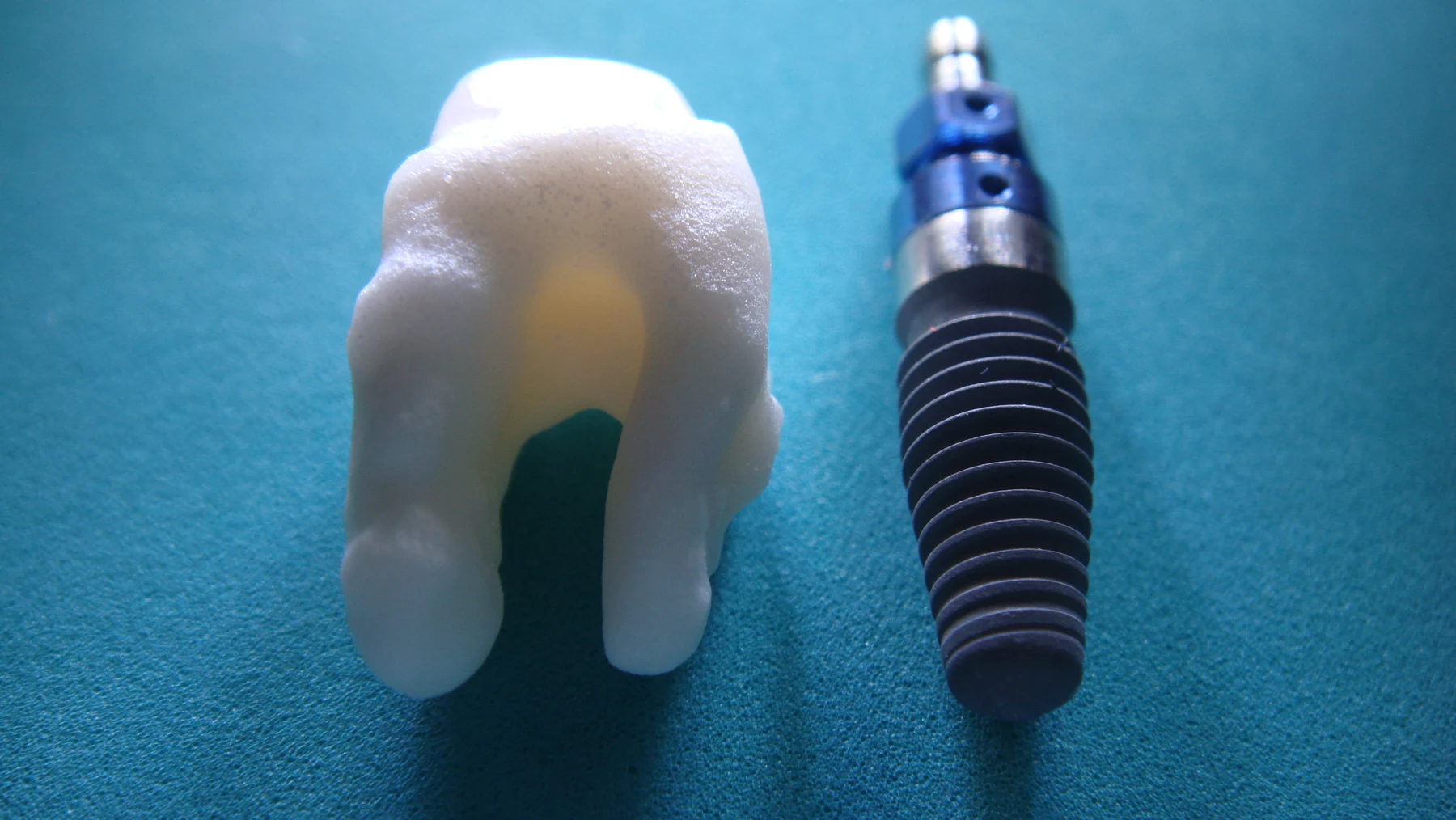
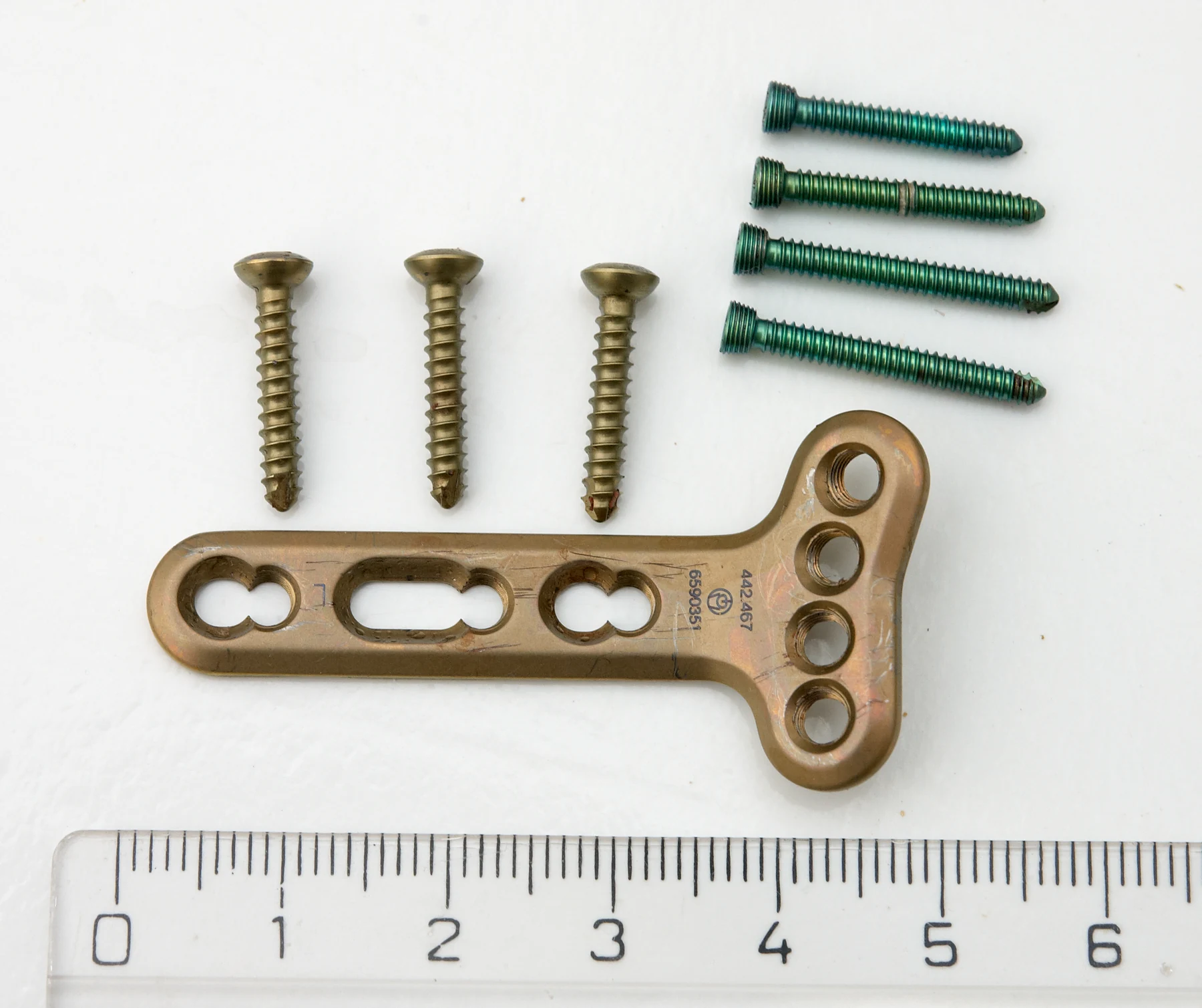
The distinction matters because medical devices face different jobs. An artificial hip must support substantial loads and endure repeated motion, so strong, wear-resistant alloys and ceramics are often used. A vascular stent has another task: it must support a vessel while accommodating the vessel’s flexible, pulsating behavior. Flexible polymers and metal alloys can serve that role. A single ideal stiffness would not suit both devices. [1]
The body also responds to materials biologically. A device may be strong in a mechanical test yet cause an unwanted response where it contacts tissue. Biomaterials can be selected or designed for their location, function, and interaction with the body; in some applications, a coating such as hydroxyapatite, a mineral abundant in bone, encourages tissue ingrowth. Mechanical fit and biological compatibility are related design concerns, but one does not guarantee the other. [1]
Why “harder” is not always better
Consider a flexible tube and a rigid pipe. If the job is to carry flow through a moving, deformable part of the body, a tube that yields slightly may be more appropriate than one that holds its shape at all costs. Conversely, a load-bearing implant that deforms too much could fail to support the surrounding tissue. The design question is not simply how to maximize stiffness or strength. It is how much deformation and load capacity the particular task allows.
A mental experiment makes the tradeoff clear: pull a rubber band and a glass rod with gradually increasing force. The rubber band stretches a great deal before breaking; the glass rod barely stretches and then snaps. The rubber band is less stiff, but that observation alone does not tell you its strength under every kind of load. Bending, stretching, compression, and repeated cycling can produce different outcomes.
Testing the whole use case
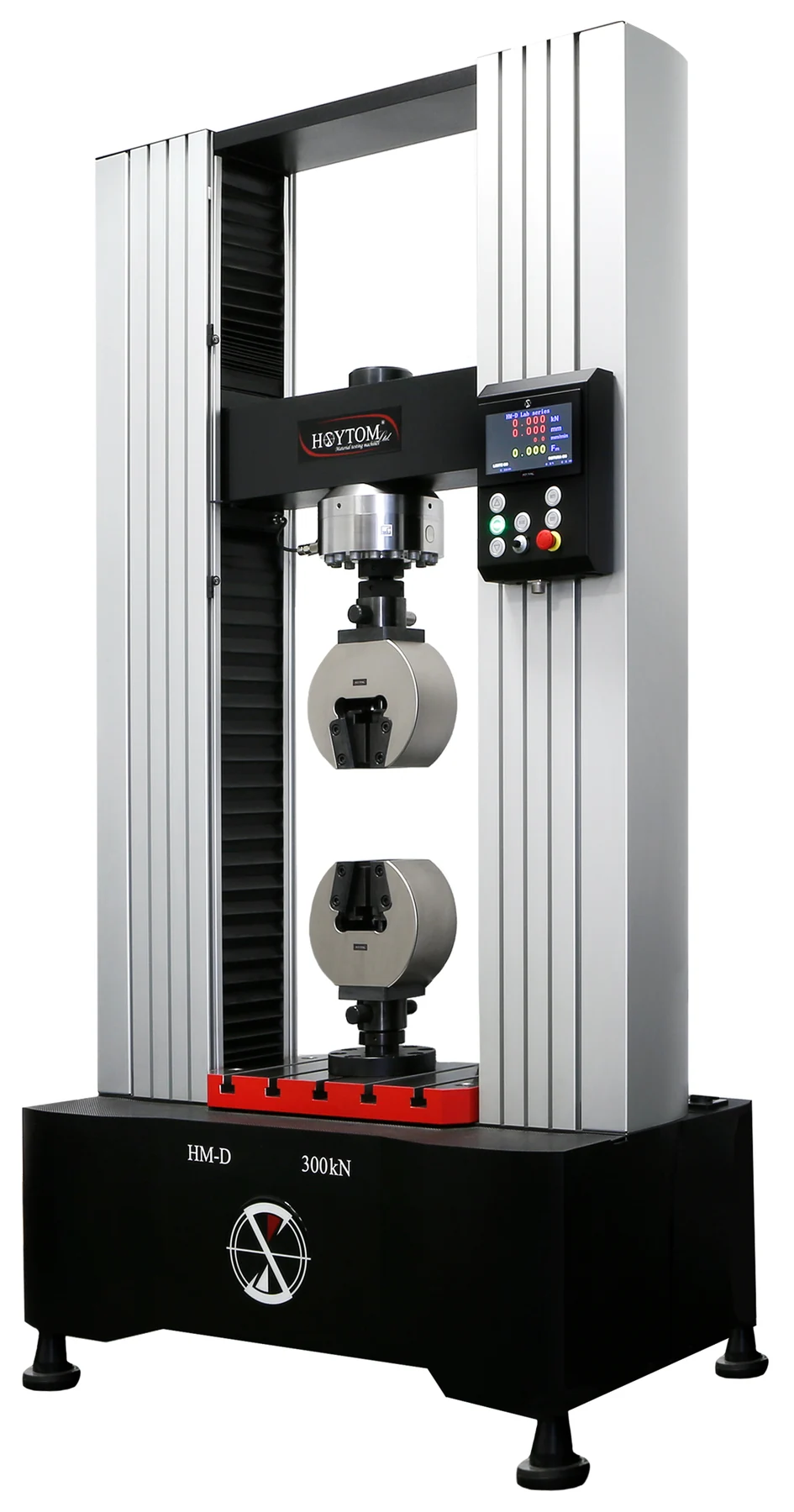
Material safety assessment takes more than a label such as “titanium” or “polymer.” The FDA considers a device’s material properties alongside its intended use and function. Manufacturers assess possible biological responses and evaluate factors such as component materials, manufacturing processes, anatomical location, and the frequency and duration of exposure. Wear and corrosion testing may also help model how a particular device behaves in its intended environment. [2]
That is why material selection is a design problem rather than a contest for the strongest substance. A joint replacement, contact lens, or vessel support needs properties suited to its own geometry, forces, and contact with tissue. Stiffness predicts how much it gives under load; strength helps describe when it may be damaged. Neither number, by itself, says whether the finished medical device is suitable for its purpose.
Sources & further reading
Prepared for the independent PSI Center reading library. About edition dates and source checking.
This explainer describes scientific principles. It does not assess individual treatment choices.