Why can a person hear a door slam yet struggle to follow a quiet conversation? The answer is not always that every sound has become too soft. Hearing turns air vibrations into motion inside the ear, then into signals the brain can interpret. A fault at different points in that chain changes what loudness can accomplish. The distinction helps explain why some devices amplify sound while others take a different route to the auditory nerve.
From air pressure to a message
A sound wave is a traveling pattern of pressure changes in air. The outer and middle ear guide those changes inward, where they move structures in the inner ear. There, tiny sensory cells called hair cells convert mechanical motion into neural signals. The brain interprets those signals as sounds, including speech, music, and warning cues.
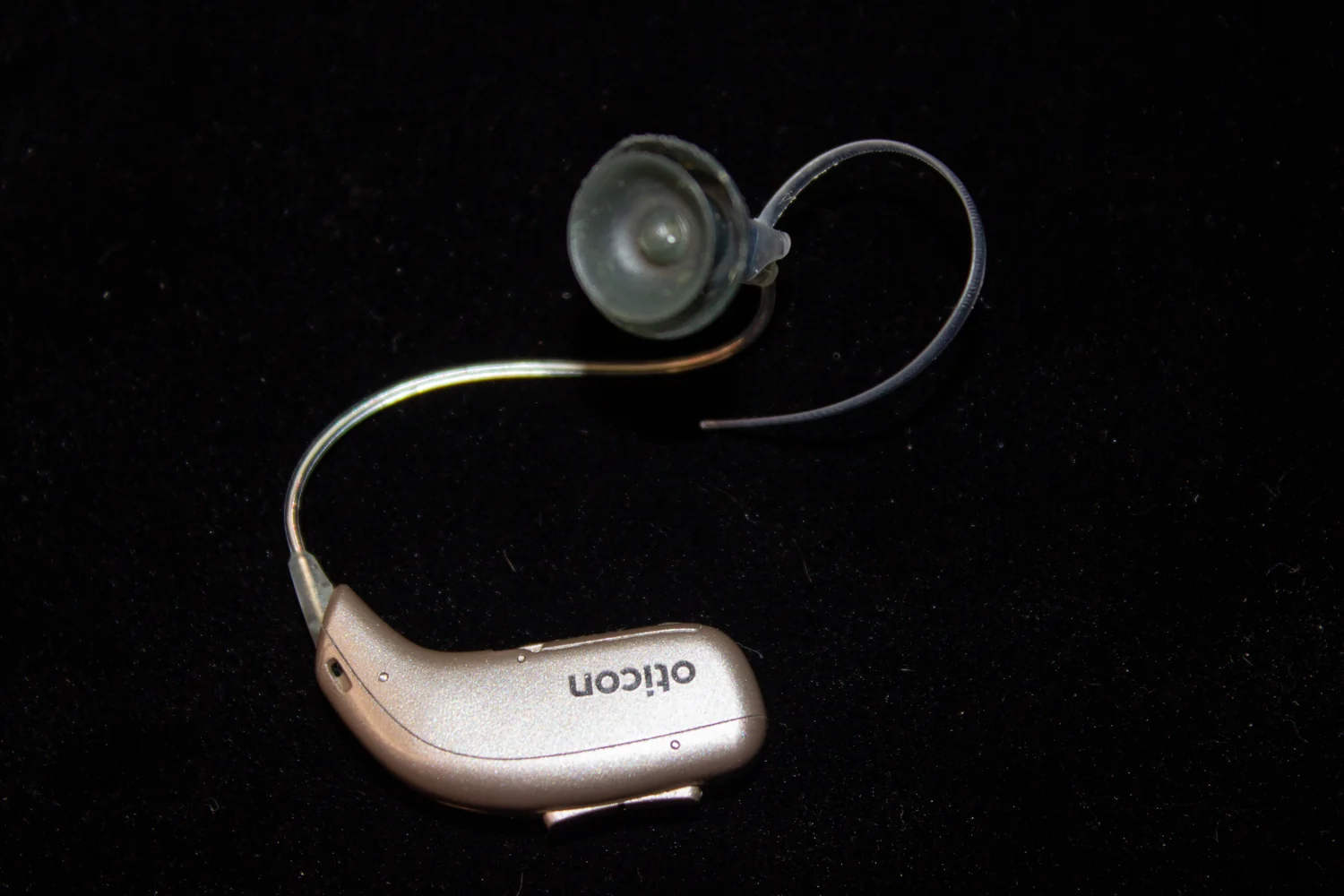
This chain is a little like a microphone connected to a speaker, but with living machinery in between. A hearing aid’s microphone captures sound, its electronics amplify selected signals, and a speaker sends them into the ear. When inner-ear hair cells are damaged, stronger vibrations can help surviving cells respond. That is why amplification can improve hearing for many people with sensorineural hearing loss, which arises from damage in the inner ear or auditory nerve pathways [1].
Why turning up the volume has limits
Imagine increasing the volume of a radio whose speaker is partly damaged. The output may become easier to hear, but distortion or missing detail does not necessarily disappear. In the ear, amplification has a similar boundary: a hearing aid can make sound vibrations larger, but it cannot restore hair cells that no longer work. If the inner ear is too damaged to convert those vibrations into neural messages, even substantial amplification may not help effectively [1].
Hearing loss also affects more than whether a sound crosses a loudness threshold. A listener may detect a voice but have trouble separating it from surrounding noise or understanding speech. Digital hearing aids can be programmed to amplify some frequencies more than others and, in some cases, emphasize sound from a direction. Yet a hearing aid cannot completely separate wanted sounds from unwanted background noise [1].
Two devices, two routes
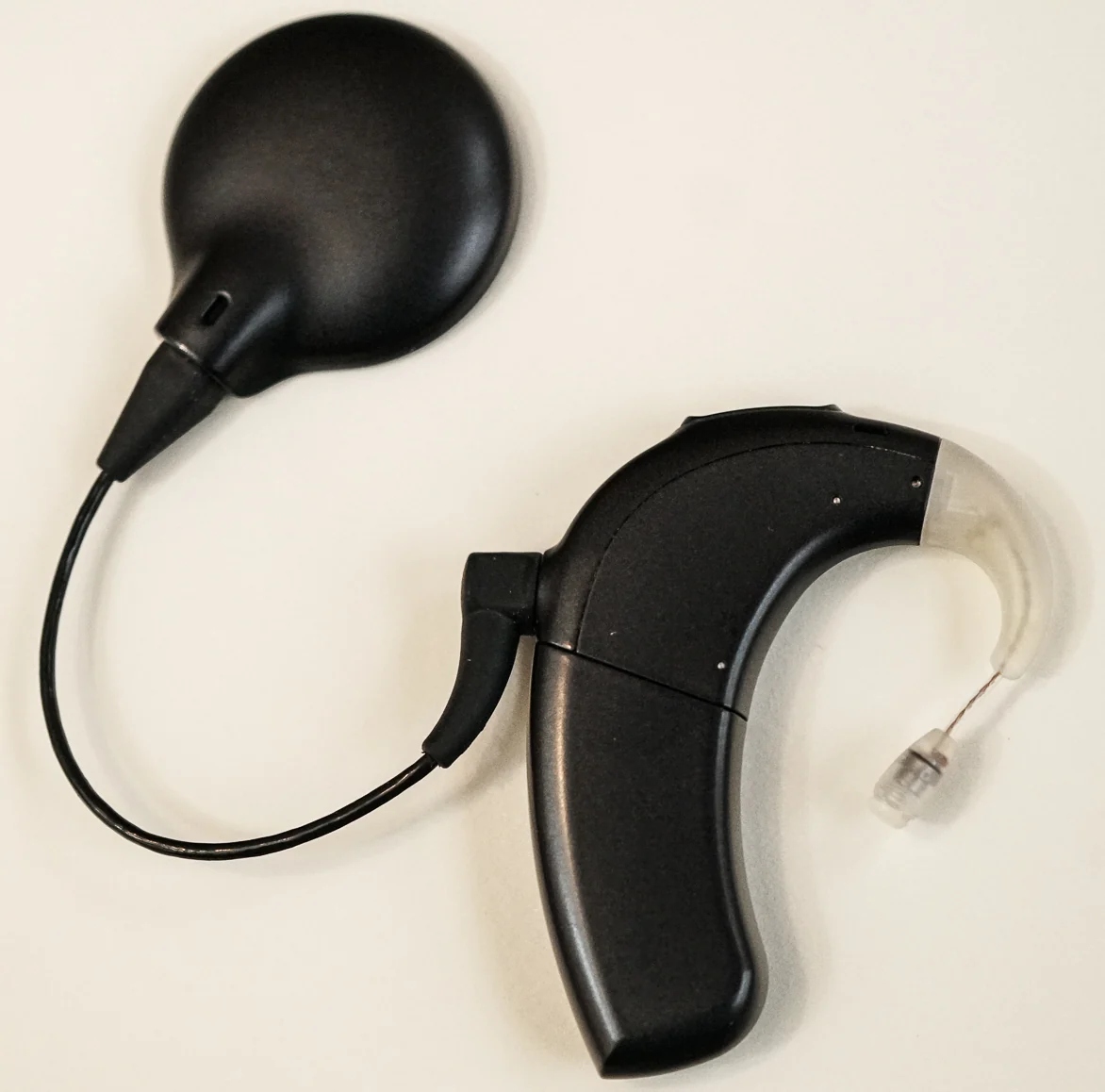
A cochlear implant addresses a different point in the chain. Its microphone and speech processor capture and organize sound, then a transmitter and receiver convert the processed information into electrical impulses. An electrode array sends those impulses to different regions of the auditory nerve, bypassing damaged portions of the ear [2].
That route is not the same as restoring ordinary hearing. The brain receives a useful representation of sound, but hearing through an implant differs from normal hearing and takes time to learn or relearn. An implant may help a person recognize environmental sounds and understand speech, while a hearing aid instead relies on the ear’s remaining ability to detect amplified vibrations [2].
A listening problem is not one-size-fits-all
Consider a quiet conversation across a room. If the main problem is that speech sounds are too faint, amplification may help. If the issue is that surviving sensory cells cannot turn vibration into useful signals, simply making the voice louder may not solve it. The underlying location and severity of the problem matter, which is why hearing devices are selected around a person’s hearing loss and needs rather than by volume alone [1].
Cochlear implantation involves surgery and substantial therapy, and people do not all perform at the same level with the device. Hearing aids also require fitting and adjustment. These differences make the central physics practical: hearing is a sequence of transformations, and a device can assist only by working with the parts of that sequence that remain available [2].
Sources & further reading
- Hearing Aids NIDCD
- Cochlear Implants NIDCD
Prepared for the independent PSI Center reading library. About edition dates and source checking.
This explainer describes scientific principles. It does not assess individual treatment choices.