If sound reaches the ear but damaged hair cells cannot turn it into nerve signals, can a device pass that bottleneck? A cochlear implant does so by converting sound into electrical impulses that stimulate the auditory nerve. The route is different from ordinary hearing, so the brain receives useful sound information through a new pattern that takes time to learn.
The ear normally translates vibration
Sound begins as pressure waves in air. The eardrum vibrates, the small bones of the middle ear pass those vibrations onward, and fluid inside the cochlea ripples. A traveling wave moves along the cochlea’s basilar membrane, where hair cells respond at different locations to different pitches [2].
When these sensory cells move, tiny projections called stereocilia bend. That motion opens channels in the cells and triggers electrical signals. The auditory nerve carries those signals to the brain, which interprets them as sound. Hair cells are therefore not miniature microphones: they are part of a biological chain that converts mechanical motion into electrical communication.
An implant takes a different route
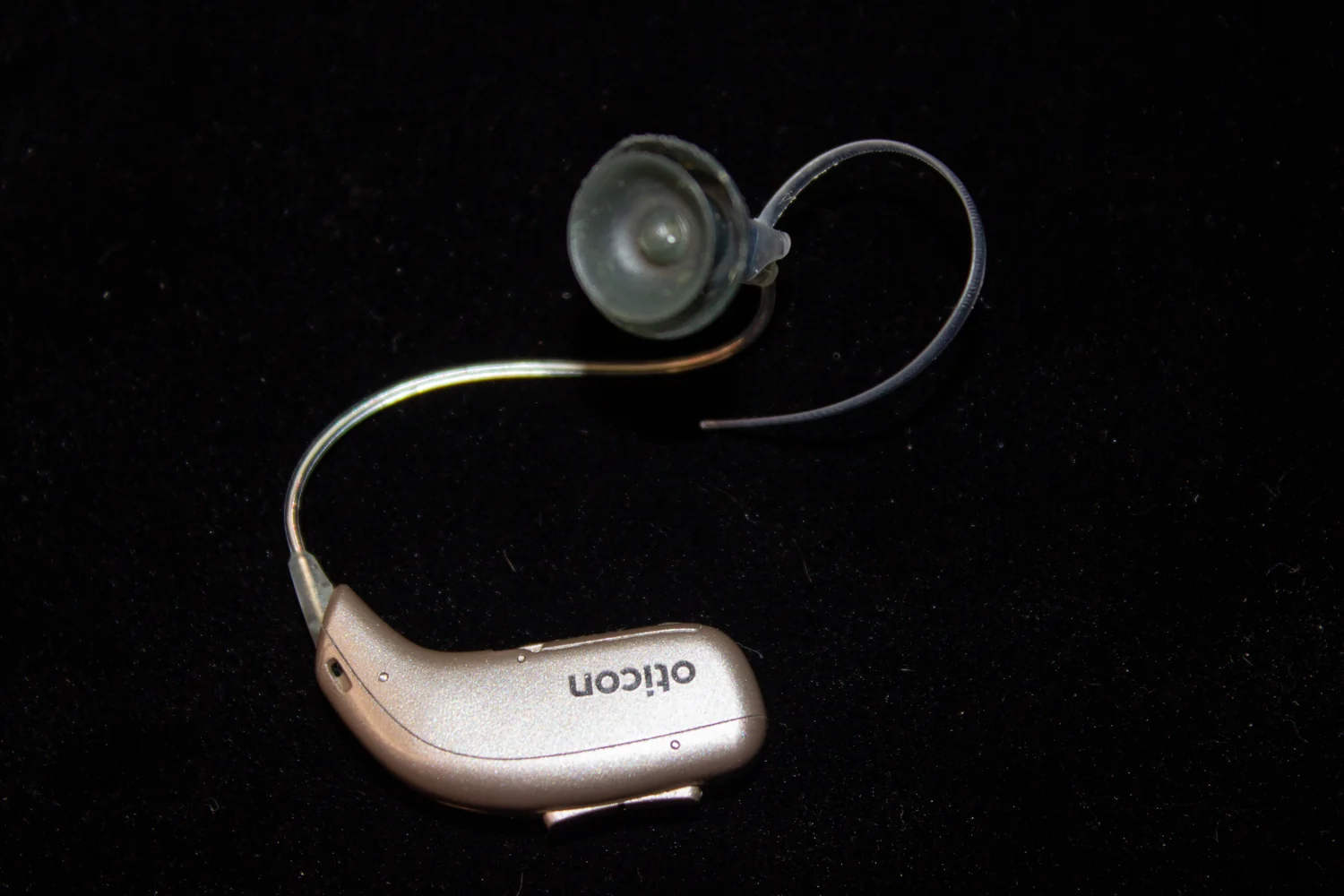
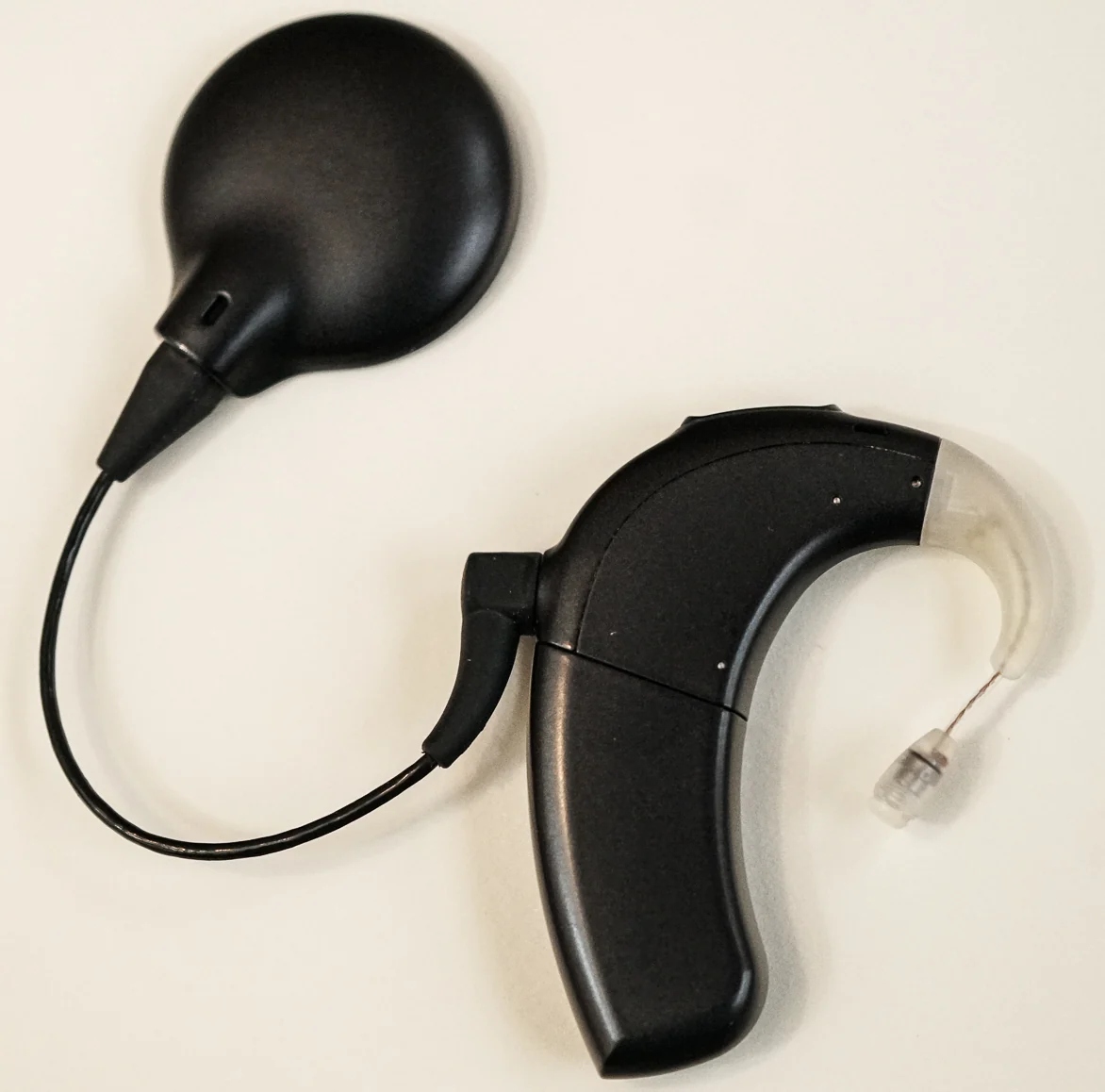
A cochlear implant has an external microphone and speech processor, plus an implanted receiver and electrode array. The microphone picks up sound; the processor selects and arranges it; and the implanted components turn the resulting signals into electrical impulses. Electrodes deliver impulses to different regions of the auditory nerve [1].
This route bypasses damaged portions of the ear, including hair cells that no longer provide a usable signal. Imagine a row of damaged doorbells between a visitor and the person inside. Instead of repairing every bell, a cochlear implant sends coded electrical signals to a communication line beyond them. It does not reproduce every detail of natural hearing; it provides a representation the brain can use.
Pitch becomes a spatial code
In natural hearing, different regions of the cochlea respond most strongly to different pitches: higher-pitched sounds are detected nearer the wider end, and lower pitches nearer the center [2]. The implant’s electrode array similarly stimulates different auditory-nerve regions. The pattern and timing of electrical activity carry information about sound, though the code is simpler than the ear’s normal processing.
That difference explains why a cochlear implant does not restore normal hearing. Signals from an implant are perceived through the auditory nerve and interpreted by the brain as sound, but hearing with the device differs from ordinary hearing [1]. A voice may be recognizable while its natural tone and texture are not recreated in the same way. The device is a bridge for information, not a replacement cochlea.
The brain learns the signal
Because the incoming pattern is unfamiliar, using an implant involves learning or relearning how to connect the device’s signals with sounds. The adjustment takes time and practice; outcomes vary among people. Surgery places the internal portion, while follow-up therapy helps a person make sense of what the device delivers [1].
A useful way to picture the process is learning a new accent in a language you already know. At first, individual sounds may be hard to separate; repeated listening helps the brain attach meaning to patterns. The analogy is limited, but it captures an important point: the implant supplies nerve signals, while perception depends on the brain interpreting them. For many users, that can support speech understanding and awareness of sounds in the environment without making the experience identical to natural hearing.
Sources & further reading
- Cochlear Implants NIDCD
- How Do We Hear? NIDCD
Prepared for the independent PSI Center reading library. About edition dates and source checking.
This explainer describes scientific principles. It does not assess individual treatment choices.