What happens when turning up the volume no longer makes speech understandable? A hearing aid can make incoming sound vibrations larger, but it depends on the inner ear’s sensory cells to convert those vibrations into nerve signals. If those cells are too damaged, louder sound may not solve the problem. A cochlear implant takes a different route: it processes sound and sends electrical impulses to the auditory nerve, bypassing damaged portions of the ear. The distinction is not simply power; it is where the sound-to-nerve conversion happens.
Amplification depends on working hair cells
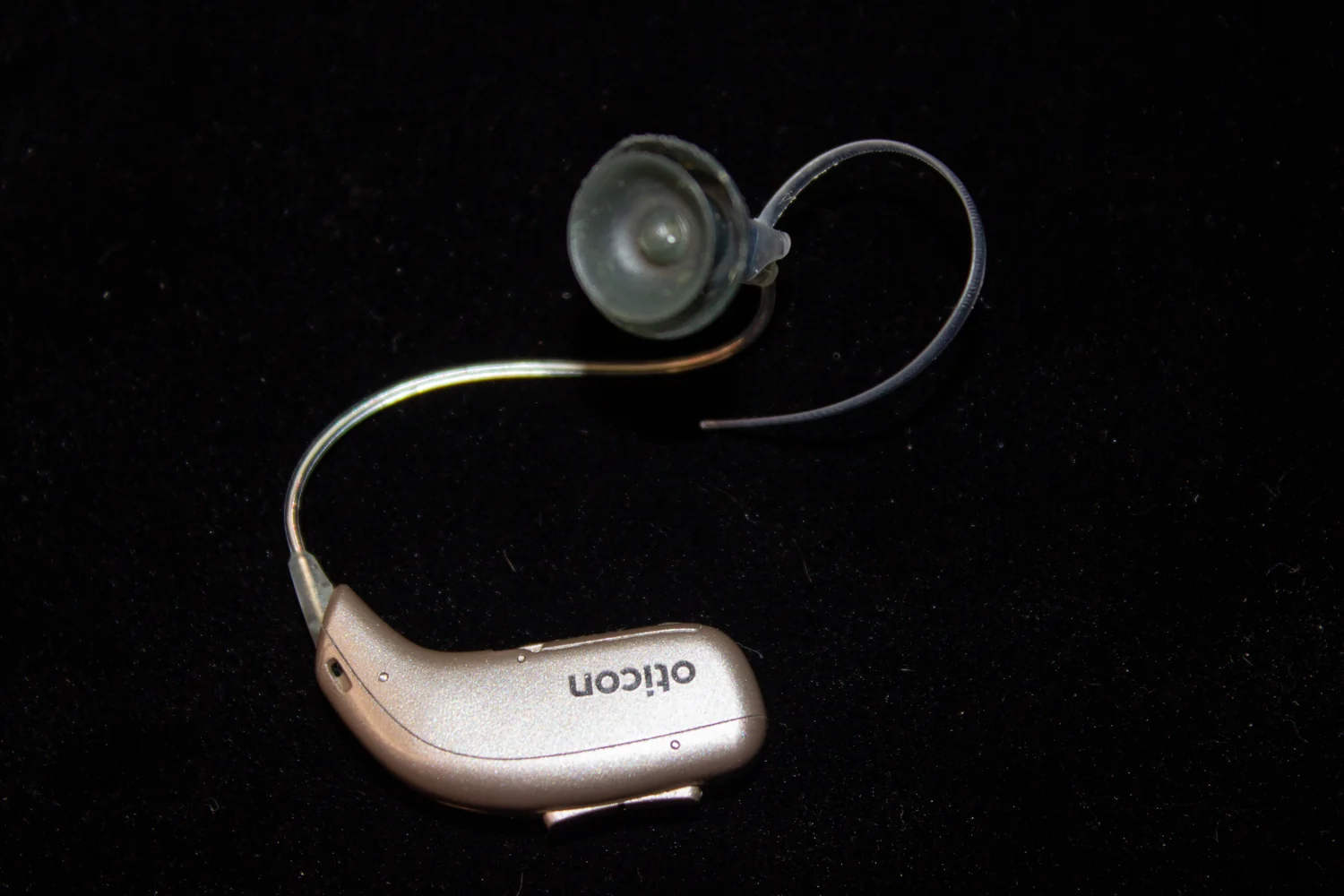
A hearing aid begins with a microphone that receives sound and turns it into electrical signals. An amplifier increases their power, and a speaker sends the enhanced sound into the ear [2]. Inside the cochlea, tiny sensory structures called hair cells detect vibrations and help convert them into neural signals sent to the brain. When some hair cells are damaged, stronger vibrations may allow surviving cells to respond more clearly.
There are limits. The greater the hair-cell damage, the more amplification may be needed, but if the inner ear is too damaged, even large vibrations may not become useful neural signals [2]. Imagine a microphone connected to a speaker and then to a broken wire: turning up the speaker cannot repair the connection. A hearing aid is therefore a sound enhancer, not a replacement for the sensory conversion process.
An implant routes around a damaged pathway
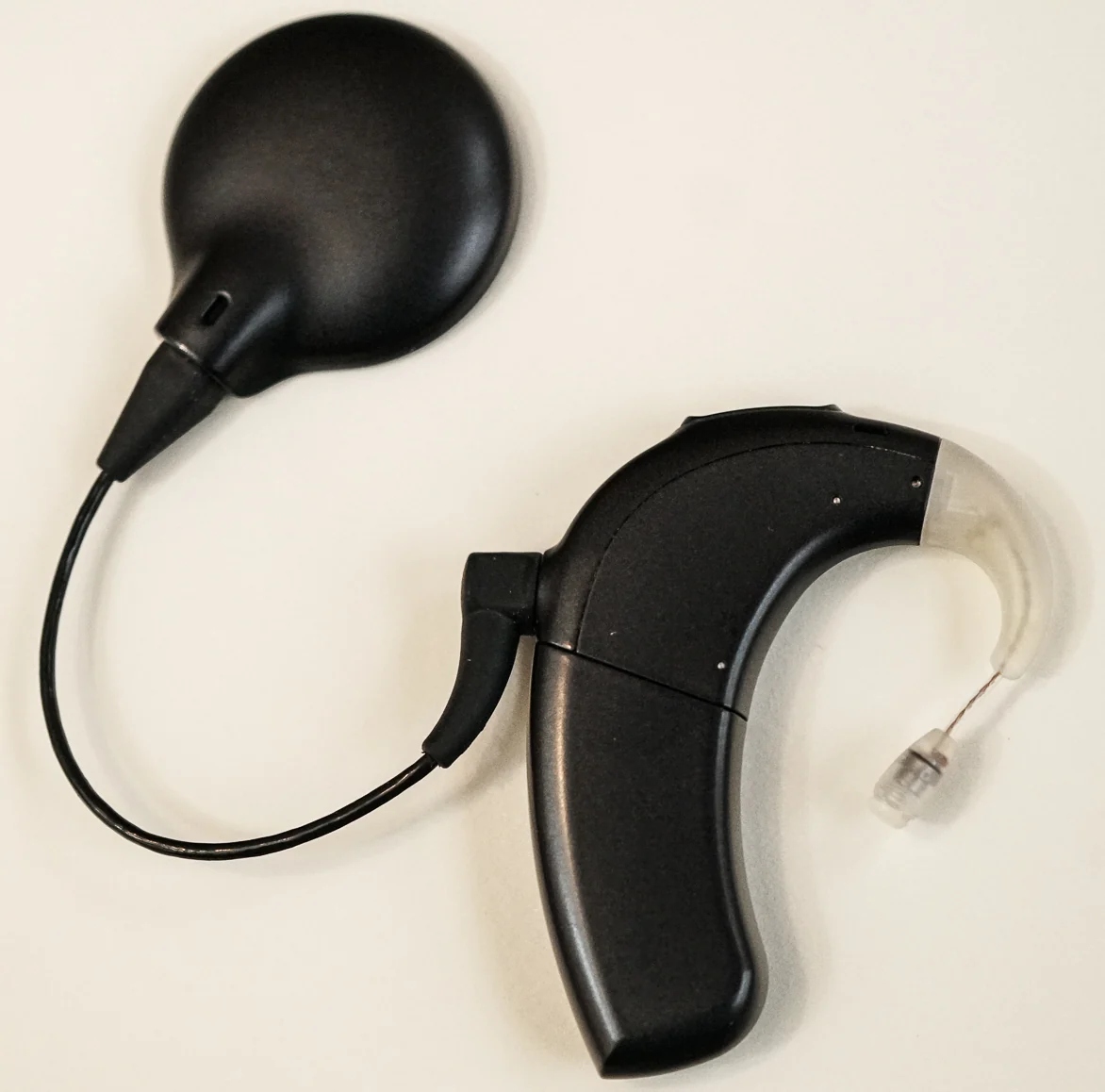
A cochlear implant has an external microphone and speech processor, plus a surgically placed portion under the skin. The processor selects and arranges environmental sounds. A transmitter sends signals to an implanted receiver and stimulator, which converts them into electrical impulses. An electrode array delivers impulses to different regions of the auditory nerve [1]. Instead of relying on damaged hair cells to turn amplified vibration into nerve activity, the implant directly stimulates the nerve.
This is why “louder hearing aid” misses the key physics. A hearing aid increases acoustic vibration; a cochlear implant transforms sound into a patterned electrical signal and delivers it at the nerve. The device does not restore normal hearing. It supplies a useful representation of sound that the brain can recognize and interpret over time [1]. The path from environmental sound to perception is therefore altered, not merely boosted.
The brain learns a new representation
The signals generated by an implant travel along the auditory nerve to the brain, which recognizes them as sound. Because this pattern differs from ordinary hearing, understanding it takes practice. The wearer may need to learn or relearn how the implant’s signals correspond to speech and sounds around them [1]. A warning beep, a familiar voice, and background noise are not just volumes; the brain has to sort useful patterns from the incoming stream.
This learning period highlights the difference between detecting a signal and understanding it. A device can deliver electrical activity to the auditory pathway, but perception involves the brain interpreting that activity. Many people can learn to recognize warning signals, environmental sounds, and speech, though outcomes vary [1]. Rehabilitation and practice are part of the overall process, rather than optional fine tuning of a device that instantly recreates natural hearing.
Different tools fit different damage
Hearing aids are used when amplified sound can still be detected through the ear’s remaining sensory function. Cochlear implants may help some people who are profoundly deaf or severely hard-of-hearing by bypassing damaged portions and stimulating the auditory nerve [1] [2]. These are different strategies for different points along the hearing pathway. One increases the input to the natural system; the other changes the route by which sound information reaches the brain.
Implantation involves surgery and significant therapy, and people do not all perform at the same level with the device [1]. The contrast also clarifies why one technology cannot be described as a stronger version of the other. A hearing aid works with the ear’s remaining mechanical and sensory function. A cochlear implant substitutes an electrical route for part of that process. Both are tools that can assist hearing, but the physics—and the learning involved—are distinct.
Sources & further reading
- Cochlear Implants NIDCD
- Hearing Aids NIDCD
Prepared for the independent PSI Center reading library. About edition dates and source checking.
This explainer describes scientific principles. It does not assess individual treatment choices.