How does a ripple in the air become the sound of a voice? The ear passes that physical disturbance through a sequence of transformations. Air-pressure waves move the eardrum; tiny bones relay and amplify its motion; fluid inside the cochlea shifts a flexible membrane; and sensory cells convert movement into electrical signals. Each stage changes the form of the information while preserving patterns the brain can interpret. Hearing is therefore not one event in one organ, but a linked mechanical and biological process.
From air pressure to a moving eardrum
Sound travels as pressure variations through air. When these waves enter the ear canal, they reach the eardrum and make it vibrate [1]. The eardrum acts as a boundary between the air-filled outer ear and the middle ear. Its motion follows the incoming pattern: the timing and size of its vibrations carry features of the sound that began outside.
The eardrum passes movement to three tiny middle-ear bones: the malleus, incus, and stapes. These bones amplify the vibrations and send them toward the cochlea, an inner-ear structure filled with fluid [1]. Amplification matters because the next stage depends on making fluid move. The chain is mechanical: a wave in air moves a membrane, and that motion is relayed through connected structures.
A traveling wave separates pitches
Inside the cochlea, vibration causes fluid to ripple and creates a traveling wave along the basilar membrane, an elastic partition [1]. The membrane does not move uniformly from end to end. Hair cells at different locations respond to different parts of the wave: those near the wide end detect higher-pitched sounds, while cells closer to the center detect lower-pitched ones.
Imagine two tones, one high and one low, arriving at the same ear. Their vibrations travel through the same outer and middle-ear structures, but the resulting cochlear waves peak at different places. This spatial organization helps the nervous system distinguish pitch. The cochlea thus converts differences in sound frequency into differences in where mechanical motion is strongest along the membrane.
Hair-cell motion becomes an electrical message
Hair cells sit on the basilar membrane and move with its traveling wave. Tiny projections called stereocilia on top of each hair cell bend as they contact an overlying structure. Bending opens pore-like channels at the tips; chemicals then enter the cells and create an electrical signal [1]. A mechanical displacement has been translated into a change in cellular activity.
The auditory nerve carries these signals to the brain, which recognizes and interprets them as sound [1]. This conversion is the bridge between vibration and perception. The nerve does not carry a miniature recording of the original sound. Instead, patterns of electrical activity encode information that the brain can use to identify sounds and make sense of them.
A cochlear implant takes another route
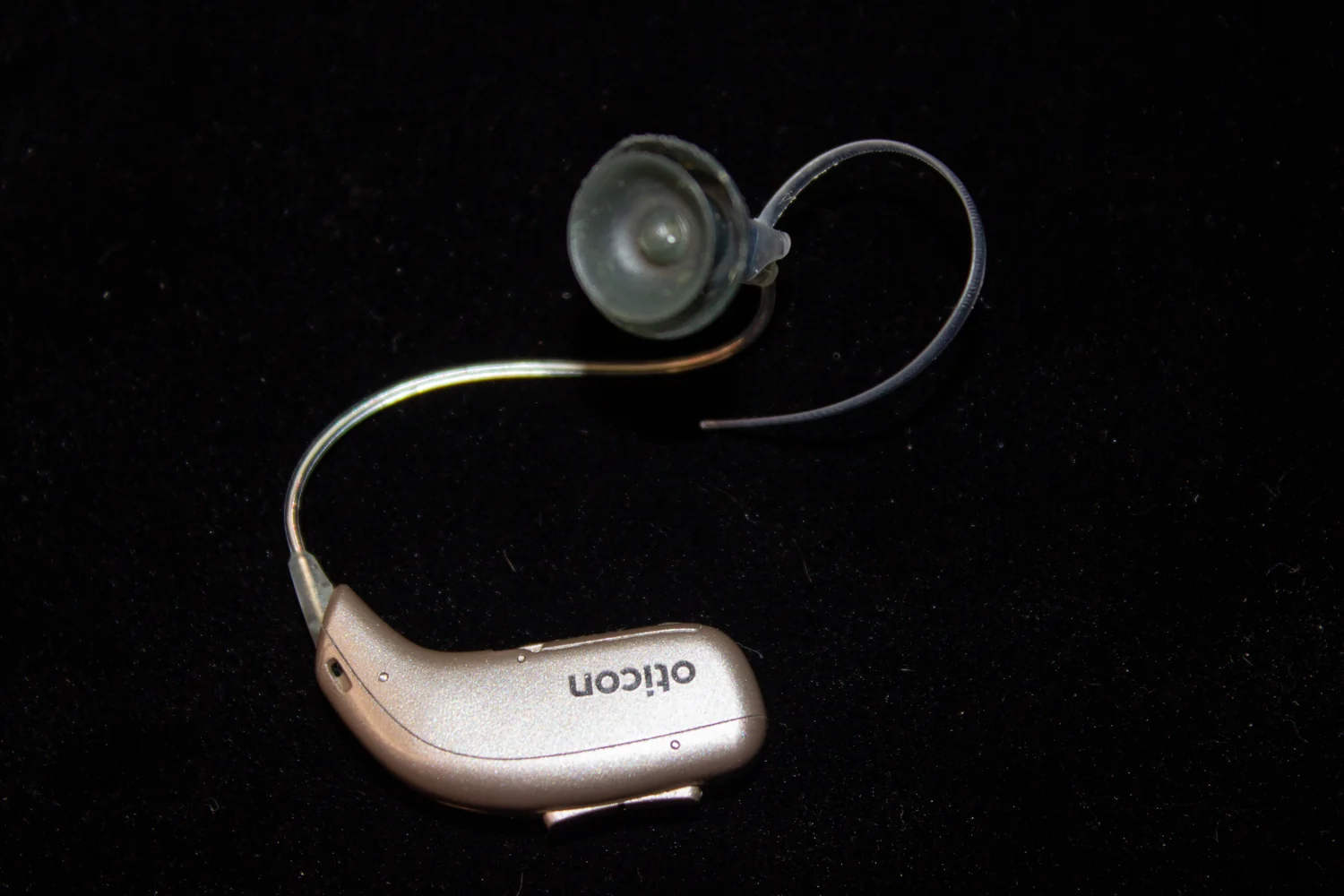
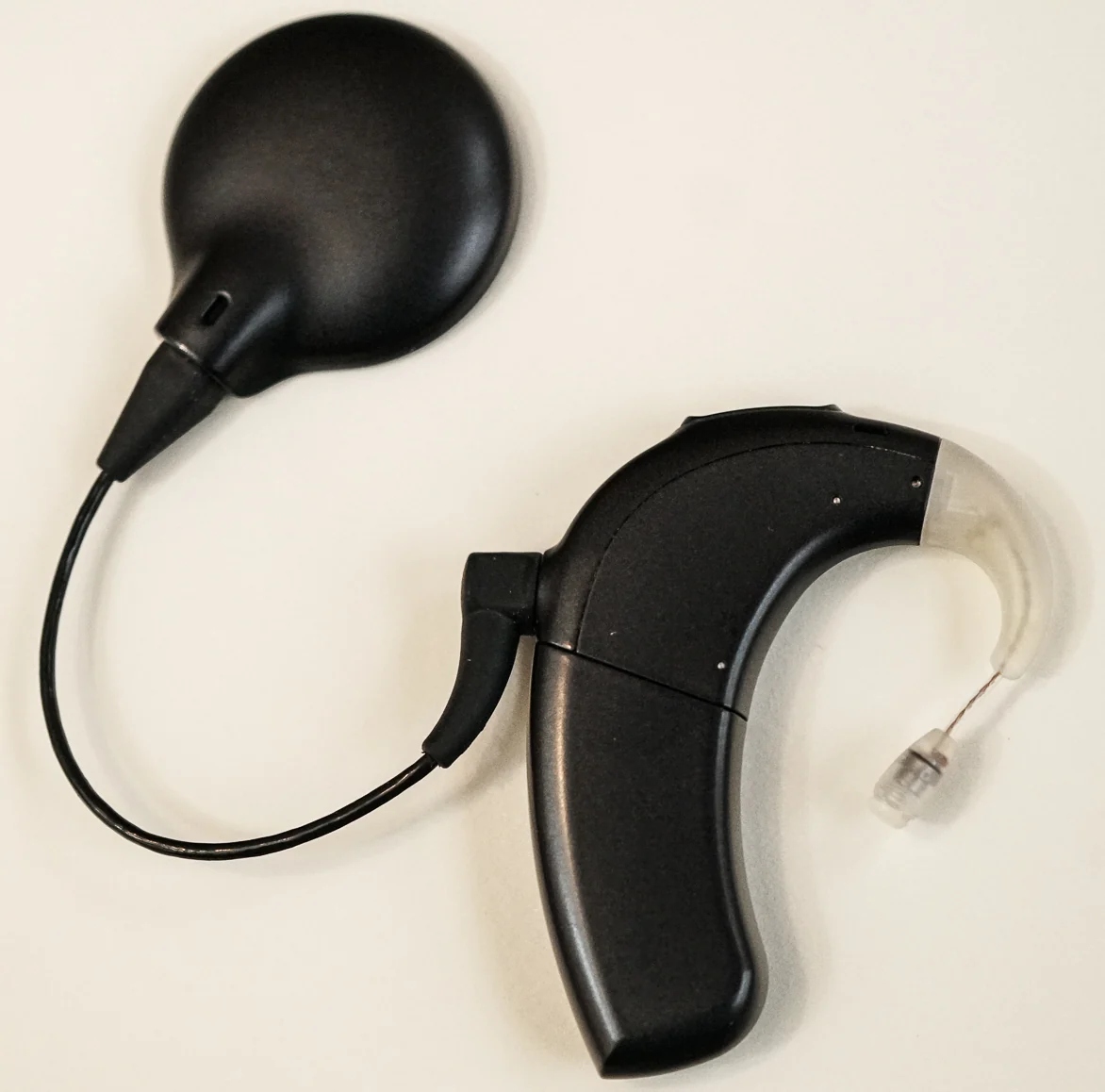
A cochlear implant illustrates what happens when parts of the normal chain cannot deliver useful signals. A hearing aid amplifies sound so damaged ears may detect it; a cochlear implant bypasses damaged portions and directly stimulates the auditory nerve [2]. Its microphone picks up sound, a speech processor selects and arranges it, and an electrode array sends electrical impulses to different regions of the nerve.
The result is a useful representation of sound for many recipients, not a restoration of normal hearing [2]. Signals from the implant differ from those produced by the ordinary mechanical process, and learning to interpret them takes time and therapy. The contrast makes the ear’s chain easier to see: normal hearing depends on carefully linked transformations from air to fluid to cell signals, while an implant substitutes electronic processing and direct neural stimulation for some of those steps.
Sources & further reading
- How Do We Hear? NIDCD
- Cochlear Implants NIDCD
Prepared for the independent PSI Center reading library. About edition dates and source checking.
This explainer describes scientific principles. It does not assess individual treatment choices.