Why can a pair of earplugs leave a loud machine sounding almost unchanged? Sound is a pressure wave moving through air, and protection works by reducing how much of that wave reaches the ear canal. If the plug leaves a gap, the opening becomes a route around the barrier. The details of fit matter because the inner ear receives vibrations that it cannot simply replace once noise has damaged its sensory cells.
The ear turns vibration into signals
Sound waves enter the ear canal and vibrate the eardrum. Three tiny middle-ear bones transmit that motion to fluid inside the cochlea, a spiral-shaped structure in the inner ear. Ripples along a membrane move sensory hair cells; tiny projections on those cells bend, opening channels that help generate electrical signals carried by the auditory nerve to the brain [1].
Very loud sound can damage or kill these hair cells. Human hair cells do not grow back, so the damage can be permanent even when a person does not notice an immediate change [1]. Protection therefore aims to reduce the sound reaching the ear before that delicate mechanical-to-electrical process is overloaded.
A small gap can become the main route
Imagine closing a window against traffic noise but leaving a narrow crack. Most of the glass may block sound, yet the crack still lets sound through. Ear protection has a similar practical problem: a plug or earmuff only attenuates sound effectively when it is positioned to limit the paths into the ear. A poorly seated plug can leave a channel along the ear canal, reducing the benefit of the material itself.
Different protective devices suit different settings and ears; NIDCD recommends using earplugs or other protective devices during loud activities and moving away when noise cannot be reduced or blocked [1]. The useful distinction is between having protection and having protection that is actually in place. A device cannot help much if it is loose, displaced, or incompatible with the activity.
Loudness and time work together
Sound level is measured in decibels, with dBA commonly used to reflect human hearing sensitivity. Sounds at or below 70 dBA are unlikely to cause hearing loss even with long exposure, while prolonged or repeated exposure at or above 85 dBA can cause damage. The louder the sound, the less time it takes to pose a risk [1]. Thus, protection is one part of reducing exposure; distance and duration matter too.
A concert and a quiet conversation are not just different in subjective intensity. A typical conversation is listed at 60–70 dBA, while concerts and sporting events can fall in the 94–110 dBA range [1]. The scale is not a simple linear count of “loudness units,” so a modest numeric increase can represent a substantial increase in sound intensity. Moving farther from the source lowers the sound reaching you, and limiting time reduces the total exposure.
Fit is about the path sound takes
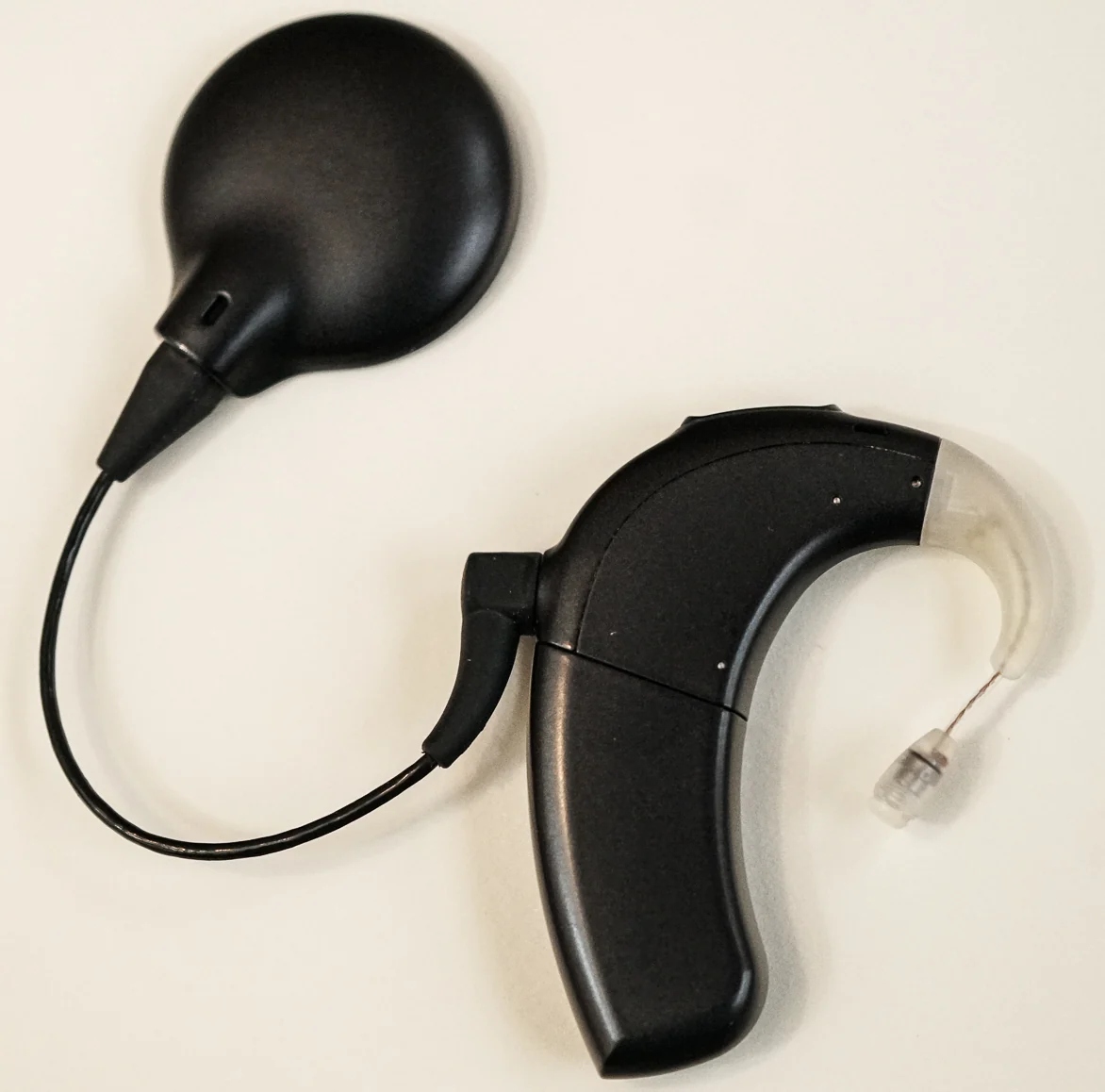
A hearing aid provides a useful contrast: it uses a microphone, amplifier, and speaker to make selected sounds louder for someone with hearing loss [2]. Ear protection has the opposite immediate aim—reducing sound transmission into the ear. Both depend on a physical route. A hearing aid must deliver sound into the canal; a protector must limit it from entering. In either case, the device’s position and interaction with the ear affect what the user experiences.
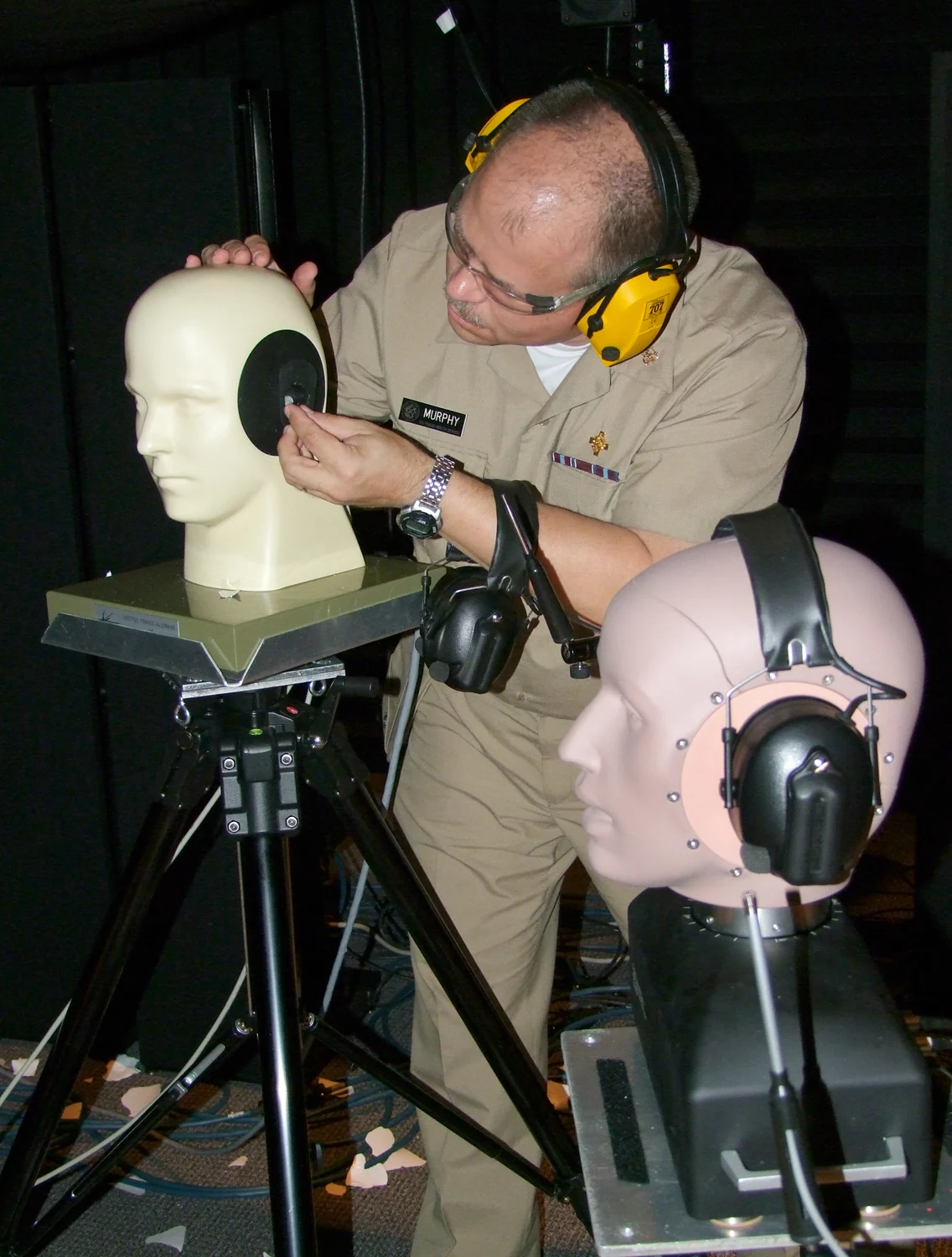
Fit also explains why protection should be checked in the setting where it is needed. A plug that seems secure in a quiet room can shift during work, movement, or repeated removal. Muffs can be interrupted by objects between the cushion and head. The underlying physics is straightforward: sound follows available paths through air and vibrating material. Good protection narrows those paths, while sensible distance and exposure time reduce the sound burden that remains.
Sources & further reading
- Noise-Induced Hearing Loss NIDCD
- Hearing Aids NIDCD
Prepared for the independent PSI Center reading library. About edition dates and source checking.
This explainer describes scientific principles. It does not assess individual treatment choices.