If a 3D printer can reproduce the shape of a bone from an image, why is that not enough to establish that an implant is safe? Shape is only one part of an implant’s behavior. The device must also bear forces, interact with tissue and body fluids, and remain reliable after manufacturing. Printing changes how an object is made; it does not remove the need to test what the object is made of.
Geometry is a beginning
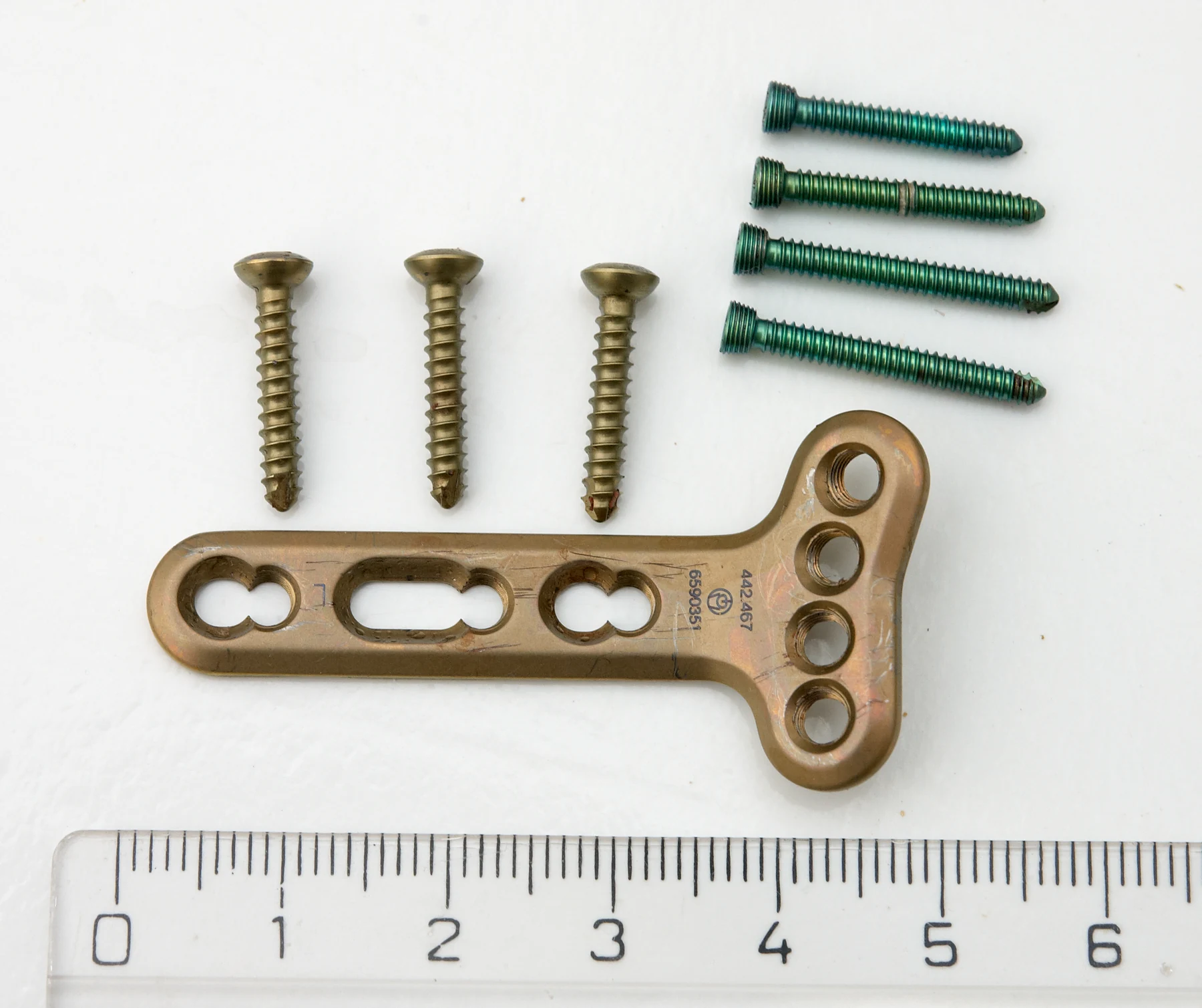
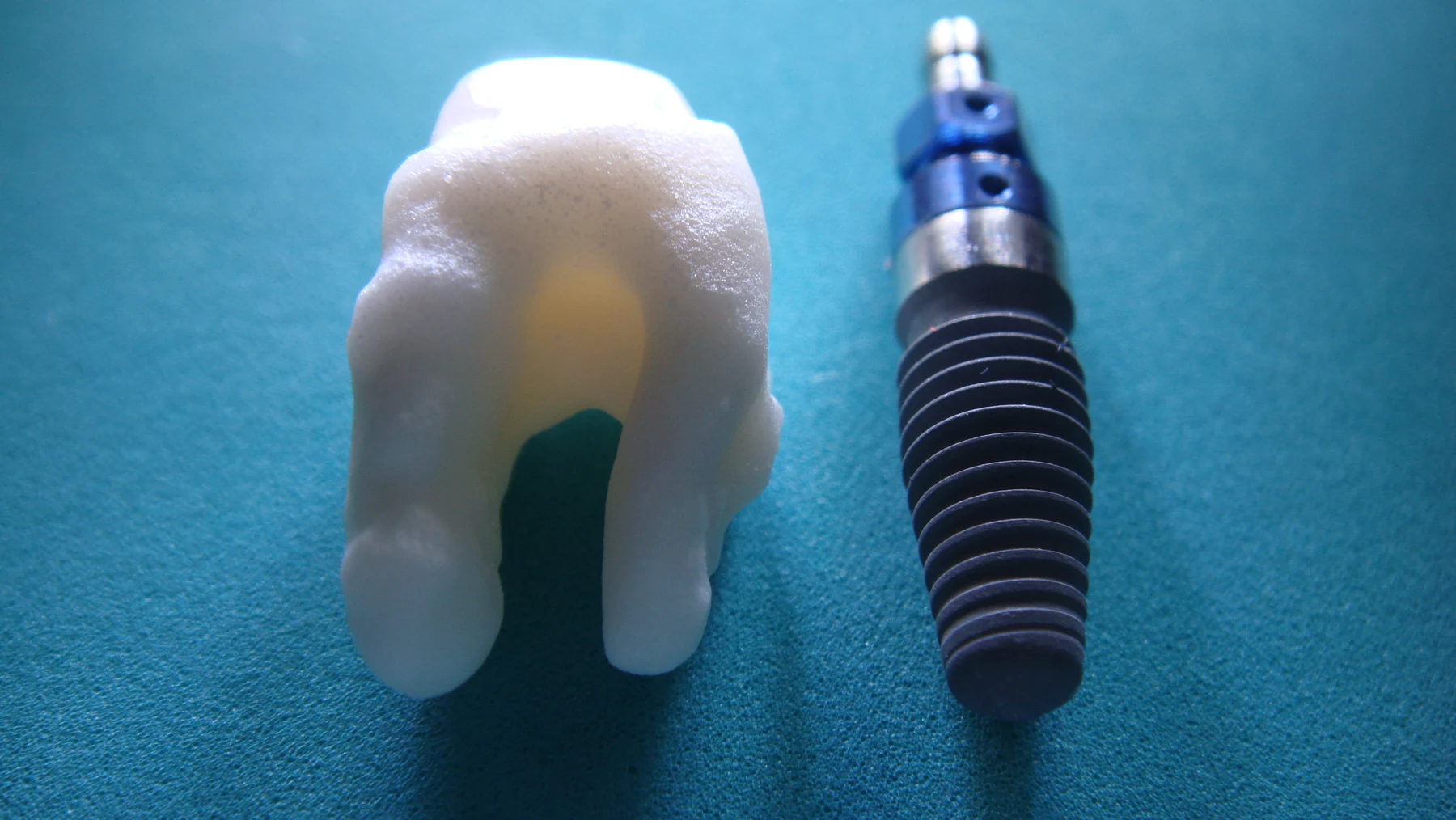
Additive manufacturing builds an object in successive layers from a digital design. That approach allows complicated internal structures and patient-specific shapes, and medical applications include orthopedic and cranial implants, dental restorations, instruments, and prosthetics. An MRI or computer-aided design file may inform the geometry, but a digital model describes dimensions, not the complete biological or mechanical performance of the finished device. [1]
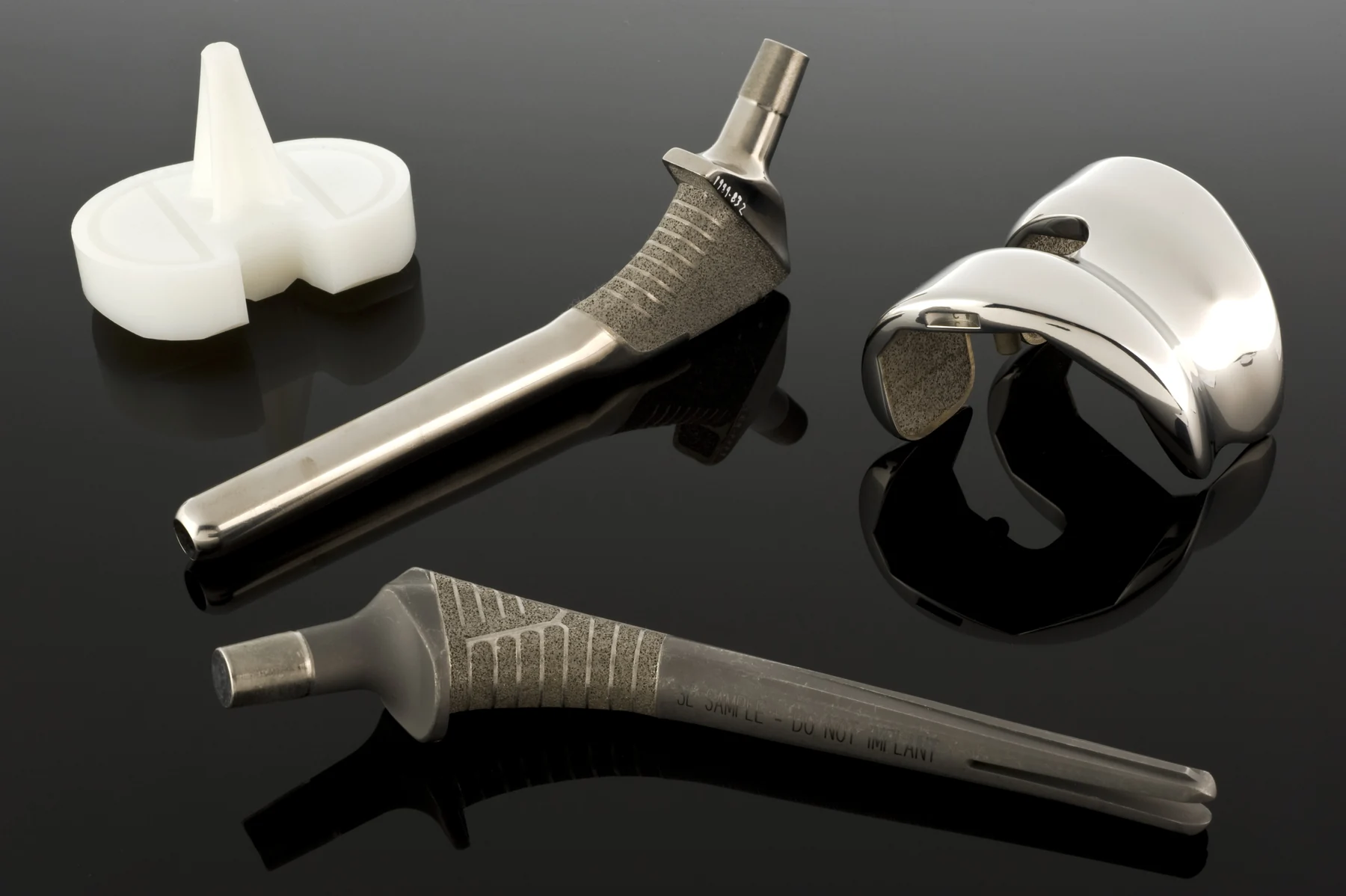
A useful analogy is a bridge designed to fit a particular valley. Matching the terrain does not tell an engineer whether the bridge material will fatigue, corrode, or crack under repeated loads. In the body, an implant’s location and function set different demands: a hip component experiences repeated loading, while a device in a blood vessel must coexist with pulsatile flow. Material properties matter in relation to the job. [2]
The body is an active environment
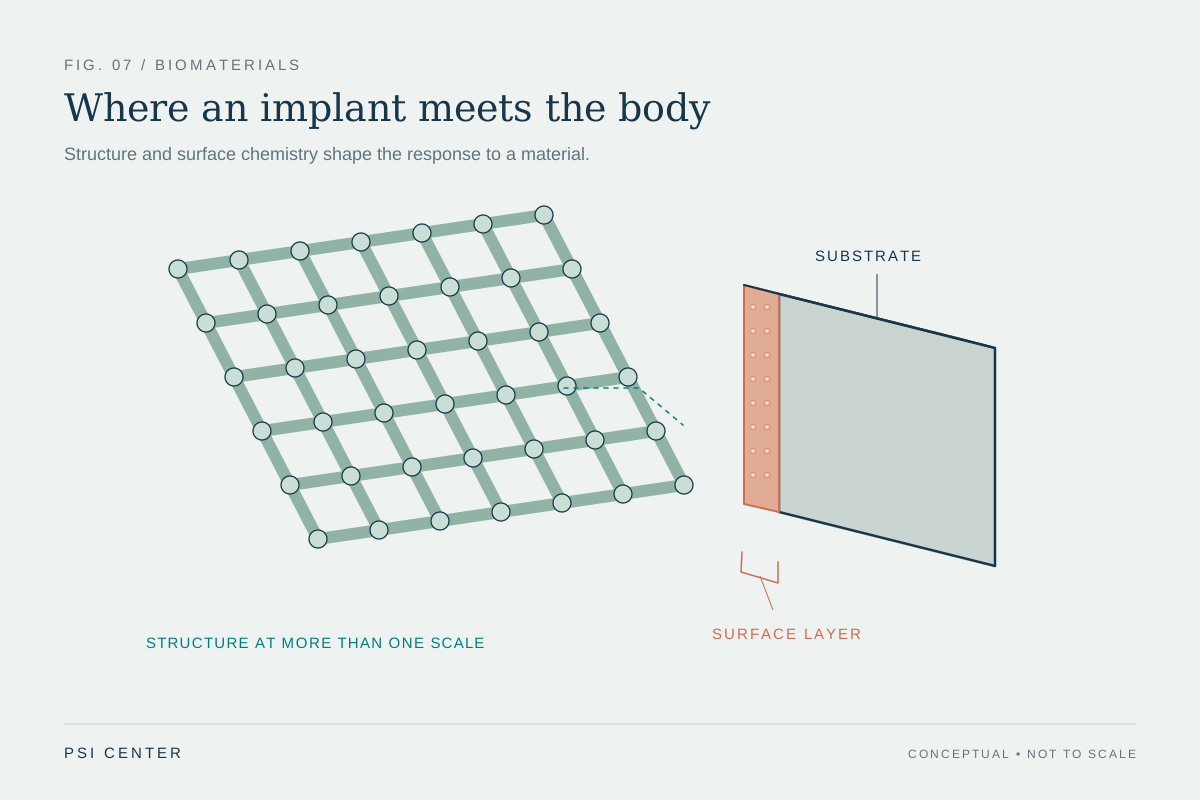
A biomaterial is a material used in a device that interacts with the body. Metals, polymers, and ceramics are all used in medical devices, but no category is automatically suitable for every implant. Tissue may mount a foreign-body response: immune activity can degrade or surround an object with scar tissue, potentially impairing device function or causing pain. Material chemistry, surface, anatomical location, and exposure duration all shape this interaction. [2]
The surrounding environment can also change the device. Metal wear and corrosion may release material products; repeated movement can stress a component; and a polymer intended to flex must do so without losing its role. FDA evaluation considers specific material properties alongside intended use and function, and manufacturers assess possible biological responses and engineering risks such as wear or corrosion. [2]
Printing introduces process questions
Layer-by-layer manufacture means the production process itself is part of the device story. A digital design can be consistent while variations in materials or manufacturing affect the final object. Testing therefore has to characterize the actual finished device and process, rather than treating the printer file as proof of material safety. FDA technical guidance addresses considerations specific to additively manufactured devices, while material evaluation follows a risk-based approach. [1]
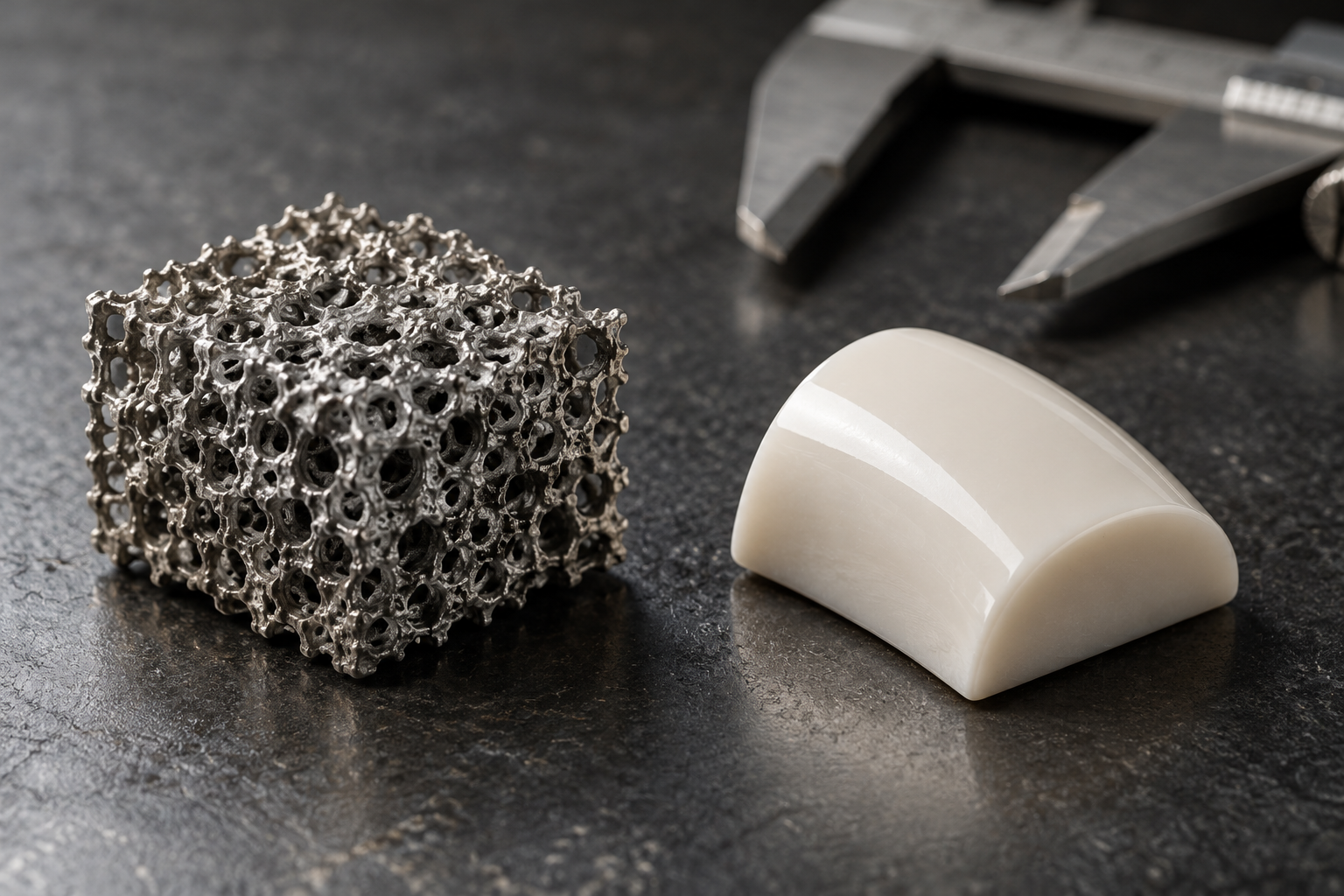
Suppose two implants have the same outer contour but one has a porous interior and the other is solid. Their stiffness, fluid access, and tissue contact may differ even though they fit the same anatomical space. That thought experiment shows why geometry and material behavior cannot be separated cleanly: internal architecture affects mechanics, and mechanics can affect the tissues around the device.
Evidence follows intended use
Biocompatibility assessment asks whether a device’s materials could produce an adverse biological response and whether the associated risks are acceptable. The evaluation considers components, manufacturing processes, where the implant will be used, and how often or how long the body is exposed. This is not a single universal test that certifies every material for every purpose; it is an evidence package matched to the specific device and contact conditions. [2]
Biomaterials research offers promising design strategies, such as using a coating that resembles aspects of bone or a biodegradable structure intended to support healing. Yet a material strategy or promising model result does not establish that every printed implant is clinically proven. A tailored shape can solve a geometric problem; material and device testing address the separate questions of whether it behaves safely and reliably in its intended setting. [3]
Explore the physics: an explanatory diagram
Sources & further reading
Prepared for the independent PSI Center reading library. About edition dates and source checking.
This explainer describes scientific principles. It does not assess individual treatment choices.