What exactly gets louder when a hearing aid is switched on? The device does not simply turn up every sound in the world. It captures sound, changes its electrical representation, and sends a modified signal into the ear. The inner ear must still do its part: sensory hair cells convert vibration into signals the brain can interpret. This division between device processing and biological hearing explains both what aids can help with and why their effects have limits.
From microphone to inner ear
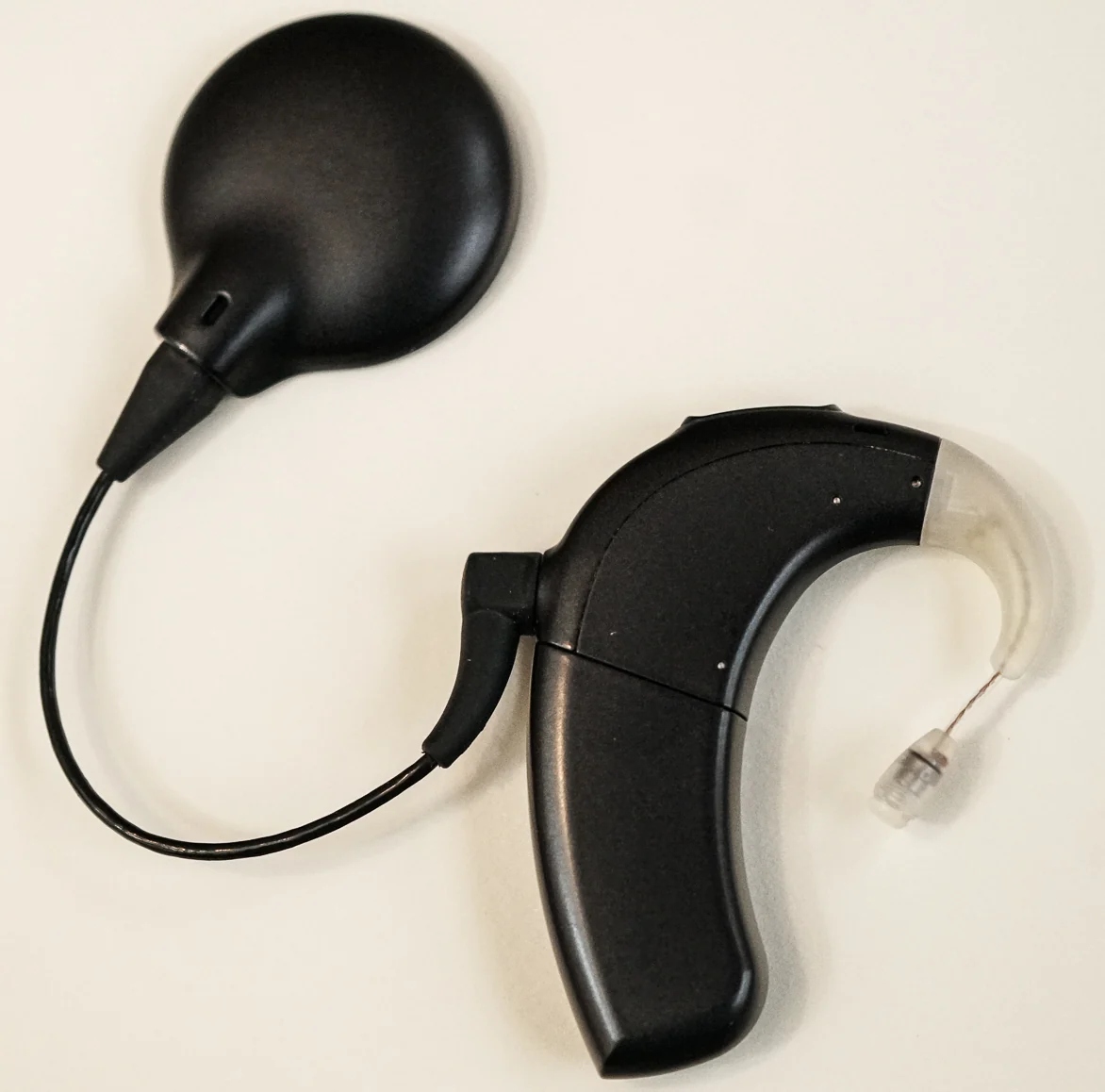
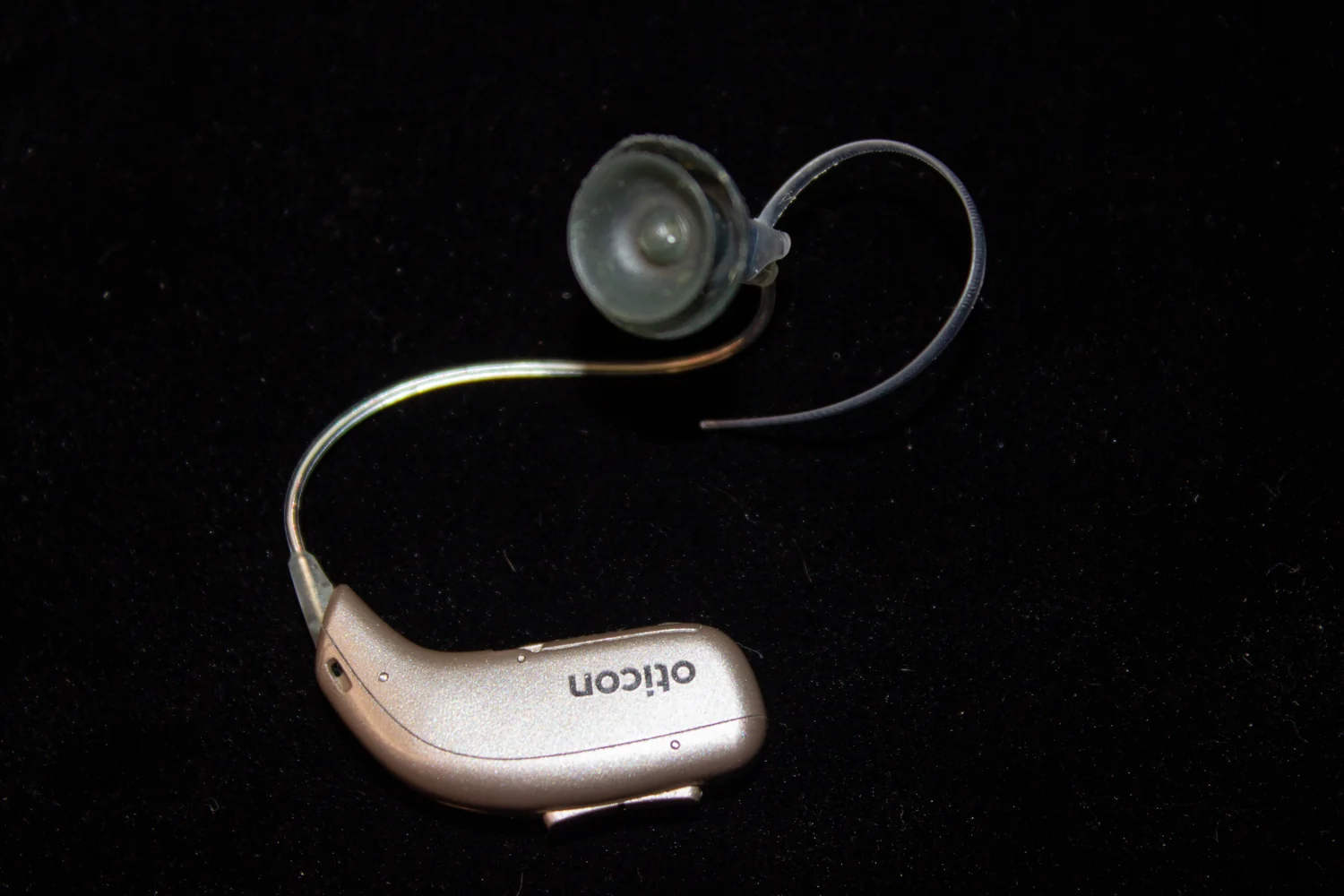
A conventional hearing aid has a microphone, amplifier, and speaker. The microphone converts sound waves into electrical signals; the amplifier increases their power; and the speaker delivers sound into the ear [1]. The device therefore acts before the inner ear, changing the input rather than repairing the sensory cells that detect it.
Sound normally travels down the ear canal and vibrates the eardrum. Tiny middle-ear bones pass those vibrations to fluid in the cochlea, a spiral-shaped inner-ear structure. A traveling wave moves along the basilar membrane, where hair cells respond to particular pitches. Their movement bends microscopic projections, opening channels that produce electrical signals carried by the auditory nerve to the brain [2]. A hearing aid supplies stronger vibrations; the ear and brain still perform the conversion and interpretation.
Amplification can be selective
Digital aids convert sound into numerical codes before amplification. Because the code can preserve information about pitch and loudness, the device can be programmed to amplify some frequencies more than others or emphasize sound from a particular direction [1]. That matters because hearing loss is not necessarily uniform across pitches. A sound-processing system can shape the signal to better fit remaining hearing rather than raising every frequency equally.
Picture a conversation in a café: the goal is not merely to make the whole room louder. A programmable aid can be adjusted for different listening environments, though it cannot perfectly separate desired speech from every competing sound. Background noise may remain, and settings may need adjustment. This is signal processing—modifying sound before it reaches the ear—not a guarantee that every word will become clear.
Why louder is not always enough
Many hearing aids help when hearing loss results from damage to inner-ear hair cells. Larger vibrations can allow surviving cells to respond more effectively, but there are practical limits to amplification. If the inner ear is too damaged to convert even strong vibrations into neural signals, a conventional hearing aid may not help effectively [1]. The device can strengthen the input, but it cannot make absent sensory machinery work.
Pitch is also mapped along the cochlea: hair cells near its wider end detect higher-pitched sounds, while cells nearer the center respond to lower-pitched sounds [2]. If damage differs across that structure, an aid’s frequency-specific adjustments can matter. Yet amplification is not the same as restoring normal hearing. Users may need time to adjust to altered sound, and a plugged-up or unusually loud perception of their own voice can occur as the brain adapts [1].
Device design follows the listening task
Hearing aids come in behind-the-ear, in-the-ear, and canal styles, with differences in size, placement, amplification capacity, and available features. Digital circuitry can be used across styles; smaller canal devices have less room for batteries and added components, and their compactness may limit power [1]. The physical form is part of the engineering tradeoff: a device must fit, remain usable, and deliver the needed signal.
Some implantable devices take another route by moving middle-ear bones directly or transmitting vibration through skull bone to the inner ear, but these are different technologies and may involve surgery [1]. They still rely on the inner ear’s ability to detect vibration. Across designs, the common principle is to alter how sound energy reaches the hearing system. Understanding that chain—from air vibration to cochlear motion to neural signal—makes clear why an aid can improve access to sound without recreating the original hearing process.
Sources & further reading
- Hearing Aids NIDCD
- How Do We Hear? NIDCD
Prepared for the independent PSI Center reading library. About edition dates and source checking.
This explainer describes scientific principles. It does not assess individual treatment choices.