When a person takes a step with a prosthesis, where does the force go? It passes from the ground through the artificial limb and its socket or attachment, then into the body’s tissues. That boundary is more than a fitting detail: it is where mechanical loads, sensation, materials, and movement meet. A successful interface must transmit useful forces while avoiding damaging concentrations of pressure and accommodating the body’s changing shape and response.
Forces cross the boundary
A prosthesis replaces or supports a function, but it does not simply attach to a static body. During walking, the limb accelerates, stops, and changes direction. The interface carries forces between device and tissue; pressure is force distributed over area. If a load is concentrated in a small region, local pressure rises, which can affect comfort and skin. Fit must therefore be understood dynamically, across repeated motion, rather than as a single measurement made at rest.
Imagine pushing a fingertip against a table, then pressing with the broad palm using the same force. The palm spreads the load over more area, so pressure at any one point is lower. A prosthetic socket similarly aims to distribute loads across suitable regions while supporting control. The analogy has limits because living tissue is deformable and varies in sensitivity, but it shows why geometry matters as much as material strength.
Materials meet living tissue
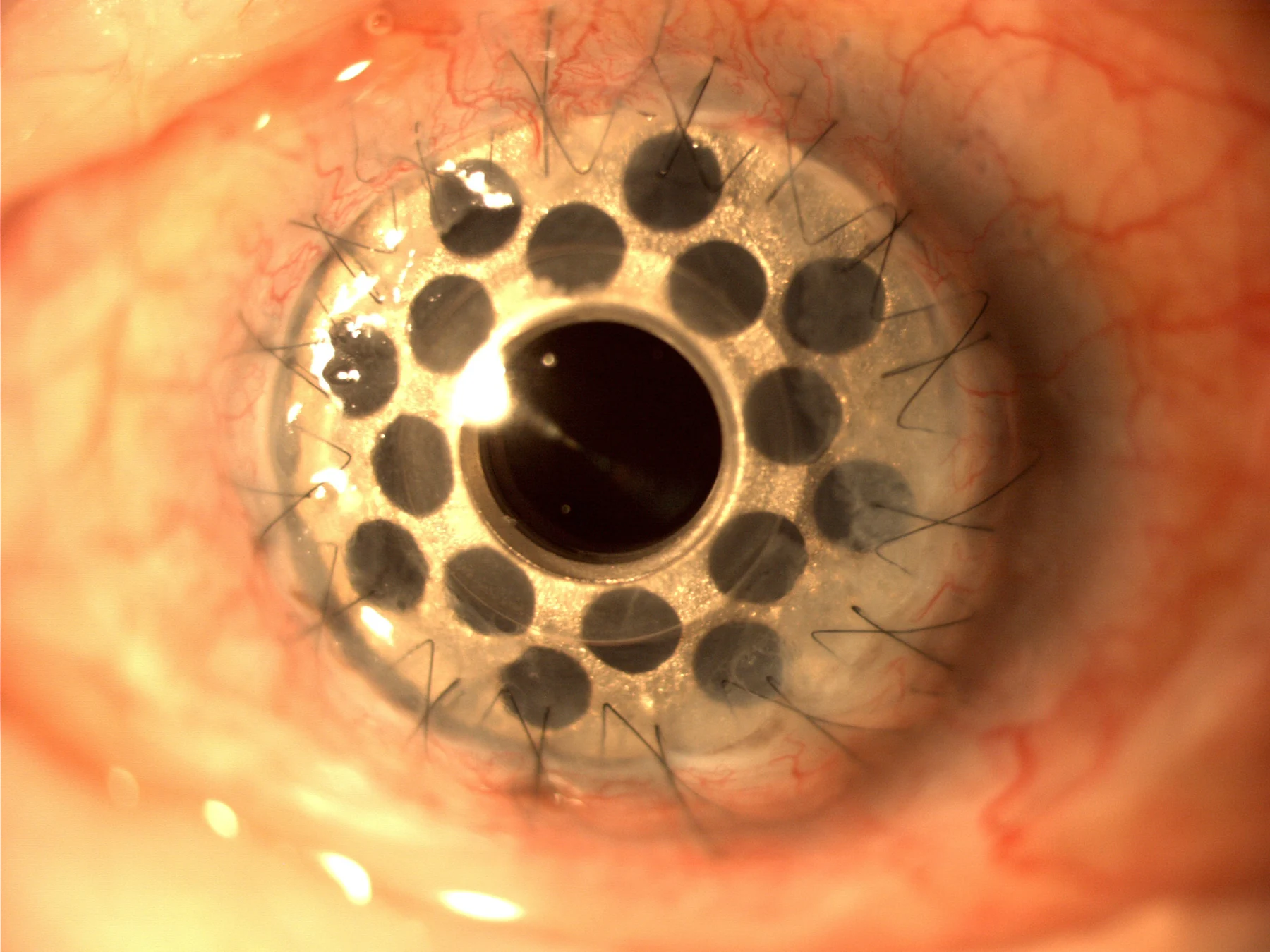
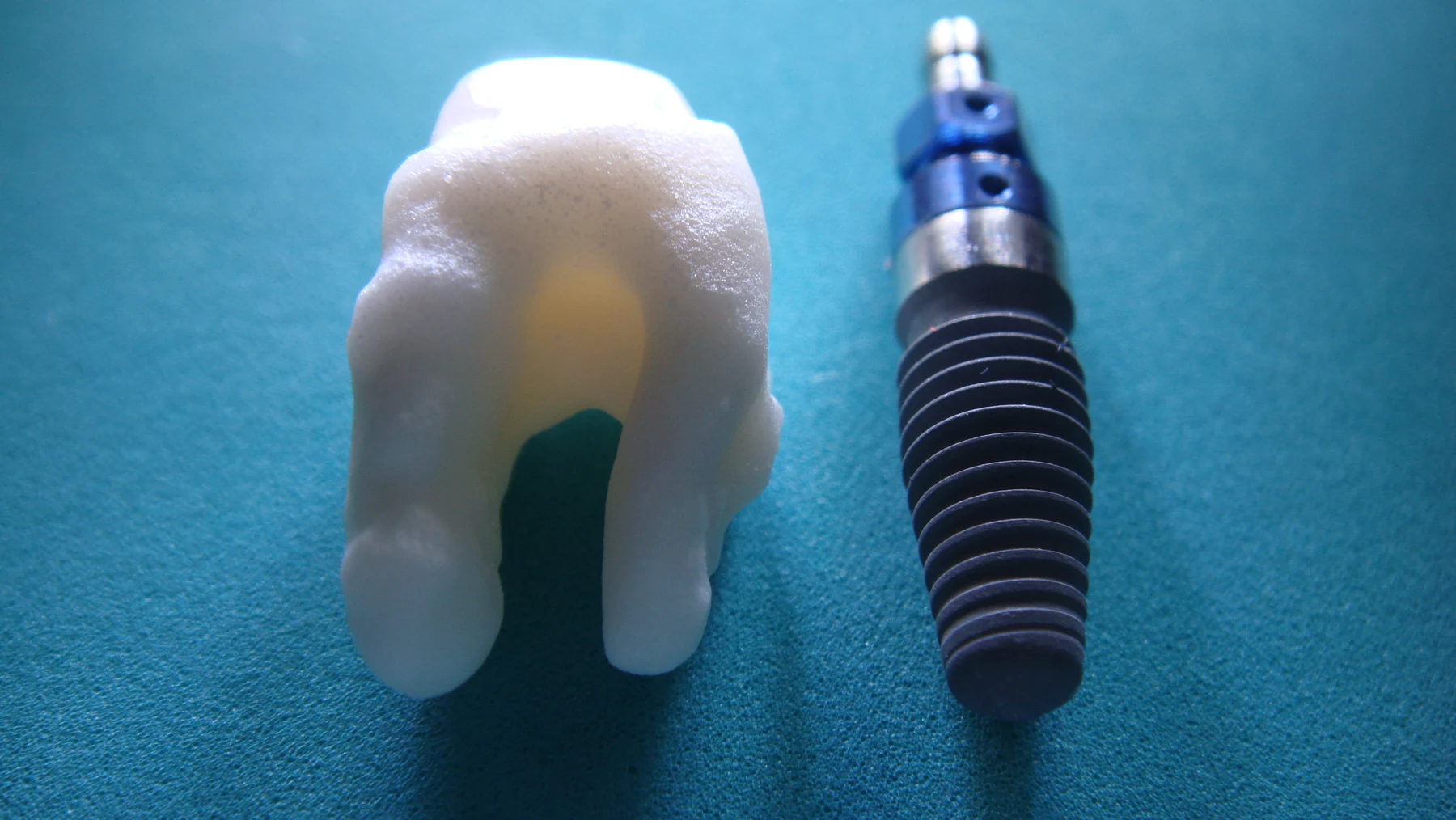
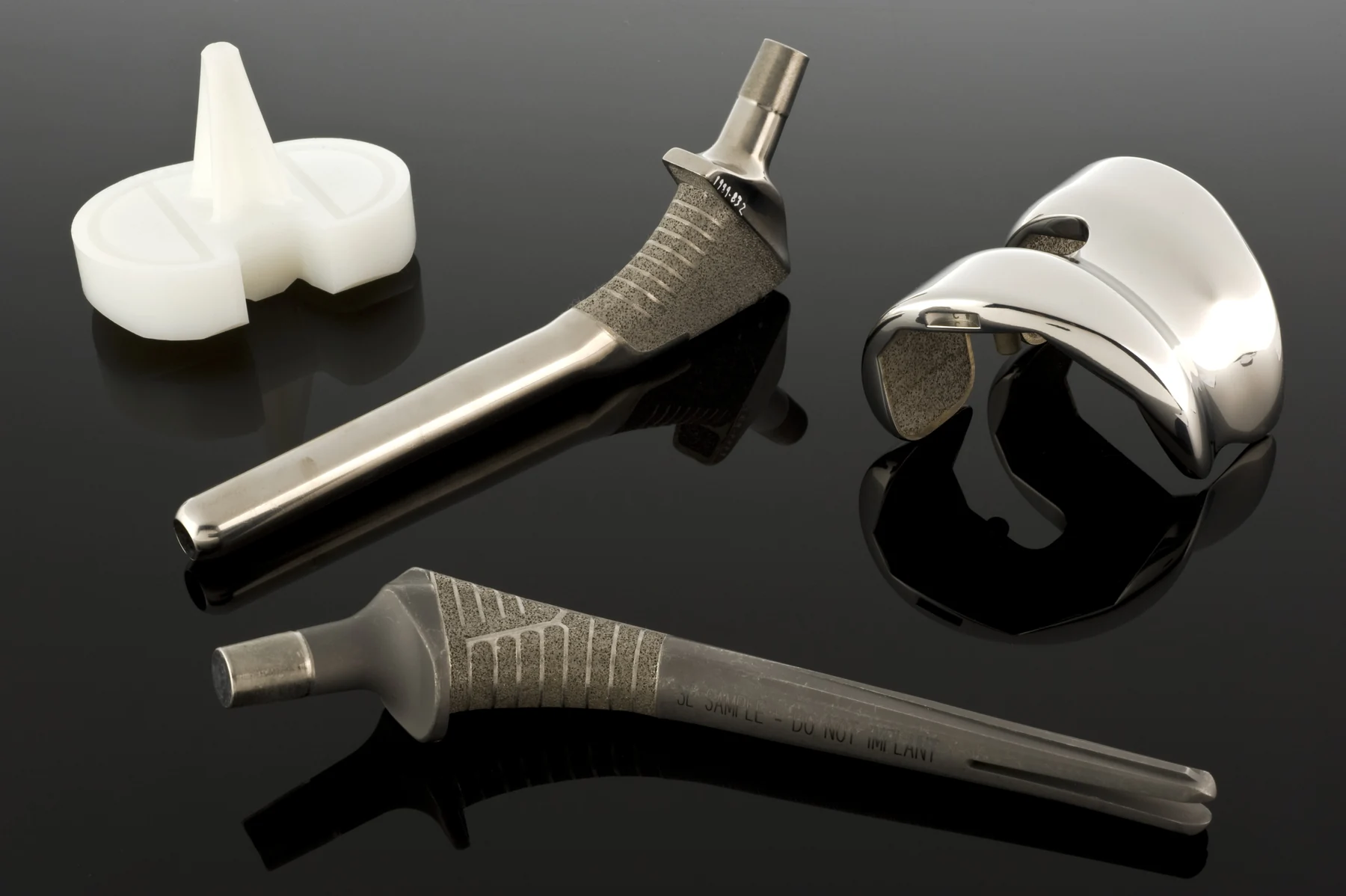
Materials used in medical devices range from polymers and metals to ceramics and natural materials. Their properties shape how they bear load, resist wear, and interact with the body [2]. A rigid structure may provide support, while a softer liner can cushion contact. Yet softness alone does not guarantee comfort: a material can deform, trap moisture, or shift in ways that create friction at the skin.
When an implanted material enters the body, the immune system may react and eventually encase it in scar tissue, a process known as the foreign body response. That response can interfere with device function or cause pain [2]. Designers may use corrosion-resistant materials, biodegradable materials, or surfaces that mimic aspects of the body’s own extracellular matrix. These strategies are design approaches; their performance depends on the particular device and setting, not on a universal property called biocompatibility.
Movement and feedback complete the system
Some bionic limbs use sensors to measure angles and forces, with a microprocessor using that information to help control limb position and motion [1]. The sensor’s reading is only one part of a loop: movement creates signals, control logic adjusts the device, and the user adapts through experience. A prosthesis can be mechanically capable yet difficult to use if its response does not match the person’s movement goals.
Feedback may come through residual muscles, pressure, sound, or visual attention. NIBIB describes research on an ankle prosthesis that uses electrical signals from residual muscle to support ongoing posture and balance control [1]. This illustrates a key distinction: a device that senses the environment and a user who senses the device are not the same thing. The interface can be electronic, mechanical, and biological at once.
Why fit changes over time
The body’s shape and tissues can change with activity, healing, temperature, and ordinary variation. A fit that distributes force well at one moment may become uncomfortable after swelling or repeated movement. Likewise, wear can alter a device’s surface or alignment. Engineers and clinicians therefore consider the interface over time, including how components can be adjusted and how tissue responds to contact.
New materials and robotic systems may improve comfort or control, but an innovation in a laboratory or research program is not proof that every design is clinically established. NIBIB describes soft exoskeleton materials intended to be flexible and compliant, and biomaterial work exploring how tissue interacts with implants [1] [2]. Those directions share a physical question: how can a device provide useful support while respecting the body’s motion and response? The answer is specific to each person, device, and task.
Sources & further reading
Prepared for the independent PSI Center reading library. About edition dates and source checking.
This explainer describes scientific principles. It does not assess individual treatment choices.