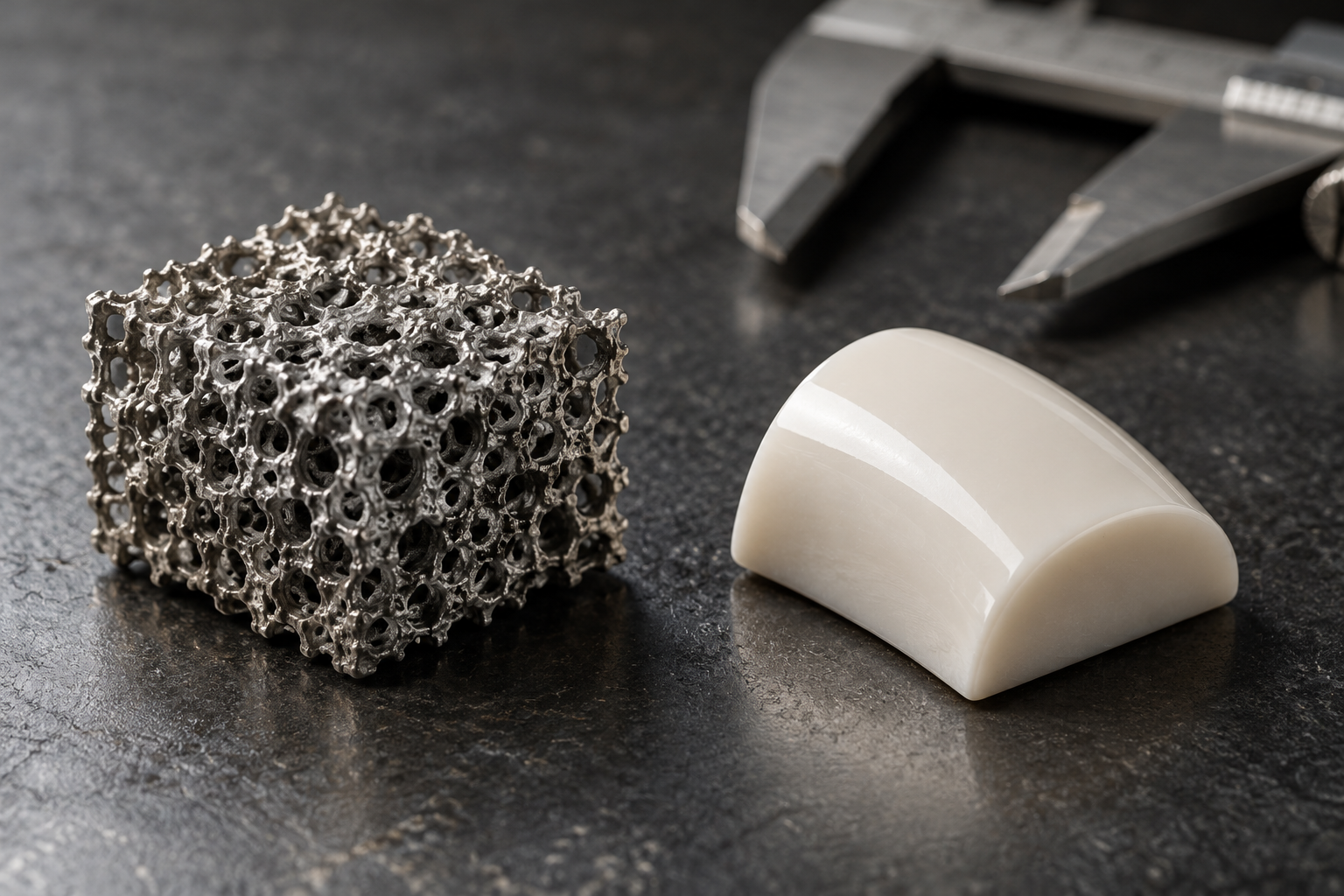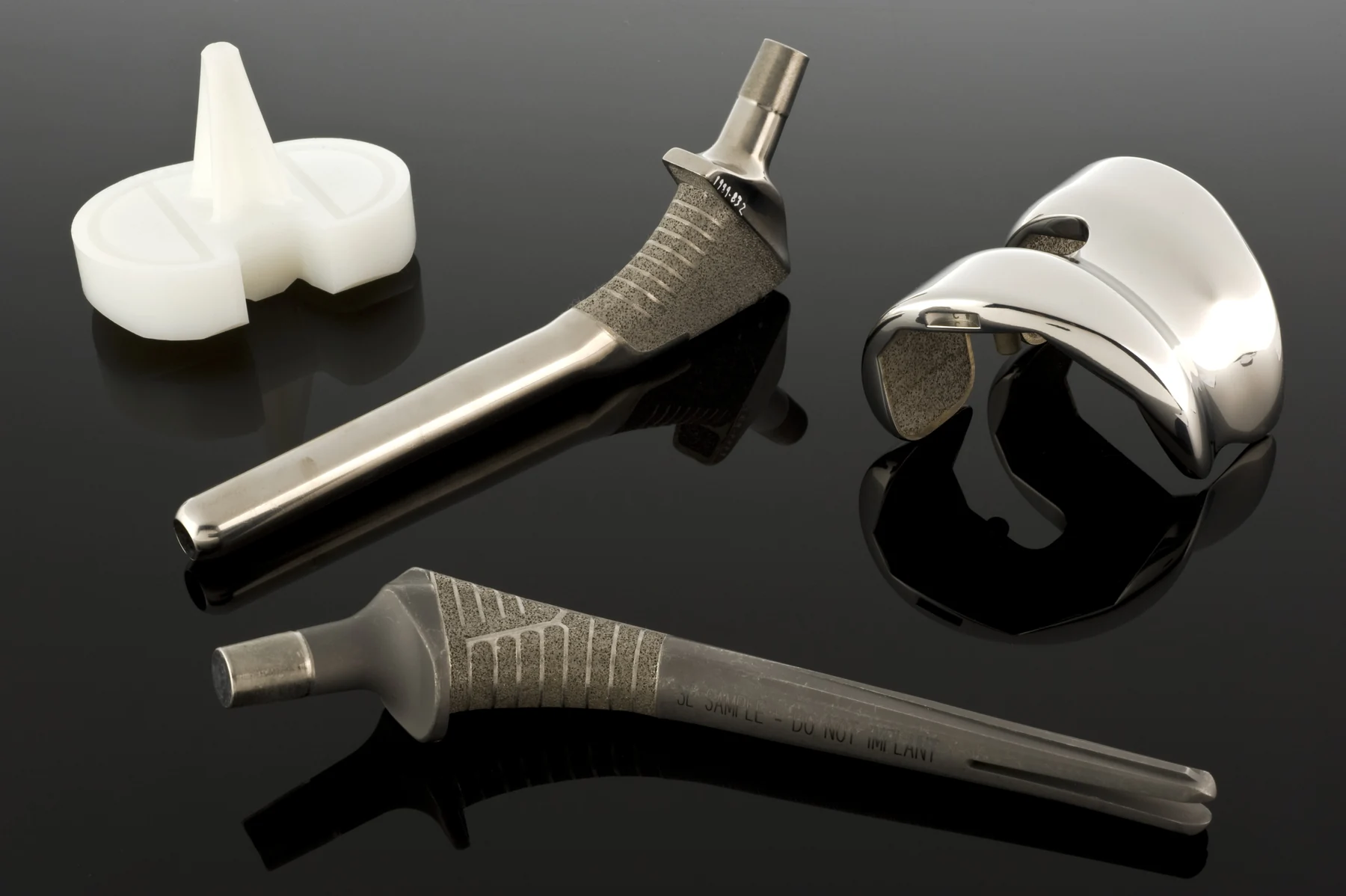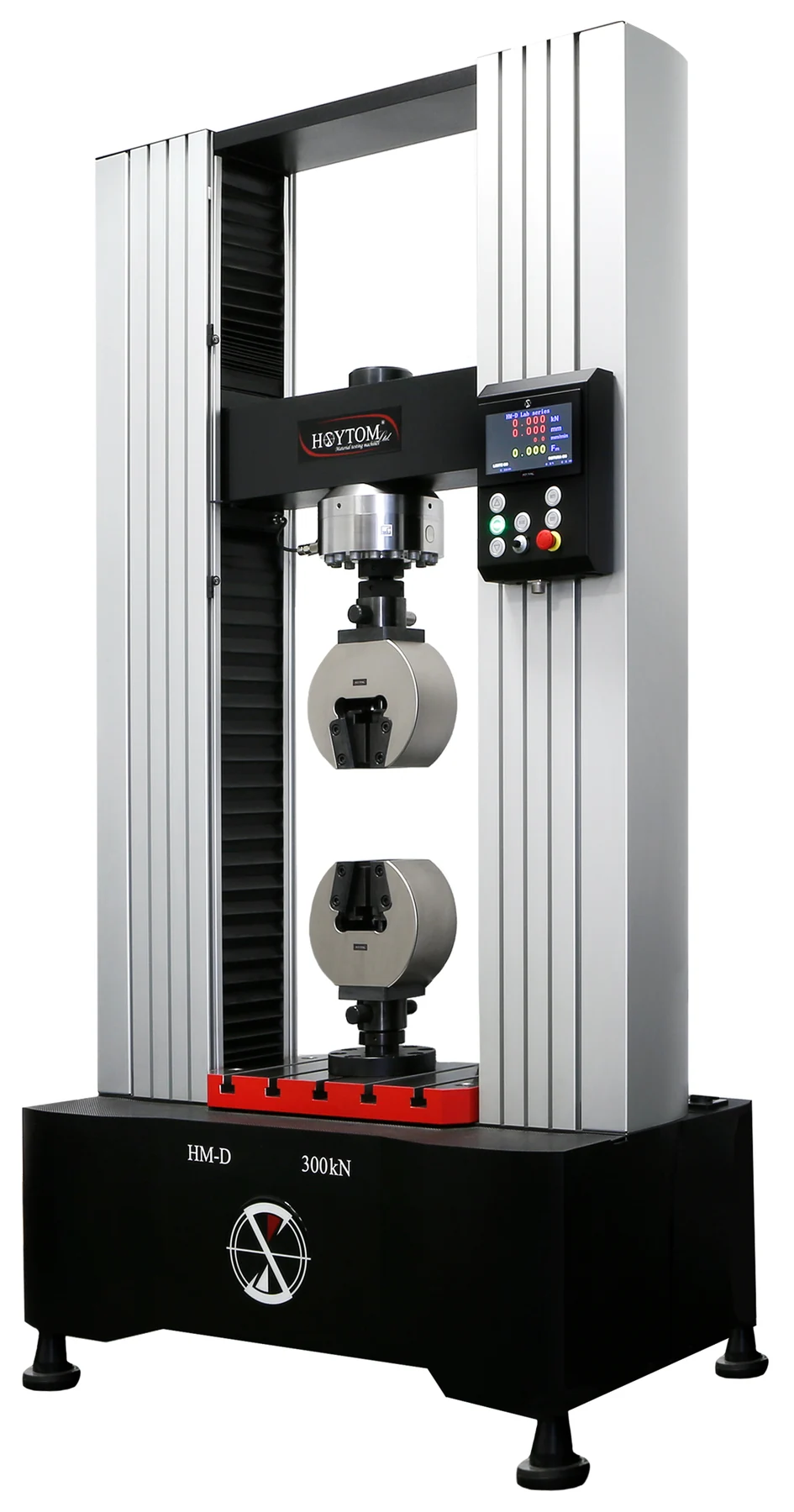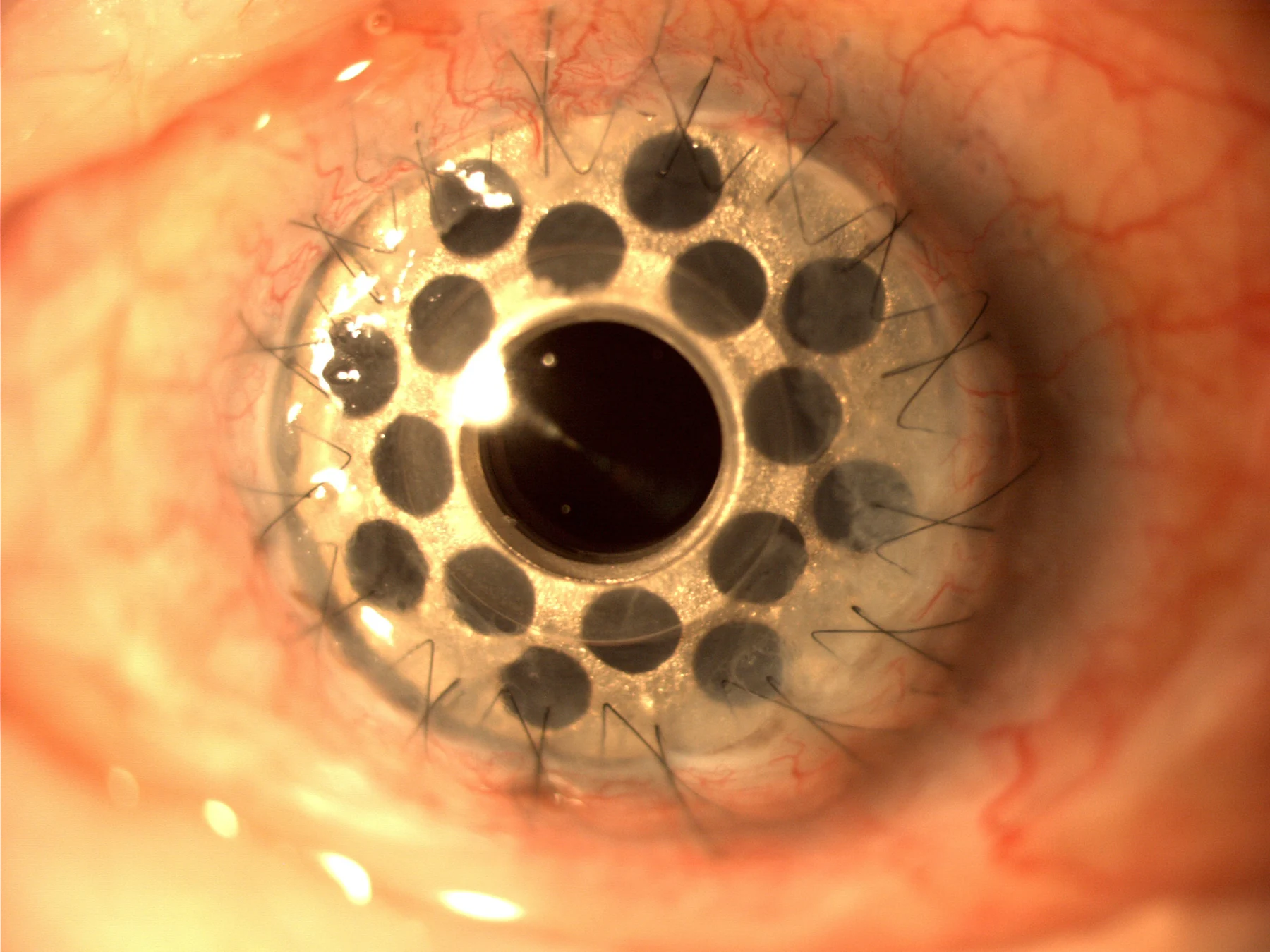
Why can the shape of an implant matter as much as the material it is made from? Because forces do not act on a material in the abstract: they travel through curves, edges, joints, and contact surfaces. A hip component, vascular stent, or dental filling experiences its own pattern of loading. The language of stress and strain helps describe that pattern and explains why design must consider both material and geometry.
Two ways to describe a force
In mechanics, stress describes how much force is carried across an area. Strain describes the resulting change in shape or length compared with the original. Pull a soft band and it stretches; the force produces stress within the band, and the extension is strain. These ideas are related but not interchangeable: two materials under the same stress can deform by different amounts, and a given deformation can require different forces in different materials.
For an implant, the forces may be repetitive, directional, and shared with living tissue. A load-bearing hip replacement must tolerate repeated motion, while an artificial blood vessel must flex with pulsatile flow. Metals, ceramics, and polymers offer different combinations of strength, flexibility, and wear resistance. The intended job constrains the design: a rigid component may suit one role but transfer forces poorly if the surrounding tissue is much softer. [1]
Geometry steers the load
Picture pressing a flat object with a rounded edge against a surface, then pressing with a sharp corner. The applied force may be similar, but the contact area and distribution differ. In an implant, changes in thickness, curvature, holes, or junctions can concentrate stress in some regions and reduce it in others. Shape also affects how motion is transmitted across the boundary between the device and tissue.
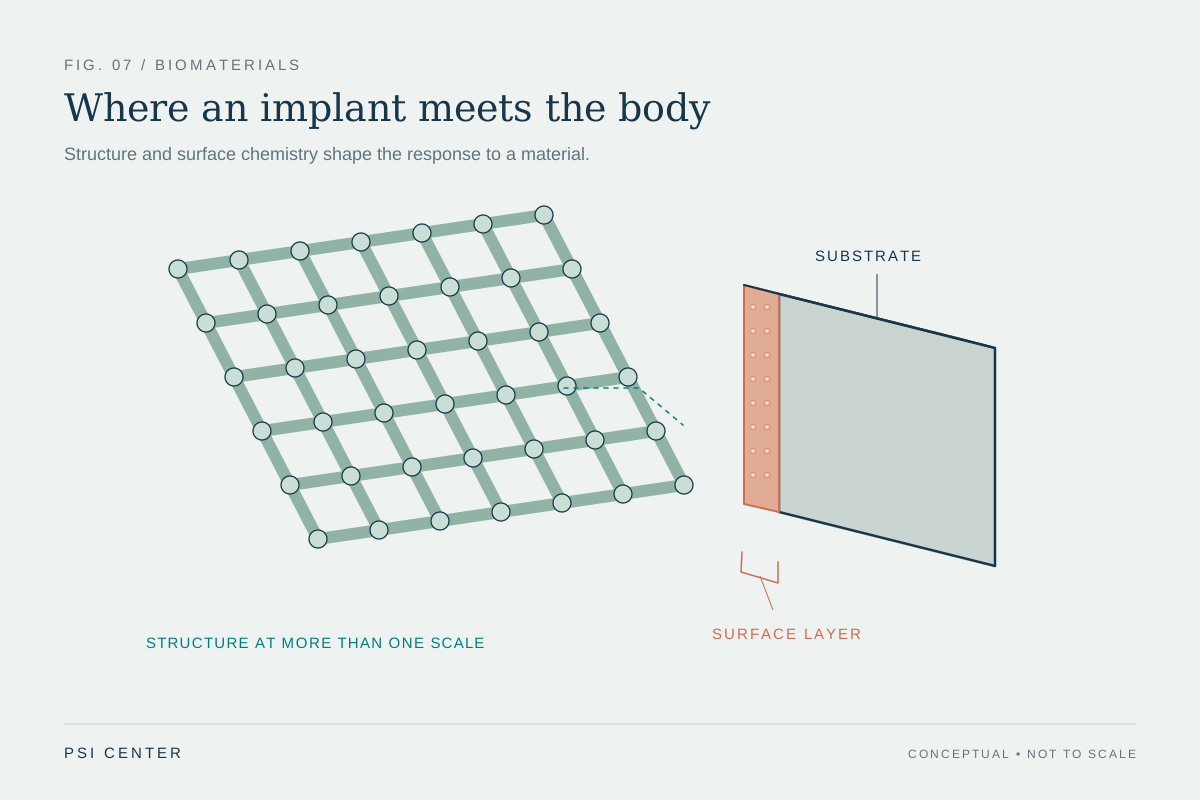
That boundary matters because the body responds to foreign materials. The immune system may attempt to degrade an object and can enclose it in scar tissue, a response that can hinder device function. Designers can choose corrosion-resistant, biologically inert materials or materials intended to break down, and may tune surface chemistry or structure to encourage tissue integration. Hydroxyapatite coatings on orthopedic implants, for example, use a mineral abundant in bone to encourage tissue ingrowth. [1]
A model is a testable approximation
Engineers can use computational models to simulate how a proposed design behaves under different conditions. A model represents a system with variables and mathematical rules, then calculates outputs such as deformation or force distribution. A mechanistic model uses established physical principles; data-driven models use patterns in datasets, and some combine both approaches. In either case, the result depends on the assumptions, input data, and level of detail built into the representation. [2]
A simplified model might treat a component as uniform and omit complex tissue behavior. A more detailed one could represent geometry, material properties, and contact with surrounding structures. Increasing detail can reveal questions that a simple calculation misses, but it does not automatically make a prediction true. Models can help narrow the designs worth studying experimentally; they do not independently establish how a finished implant will perform in every patient. [2]
From virtual loading to living tissue
Consider a stent: it must support a vessel while remaining compatible with the vessel’s repeated expansion and recoil. A designer can estimate how its struts deform and where loads concentrate, then compare those predictions with physical tests. But biological performance also depends on surface interactions, healing, and tissue response. Mechanical fit is essential, yet it is only one part of whether a device works safely and durably.
Biomaterials span metals, ceramics, synthetic polymers, and materials derived from natural structures. Their uses include joint replacements, valves, lenses, and scaffolds intended to support tissue engineering. A rabbit study of a pressure-responsive polymer film that generated electrical current and was paired with exercise reported cartilage-like tissue regeneration; that animal-model result is a research finding, not proof that the film is an established treatment for people. [1] The practical lesson of stress and strain is therefore not a universal recipe: shape and material must be evaluated together, and performance claims must match the evidence.
Explore the physics: an explanatory diagram
Sources & further reading
- Biomaterial Technologies NIBIB
- Computational Modeling NIBIB
Prepared for the independent PSI Center reading library. About edition dates and source checking.
This explainer describes scientific principles. It does not assess individual treatment choices.