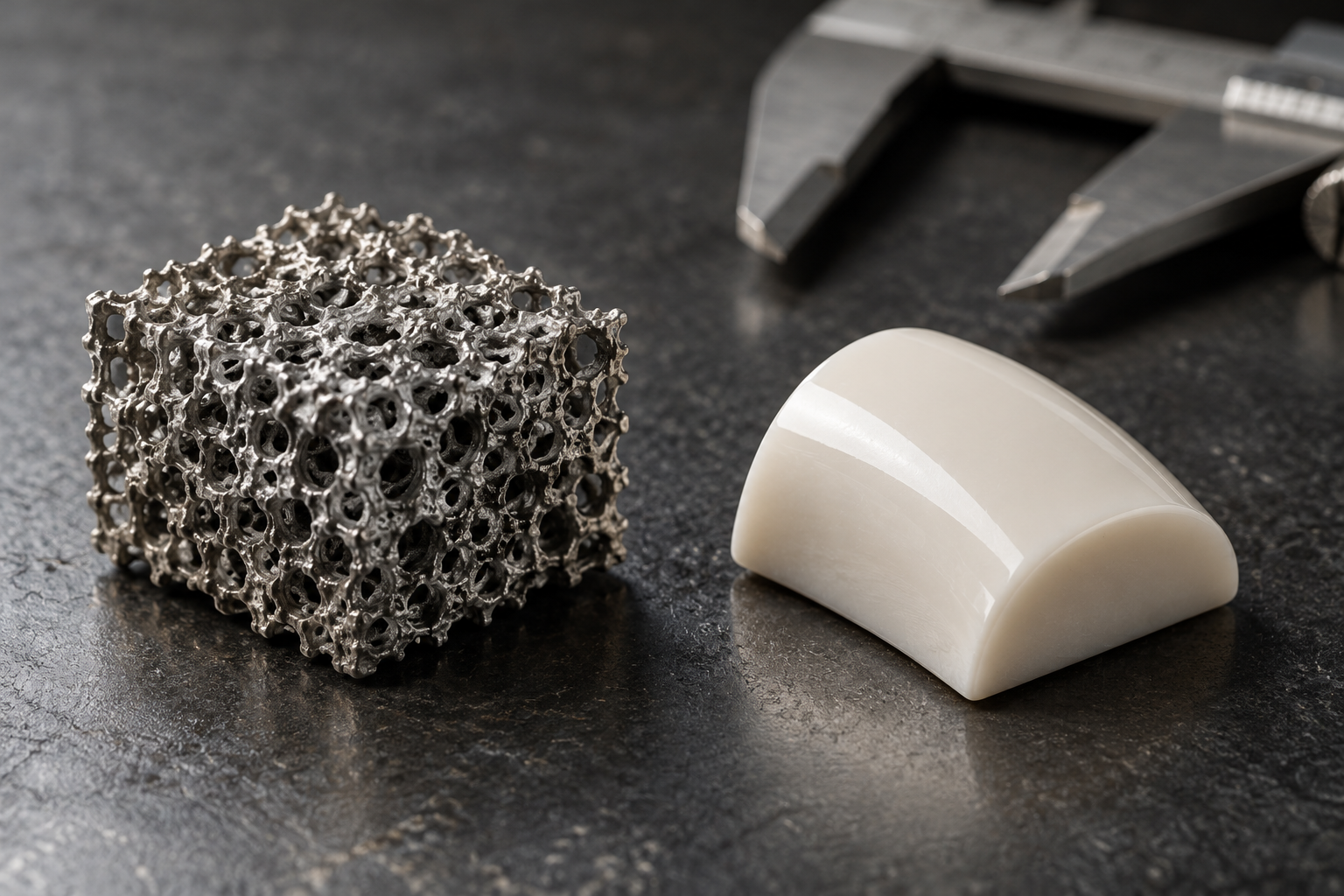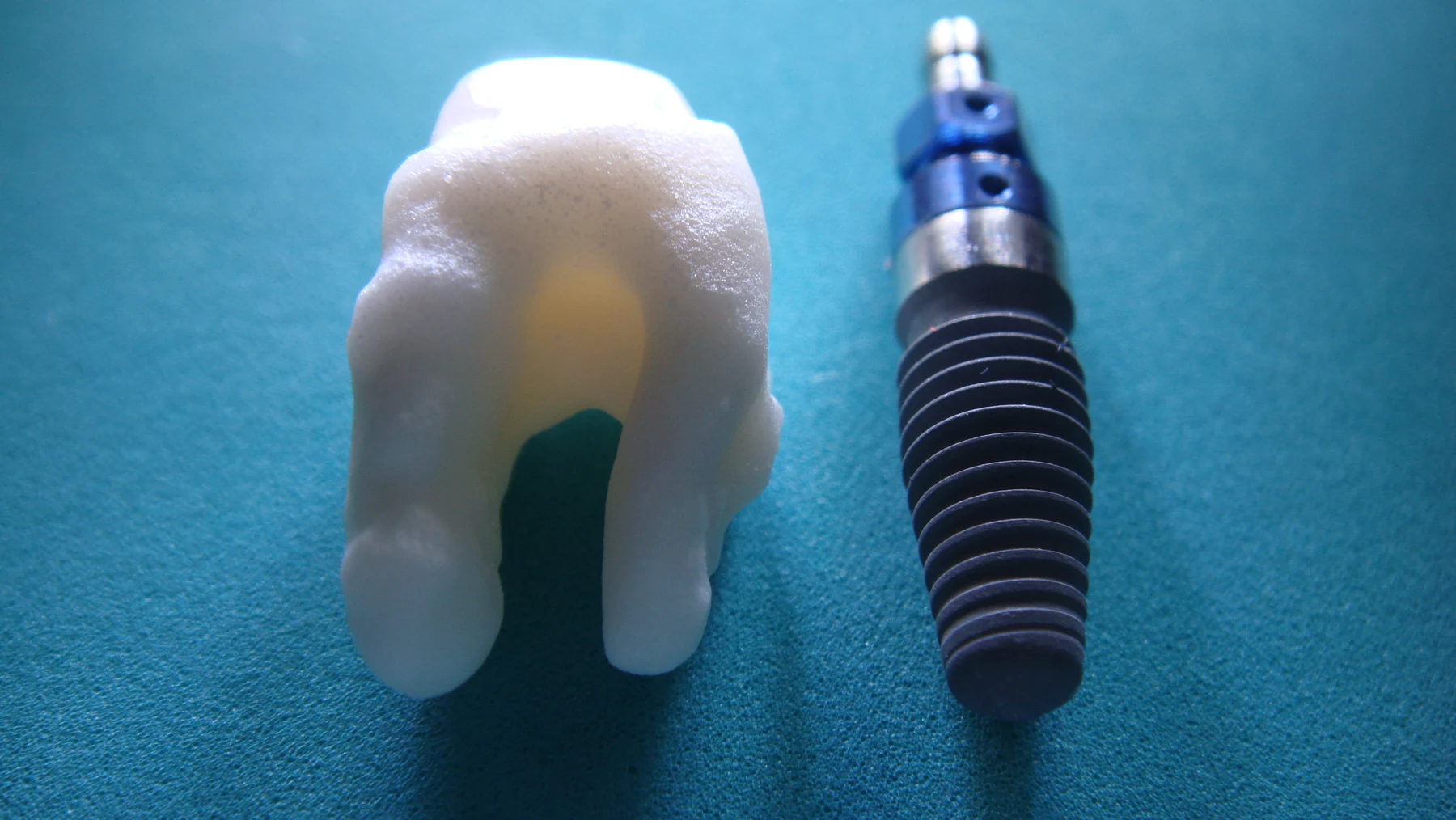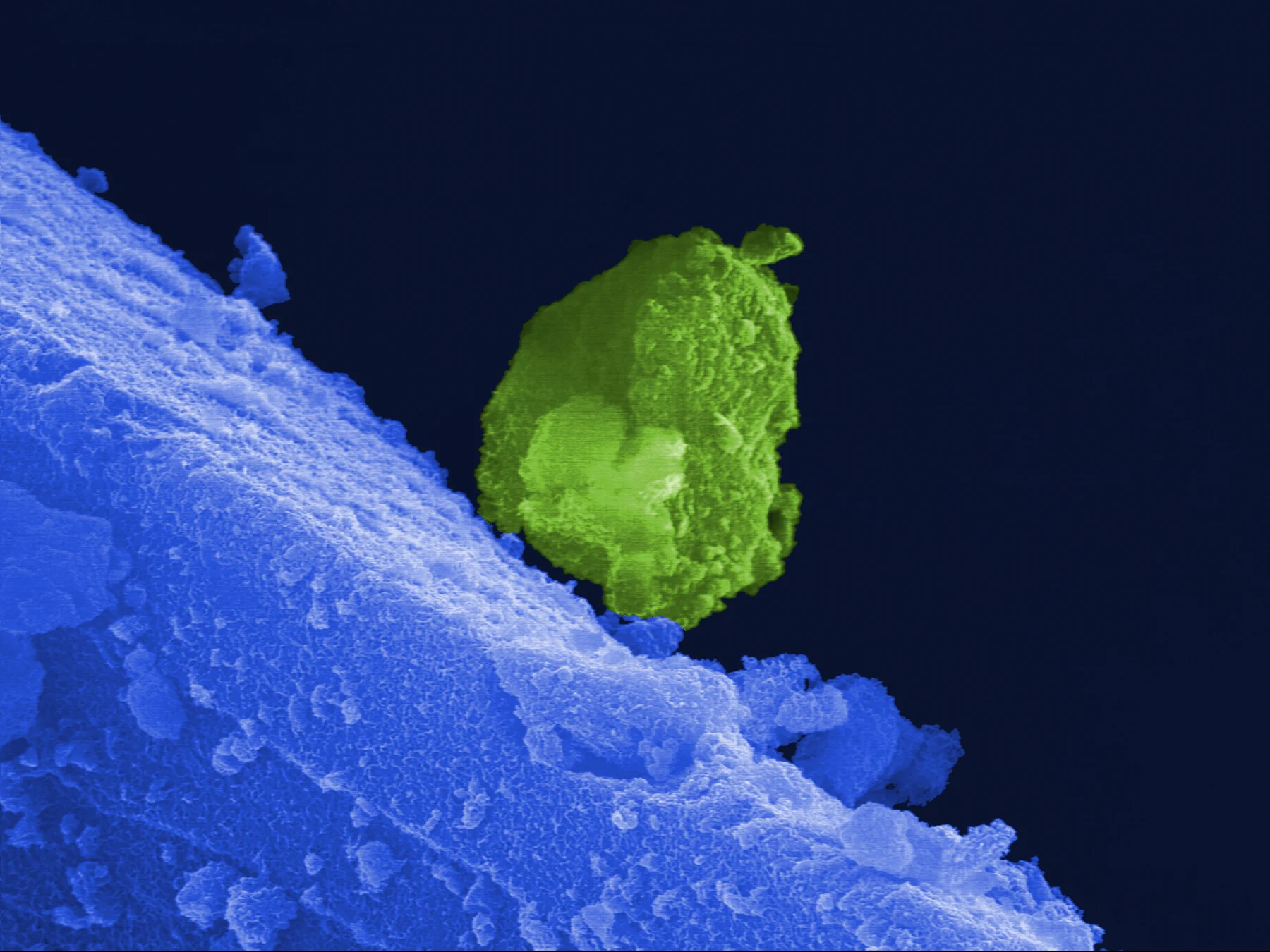
How can a material be mostly water and still hold a shape? A hydrogel answers with a polymer network: long molecules linked into a structure that traps water rather than letting it run away. The result can feel soft and tissue-like, yet its behavior depends on the network’s chemistry and architecture. That combination makes hydrogels useful to study as biomaterials, while also making clear why “gel” alone says little about safety or medical performance.
A net that holds water
Polymers are molecules made from repeating units, often arranged as long chains. In a hydrogel, links between chains form a three-dimensional network. Water can enter and occupy spaces within that network, but the connected structure resists dissolving into a simple liquid. A kitchen sponge is a rough mental model for holding fluid, although a hydrogel’s polymer mesh is much finer and its mechanics come from molecular-scale links.
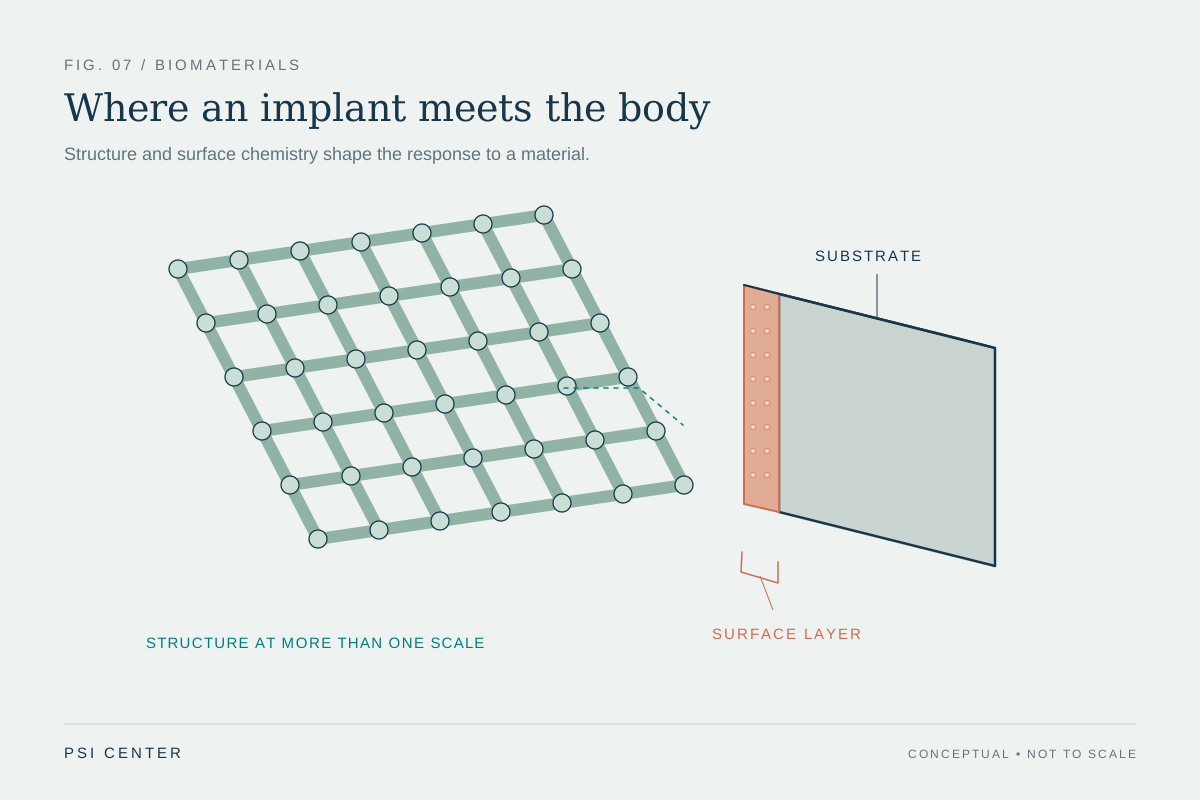
The amount of water, the strength and spacing of crosslinks, and the polymer chemistry all affect softness, swelling, and durability. A loosely connected network may swell substantially but deform easily; a tighter one may hold shape more firmly while admitting less water. These are design tradeoffs, not universal properties shared by every hydrogel.
Why the body notices materials
A material placed in the body meets cells, proteins, and immune defenses. NIBIB explains that the foreign-body response can degrade or surround an implant with scar tissue, sometimes impairing function or causing pain. Biomaterials may be designed to reduce that response or to resemble aspects of the extracellular matrix, the surrounding scaffold that supports cells. [1]
Hydrogels can be attractive because their water-rich softness resembles some features of biological tissues. But resemblance is not equivalence: the body’s matrix is active, organized, and constantly remodeled. A hydrogel’s compatibility depends on its composition, where it is placed, how it degrades, and what it is intended to do. The label “biomaterial” does not guarantee a clinical benefit.
A scaffold can do more than fill space
Biomaterials can provide structure for tissue-engineering research, carry therapeutics, or coat devices. A material may be designed to release a compound as it degrades or in response to a biological cue such as acidity. Such designs aim to protect a therapeutic or influence where and when it becomes available, but each proposed function needs testing for the specific material and application. [1]
A hydrogel scaffold can also give cells a physical environment to attach to and grow within. Stiffness and structure can affect cell behavior, which is one reason researchers tune networks rather than treating them as inert filler. Yet a change in cell growth in a laboratory setting does not prove that a scaffold will restore tissue function in a person.
From promising material to evidence
NIBIB describes a biodegradable polymer film that generates electrical current under pressure and was studied with exercise in a rabbit model of osteoarthritis. The reported tissue regeneration is a research finding in animals, not proof of a hydrogel treatment or a human clinical outcome. The example illustrates how material design can combine mechanical and electrical properties, but evidence remains specific to the tested platform. [1]
Sensors provide another useful comparison: a device can detect an input and report data, but the signal and its interpretation are distinct. Likewise, a hydrogel’s swelling, stiffness, or drug release can be measured without establishing that it improves health. NIBIB notes that advanced sensors often help researchers study disease foundations even when they are not ready for routine care. [2]
Explore the physics: an explanatory diagram
Sources & further reading
- Biomaterial Technologies NIBIB
- Sensors NIBIB
Prepared for the independent PSI Center reading library. About edition dates and source checking.
This explainer describes scientific principles. It does not assess individual treatment choices.