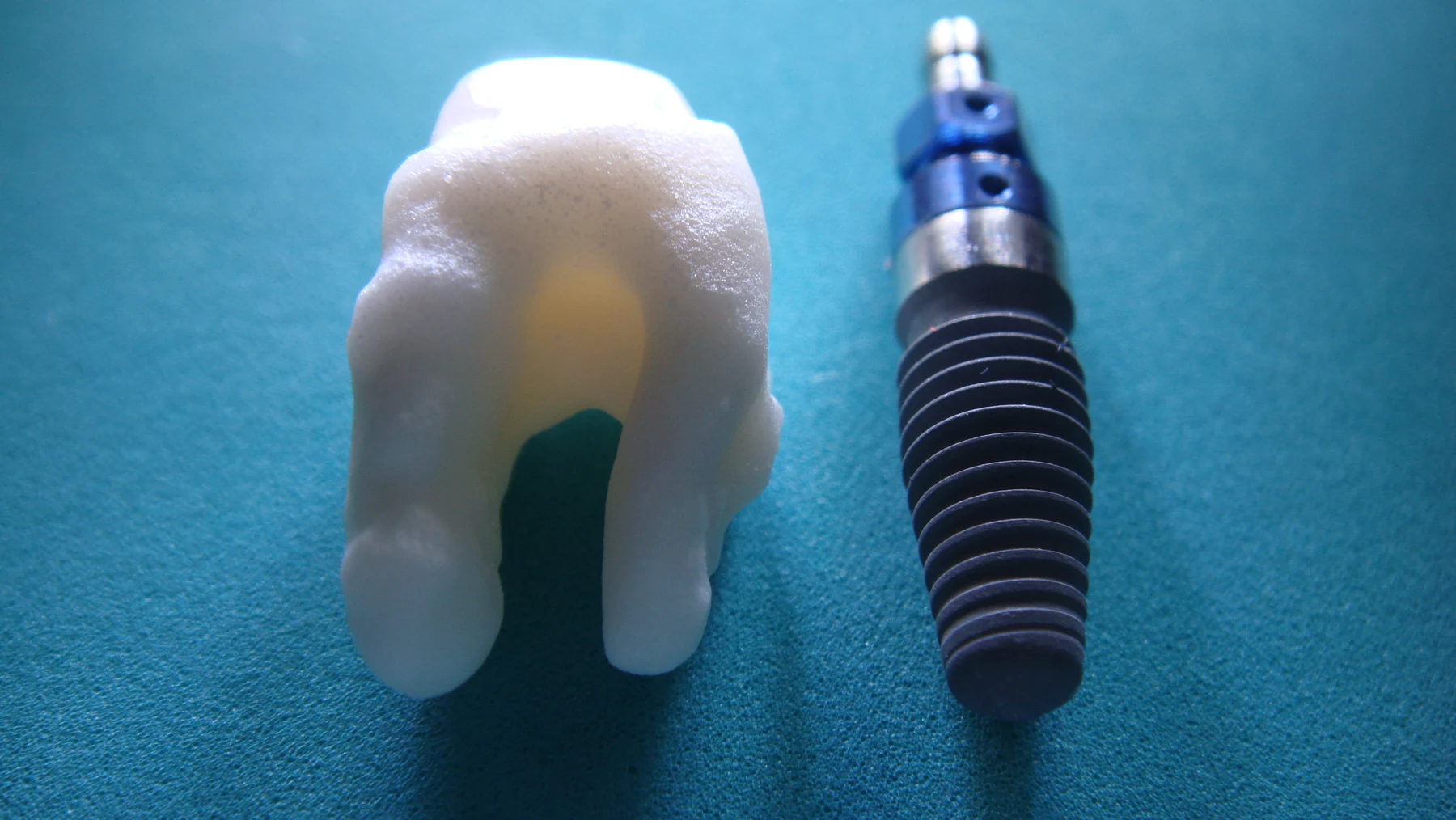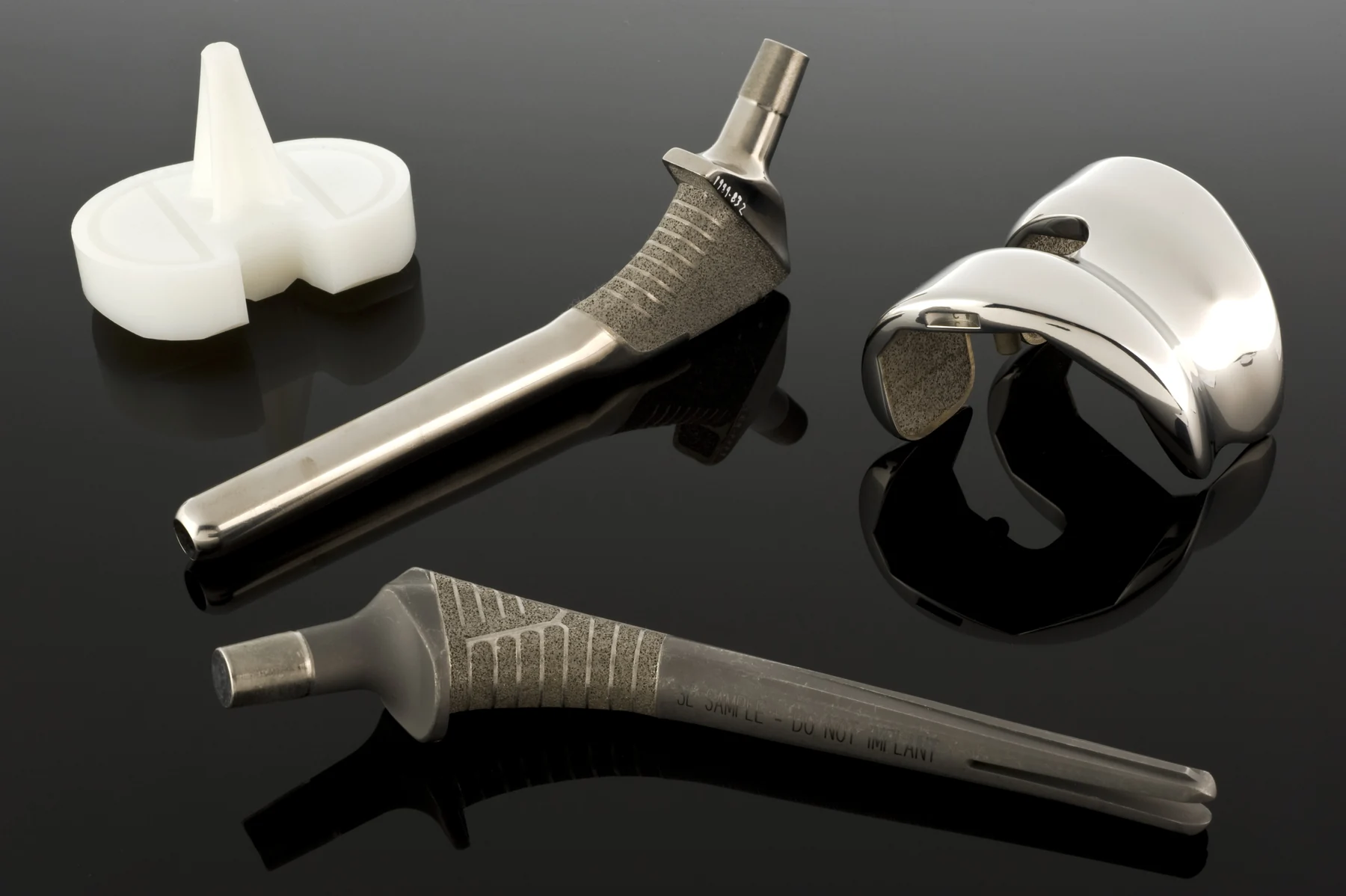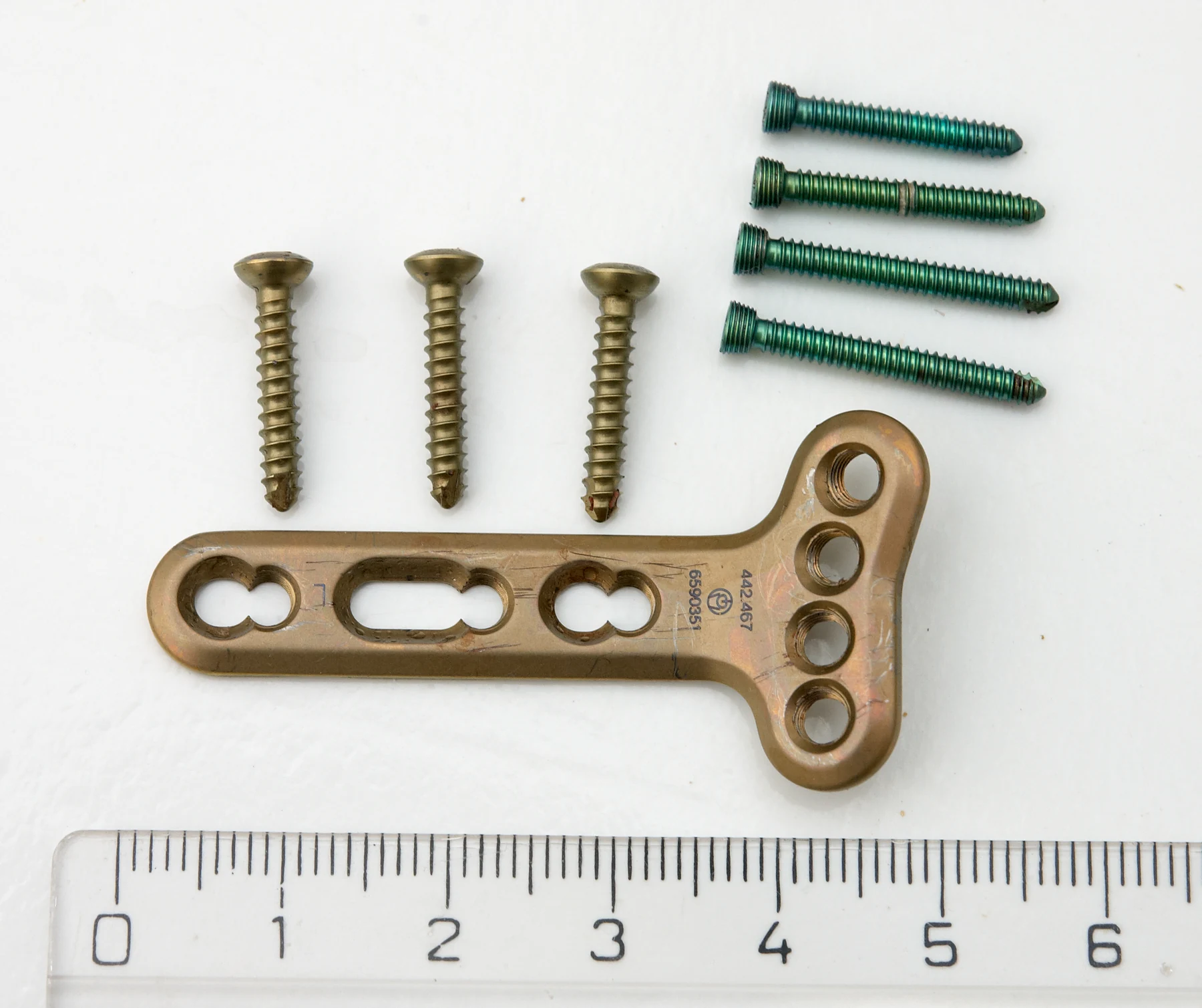
What happens when a new material meets living tissue? A surface that looks strong or flexible in a laboratory may behave differently in the body, where cells, fluids, movement, and time all matter. Testing a biomaterial is therefore a sequence of questions, moving from what the material does to whether a medical device containing it can safely and effectively serve its intended purpose.
Start by defining the intended use
A biomaterial is a material designed to interact with the human body as part of a health technology. Medical devices can monitor, modulate, or supplement bodily functions and anatomical structures, and may operate inside the body, like an implanted pacemaker, or outside it, like a wearable sensor [1]. A material’s intended location and role shape the tests researchers need to conduct.
A flexible surface intended to sit on the heart faces different demands from a patch worn on skin. The first may need to conform to moving tissue while delivering an electrical signal; the second may need to remain attached and gather data. The material is not evaluated in isolation from its job. A useful test plan begins by stating what the complete device is meant to do and what conditions it will encounter.
Move from material properties to device behavior
Early investigations can examine properties such as flexibility, strength, electrical behavior, or response to fluids. These bench tests help reveal whether the material can perform a basic function. But a promising measurement in a controlled setup is not proof that a device will work reliably in a person, because the body adds movement, varied anatomy, biological processes, and practical use conditions.
The device itself also includes components beyond the material: sensors, electrodes, power or signal systems, software, packaging, and instructions. NIBIB describes devices ranging from implanted stimulators that send electrical pulses to wearable sensors that monitor health signals [1]. Testing needs to account for how these elements work together. A material that performs well alone may still fail to support the intended behavior of the assembled device.
Human studies answer different questions
Before clinical use, evidence may need to address safety and effectiveness in people. The evidence needed depends on the device and its claims. FDA explains that an Investigational Device Exemption allows an investigational device to be used in a clinical study to collect safety and effectiveness data for a possible Premarket Approval or 510(k) submission [2]. Significant-risk device studies require FDA and institutional review board approval before starting; nonsignificant-risk studies require institutional review board approval.
A study should measure the outcome that matches the intended use. If a wearable is meant to monitor a signal, researchers need to assess whether it captures that signal under relevant conditions. If an implanted device is intended to alter a bodily function, the study must examine that function and relevant safety outcomes. A cell experiment or bench demonstration can provide useful evidence about a mechanism, but it cannot establish clinical benefit by itself.
Regulatory pathways reflect device risk and claims
FDA classifies medical devices into Classes I, II, and III, with regulatory control increasing across the classes. Most Class I devices are exempt from 510(k), most Class II devices require it, and most Class III devices require Premarket Approval; requirements depend on the device category [2]. For a 510(k), a manufacturer demonstrates substantial equivalence to a legally marketed device. PMA is a more involved route and includes clinical data to support claims.
This process is not a blanket certification of every material or every claim associated with a product. The FDA also lists quality management, labeling, registration, and reporting among device requirements [2]. The larger lesson is methodological: material properties, assembled-device performance, human evidence, and regulatory requirements answer related but distinct questions. A biomaterial earns confidence through evidence appropriate to its use, not simply through an appealing laboratory result.
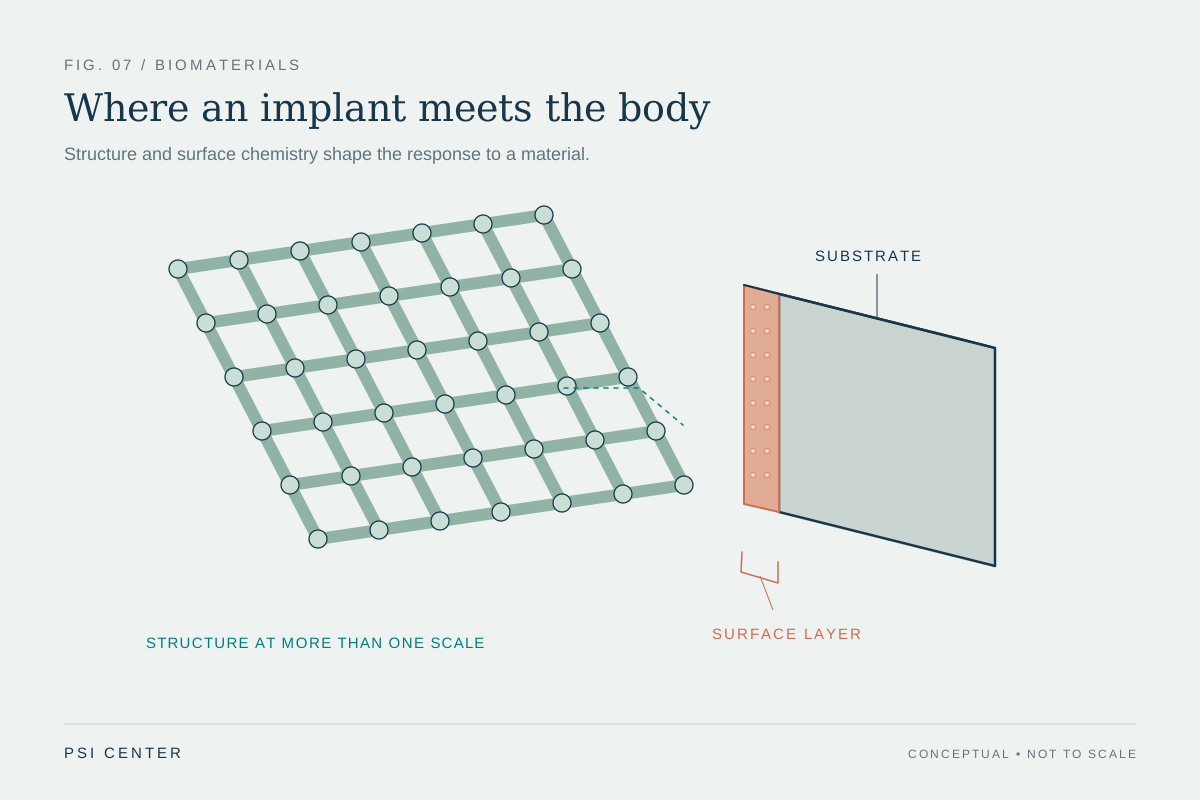
Explore the physics: an explanatory diagram
Sources & further reading
Prepared for the independent PSI Center reading library. About edition dates and source checking.
This explainer describes scientific principles. It does not assess individual treatment choices.