If an experimental treatment is added to wound care, how can researchers tell whether it helped? They need a fair comparison with care that patients would otherwise receive. Keeping standard care in both groups makes the experimental addition the main difference under study. This design matters especially for chronic wounds, where outcomes can depend on many factors and a promising laboratory mechanism may not translate into reliable clinical benefit.
The comparison isolates an added effect
A clinical trial comparing standard care alone with standard care plus an experimental treatment asks a focused question: does adding the new intervention improve outcomes beyond the existing regimen? If one group receives different wound management in several ways, any observed difference becomes harder to attribute. A shared baseline is a kind of control for the ordinary care process, not a claim that standard care is identical for every person. [2]
In a randomized trial, participants are assigned to groups by chance, which can help balance factors that might otherwise influence outcomes. Blinding, when feasible, can reduce the influence of expectations on care or assessment. These design features do not guarantee a definitive answer, but they help make the comparison more informative. Wound area, healing, infection-related measures, adverse events, and follow-up duration each capture different parts of the clinical picture.
A small study can signal, not settle
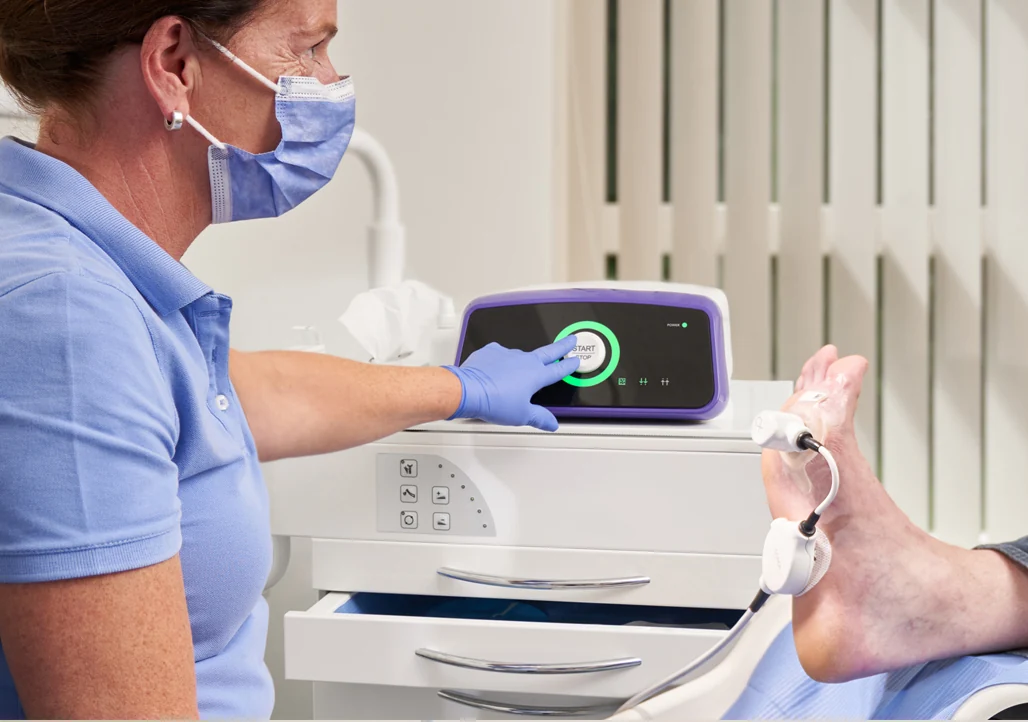
One randomized study of cold atmospheric plasma (CAP) enrolled 44 people with diabetic foot ulcers. It compared standard care with standard care plus CAP delivered repeatedly across three weeks. The investigators reported reduced wound-size fraction and an immediate decrease in bacterial load after exposure. Those findings are a signal from a particular study, with a particular device, population, schedule, and observation period. [1]
A result can be statistically notable within a trial and still leave open whether it is reproducible, durable, safe, or useful across broader practice. The immediate bacterial change is not the same outcome as sustained wound closure. A short follow-up may not answer whether healing remains complete or prevents complications. And a trial of dozens of participants is not equivalent to a body of low-bias evidence across settings. [1]
Guidelines weigh the whole evidence base
The 2023 International Working Group on the Diabetic Foot (IWGDF) guideline recommends against using other gases, including cold atmospheric plasma, ozone, nitric oxide, and carbon dioxide, compared with standard care for healing diabetes-related foot ulcers. It grades the recommendation strong while rating the evidence low, and explains that the underlying evidence is poor, with no studies assessed as low risk of bias. [2]
This is not a contradiction of the individual trial’s reported findings. A guideline weighs the whole set of available studies, their risk of bias, likely benefits and harms, costs, feasibility, and uncertainty. A promising comparison can justify further research without demonstrating that an intervention should become routine care. The guideline also notes that adverse effects were poorly reported, so absence of clear harm in the evidence is not the same as strong evidence of safety. [2]
Mechanism and clinical value answer different questions
CAP is an ionized gas containing reactive components, and laboratory or wound studies may investigate antimicrobial effects and tissue responses. But a plausible mechanism does not establish that patients heal better in day-to-day care. Clinical trials must test outcomes that matter to patients and compare the intervention against appropriate care. The equipment’s physical action also matters: CAP is distinct from argon plasma coagulation, which heats and coagulates tissue, and from gas-plasma sterilization equipment used to process devices.
Keeping standard care in both trial arms helps preserve a useful question: what did the added treatment contribute? For diabetic foot ulcers, the answer must be judged against the totality and quality of evidence, not a single biological effect or a single trial. That is how research can remain promising while practice recommendations stay cautious until the clinical case is stronger. [1] [2]
Sources & further reading
- Cold Atmospheric Plasma in Diabetic Foot Ulcers Mirpour et al., Scientific Reports (2020)
- Guidelines on Interventions to Enhance Healing of Foot Ulcers: 2023 Update International Working Group on the Diabetic Foot
Prepared for the independent PSI Center reading library. About edition dates and source checking.
This explainer describes scientific principles. It does not assess individual treatment choices.