If a treatment kills bacteria in a laboratory, will it heal an infected wound? The first result answers a focused question about microbes under specific conditions. A wound is a far more complex setting: tissue must repair, blood supply and care matter, and a treatment must be both tolerable and useful to patients.
A laboratory result isolates one mechanism
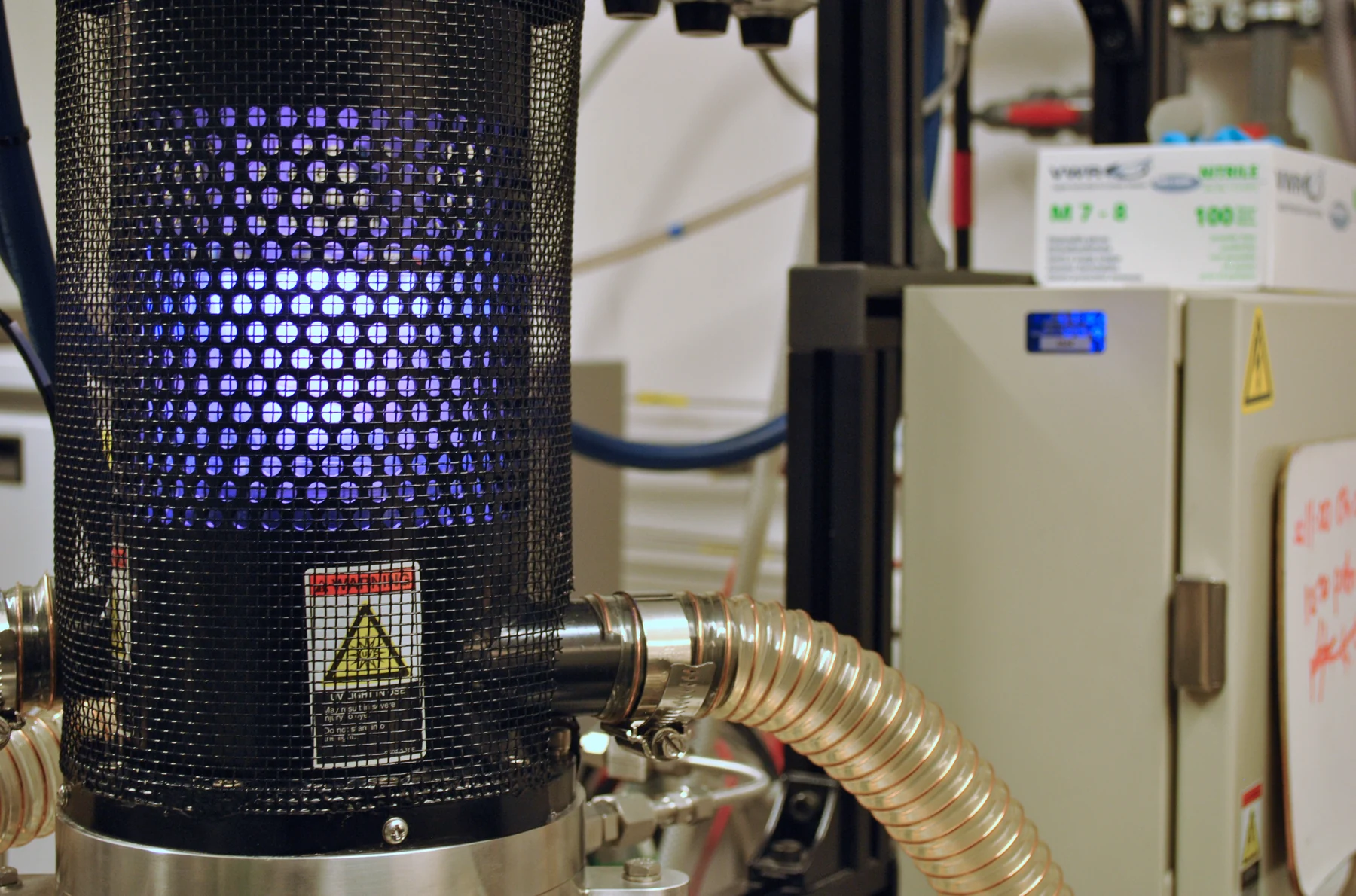
Cold atmospheric plasma is a gas-based treatment under study for medical uses. Laboratory experiments can test whether it reduces microbes exposed to the treatment. That is important mechanistic evidence, but it does not show that a wound will close sooner or that patients will avoid complications. In a living wound, microbes coexist with damaged tissue, immune responses, moisture, and ongoing care.
Even the word “plasma” can refer to different technologies. Cold atmospheric plasma, argon plasma coagulation, and gas-plasma equipment sterilization have different purposes. Argon plasma coagulation heats and coagulates tissue; cold atmospheric plasma research concerns a different form and intended use. A laboratory antimicrobial result should not be transferred across these methods simply because their names share a word.
Clinical outcomes add the missing context
A 2010 randomized phase II study examined cold atmospheric argon plasma as an addition to standard care in 38 chronic infected wounds among 36 patients. The study reported reduced bacterial load in treated wounds and no side effects observed during the study [1]. These findings are relevant to bacterial burden and short-term tolerability in that study context.
But bacterial load is not identical to wound healing. A lower count does not by itself establish faster closure, fewer amputations, or lasting benefit. The study’s conclusion described the approach as potentially useful; a careful reader should preserve that uncertainty. Trials need to assess patient-relevant outcomes and be designed so that changes can reasonably be attributed to the intervention.
Guidelines weigh the whole evidence base
For diabetes-related foot ulcers, the 2023 International Working Group on the Diabetic Foot guideline recommends against using other gases, including cold atmospheric plasma, in comparison with standard care for wound healing. The recommendation is strong, while the evidence certainty is low; the guideline cites poor evidence, high risk of bias, and no studies assessed as low risk of bias [2].
This is a specific recommendation for diabetes-related foot-ulcer healing. It does not erase every laboratory finding or answer every possible future research question. It does mean that a laboratory mechanism or an early study should not be presented as a routine-care endorsement. The guideline’s assessment is that available evidence does not support adding these gases over standard care for that purpose.
Follow the chain from microbe to patient
A useful evidence chain moves through several levels: does the treatment affect microbes, can it be delivered safely in the relevant tissue, does it improve wound outcomes in controlled studies, and does the total evidence support its use for a defined population? Each step tests a different link. A break anywhere in the chain limits what can be concluded.
When reading antimicrobial claims, look for the actual measured outcome, the comparator, the population, and the study’s limitations. Reduced bacterial burden can motivate further research, while clinical recommendations depend on the broader evidence about healing and harms. Keeping those levels distinct makes room for promising science without mistaking a mechanism for proven patient benefit.
Sources & further reading
- Cold Atmospheric Argon Plasma on Chronic Wounds: Randomized Trial Isbary et al., British Journal of Dermatology (2010)
- Guidelines on Interventions to Enhance Healing of Foot Ulcers: 2023 Update International Working Group on the Diabetic Foot
Prepared for the independent PSI Center reading library. About edition dates and source checking.
This explainer describes scientific principles. It does not assess individual treatment choices.