What would it take to know that a new treatment truly helps a wound heal? A small randomized trial can offer a useful clue, yet its numbers may swing with only a few patients. Cold atmospheric plasma illustrates why researchers and readers must separate an encouraging pattern from convincing evidence: the device, the comparison, the outcome, and the uncertainty all matter.
A trial asks a narrow question
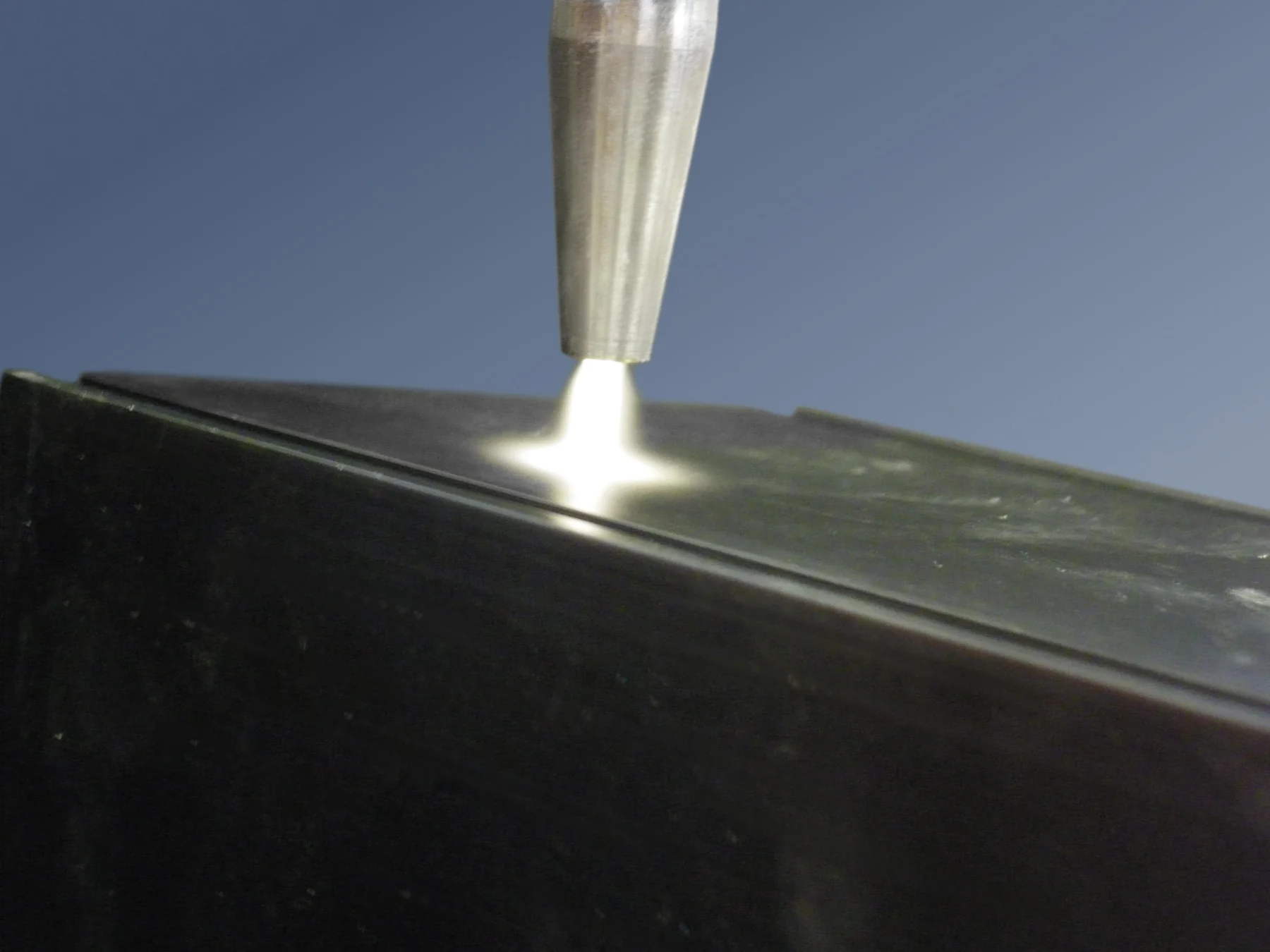
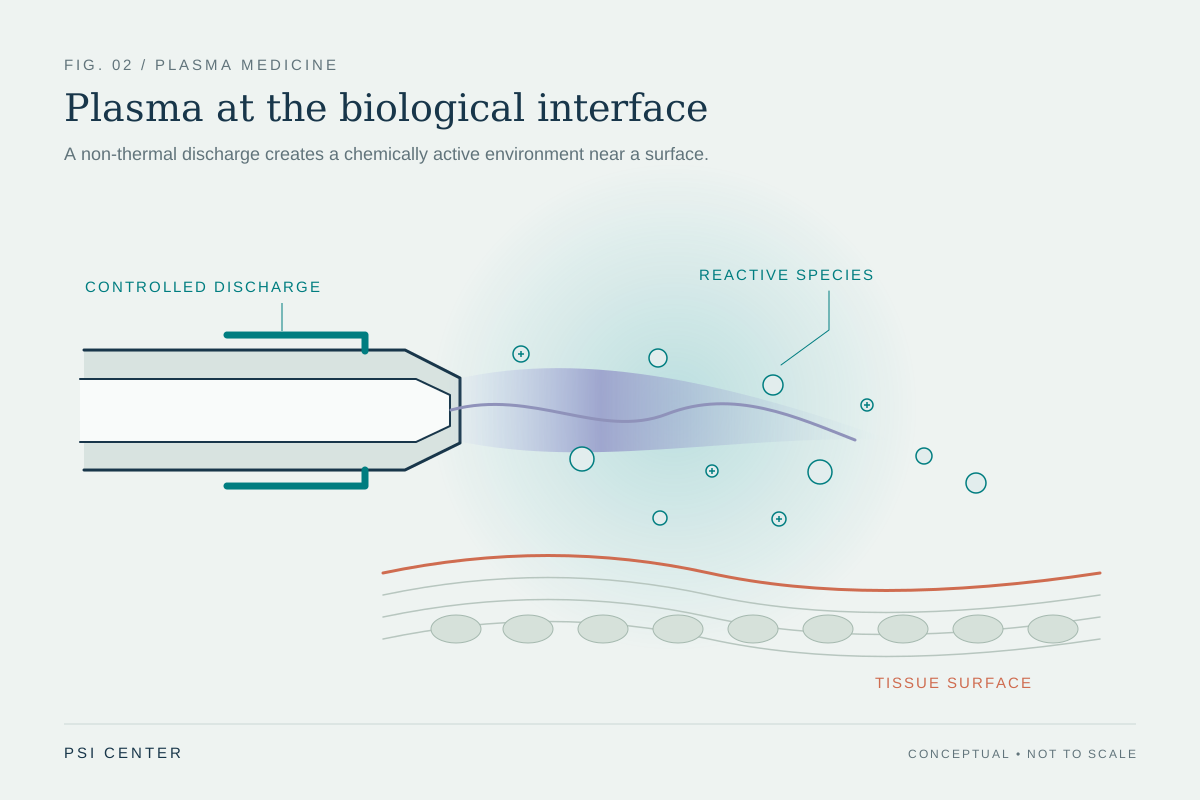
Cold atmospheric plasma (CAP) is an electrically energized gas that remains near room temperature. Researchers are studying whether its reactive particles can affect wound biology. That mechanism makes CAP a plausible research subject, but biological plausibility alone does not show that patients heal faster or avoid complications.
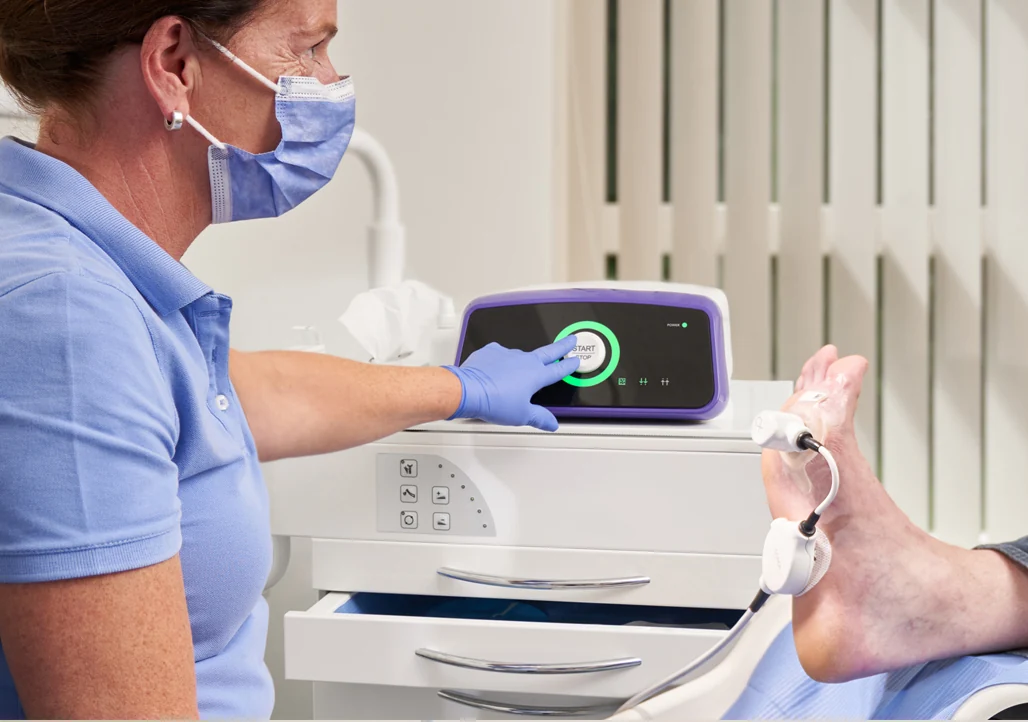
A randomized trial compared standard care alone with standard care plus direct CAP once or twice weekly for venous leg ulcers. All groups received standard care for up to 12 weeks, and 46 people were assigned across the three groups. This design asks whether adding CAP may improve outcomes under those study conditions; it does not test CAP as a replacement for ordinary wound care. [1]
Small numbers make estimates unstable
In the trial, 25% of wounds in the control group healed within 12 weeks, compared with 53.3% in the once-weekly CAP group and 61.5% in the twice-weekly group. Those percentages look striking, but the study reported that the differences were not statistically significant. The reported p-values were 0.16 and 0.08 for the two treatment comparisons. [1]
Why does sample size matter? Imagine flipping a coin only a handful of times: a short run of heads can look like a strong bias even when the coin is fair. In a small clinical trial, a few outcomes can similarly move percentages substantially. A non-significant result does not prove that treatments are equivalent; it means the study did not establish a reliable difference using its statistical test. A larger study could clarify whether the observed pattern persists.
Outcomes need context
The trial also measured reduction in wound area. Average reductions were reported as 52.8% with standard care, 63.9% with once-weekly CAP, and 95.2% with twice-weekly CAP. Yet the between-group differences were not statistically significant, and the study was open-label, meaning participants and care teams knew which treatment was given. [1]
Different outcomes answer different questions. A smaller wound is not the same as a fully healed wound, and a short follow-up does not establish long-term benefit or prevention of recurrence. Open-label care can also influence attention or assessment, even when researchers use defined outcome measures. The study reported no device-related serious adverse events, which is useful safety information for this sample and period, not proof that every use is risk-free.
From signal to clinical evidence
Clinical trials are designed to answer particular research questions, and their phase and design indicate what they can establish. Early studies may focus on safety, while later studies can assess effectiveness in larger groups. Even a randomized design remains one piece of evidence that needs replication and comparison with other studies. [2]
Guidelines also weigh the quality of the total evidence. For diabetes-related foot ulcers, the 2023 International Working Group on the Diabetic Foot recommended against other gases, including CAP, for healing because the evidence was low-certainty and at risk of bias. That guidance concerns a specific ulcer population, not venous leg ulcers, but it underscores why a promising trial is not routine-care endorsement. The careful conclusion is proportionate: this small trial offers a research signal that merits testing, not a settled treatment claim. [3]
Explore the physics: an explanatory diagram
Sources & further reading
- Direct Cold Atmospheric Plasma for Venous Leg Ulcers: Randomized Trial Smits et al., Advances in Wound Care (2024)
- Clinical Trials: What Are the Phases? National Cancer Institute
- Guidelines on Interventions to Enhance Healing of Foot Ulcers: 2023 Update International Working Group on the Diabetic Foot
Prepared for the independent PSI Center reading library. About edition dates and source checking.
This explainer describes scientific principles. It does not assess individual treatment choices.