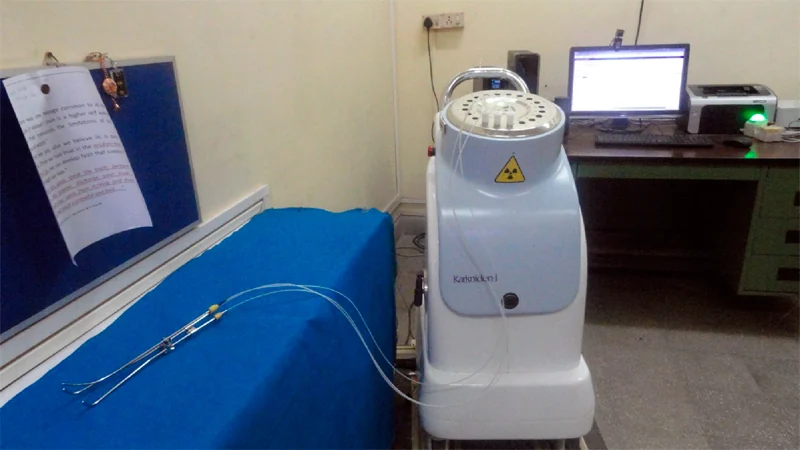
How can a treatment team know that a radiation beam is delivering the intended dose to the intended place? A computer can calculate a plan, and a machine can aim a beam, but both rely on measurements: of the radiation, the patient’s position, and the anatomy being treated. Quality assurance connects those measurements to shared references and checks whether their uncertainty is small enough for the task. The reasoning is physical as well as clinical: dose and location must be measured, compared, and kept within the purpose of the plan.
A plan begins with a target
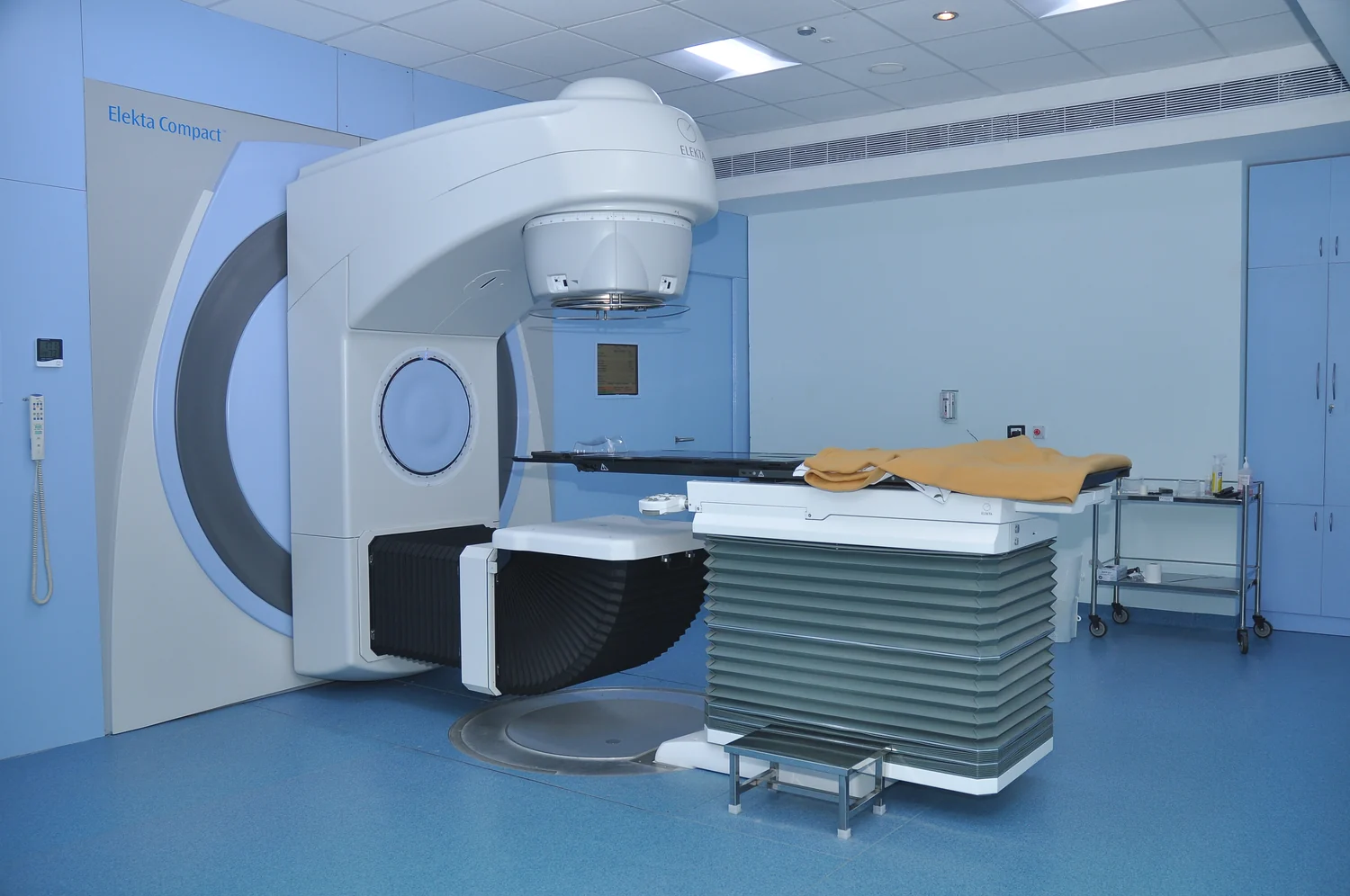
External beam radiation therapy uses a machine to direct radiation at a particular part of the body. It is a local treatment: a plan seeks to deliver a prescribed dose to a tumor while sparing nearby normal tissue [2]. Computers analyze medical images and calculate a treatment path. In three-dimensional conformal therapy, beams from several directions can be shaped to the tumor; intensity-modulated radiation therapy varies the strength of smaller beams in different areas.
That calculation depends on a map of the patient’s anatomy and the relationship between the machine, beam, and target. A plan can be precise in its arithmetic while still depending on how accurately its inputs represent the real treatment setup. Positioning and equipment checks matter because even a small spatial mismatch can change which tissue receives radiation. Quality assurance therefore asks whether measurements and procedures support the plan’s intended delivery.
Measurements need a reference chain
A measurement has more meaning when it can be related to a recognized reference through a documented chain of calibrations. NIST calls this metrological traceability: each link in the chain contributes some measurement uncertainty [1]. A radiation measurement may be compared through calibrated instruments and standards so that results can be interpreted consistently, rather than relying on a device’s display as an isolated number.
Traceability does not by itself prove that a measurement is suitable for every purpose. NIST emphasizes that fitness for purpose depends on whether the associated uncertainty is sufficiently small for the measurement need [1]. In practical terms, a measurement may be traceable yet too imprecise for a task requiring tighter control. Quality assurance has to consider both the chain leading to a result and whether the result is accurate enough for the decision being made.
Dose and geometry answer different questions
The radiation dose describes energy delivered to tissue; imaging and positioning describe where the beam is aimed relative to anatomy. These are connected but distinct checks. A treatment can deliver the intended amount of radiation while missing part of the target, or reach the intended region with a dose distribution that differs from the plan. That is why a single machine reading cannot summarize every aspect of treatment accuracy.
External-beam methods use different physical beams and geometries. Photons can reach deep tumors but scatter radiation along their path and continue beyond the tumor; proton beams can stop at the tumor, though comparisons of their benefits remain a clinical question [2]. The distinction illustrates why measurement and planning must be matched to the beam type. A quality check should address the relevant physical behavior, not assume that every radiation beam deposits energy in the same way.
Repeated checks handle a moving body
A patient’s position and anatomy can change between planning and delivery. Image-guided radiation therapy uses scans during treatment sessions to detect changes in tumor size or location; staff can adjust positioning or the dose when needed [2]. The physical goal remains to place the planned dose relative to the target, while repeated images provide updated evidence about that alignment.
Quality assurance is not a promise that uncertainty disappears. It is a structured way to measure relevant quantities, relate measurements to references, and decide whether their uncertainty fits the clinical purpose. In radiation treatment, the central question is whether the dose and its spatial distribution are consistent with the plan closely enough to deliver the prescribed treatment while limiting normal-tissue exposure. Measurements make that question testable, and careful interpretation keeps a numerical result connected to what it is meant to protect or treat.
Sources & further reading
- Metrological Traceability NIST
- External Beam Radiation Therapy National Cancer Institute
Prepared for the independent PSI Center reading library. About edition dates and source checking.
This explainer describes scientific principles. It does not assess individual treatment choices.