What does it mean when a light-based device works? A laser can deliver a controlled beam, and a sensor can detect a signal, but those physical achievements do not by themselves show that a device improves health. The key question is whether the claimed benefit appears reliably in people, under conditions that reflect the intended use.
Light is a mechanism, not an outcome
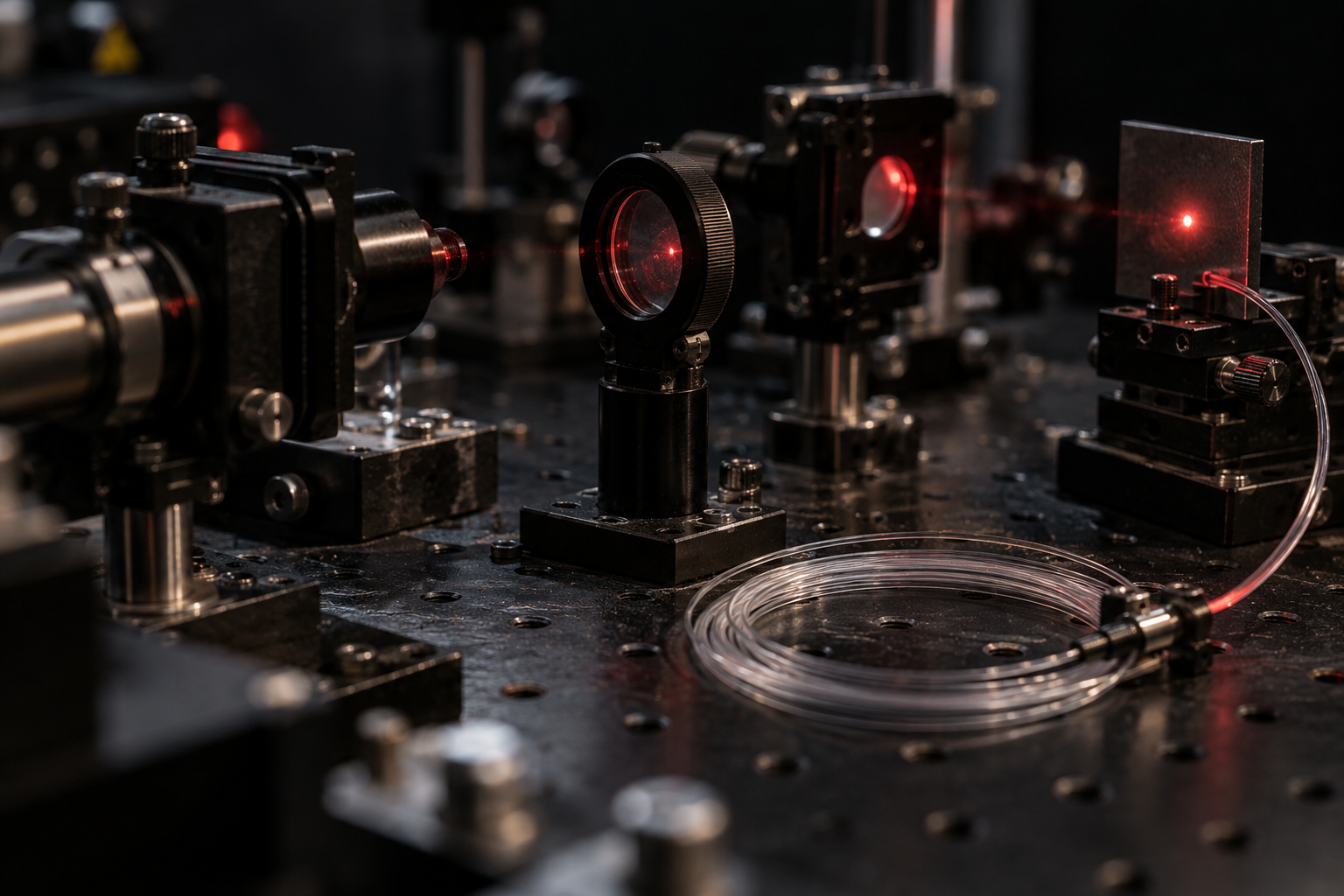
Light carries energy, and its effects depend on wavelength, intensity, exposure time, and the material it meets. A beam may heat tissue, trigger a chemical change, or provide information to an optical sensor. Showing that the beam reaches a target establishes an engineering capability; it does not yet establish that patients heal faster, feel better, or avoid complications.
Imagine a lamp that consistently illuminates a wound. That is a reproducible optical effect. To claim that it heals the wound, researchers must measure healing in people and compare outcomes with an appropriate alternative. The distinction is similar to proving that a thermometer detects heat versus proving that acting on its readings changes a health outcome.
Trials test the claim in people
Clinical trials are studies that test how well new medical approaches work in people. Their purposes differ: a treatment trial evaluates a treatment, while prevention, screening, and supportive-care trials ask other questions [1]. Results from one kind cannot automatically answer another. A study that measures whether a light device changes a laboratory signal, for example, does not establish that it prevents illness.
A useful trial makes the claimed outcome explicit. If a device is intended to reduce pain, pain needs to be assessed in a way that supports comparison. If the claim concerns healing, investigators need to track healing rather than infer it from a light measurement. Comparison groups and careful study design help separate a device’s effect from natural change, other care, and expectations.
Regulatory review has a specific scope
In the United States, FDA device requirements vary with classification. Most Class II devices require a 510(k) notification, while most Class III devices require Premarket Approval (PMA), which includes clinical data supporting device claims [2]. A 510(k) submission must show substantial equivalence to a legally marketed device; that is a particular regulatory finding, not a general statement that every possible health claim has been proven.
The FDA also describes an Investigational Device Exemption as a route for using a device in a clinical study to collect safety and effectiveness data for a possible submission. Device studies with significant risk require FDA and institutional review board approval before they begin; nonsignificant-risk studies require institutional review board approval [2]. These steps concern specified devices and study pathways. They should not be compressed into a broad claim that a technology is simply “FDA approved.”
Match evidence to the promised benefit
The strength of a conclusion should match what researchers actually measured. A bench test can demonstrate that a beam has a chosen wavelength. A small human study may help characterize how a device is used or whether a signal can be measured. A controlled trial can ask whether the intended clinical outcome improves. Each step adds a different kind of evidence, and the earlier steps cannot stand in for the later ones.
When evaluating a light-based claim, ask what changed, in whom, and compared with what. A precise device may be valuable, but precision is a property of measurement or delivery. Evidence of benefit depends on people’s outcomes. Keeping those questions separate makes the science easier to understand and the claim easier to assess.
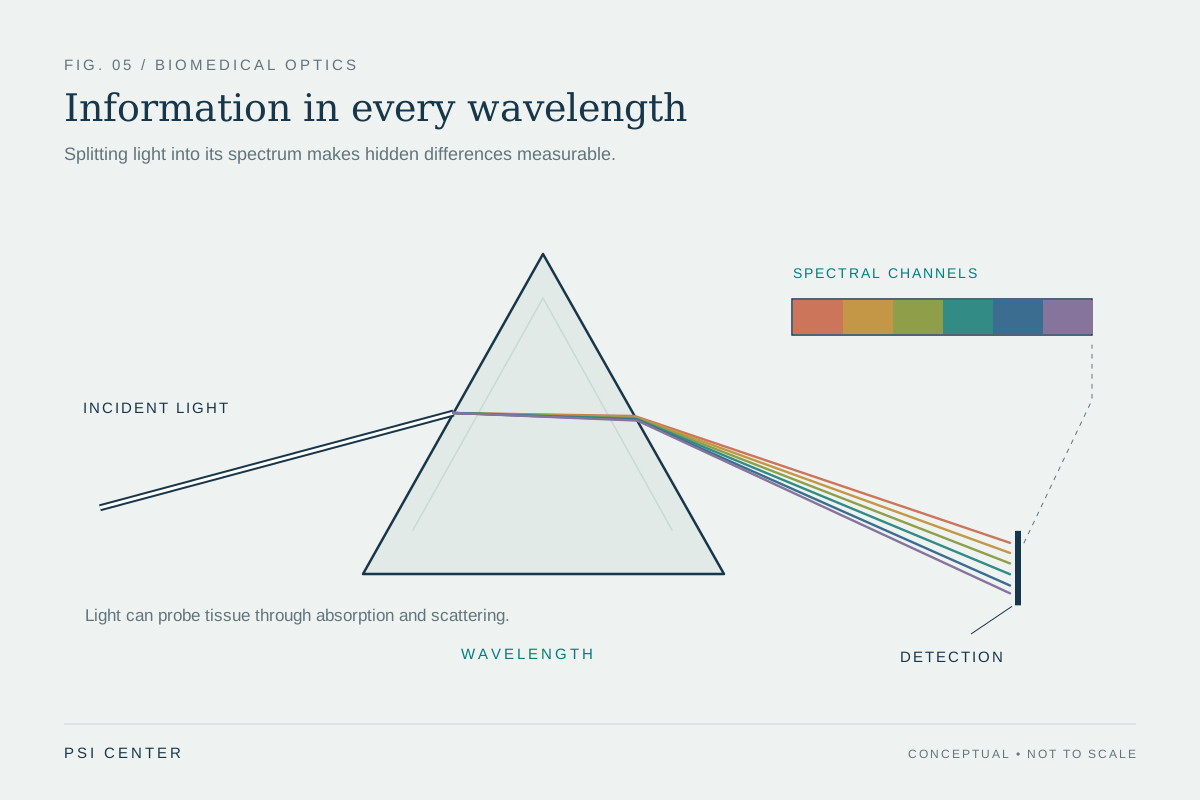
Explore the physics: an explanatory diagram
Sources & further reading
- Clinical Trials: What Are the Phases? National Cancer Institute
- Medical Device Overview FDA
Prepared for the independent PSI Center reading library. About edition dates and source checking.
This explainer describes scientific principles. It does not assess individual treatment choices.