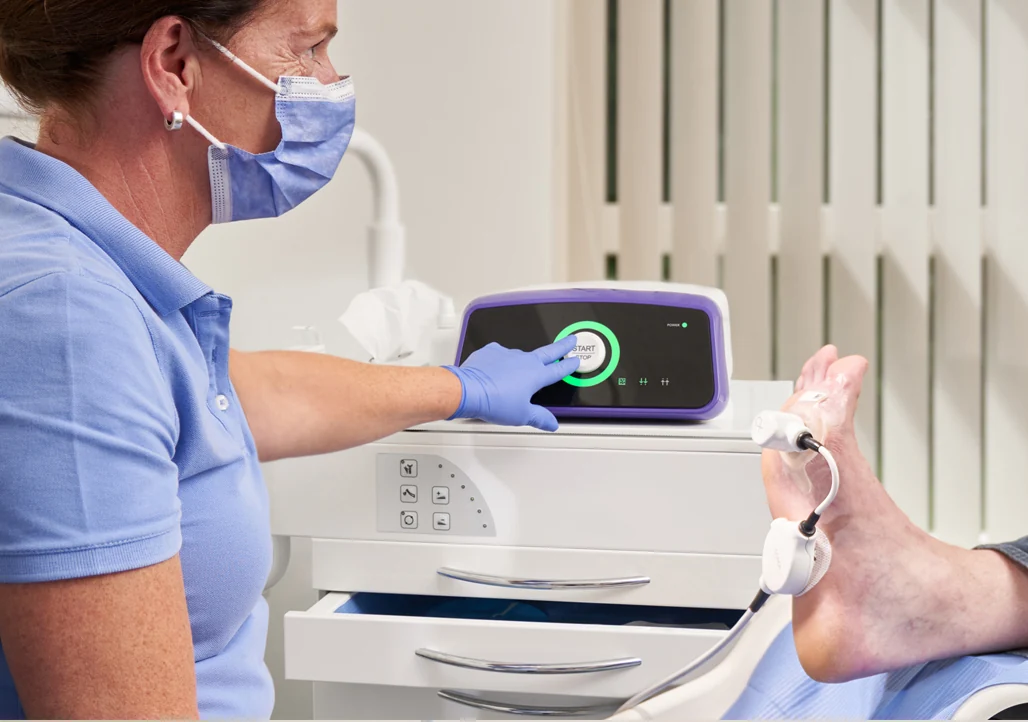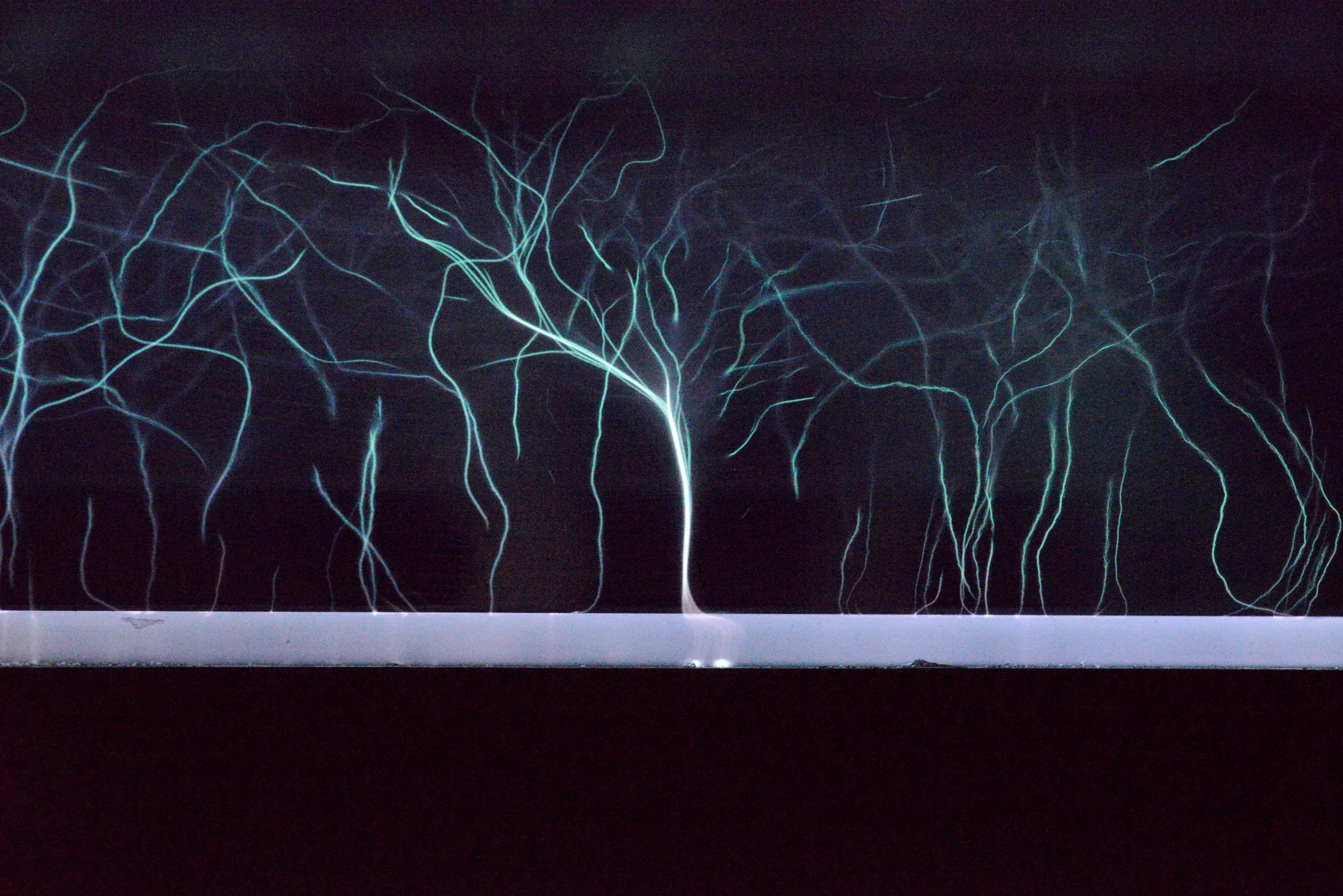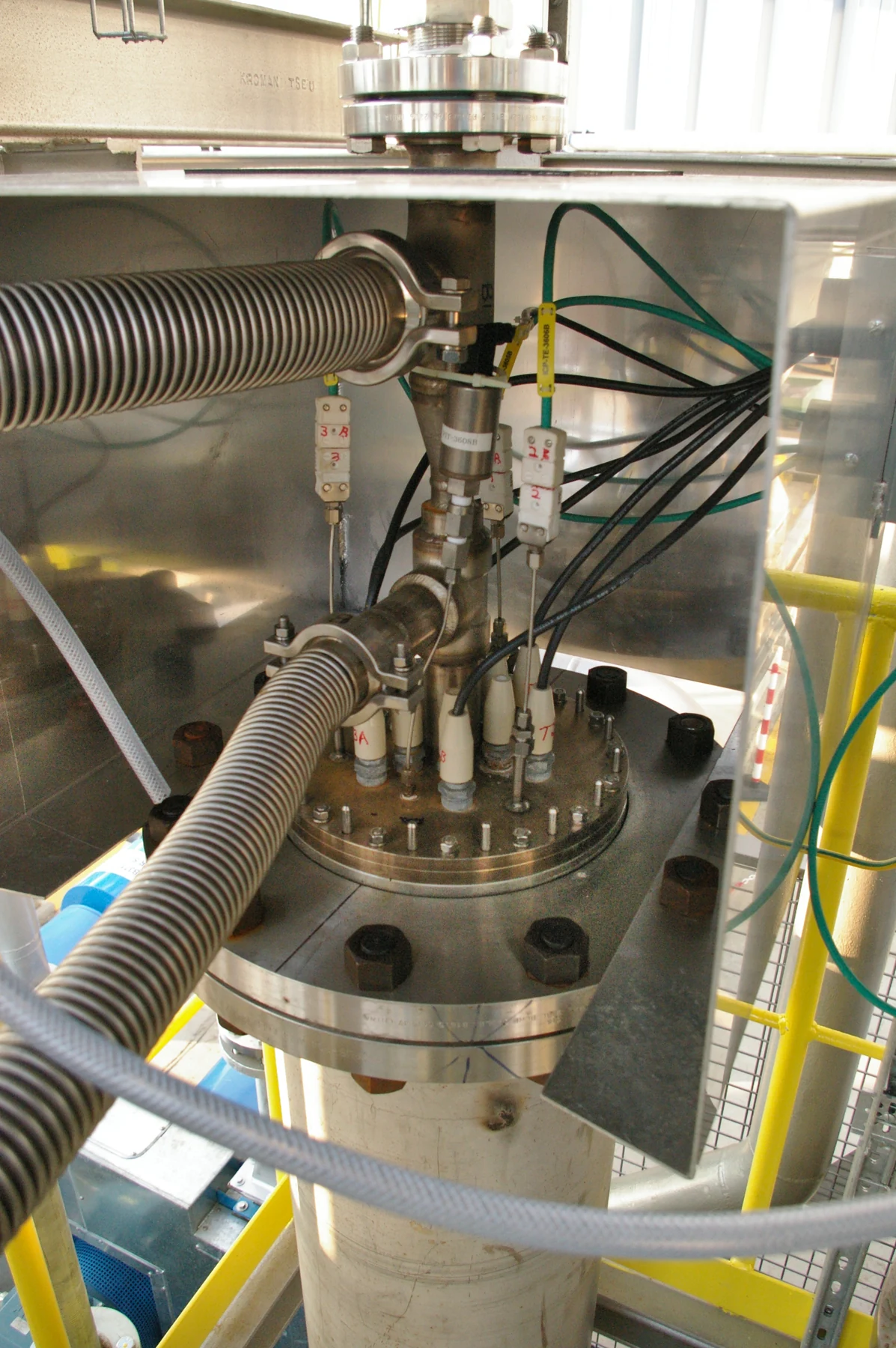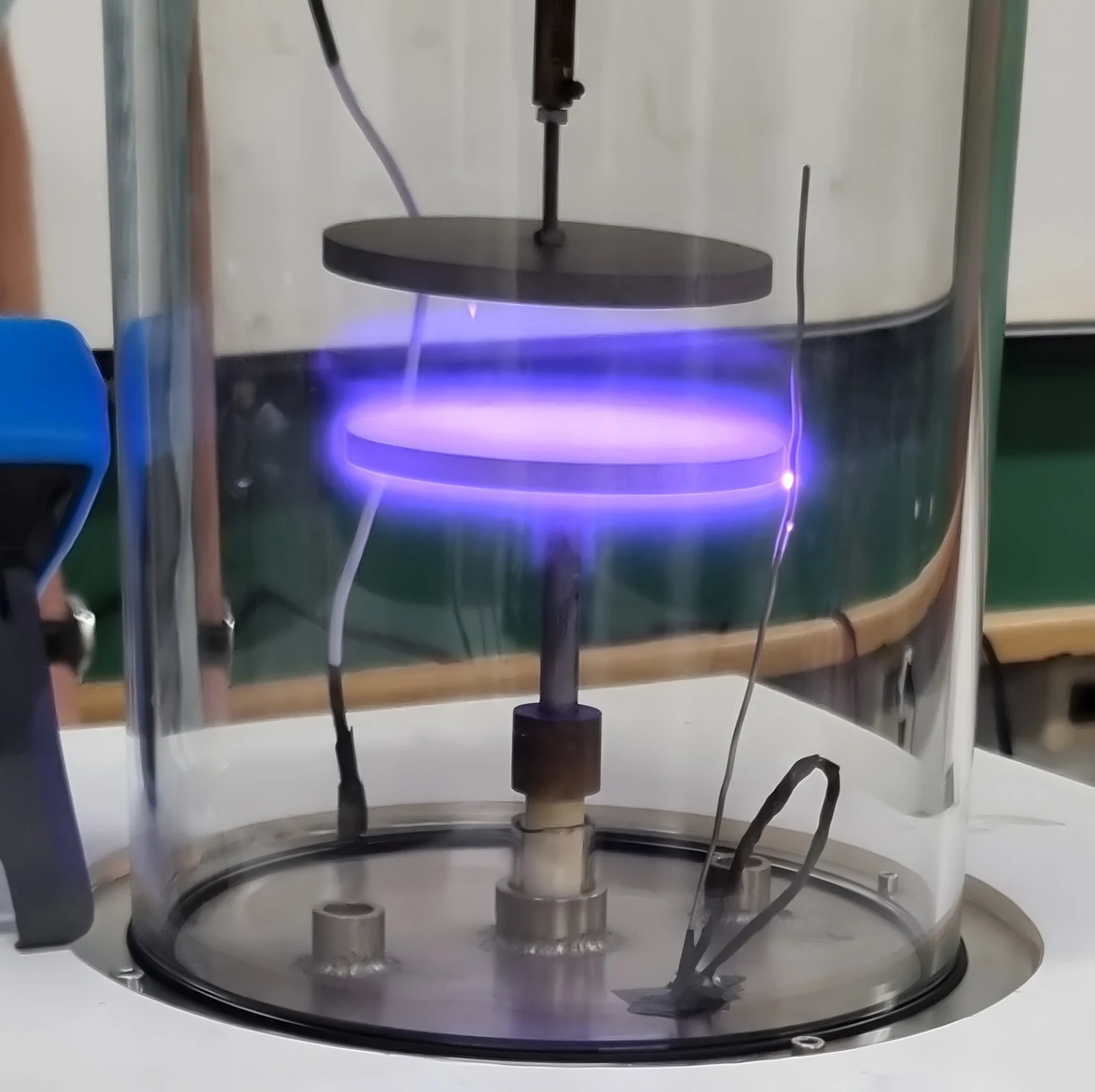
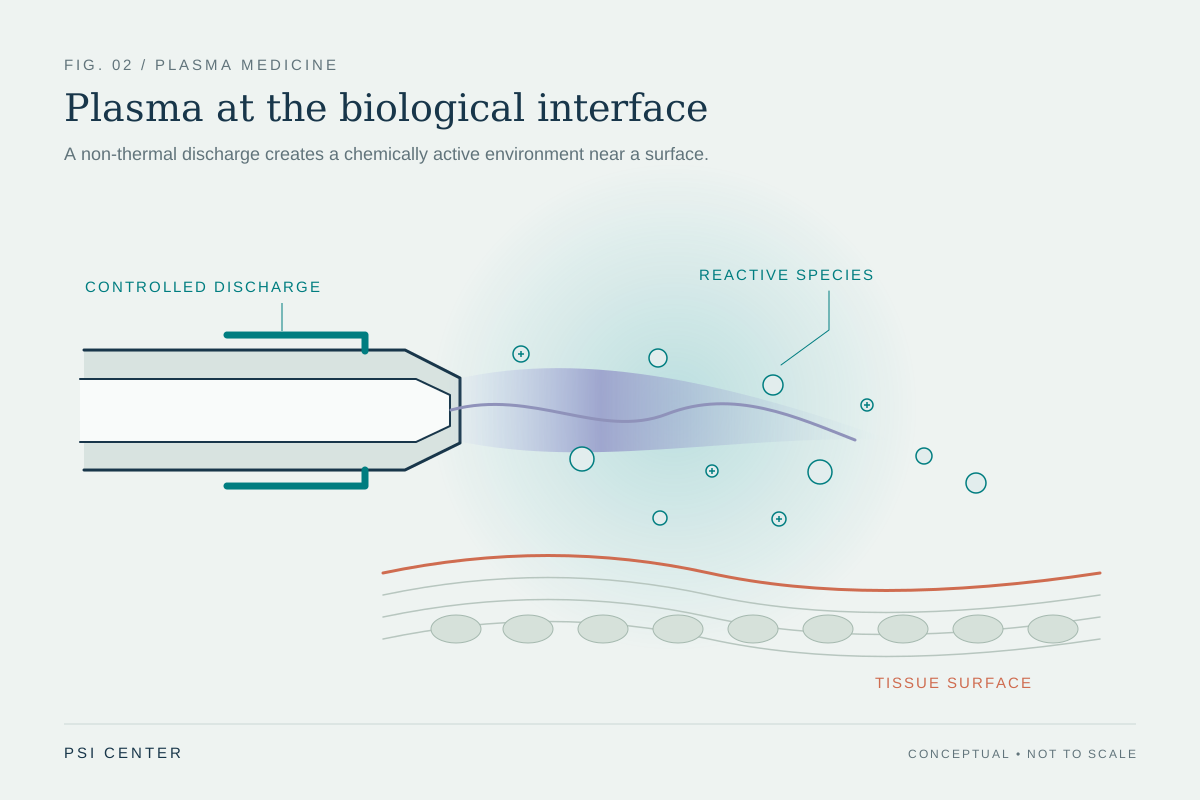
Why might a plasma device affect one part of a wound differently from another? The answer begins with geometry: the gap between source and tissue, the angle of exposure, and the shape of the surface all influence how energy and reactive species reach the target. Cold atmospheric plasma is a research area in medicine, but its physical behavior does not by itself establish clinical benefit.
A gas with active ingredients
Plasma is an ionized gas containing charged particles and reactive chemical species. Cold atmospheric plasma (CAP) is generated near ordinary atmospheric pressure with conditions intended to limit bulk heating of exposed tissue. “Cold” describes the overall gas treatment context, not an absence of energetic particles or chemical activity. Depending on the source and surrounding air, the plasma can create short-lived and longer-lived reactive compounds.
Those compounds and fields reach a surface through a changing mix of transport and chemistry. Some species react quickly close to where they form; others persist longer or dissolve into moisture. A wound is not a flat, dry laboratory plate: it has fluid, folds, tissue edges, and variable depth. As a result, exposure can vary across the target even when a device is held in a fixed position.
The gap shapes delivery
Consider shining a flashlight on a rough wall. Moving the light farther away spreads its illumination and reduces intensity at a given patch; tilting it changes the footprint. A plasma source is more complex than a flashlight, but the mental model helps: distance and angle influence which regions are reached and how concentrated the exposure is. The source’s flow, electrical conditions, and the surrounding air also contribute, so a simple distance rule cannot predict dose by itself.
Clinical devices can differ in their electrode arrangement, gas flow, and whether plasma is delivered directly or through an intervening space. The INP describes cold atmospheric pressure plasma sources as being studied for disinfection of body surfaces and possible influence on wound healing. These are device-dependent research applications, and claims about one source cannot automatically be transferred to another design. [1]
A measured exposure is not a proven outcome
In a randomized study involving 44 people with diabetic foot ulcers, investigators applied helium-generated CAP alongside standard care or used standard care alone. The study reported reductions in wound size and an immediate decrease in bacterial load after exposure. These observations are evidence from a particular study and setup; they do not establish that all CAP devices or treatment geometries produce the same result. [2]
A separate randomized trial compared argon-generated CAP with placebo alongside standard care. It reported a difference in wound-area reduction, but not a significant difference in infection or microbial-load reduction. This distinction is important: a device may affect one measured endpoint without demonstrating another proposed mechanism. Differences in gas, apparatus, patient group, application schedule, and measurement can all change what a trial finds. [3]
From apparatus to clinical evidence
Physical mapping can help researchers characterize a device: where the active region forms, how the output changes with spacing, and whether curved or recessed areas receive comparable exposure. Such measurements help explain what was delivered in an experiment. They do not show, by themselves, that healing improves in people; clinical outcomes require appropriately designed trials and careful comparisons with standard care.
Evidence for CAP wound treatment remains mixed. The 2023 International Working Group on the Diabetic Foot guideline recommends against other gases, including CAP, for diabetic foot-ulcer healing because evidence is low-certainty and biased. Thus, promising mechanisms and individual trial findings should remain distinct from established care. Geometry helps define exposure, while controlled clinical evidence determines whether that exposure leads to meaningful benefit. [4]
Explore the physics: an explanatory diagram
Sources & further reading
- Wound Healing and Antisepsis Leibniz Institute for Plasma Science and Technology
- Cold Atmospheric Plasma in Diabetic Foot Ulcers Mirpour et al., Scientific Reports (2020)
- Cold Atmospheric Plasma for Diabetic Foot Ulcers: Randomized Trial Stratmann et al., JAMA Network Open (2020)
- Guidelines on Interventions to Enhance Healing of Foot Ulcers: 2023 Update International Working Group on the Diabetic Foot
Prepared for the independent PSI Center reading library. About edition dates and source checking.
This explainer describes scientific principles. It does not assess individual treatment choices.