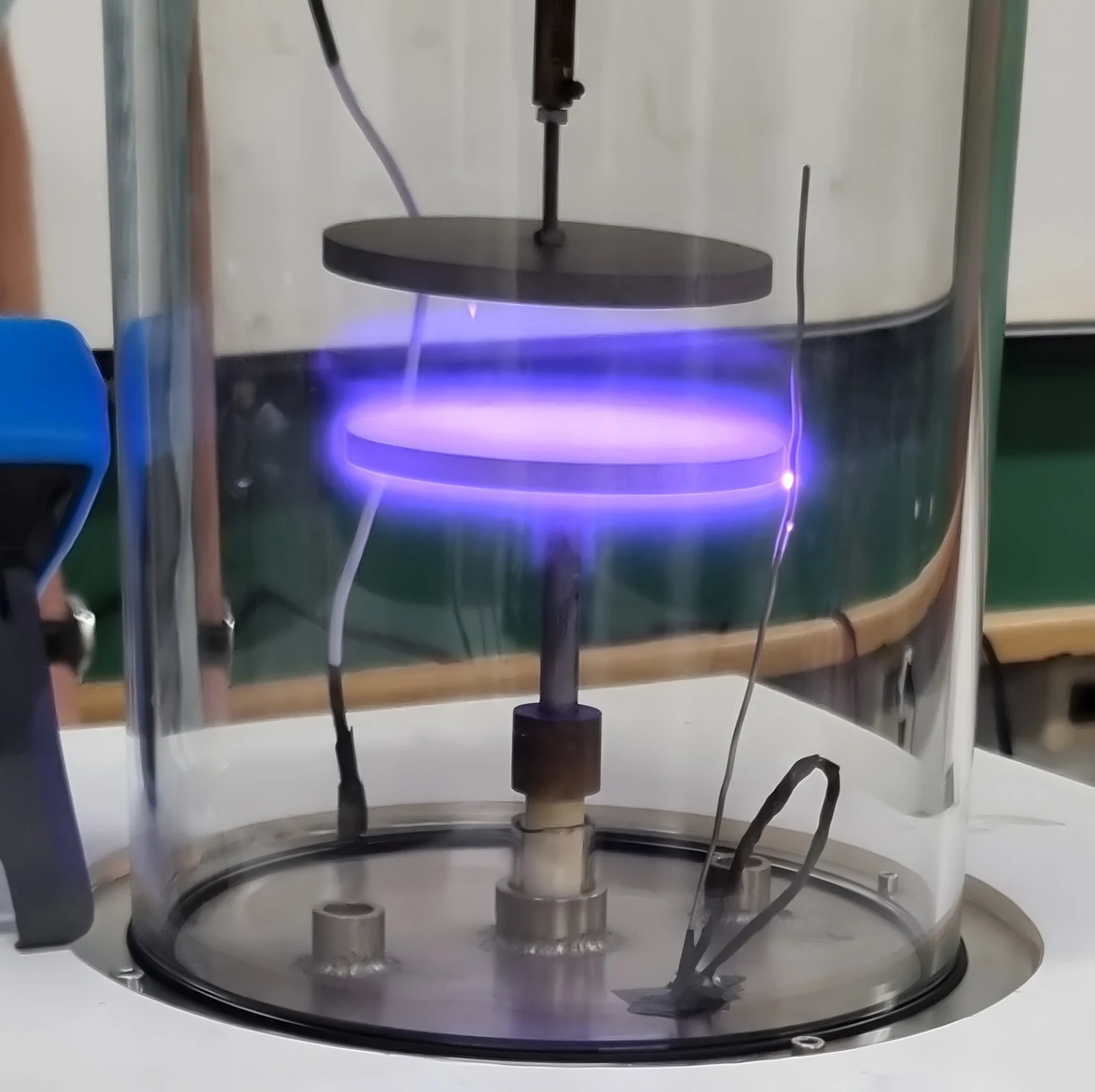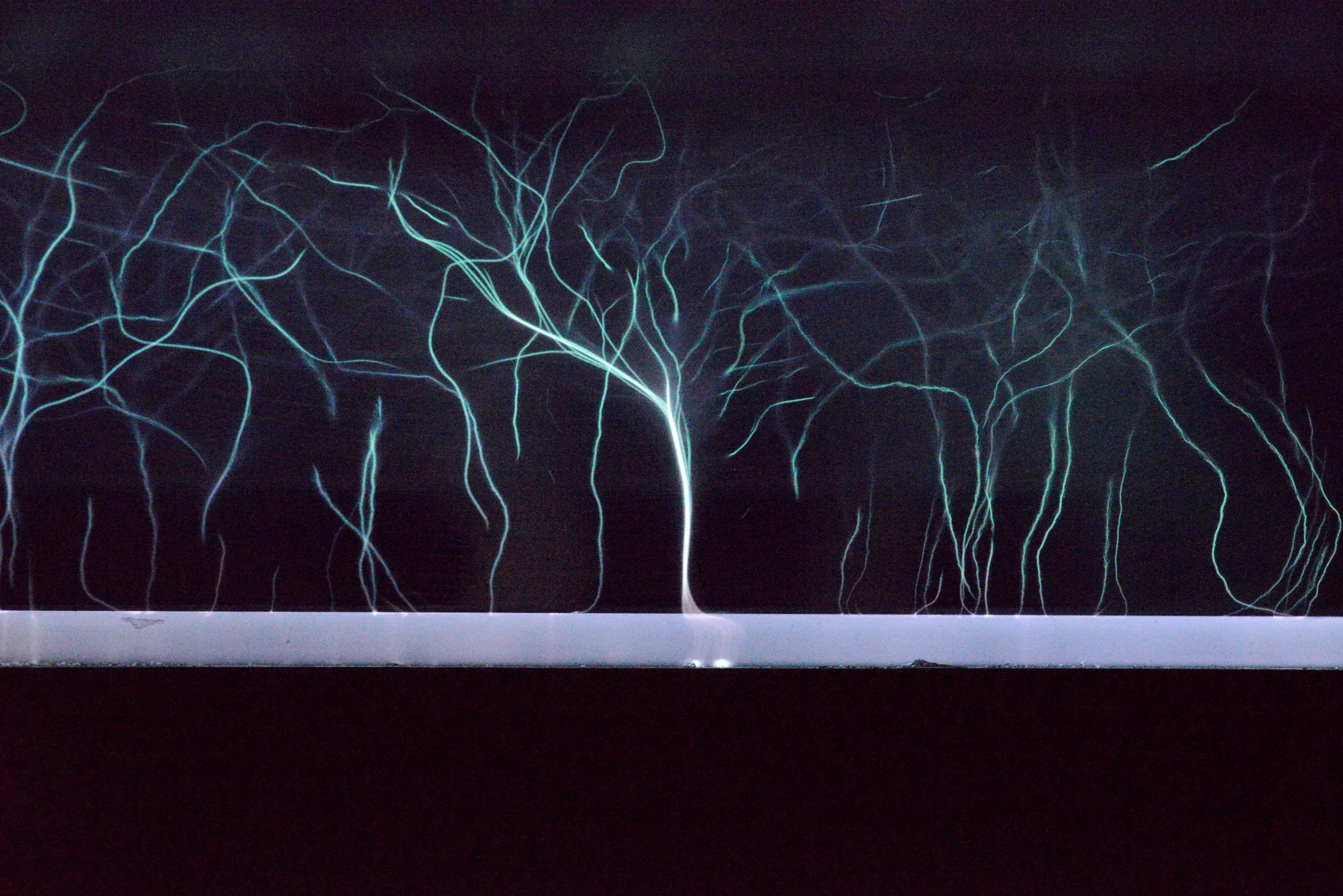
How can a glowing, electrically active gas be called cold? The apparent contradiction disappears when temperature is not treated as a single number for every particle. A plasma can contain fast-moving electrons alongside much cooler neutral gas molecules and ions. In some devices, that imbalance lets the gas remain near room temperature while still producing chemically active species. The distinction matters in medicine, where “cold plasma” describes a research tool, not a promise of clinical benefit.
A plasma is a partly ionized gas
In an ordinary gas, atoms or molecules are mostly electrically neutral. In a plasma, some electrons have been separated from atoms or molecules, leaving free electrons and positively charged ions alongside neutral particles. Those charges allow electric current to flow and make plasma respond to electric and magnetic fields [1]. Lightning is a familiar natural example; fluorescent lamps and stars are others.
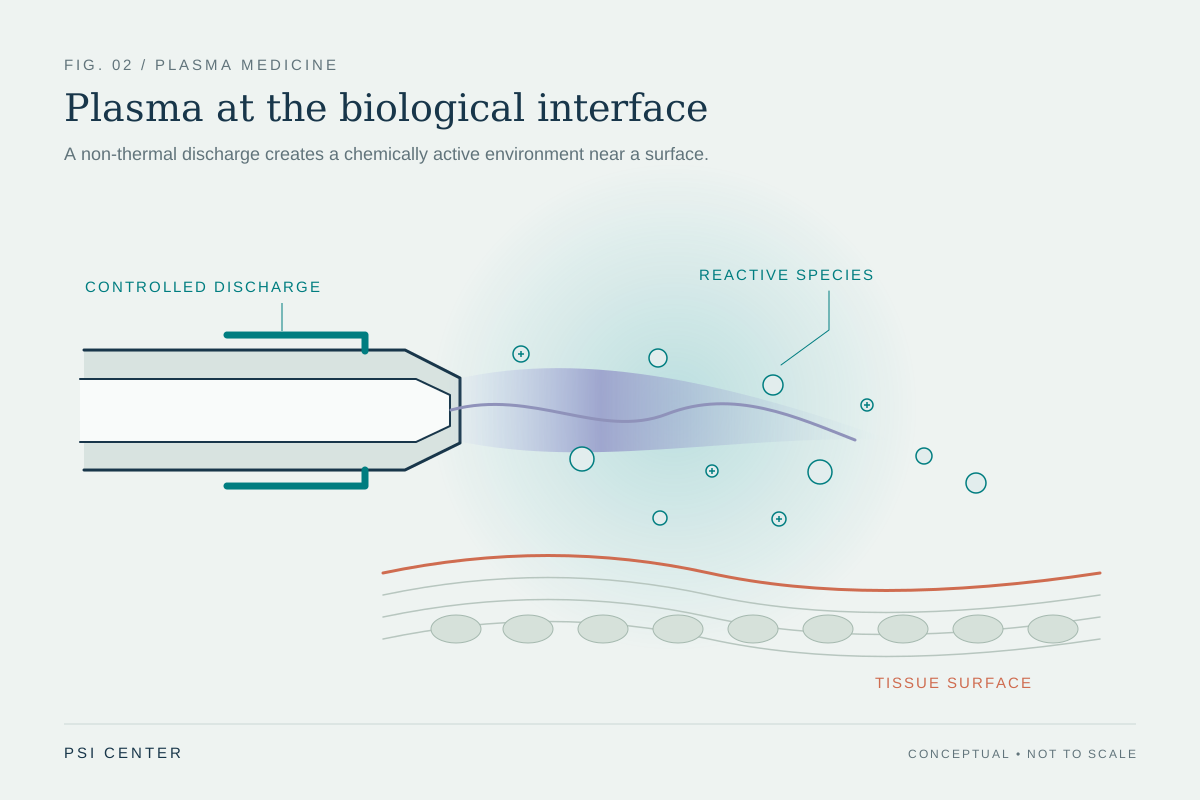
It is tempting to picture plasma as a gas simply heated until everything is extremely hot. Heating can create plasma, but it is not the only way to supply energy. An electric field can accelerate electrons. When these energetic electrons collide with gas molecules, they can trigger chemical reactions or ionization even if the heavier particles have not warmed to the same degree.
Temperature can differ by particle type
Temperature is related to the random motion of particles. In a cold atmospheric plasma, electrons may carry much more energy than the heavier ions and neutral molecules. Because electrons are so light, they can gain energy rapidly from an electric field; collisions transfer only part of that energy to the heavier gas. The gas as a whole can therefore stay comparatively cool even while electrons drive reactions.
A useful mental picture is a crowded room where a few tiny balls zip quickly between slowly moving heavy balls. The energetic small particles can still cause changes when they collide, even though the whole collection does not share one speed. This is an analogy, not a literal model of all plasma chemistry. The key is that “cold” refers to the bulk gas conditions, not to every particle having low energy.
Medical devices exploit the chemistry
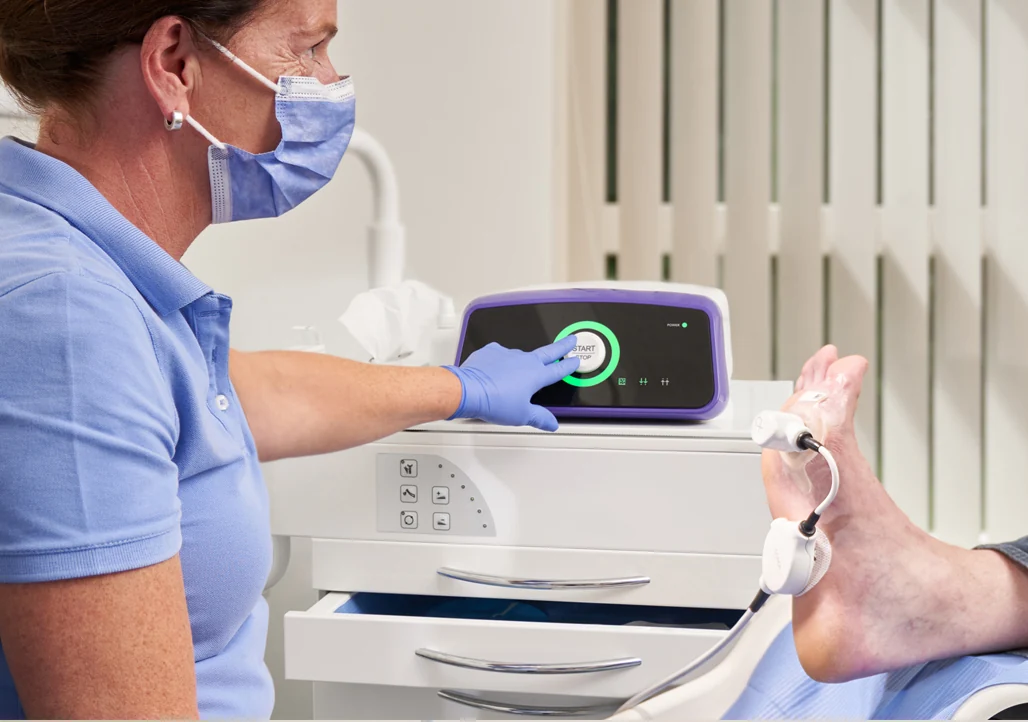
Cold atmospheric pressure plasma sources are being studied for applications on body surfaces and living tissue, including disinfection and possible effects on wound healing. Their reactive particles and molecules can interact with microbes and tissue; proposed biological effects extend beyond simply heating a wound [2]. A device’s output depends on how the plasma is generated and delivered, so “plasma” alone does not specify a treatment.
A laboratory mechanism is not proof of patient benefit. The evidence for cold atmospheric plasma in wound care is mixed, and the 2023 International Working Group on the Diabetic Foot guideline recommends against using other gases, including cold atmospheric plasma, to promote healing of diabetes-related foot ulcers because the evidence was low-certainty and biased. Research and clinical recommendations can differ across contexts; neither a plausible mechanism nor a trial automatically establishes routine care. [3]
The word plasma covers distinct technologies
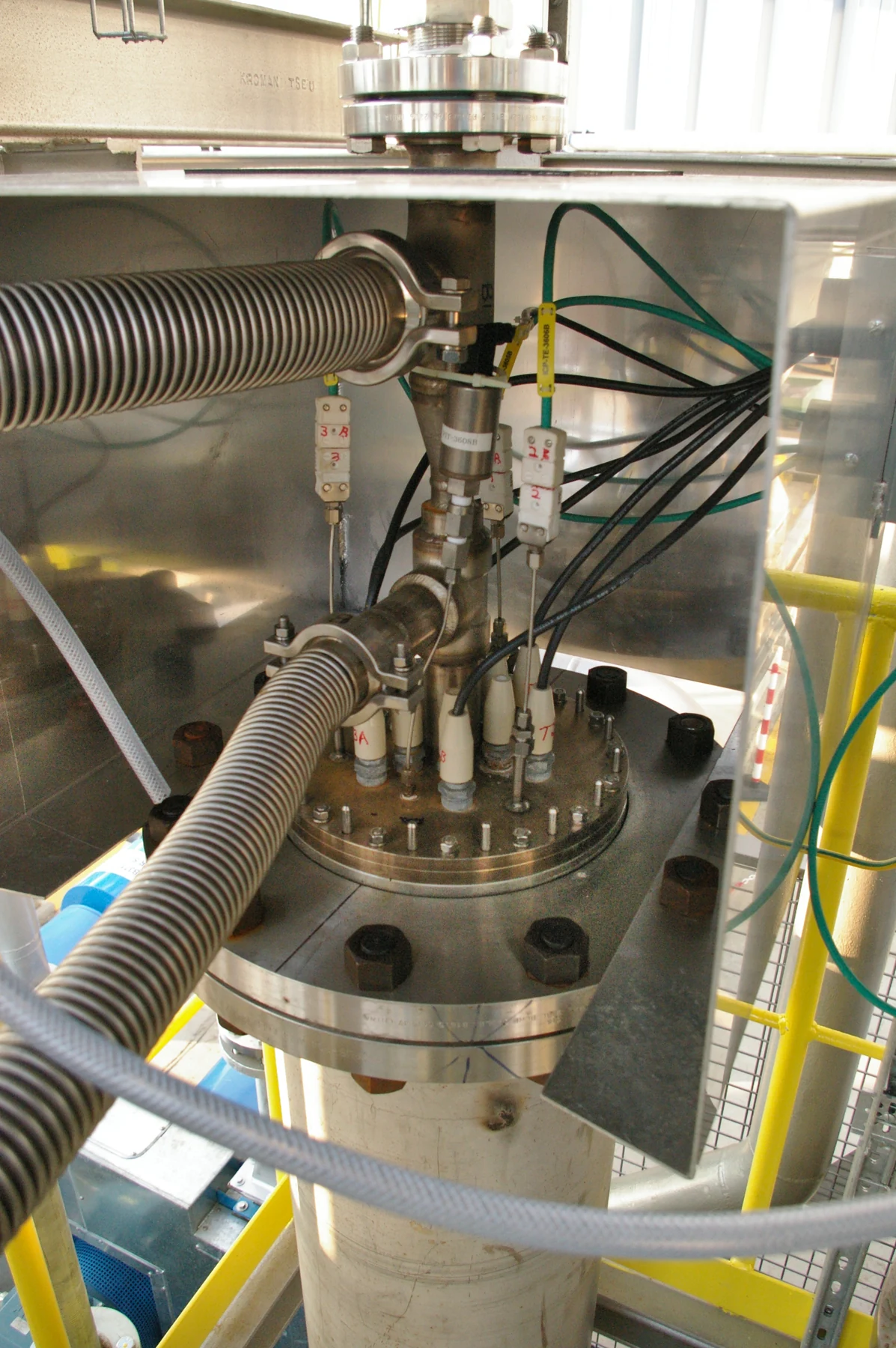
The word also appears in other medical settings, but those uses should not be conflated. Argon plasma coagulation is a technique that heats and coagulates tissue. Cold atmospheric plasma is intended to deliver a comparatively cool, reactive gas. Plasma equipment sterilization uses gas-plasma processes to sterilize instruments. The shared word points to ionized gas, while purpose, temperature, and interaction with tissue differ.
That distinction is useful whenever a headline says plasma “treats” something. Ask what kind of plasma, what the device does physically, and what evidence supports the particular use. A cold gas can still be chemically active; an active mechanism can still have uncertain clinical value. Keeping those ideas separate makes the physics interesting without turning early research into a claim of established therapy.
Explore the physics: an explanatory diagram
Sources & further reading
- About Plasmas and Fusion Princeton Plasma Physics Laboratory
- Wound Healing and Antisepsis Leibniz Institute for Plasma Science and Technology
- Guidelines on Interventions to Enhance Healing of Foot Ulcers: 2023 Update International Working Group on the Diabetic Foot
Prepared for the independent PSI Center reading library. About edition dates and source checking.
This explainer describes scientific principles. It does not assess individual treatment choices.