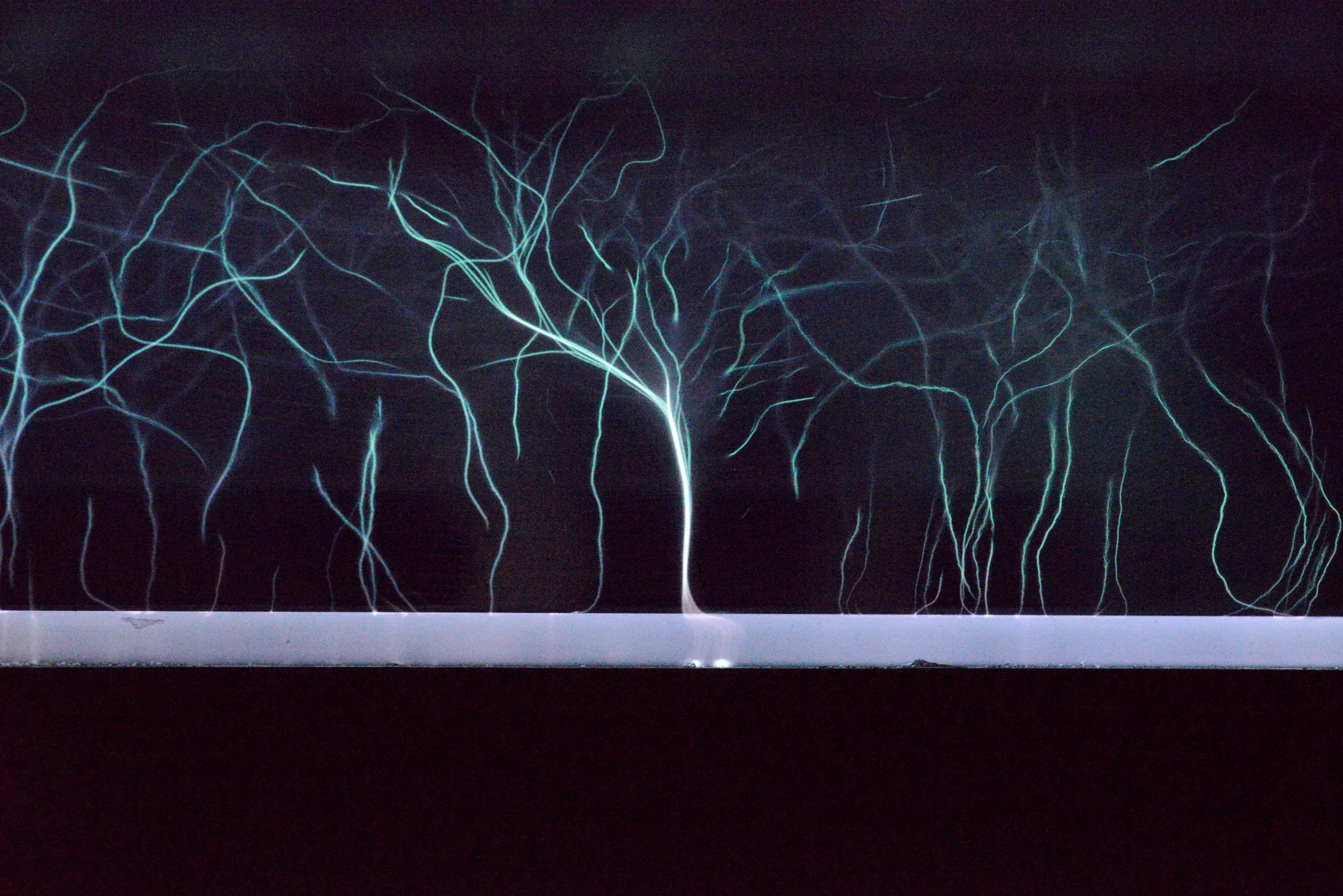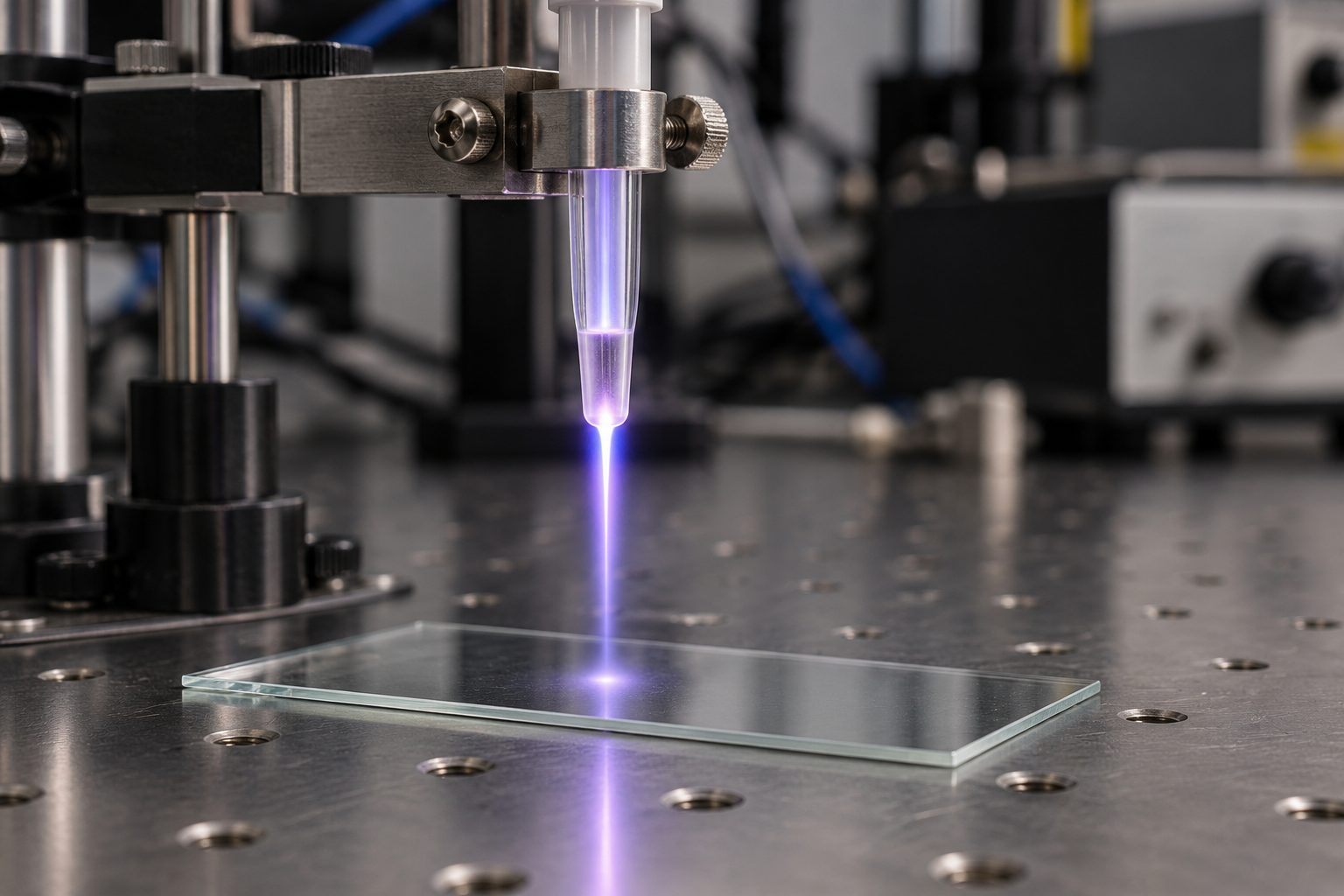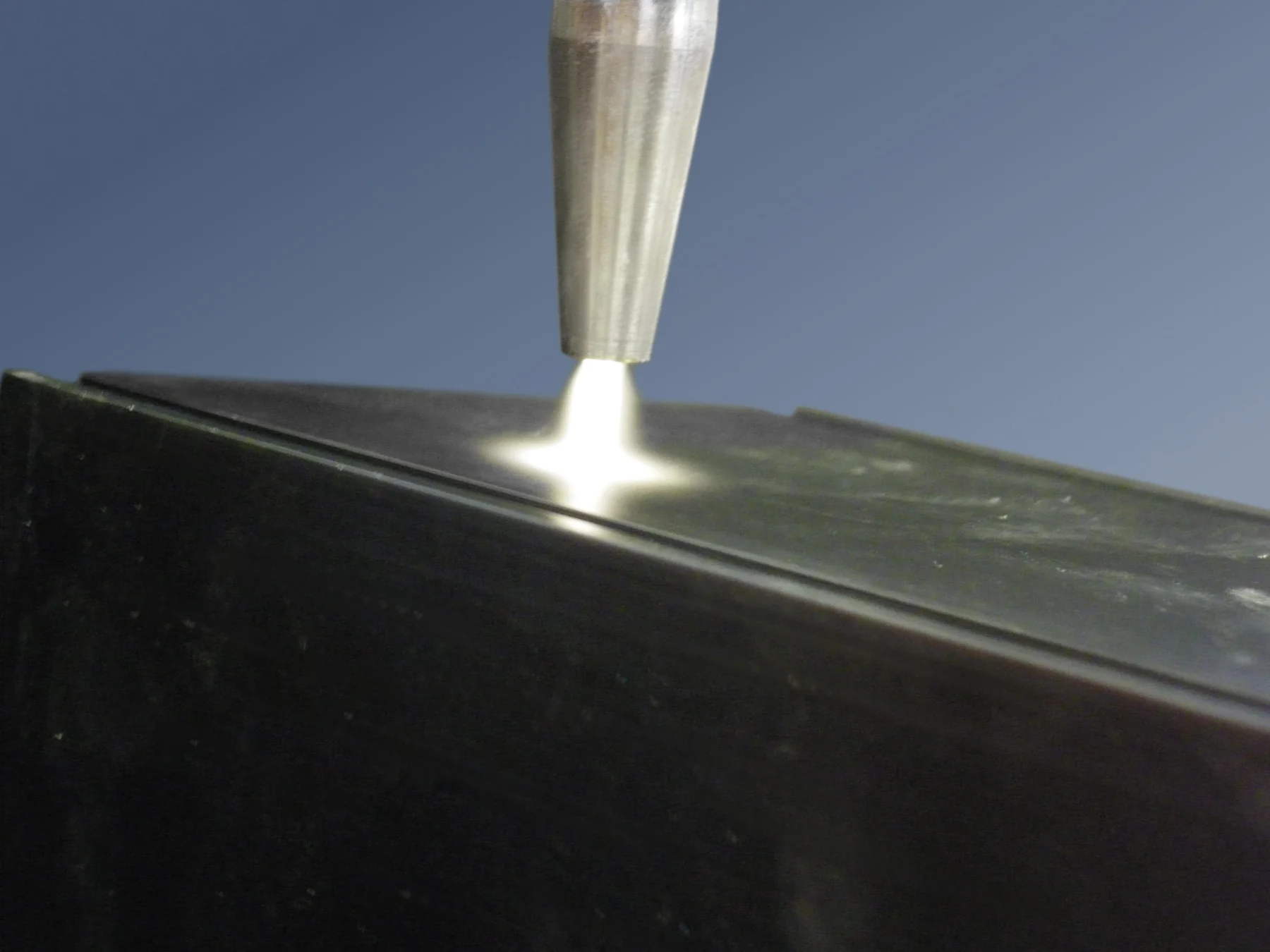
How can a gas that feels cool still alter living tissue? In cold atmospheric plasma, electrical energy creates a mix of charged particles and reactive oxygen- and nitrogen-containing species. These short-lived chemicals can interact with cells near the treated surface. Whether that interaction helps depends on the dose, tissue, and clinical setting; chemical activity alone is not evidence of a cure.
Reactive does not mean selectively helpful
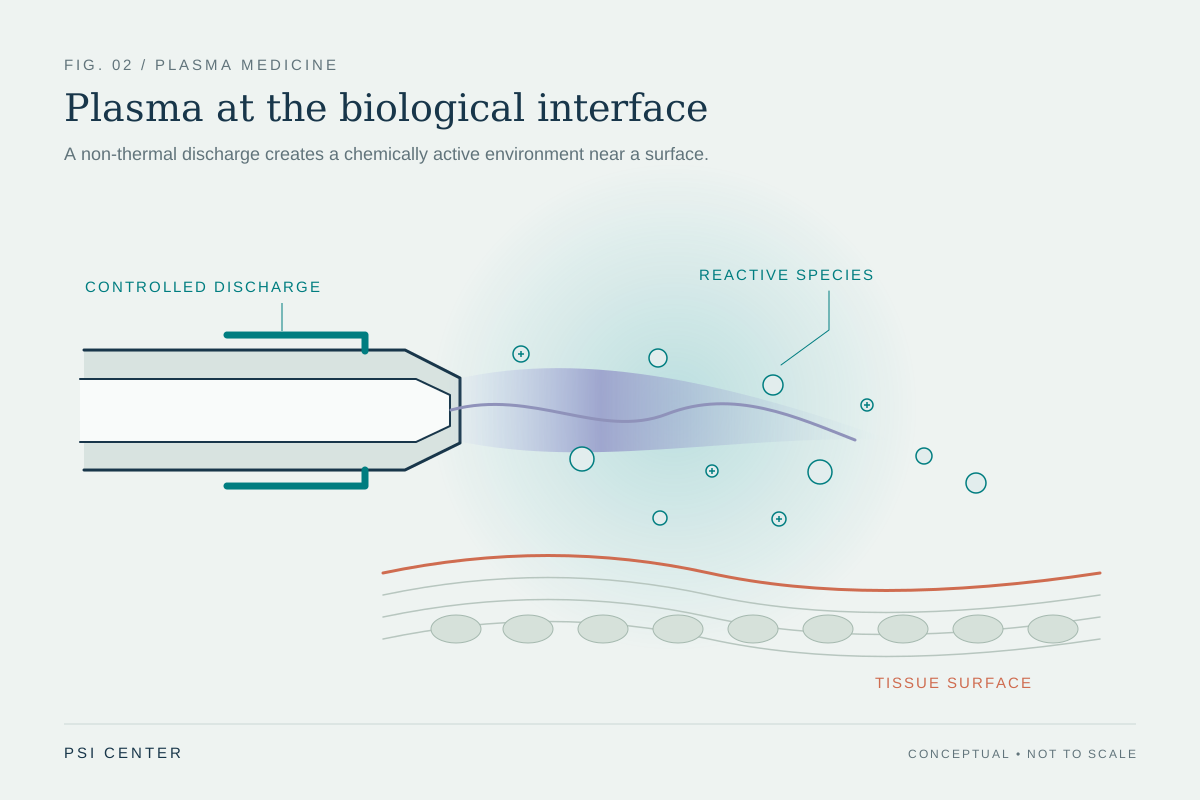
A reactive species is a particle or molecule inclined to take part in chemical reactions. Some reactive oxygen and nitrogen species also occur in the body, where their effects depend on concentration, location, and timing. A plasma source can deliver such species at a surface, alongside an electric field and other physical effects. In principle, that gives researchers ways to influence microbes or cell behavior; it also means excessive or poorly controlled exposure could harm tissue.
The word “cold” distinguishes these sources from hot thermal plasmas, but it does not mean biologically inert. Cold atmospheric pressure plasma is studied for disinfection of body surfaces and living tissue and for possible influence on wound healing [1]. The proposed chain is plausible: reactive chemistry affects microbes and local cells, which may alter conditions around a wound. Each step, however, needs evidence in the relevant tissue and patient population.
A wound mechanism meets a clinical test
Chronic wounds can be difficult to heal, and a treatment that reduces microbes or changes local cell activity might seem promising. The Leibniz Institute for Plasma Science and Technology describes cold plasma as having antiseptic effects and reports clinical studies suggesting it may support regeneration in chronic wounds [1]. Such reports help motivate research, but they do not by themselves settle whether the treatment reliably improves healing compared with appropriate care.
The evidence is not uniformly positive. For diabetes-related foot ulcers, the 2023 International Working Group on the Diabetic Foot guideline recommends against other gases, including cold atmospheric plasma, for wound healing because the supporting evidence is low-certainty and at risk of bias. This is a specific clinical recommendation for a defined wound context. It does not erase laboratory findings or every study in other settings, but it does show why mechanistic promise cannot stand in for dependable clinical results. [3]
What a phase I cancer study can answer
Cancer researchers have also investigated cold plasma used during surgery. In a phase I study, 20 people with stage IV or recurrent solid tumors underwent surgical resection combined with intraoperative treatment using a particular cold plasma device. The primary endpoint was safety; the study reported no related adverse events and no effect on intraoperative physiological data [2]. That is useful early evidence about feasibility and safety in the studied procedure. [4]
The study does not establish that cold plasma is an effective cancer treatment. Its small group, combination with surgery, and safety-focused design do not show what would have happened without the plasma treatment or whether results generalize to other cancers and patients. Reported response and survival figures in such a study should not be read as proof of cure. A phase I trial is an early research step, not routine-care endorsement or general FDA approval of the therapy [2].
Same label, different jobs
A further source of confusion is the word “plasma” on equipment used in medicine. Argon plasma coagulation is an established endoscopic technique that uses ionized argon to conduct electrical energy and heat tissue, causing coagulation. Cold atmospheric plasma research aims at different interactions and uses a different temperature regime. Hydrogen peroxide gas-plasma sterilization, meanwhile, processes compatible instruments in a chamber to inactivate microorganisms. These are not interchangeable treatments.
The practical question is therefore not whether plasma is good or bad, but what a particular device delivers, where it is used, and what evidence supports that use. A reactive chemical pathway may be valuable in one carefully bounded application and harmful or ineffective in another. For patients, the clinically meaningful evidence comes from well-designed studies and guidance for the specific condition—not from the word “plasma” or a plausible mechanism alone.
Explore the physics: an explanatory diagram
Sources & further reading
- Wound Healing and Antisepsis Leibniz Institute for Plasma Science and Technology
- First Cold Atmospheric Plasma Phase I Trial for Advanced Solid Tumors Canady et al., Cancers (2023)
- Guidelines on Interventions to Enhance Healing of Foot Ulcers: 2023 Update International Working Group on the Diabetic Foot
- Learn About Clinical Trials National Eye Institute
Prepared for the independent PSI Center reading library. About edition dates and source checking.
This explainer describes scientific principles. It does not assess individual treatment choices.