If two devices both produce cold atmospheric plasma, should they be expected to treat a wound in the same way? The answer depends on what the equipment delivers, how often it is used, and which patients and outcomes researchers study. A label can identify a technology family, but it cannot substitute for a treatment protocol or clinical evidence. That distinction is essential when comparing plasma devices and interpreting wound-care research.
A shared name does not specify a treatment
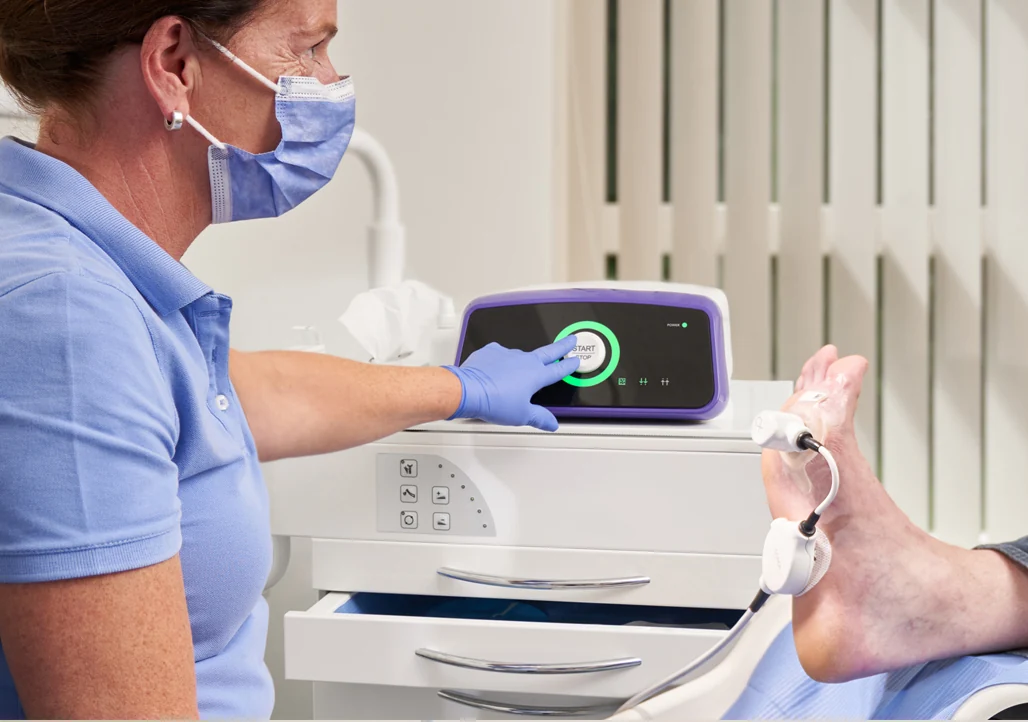
Plasma is an energized gas containing charged particles and reactive components. In cold atmospheric plasma (CAP), the gas is generated near ordinary pressure while keeping the treatment suitable for contact with living tissue. That broad description does not provide a complete recipe for a clinical intervention. Devices may differ in their gas, energy delivery, geometry, distance from the wound, exposure, and whether treatment is direct or indirect. The supplied trials illustrate that researchers have studied particular setups, not an interchangeable category called “plasma.”
For example, a randomized trial in diabetic foot ulcers used an atmospheric-pressure plasma jet generated from argon gas and compared eight applications plus standard care with placebo applications plus standard care [2]. A venous-leg-ulcer trial instead compared standard care alone with direct-CAP added once or twice weekly [1]. Those details define the interventions that were tested. A brand name by itself does not tell a reader whether another device uses the same design or schedule.
What a clinical comparison can show
In the diabetic foot-ulcer study, researchers randomized 62 wounds from 43 patients for final evaluation. The CAP group showed greater wound-area reduction and a shorter time to a defined reduction than the placebo group, while infection and microbial-load reductions did not differ significantly [2]. These outcomes answer distinct questions: a wound can shrink without the measured infection outcomes changing in the same way. The trial’s result is evidence about its protocol and enrolled wounds, rather than proof that every CAP device prevents infection or heals every chronic wound.
The venous-ulcer trial enrolled 46 patients across three groups receiving standard care, with one or two CAP sessions weekly added in the treatment groups. It reported numerically higher proportions of wounds healed in the CAP groups, but the differences in healing proportions were not statistically significant [1]. The study also reported no device-related serious adverse events. A numerical difference can be interesting without establishing that the treatment caused a reliable improvement; sample size and uncertainty matter when interpreting the comparison.
Protocols and patient groups matter
A useful comparison starts by asking what condition was treated. A venous leg ulcer and a diabetic foot ulcer are both chronic wounds, but their causes and clinical contexts differ. The studies also used different schedules and trial designs. If an effect appears in one condition, that does not automatically establish benefit in another. Nor does a result from one machine establish equivalent results from another machine that shares the CAP label.
Standard care is another key part of the comparison. Both studies evaluated CAP alongside standard wound care or against standard care, rather than in a vacuum [1] [2]. This matters because the research question is whether adding a specified plasma intervention changes outcomes under those study conditions. The separate effects of routine wound care, patient characteristics, device parameters, and treatment frequency cannot simply be collapsed into a claim that plasma alone produces a universal result.
Promise, uncertainty, and practice
Clinical findings can justify further study without making a treatment routine. The venous-ulcer report describes its results as supportive, yet its main between-group healing differences were not statistically significant [1]. The diabetic foot-ulcer trial reported benefits in wound-area measures, but that is still a finding from a particular study and protocol [2]. Evidence from trials must be weighed across studies and populations before practice recommendations follow.
For diabetes-related foot ulcers, the 2023 International Working Group on the Diabetic Foot guideline recommends against other gases, including CAP, for ulcer healing because the available evidence is low certainty and biased. That guideline position and individual trial results answer different levels of the evidence question. A careful device comparison therefore tracks the exact intervention, population, control, outcomes, and uncertainty. It avoids treating a shared technology name as evidence that products or clinical results are equivalent. [3]
Explore the physics: an explanatory diagram

Sources & further reading
- Direct Cold Atmospheric Plasma for Venous Leg Ulcers: Randomized Trial Smits et al., Advances in Wound Care (2024)
- Cold Atmospheric Plasma for Diabetic Foot Ulcers: Randomized Trial Stratmann et al., JAMA Network Open (2020)
- Guidelines on Interventions to Enhance Healing of Foot Ulcers: 2023 Update International Working Group on the Diabetic Foot
Prepared for the independent PSI Center reading library. About edition dates and source checking.
This explainer describes scientific principles. It does not assess individual treatment choices.