What does a beam of radiation do when it reaches a cell? The consequential step is not that a cell is “cooked” like food, but that energetic radiation can disturb atoms and damage DNA, the molecule cells use to store instructions. A cell may repair some damage; if it cannot, it may stop dividing or die. Cancer radiotherapy makes use of this vulnerability, while the same physical process can also affect healthy tissue in the beam’s path.
Enough energy to ionize
Radiation is energy traveling through space or matter. Some forms carry enough energy to remove electrons from atoms; this is ionizing radiation. X-rays, gamma rays, and several particle forms belong to this category. Visible light and radiofrequency energy are non-ionizing: individual photons carry too little energy to ionize atoms in the same way [2]. The distinction concerns energy per interaction, not whether a wave is “strong” in everyday language.
When ionizing radiation passes through tissue, it can transfer energy to molecules. One important target is DNA, the long molecular instruction set that cells copy before dividing. Damage can be direct, through energy deposited in DNA, or arise through chemical reactions involving nearby molecules. The outcome depends on the kind of damage and the cell’s ability to repair it; not every encounter produces a lasting injury.
When damage interrupts cell division
A cell with DNA damage may repair the affected material, pause its cycle, or fail to continue dividing. If damage is too extensive to repair, the cell can die or lose its ability to reproduce. Cancer radiation therapy uses high doses to damage cancer-cell DNA and slow or stop tumor growth [1]. The biological effect takes time: damaged cells do not all disappear immediately, and their breakdown can continue for weeks after treatment [1].
Picture a copied instruction manual with several torn pages. A cell can sometimes patch a page, but a severe or badly placed tear may make reliable copying impossible. This analogy captures why DNA damage can matter most when a cell tries to divide, but it is not a literal description of every radiation effect. Radiation affects different cells in different ways, and tumor response depends on biological and treatment factors.
A targeted treatment still reaches neighbors
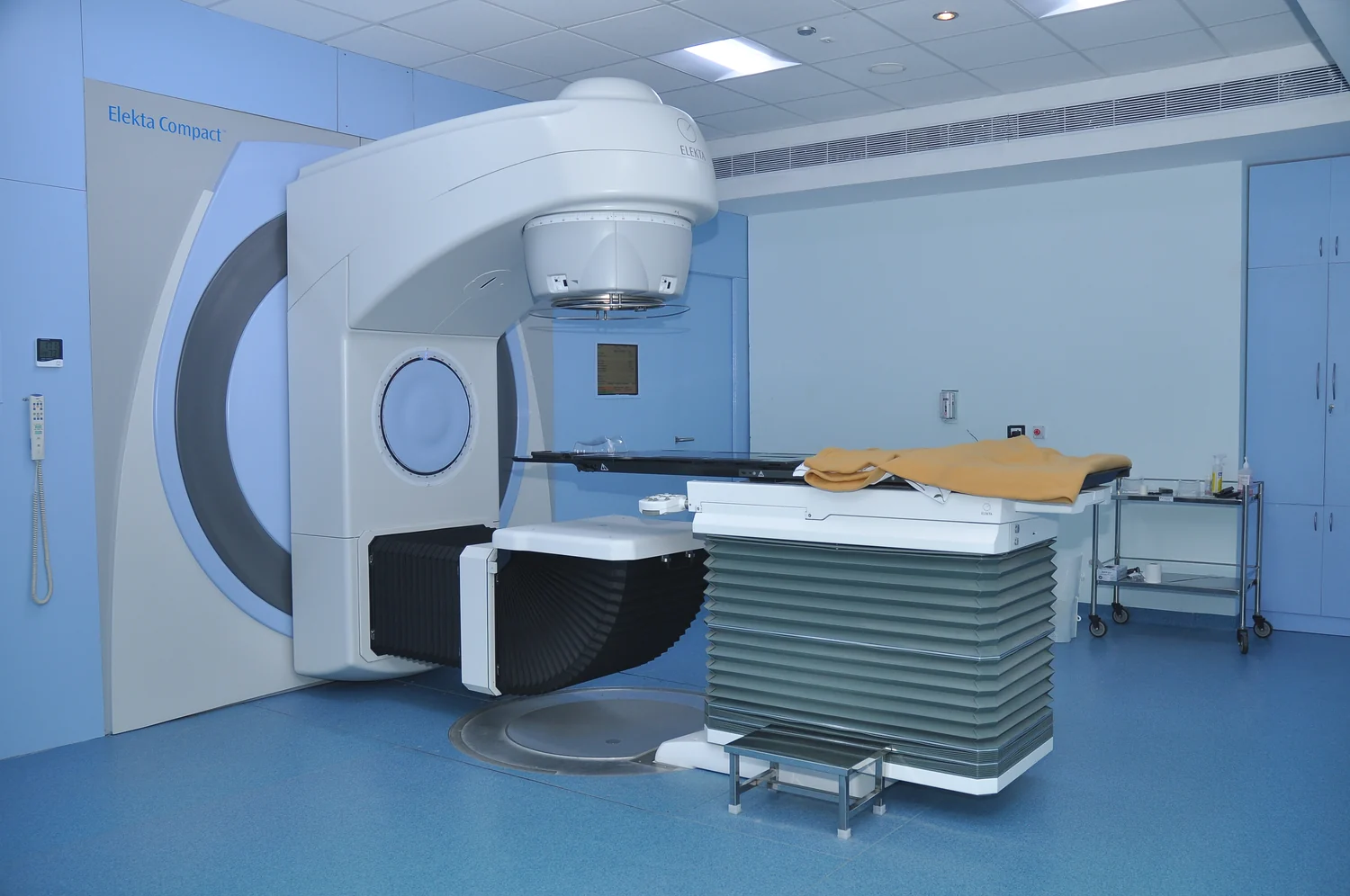
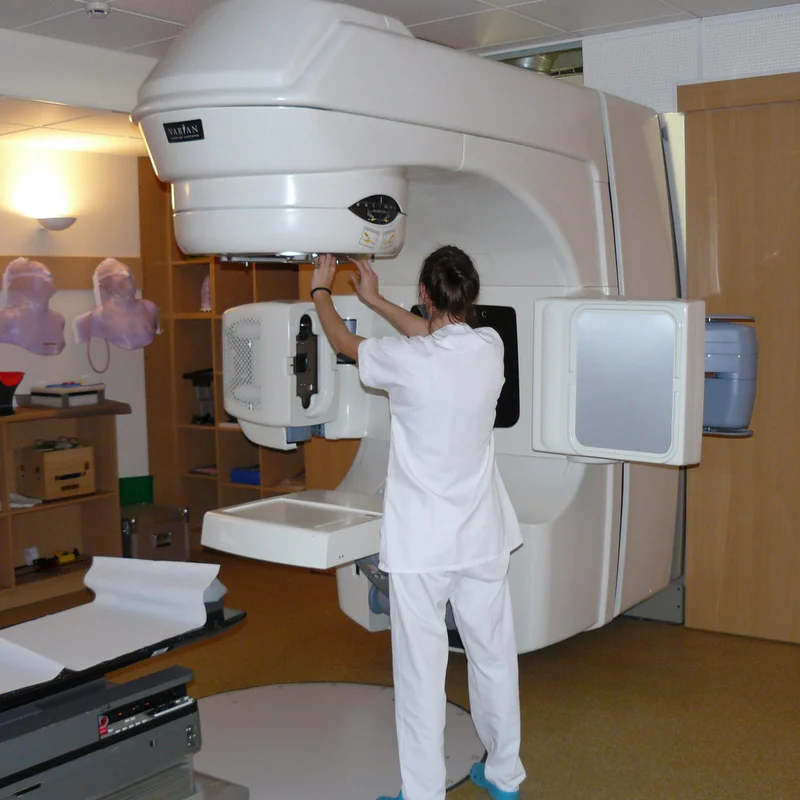
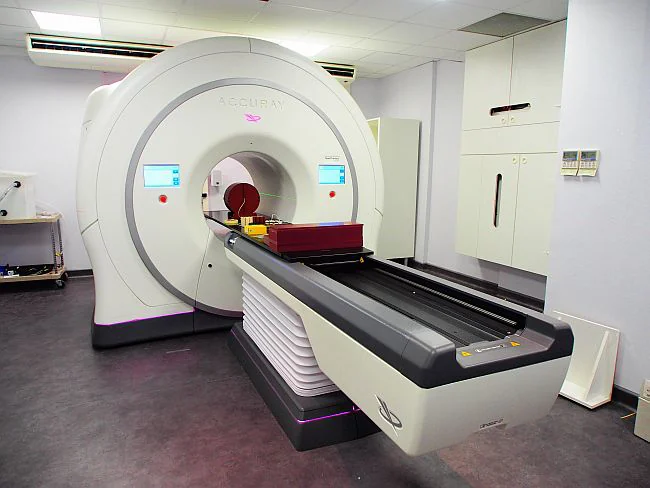
External-beam radiotherapy directs radiation from a machine toward a defined body region. It is considered a local treatment: for a lung tumor, the treatment targets the chest rather than the whole body [1]. Internal approaches place a radiation source in or near a tumor, or deliver radioactive material through the bloodstream in certain systemic treatments [1]. Different methods change where radiation comes from and how it is distributed.
The target is not made of cancer cells alone. Nearby healthy cells can also receive radiation and sustain damage, which can cause side effects [1]. Treatment planning therefore weighs tumor location, size, nearby sensitive tissues, and other clinical factors. The physical mechanism does not itself determine the treatment decision; it explains why both intended tumor effects and collateral effects are possible.
Risk depends on context
Ionizing radiation can damage DNA and, under some exposure conditions, contribute to cancer risk [2]. That statement does not mean every exposure has the same risk. Dose, tissue, timing, and the medical purpose matter. NCI notes that risks from medical imaging procedures that use ionizing radiation are generally very small and that their benefits are almost always greater than risks [2].
Radiation therapy uses higher doses for a different purpose: treating cancer or easing symptoms. It can cure some cancers, prevent recurrence, or slow growth, and it can also relieve symptoms caused by tumors [1]. The same capacity to damage cells is therefore both the tool and the source of harm. Understanding that dual role makes it possible to distinguish diagnostic exposures from deliberately therapeutic ones without treating all radiation as equivalent.
Sources & further reading
- Radiation Therapy to Treat Cancer National Cancer Institute
- Radiation National Cancer Institute
Prepared for the independent PSI Center reading library. About edition dates and source checking.
This explainer describes scientific principles. It does not assess individual treatment choices.