A device can stay below a surface-temperature threshold and still need careful biological testing. A study published on 7 November 2026 assessed a helium multijet cold atmospheric-pressure plasma system using several physical measurements and cell assays. The results offer a useful example of how safety evidence is built in layers—and why one promising laboratory result cannot stand in for the others. [1]
Why “cold” is not a complete safety specification
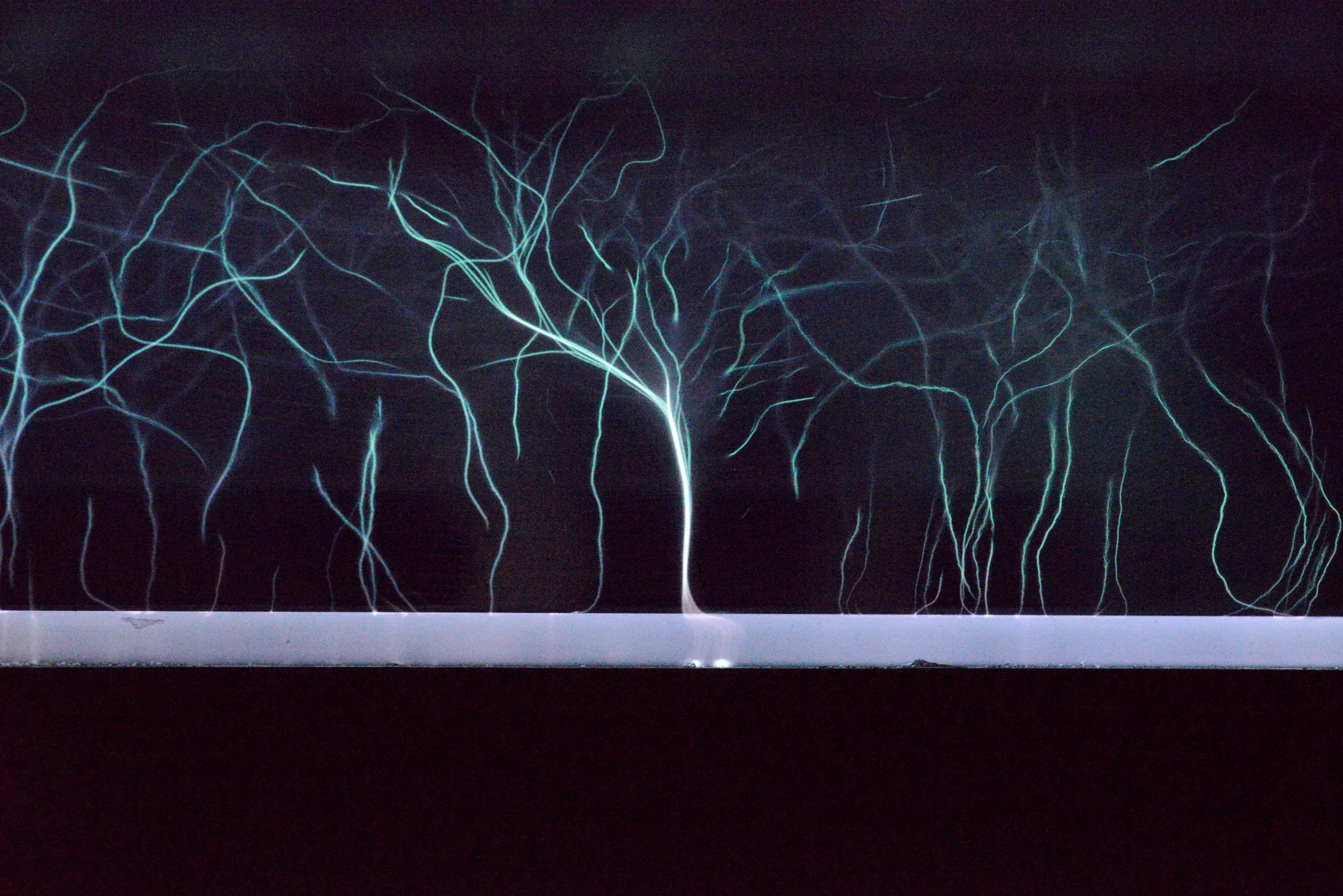
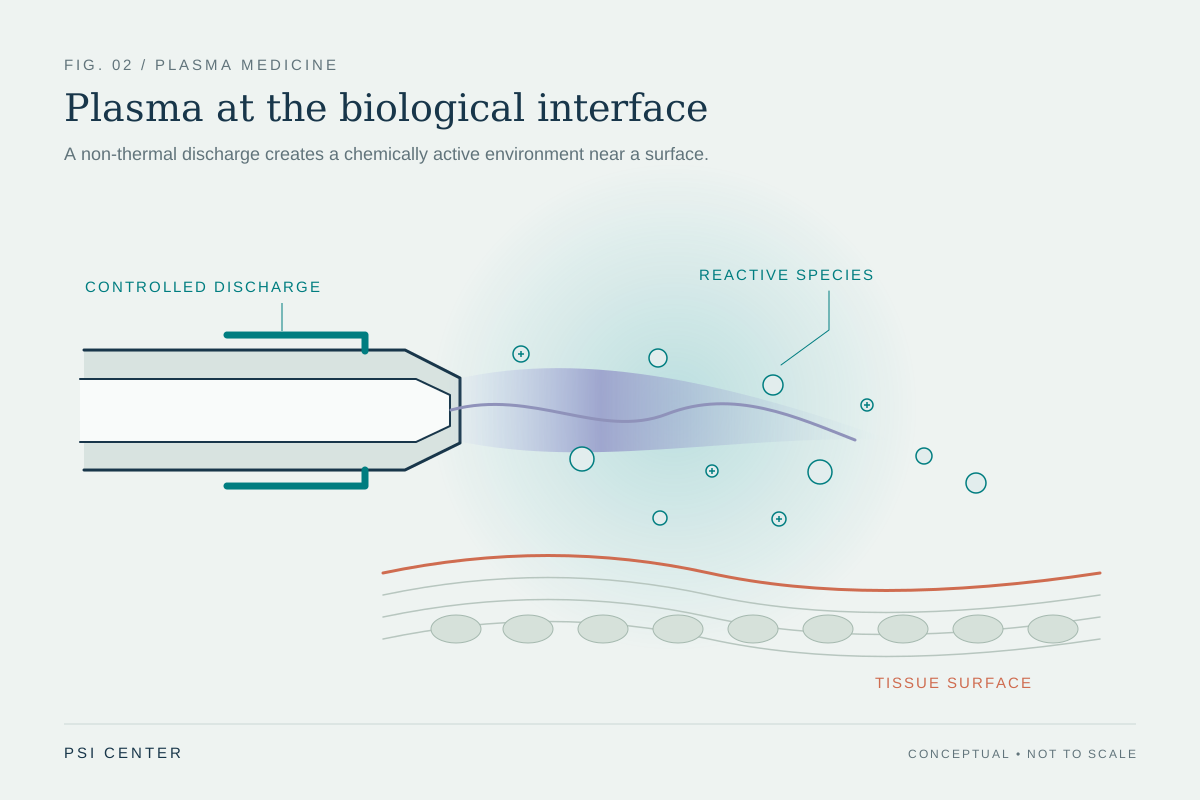
Cold atmospheric-pressure plasma is a partially ionized gas generated near room pressure. Electrons can carry substantial energy while the heavier gas particles remain much cooler, and plasma reactions can produce chemically active species. “Cold” therefore describes an important thermal feature, not a guarantee that every device, exposure or tissue interaction is harmless. The relevant conditions depend on how the discharge is generated and delivered.
That makes device characterization a measurement problem. Temperature, electrical output, treatment footprint, gas flow and biological response are different observables. A result from one category cannot automatically answer a question from another: a stable electrical signal is not a cell-safety result, and a cell assay does not reveal how evenly a broad, curved surface receives the treatment.
A multijet design adds coverage questions
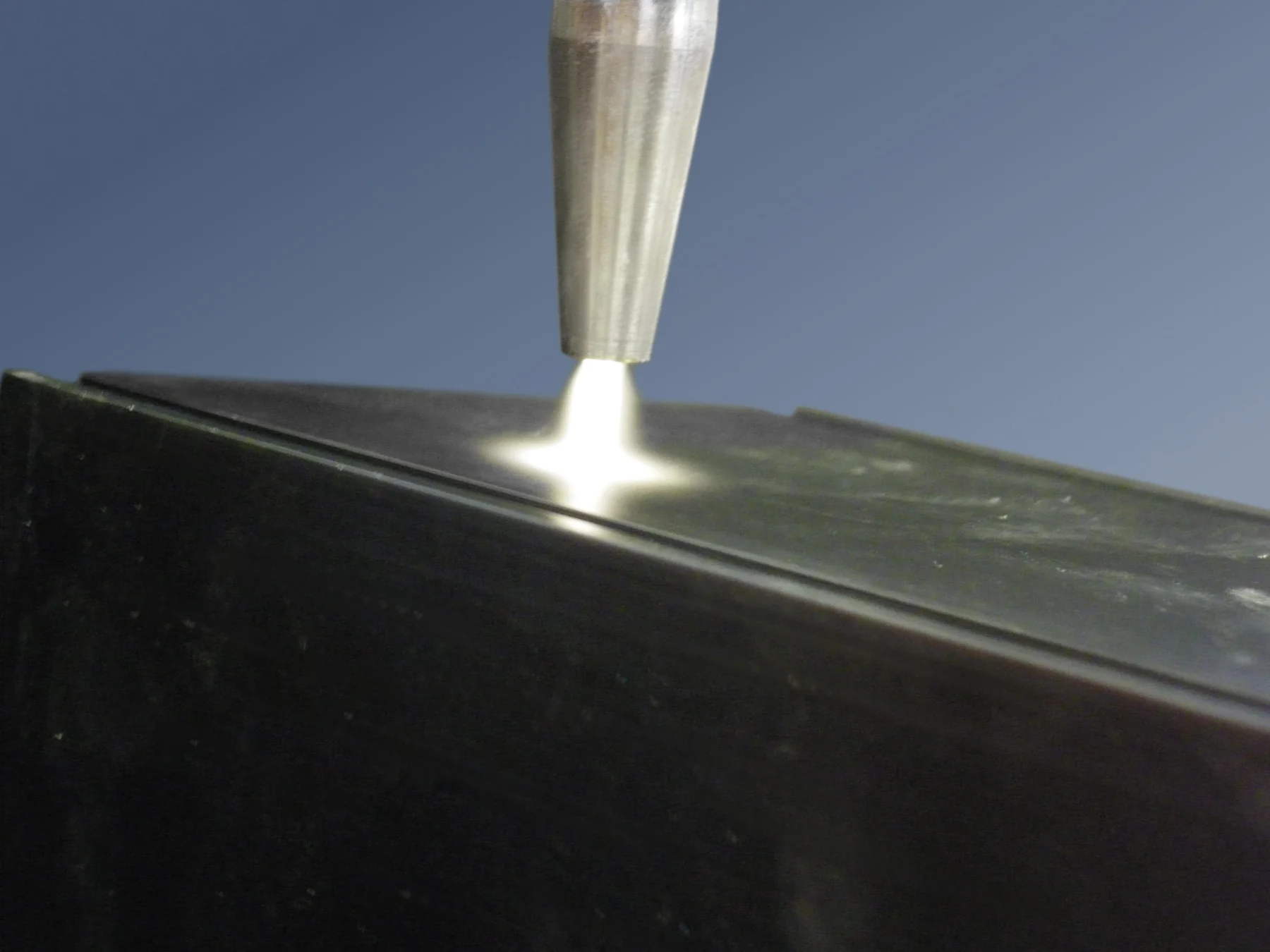
The 7 November study assessed a helium-based multijet device, a design intended to spread treatment across a larger area than a single outlet. Its authors reported treatment-time-dependent surface coverage and low liquid evaporation, which they associated with low gas flow. In practical terms, coverage asks where the treatment reaches; evaporation helps indicate whether the delivery process is substantially drying the exposed liquid under the tested setup. Neither quantity directly measures a therapeutic effect in tissue. [1]
Geometry matters because a surface is not always flat or held at one distance from a source. The device’s electrical characterization found a stable, controlled power profile that changed with input voltage and distance. This is useful engineering information: a device may behave predictably while its operating conditions vary. It also warns against treating “the plasma dose” as a single number unless the measurement and exposure geometry are defined.
Temperature answers one safety question
The researchers used contactless temperature measurements ex vivo and reported that continuous manual treatment did not raise the measured surface above 40 °C. This checks for surface heating under the tested conditions. It does not map every microscopic hot spot, establish temperatures within deeper tissue, or test every possible treatment distance, speed, gas condition or anatomy. A surface reading is informative precisely when its location and method are stated.
A practical analogy is checking a warm appliance with an infrared thermometer: the reading helps identify surface heating, but does not by itself describe the electrical insulation, chemical emissions, or response of material placed against it. The analogy is limited, but it shows why several measurements are needed. For plasma, heat is only one possible physical exposure among electrical effects and reactive chemistry.
Cell assays test biology under defined conditions
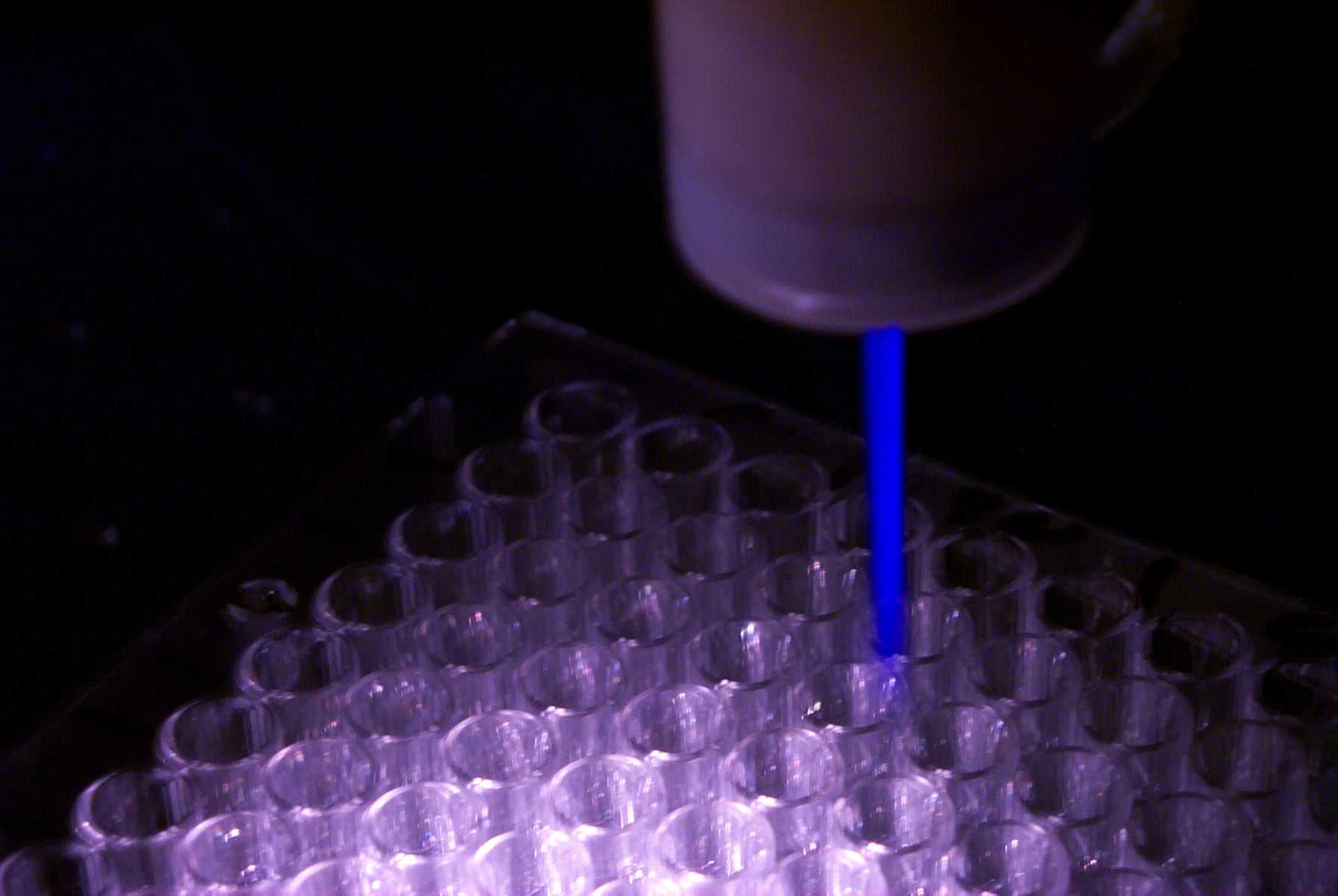
The new study also tested genotoxicity in HaCaT keratinocytes and reported no chromosomal damage in that assay. It examined cytotoxicity in confluent cultures and described minimal effects during prolonged continuous exposure, with the abstract suggesting good tolerance up to three minutes at the 70% threshold. Those are findings about particular cells, endpoints and laboratory conditions. They do not establish that every cell type responds the same way or that a treatment is safe for patients.
A separate 2026 comparison study illustrates why the protocol itself matters. It tested two plasma technologies and found that device type, treatment geometry, gas flow, liquid volume and indirect treatment conditions could change cell-assay outcomes. In some experiments, gas flow alone affected cells; treating plasma-conditioned liquid also did not produce a simple linear relationship between exposure time and effect. This supports careful reporting of experimental setup, not a universal dose conversion. [2]
From promising characterization to clinical evidence
A useful reading sequence is to ask four questions. What was physically measured, and where? Which biological endpoint was tested? Which conditions and controls define the result? What population or use does the evidence actually cover? For example, “no chromosomal damage in this keratinocyte assay” is a narrower, more defensible statement than “the device is safe.” Likewise, a measured surface below 40 °C is not evidence that a treatment heals a wound.
The multijet report is an early characterization study that supports further development and testing. Its temperature, electrical, coverage and cell measurements answer complementary questions, but they do not substitute for studies in intact tissue, controlled clinical evaluations, or evidence that a specific use improves health outcomes. The article is an Article in Press and may receive editorial changes before its final version. [1]
For readers comparing future plasma studies, the most useful habit is to keep the device, exposure, measured endpoint and evidence setting attached to every claim. That simple discipline helps distinguish a promising engineering platform from established clinical care.
Explore the physics: an explanatory diagram
Sources & further reading
- Safety assessment of a novel cold atmospheric pressure plasma multijet device for biomedical applications Scientific Reports, Ossowska et al. (published online 7 November 2026)
- Challenges in the standardization of in vitro cytotoxicity assays for comparative risk assessment of cold atmospheric pressure plasma devices Scientific Reports, Boeckmann et al., 2026
Sources checked: 8 November 2026. The calculations illustrate physical models; they are not clinical settings.
Prepared for the independent PSI Center reading library. About edition dates and source checking.
This explainer describes scientific principles. It does not assess individual treatment choices.