Can a scan help predict whether a treatment will reach a tumor? In theranostics, imaging and therapy are linked by a shared molecular target. A radioactive compound used for imaging can reveal where a targeting molecule travels; a related compound can then deliver radiation to cells bearing that target. The paired approach makes treatment location visible, while leaving effectiveness an important clinical question.
A targeting molecule gives radiation an address
A radiopharmaceutical combines a radioactive atom with a molecule that travels to or binds a target. For therapy, the radioactive material decays and releases energy that can damage DNA in nearby cells. The targeting component acts like an address label, helping carry radiation toward cells with the relevant molecular feature [1].
The match is imperfect by nature. The target must be present and accessible, and the compound must reach the relevant tissue. Radiation can affect cells close to the targeted molecule, so the location and distribution of the compound matter. This differs from external-beam radiation, which aims radiation from outside the body at a selected region. A radiopharmaceutical travels through the body and can potentially reach multiple deposits that share the target [1].
Imaging tests whether the address is found
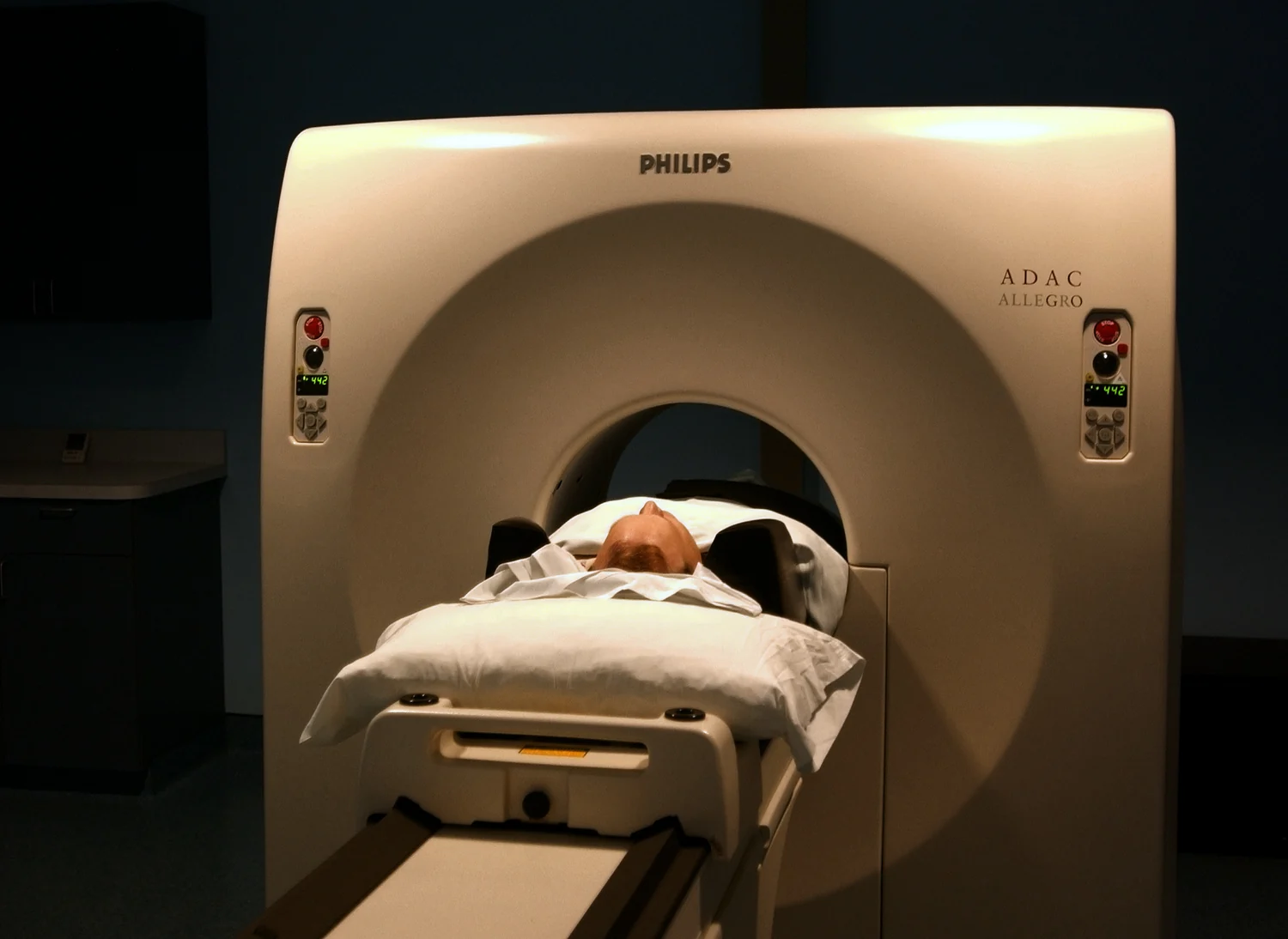
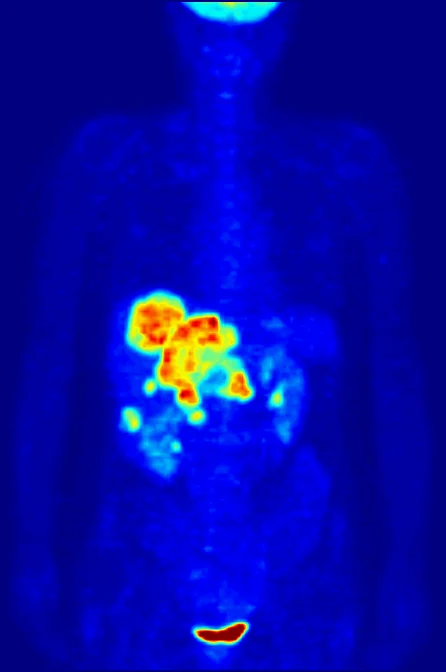
Nuclear medicine imaging tracks radioactive molecules inside the body. PET scanners detect pairs of gamma-ray photons produced after positrons interact with electrons; the detected signals are used to build images of molecular processes [2]. If an imaging version of a targeting compound accumulates at a tumor, that provides evidence that the target can be reached in that setting.
This is the logic behind using an imaging counterpart before a related therapy. NCI describes trials in which PET imaging with a compound directed at PSMA, a protein found in abundance on prostate cells, is used to assess whether a corresponding radiopharmaceutical may reach cancer deposits [1]. The scan can inform treatment selection, but it cannot guarantee that a tumor will respond or that every cancer cell carries the target.
The radioactive atom changes the job
The targeting molecule can remain similar while the radioactive atom changes. Some emissions are useful for imaging because detectors can measure them outside the body; other emissions deposit energy more locally and are selected for treatment. A radiotheranostic pair uses compounds that are nearly the same except for the radioactive atom attached, linking diagnostic information to a therapeutic strategy [2].
A simplified mental experiment: imagine placing a tiny beacon on a delivery vehicle. A camera can map where beacon-equipped vehicles arrive. For treatment, a different payload can ride on a vehicle with the same address label. The image demonstrates distribution of the beacon version, not the full outcome of the therapeutic payload. The two compounds’ behavior may differ, and biological response depends on more than arrival alone.
Dose and response still need careful assessment
Radiotheranostic treatment deliberately introduces more radiation to selected regions than a diagnostic scan. Dosimetry uses imaging and other information to estimate the radiation absorbed by organs and tissues, helping inform treatment planning [2]. This matters because the targeting is not exclusive: normal organs may also take up some compound, and exposure to those tissues is part of the overall balance.
Theranostics therefore connects measurement and intervention without collapsing them into a single certainty. A scan can show target uptake and help clinicians judge whether a treatment is plausible; follow-up imaging can help assess response. It does not promise a cure, and targeted radiation may be combined with other approaches. NCI describes radiopharmaceuticals as an evolving area in which longer-term safety and clinical outcomes continue to matter [1].
Sources & further reading
- Radiopharmaceuticals: Radiation Therapy Enters the Molecular Age National Cancer Institute
- Nuclear Medicine NIBIB
Prepared for the independent PSI Center reading library. About edition dates and source checking.
This explainer describes scientific principles. It does not assess individual treatment choices.