Why can light activate a cancer treatment near a surface but fail to reach a deeper tumor? Photodynamic therapy needs more than a photosensitizing drug: light must arrive where the drug is, and oxygen chemistry must then do its work. The distance light travels through tissue is therefore part of the treatment itself. Understanding that limit explains both why the approach can be useful for selected sites and why it is not a universal way to reach tumors hidden deep in the body.
A reaction that needs illumination
Photodynamic therapy, or PDT, combines a photosensitizer with light. A photosensitizer is a drug that can be activated by particular wavelengths of light. After activation, it produces a reactive form of oxygen that damages nearby cancer cells. The treatment may also harm tumor blood vessels and can prompt immune activity, but the central physical requirement is local: the relevant light must reach cells that contain the drug [1].
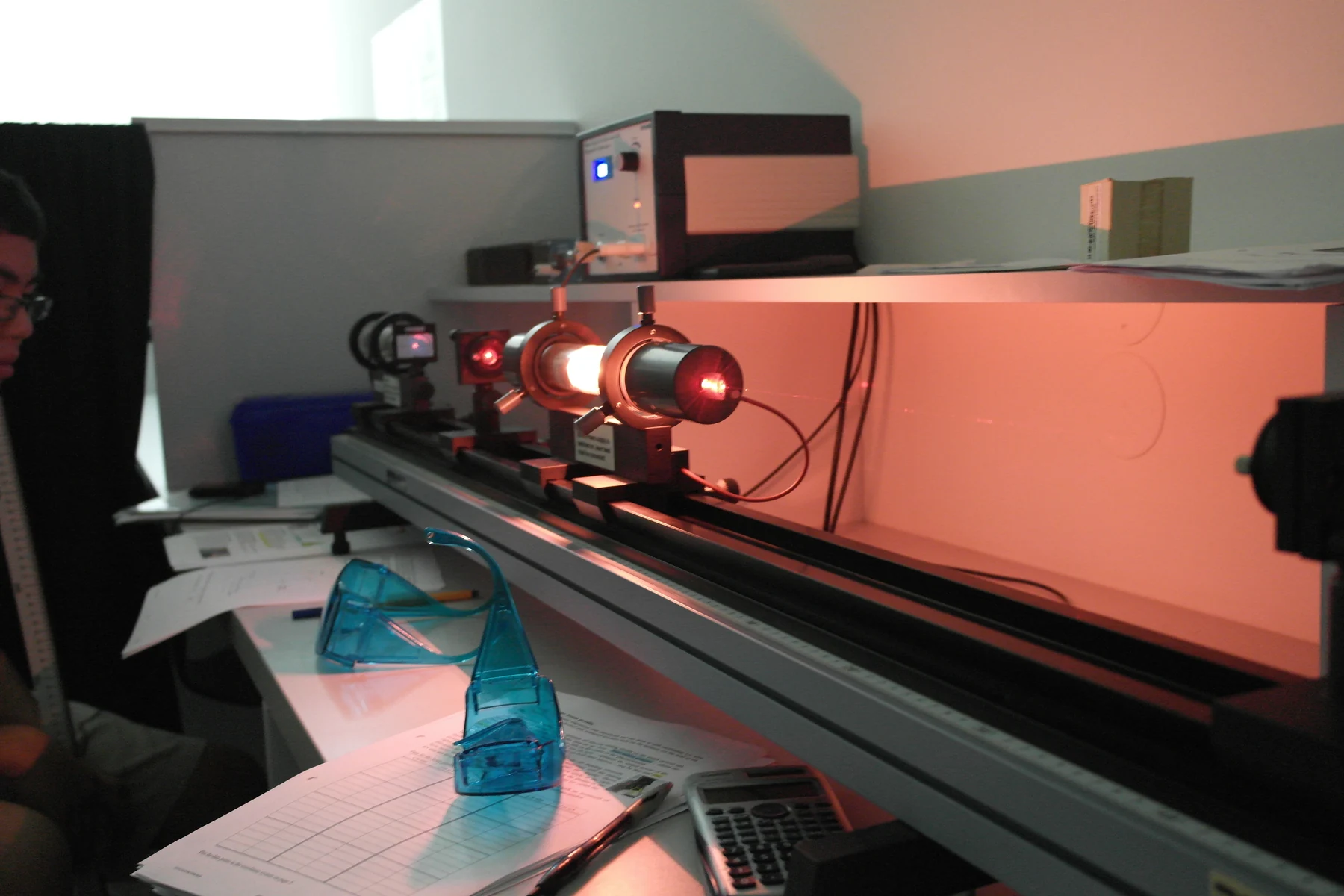
The sequence matters. First the photosensitizer is given by a route suited to the treatment site. After a period in which more of the drug leaves many normal cells than abnormal ones, light is directed at the target. The light may come from a laser or another source such as LEDs. The drug’s presence alone does not complete the process; illumination triggers the chemistry [1].
What happens to light in tissue
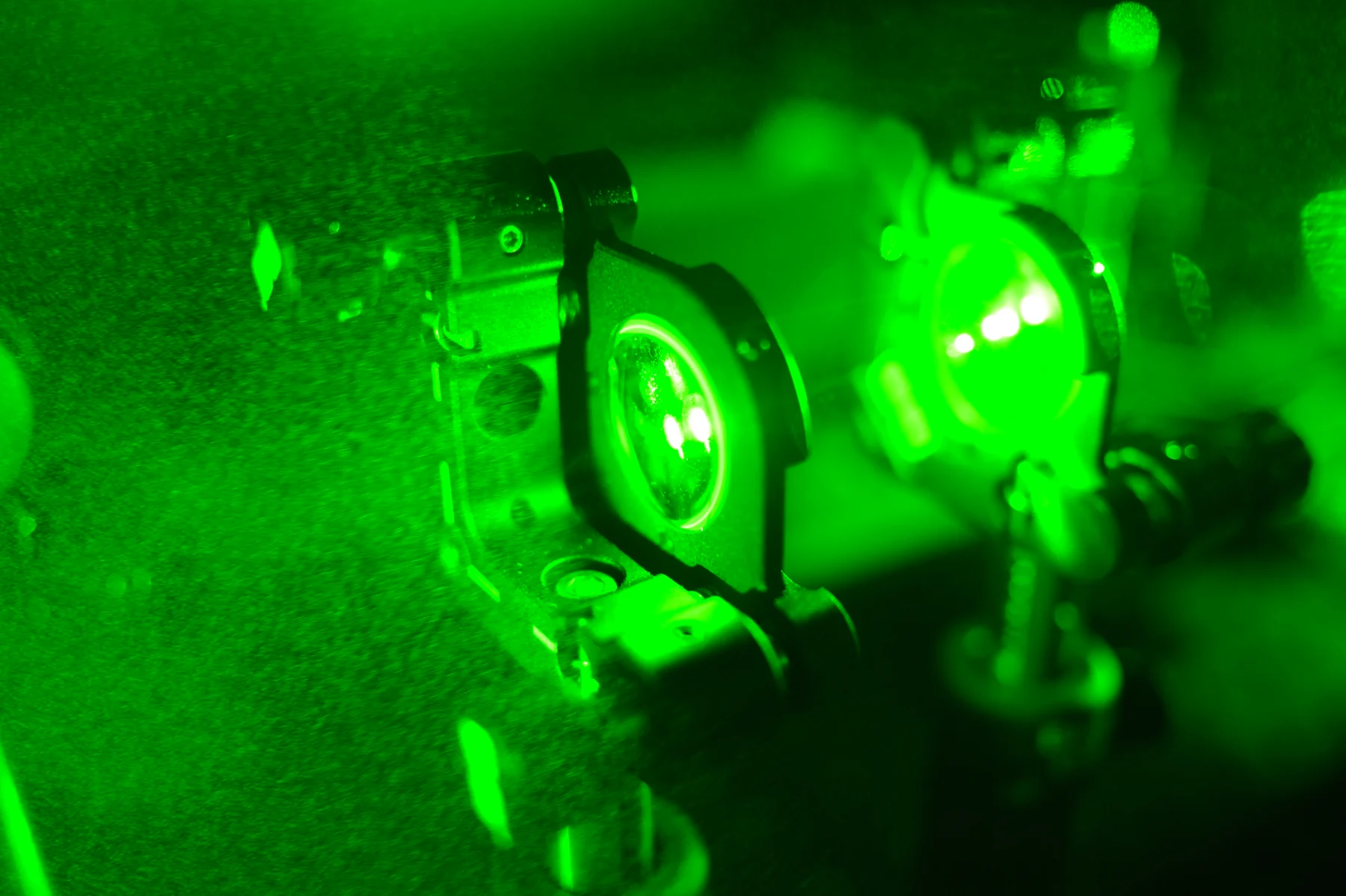
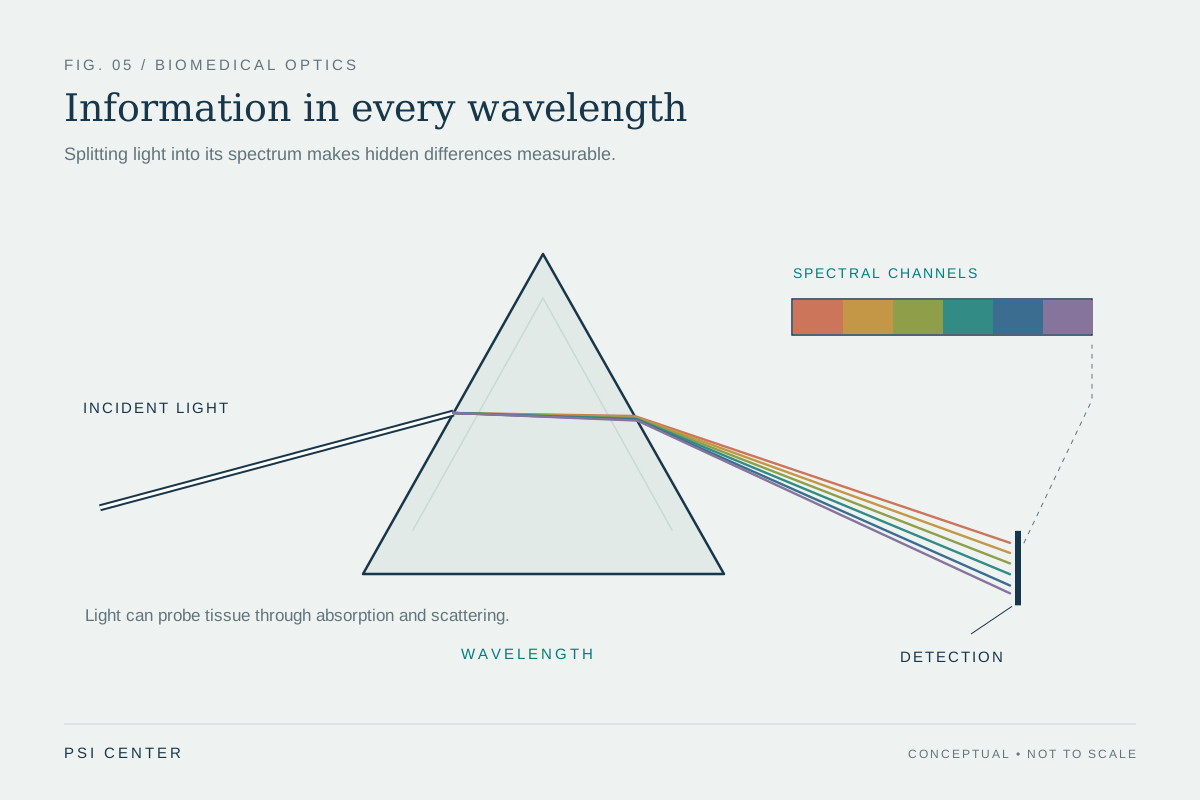
Light does not travel through tissue as though it were moving down a clear glass tube. Molecules and structures absorb some wavelengths, while scattering redirects others. Absorption removes photons from the beam; scattering sends them onto new paths. As a result, intensity falls with depth, and the arriving light becomes less like the carefully aimed beam at the surface [2].
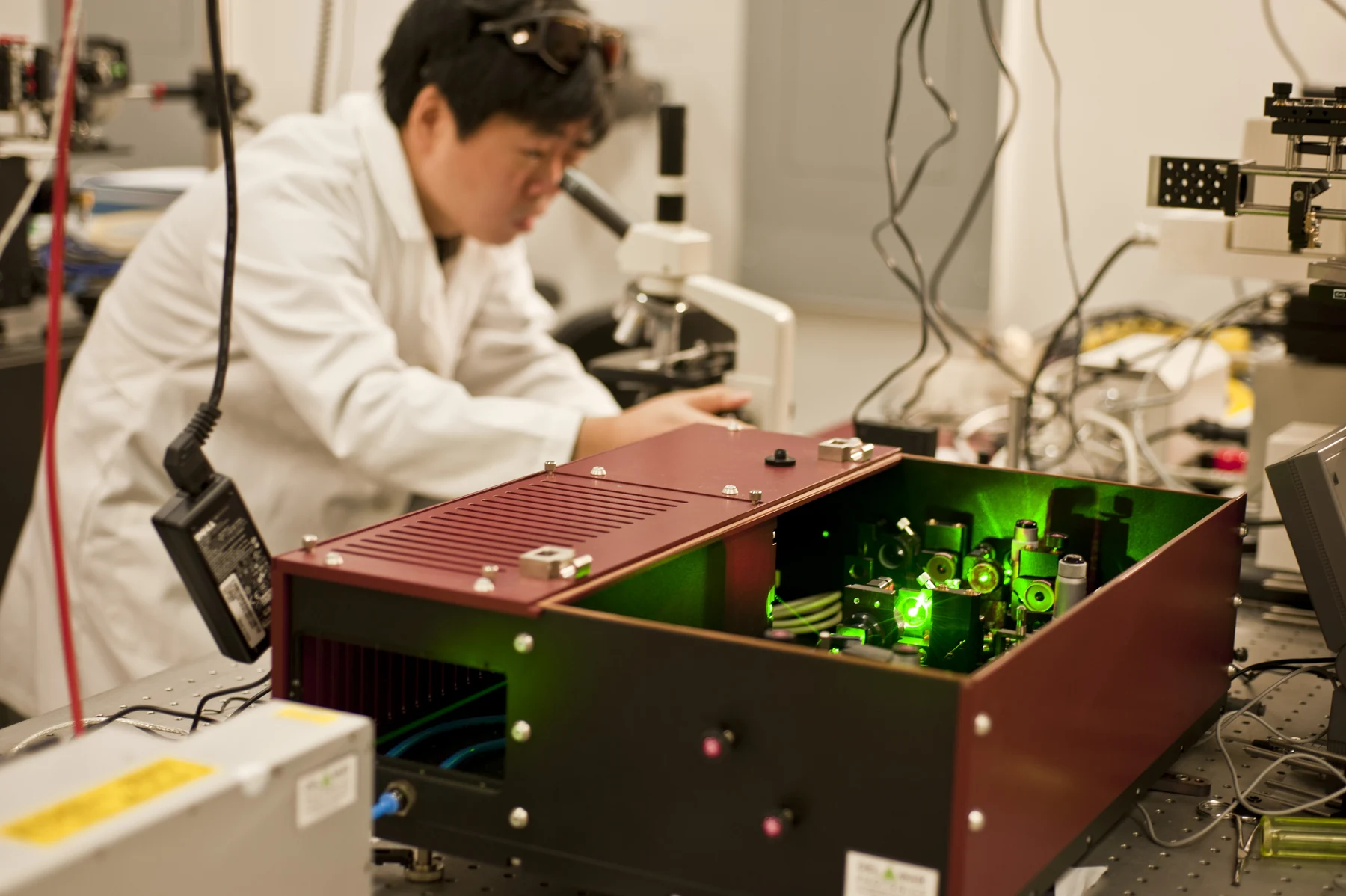
Optical imaging makes use of the same interactions—absorption, scattering, reflection, and emission—to reveal biological structures. Different optical methods work at different scales and depths. Near-infrared techniques, for example, can measure properties in soft tissue, while optical coherence tomography uses infrared light to form subsurface images. These examples show that penetration depends on wavelength, tissue, and the measurement goal, rather than on a single universal depth for all light [2].
Why the treatment site changes the setup
For a skin lesion, a light source can be aimed directly at the affected surface. For a tumor in an internal lining or cavity, a clinician can guide a light-transmitting fiber through an endoscope, a thin tube used to view inside the body. This brings illumination closer to the target instead of asking the light to cross the body from outside [1].
That contrast is a practical lesson in geometry. A target close to an accessible surface may receive enough light; a larger or deeper mass may have regions that remain poorly illuminated. The National Cancer Institute describes the light used in PDT as unable to pass through more than about one centimeter of tissue, which is why the therapy is used for selected surface-level or lining sites rather than deep tumors [1].
The boundary guides research
The depth limit shapes where PDT is useful and what researchers try to improve. Work on equipment and light delivery seeks ways to bring illumination to treatment areas more effectively. Other research explores photosensitizers that respond to light able to travel farther through tissue, target abnormal cells more precisely, or cause fewer side effects [1].
These goals do not erase the underlying tradeoff: a treatment driven by light must account for where photons can reach and how the tissue changes them. Optical techniques can supply information about tissue properties, and endoscopes can carry light inward, but neither makes every site accessible. PDT is an established local treatment for certain uses; efforts to extend its reach remain research, not proof that it can treat every tumor location.
Explore the physics: an explanatory diagram
Sources & further reading
- Photodynamic Therapy to Treat Cancer National Cancer Institute
- Optical Imaging NIBIB
Prepared for the independent PSI Center reading library. About edition dates and source checking.
This explainer describes scientific principles. It does not assess individual treatment choices.