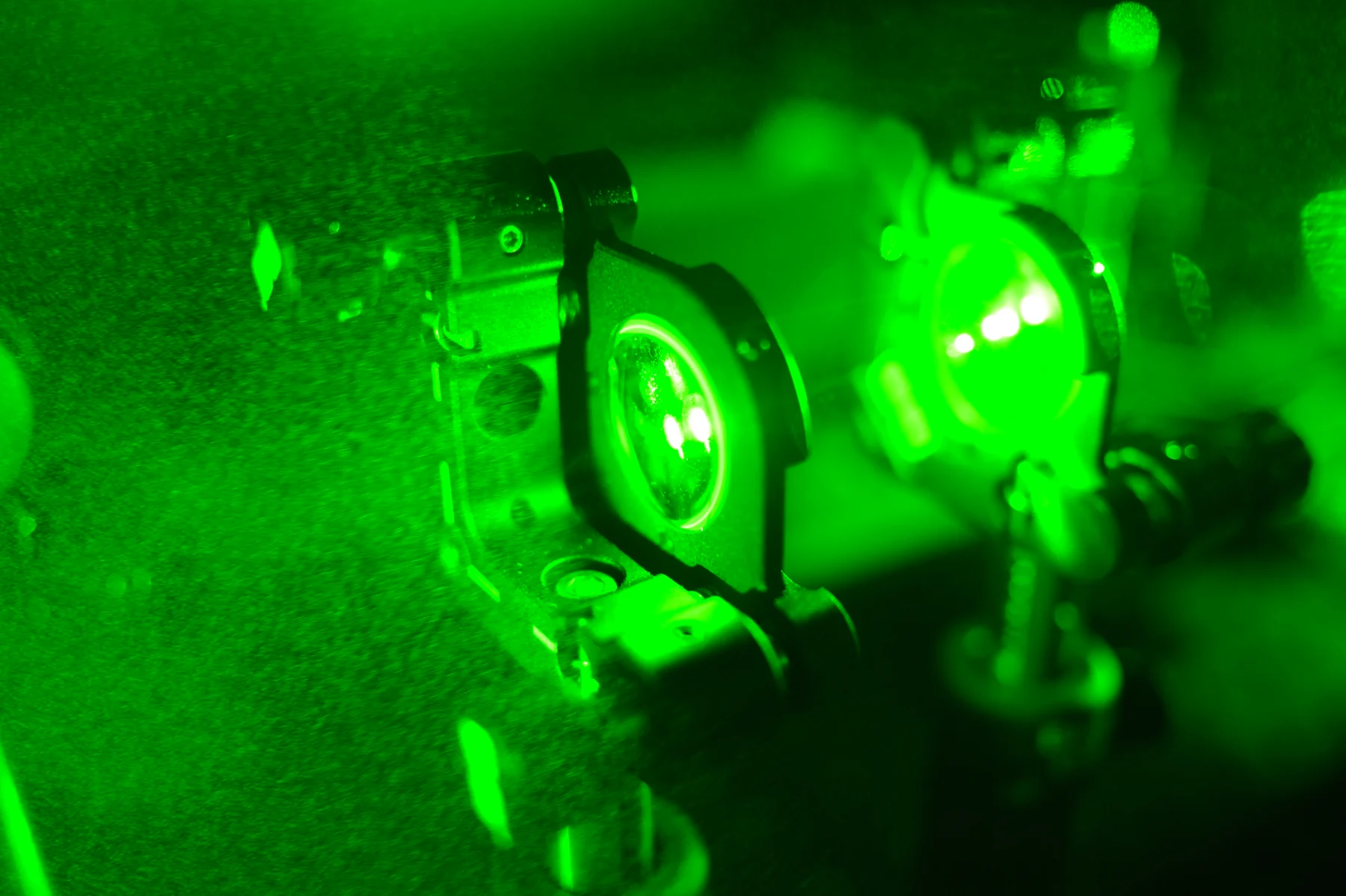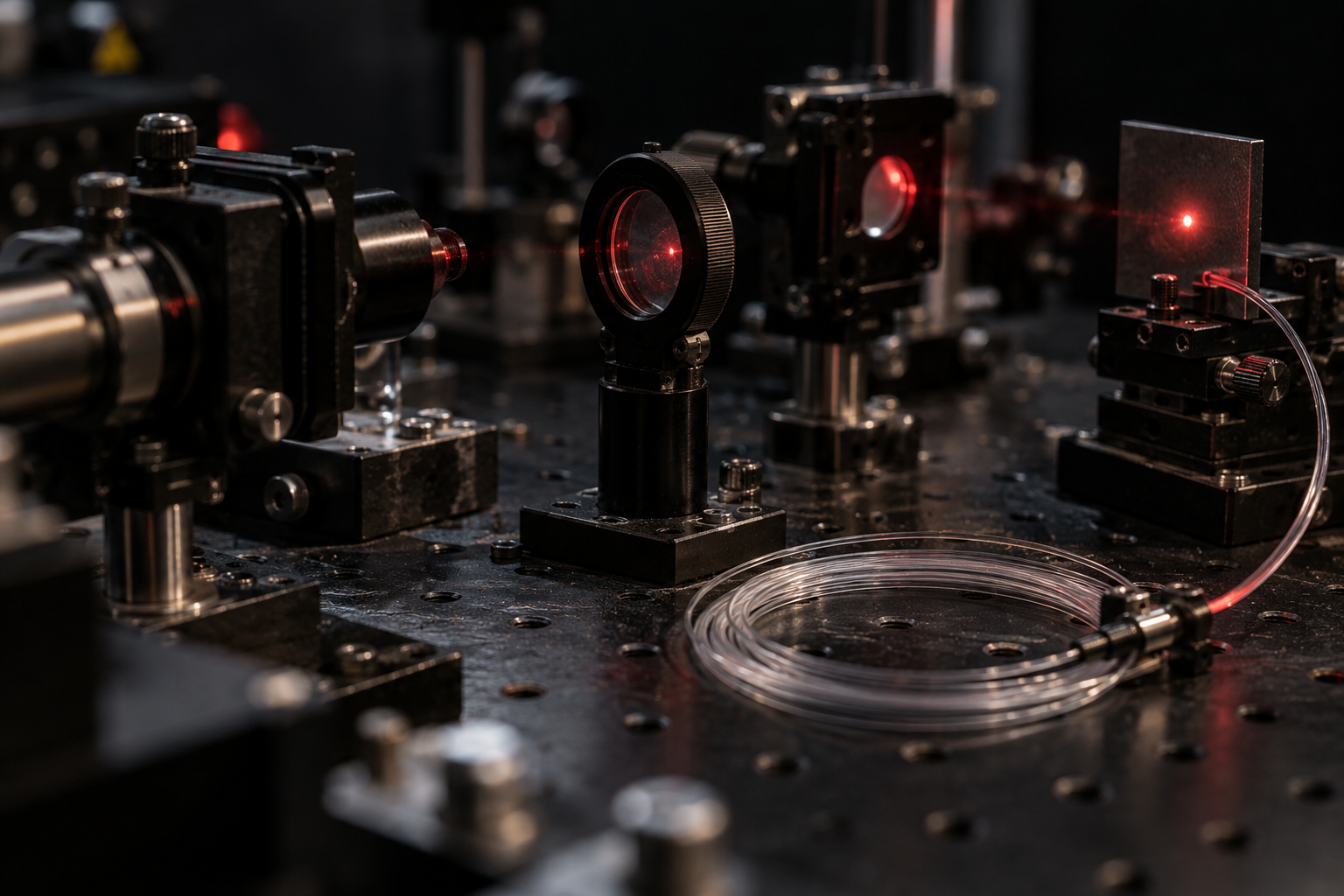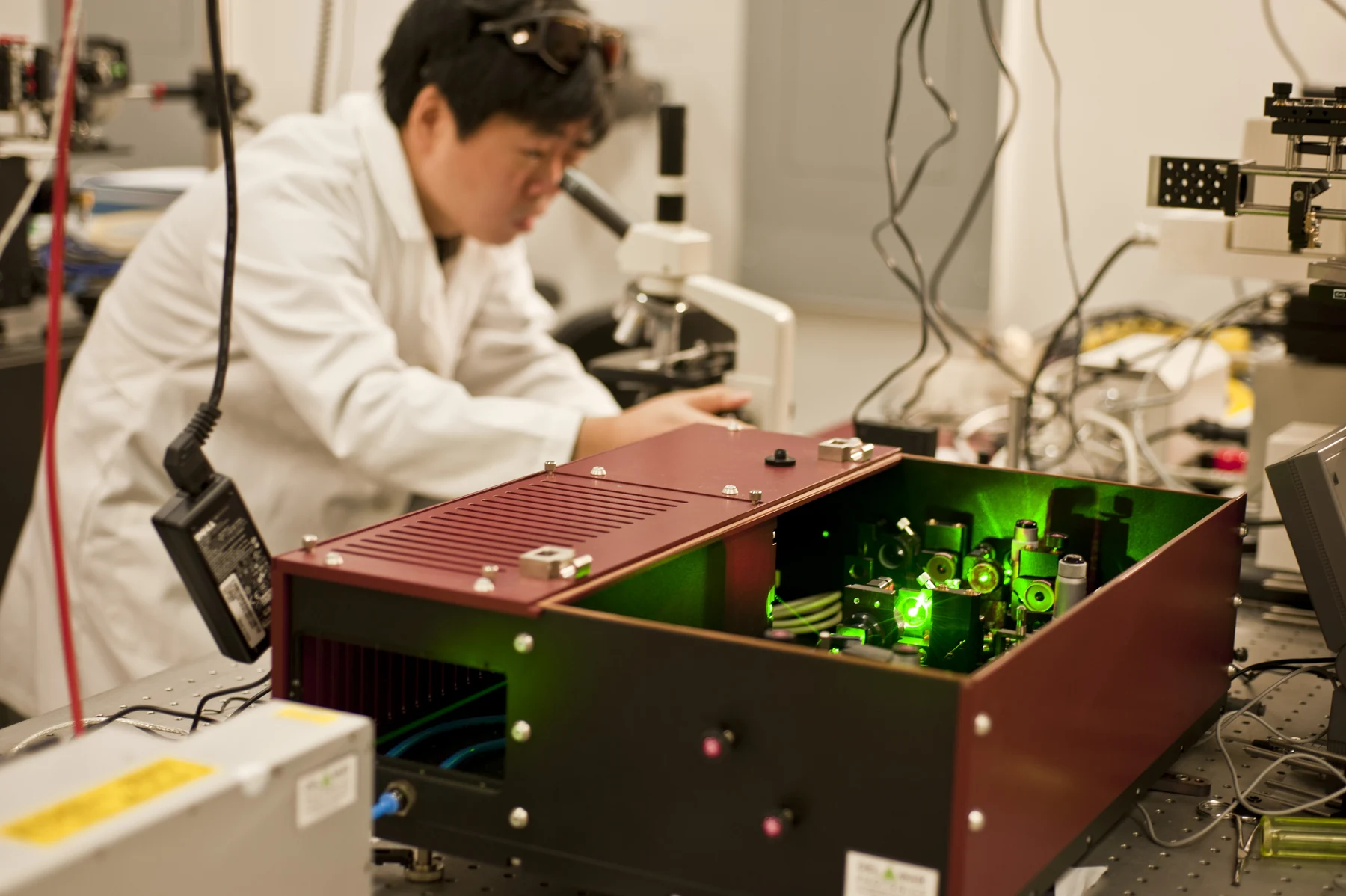
How does light reach a tumor hidden inside the body? The answer may involve a fiber threaded through an endoscope, a beam aimed at the skin, or a photosensitizing drug waiting for illumination. Light is not simply switched on around a treatment. Its wavelength, depth of travel, and route through tissue determine which cells can be affected and how precisely a local therapy can be applied.
A wavelength is a choice of interaction
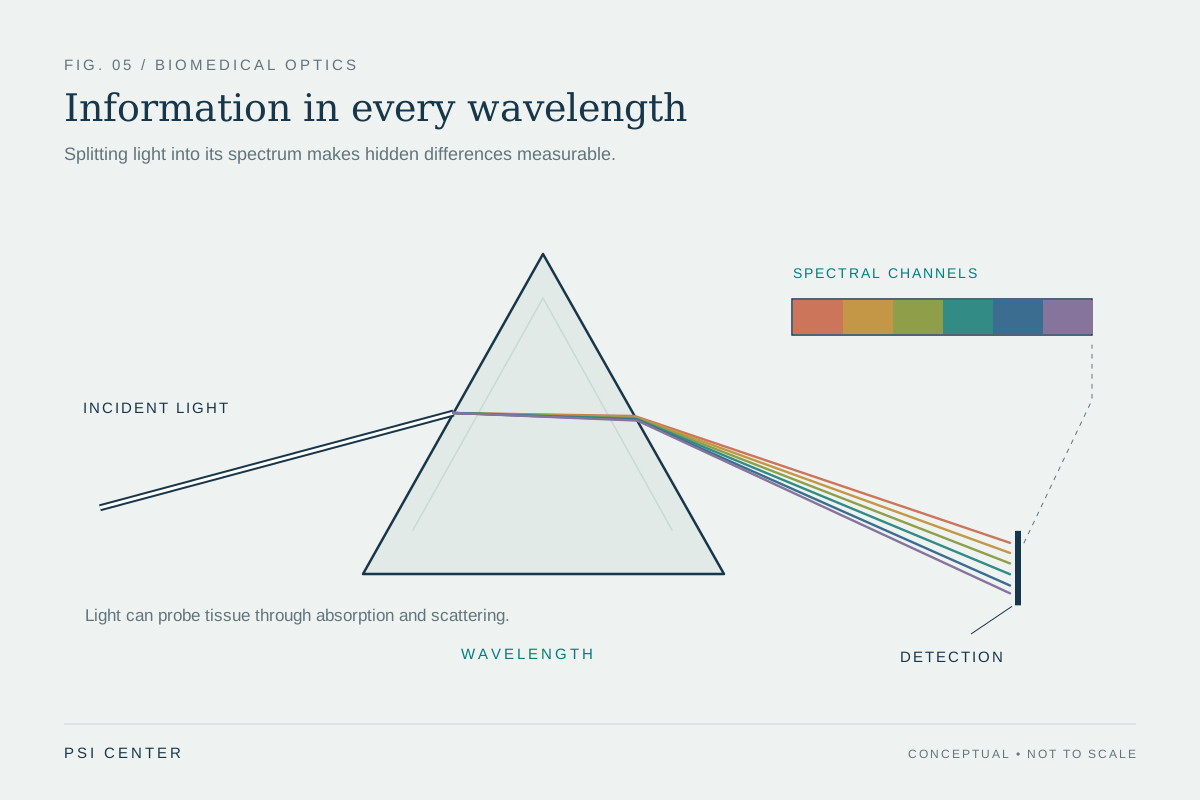
Light is electromagnetic energy, and wavelength—the distance between successive wave peaks—helps determine how it interacts with tissue. Different tissues absorb different wavelengths to different degrees. In laser therapy, an intense, narrow beam can be selected to target tissue and cut or destroy abnormal cells. Laser treatment is local: it addresses a specific body region, often a surface cancer or tissue lining an internal organ [2].
Photodynamic therapy (PDT) uses a different sequence. First, a photosensitizer—a drug activated by light—is delivered by mouth, on the skin, or through an IV depending on the treatment site. After a delay, light of a particular wavelength activates the drug, which produces oxygen radicals that kill cells. The light can also affect tumor blood vessels, and PDT may stimulate immune activity; those mechanisms do not mean that light alone is doing all the work [1].
The route depends on the target’s depth
For a lesion on the skin, light can be directed at the treatment area from outside the body. For a tumor in the throat, airways, or lungs, clinicians can use an endoscope, a thin lighted tube, to reach the site and thread a fiber-optic cable through it. The fiber carries light into the body, where it can be aimed at the treatment region [1].
This arrangement is a useful mental picture of treatment as an optical path: source, delivery route, tissue, and target. A beam that cannot reach the target cannot activate a photosensitizer there, regardless of the drug’s properties. PDT’s light does not pass more than about one centimeter through tissue, which limits its use to tumors on or just below the skin, or on the lining of organs and cavities. Large or deep tumors are therefore less suitable targets [1].
Lasers can cut, heat, or guide other effects
Laser therapy often uses endoscopes and optical fibers to deliver light precisely to internal tissues. Depending on the laser and application, the beam can cut or destroy a tumor. Lasers can also seal small blood vessels during surgery, reducing bleeding, or be used to seal nerve endings and lymph vessels. The equipment and route affect what tissue can be reached, while the operation performed by the light determines the local effect [2].
The word “laser” describes a focused light source, not one single treatment. An argon laser may be used in PDT, while other laser types serve different purposes. Laser interstitial thermal therapy, for example, uses light delivered into tissue to create heat. In PDT, by contrast, light activates a drug. Grouping these approaches together can obscure the important question: what converts the delivered energy into the intended effect? [2] [1]
A local advantage brings a local limit
Because photosensitizers tend to accumulate in abnormal cells and light can be focused on a target, PDT can limit damage to nearby healthy cells. Yet normal tissue in the treatment area can still be harmed, and side effects depend partly on the location. The light’s shallow penetration is both a design constraint and a reason the therapy is suited to particular accessible lesions rather than every tumor [1].
Light delivery is thus part of the therapeutic mechanism. A surface beam, an endoscopic fiber, and a laser used to cut tissue solve different geometry problems. Research aims to improve equipment and develop photosensitizers that are more selective or can be triggered by light that travels farther through tissue. Those efforts address a real physical bottleneck: the ability to place enough useful light at the intended target while limiting effects elsewhere [1] [2].
Explore the physics: an explanatory diagram
Sources & further reading
- Photodynamic Therapy to Treat Cancer National Cancer Institute
- Lasers in Cancer Treatment National Cancer Institute
Prepared for the independent PSI Center reading library. About edition dates and source checking.
This explainer describes scientific principles. It does not assess individual treatment choices.