What changes when a radiation source stays inside the body for minutes, days, or years? In brachytherapy, the answer is not simply how long a patient is treated. The source’s location, radioactive material, and rate of emission shape the dose delivered nearby and determine whether the source is later removed. A temporary source can deliver a planned exposure and leave; a permanent implant remains while its radioactivity gradually fades. Both are ways to focus treatment in a region.
Distance makes location part of the dose
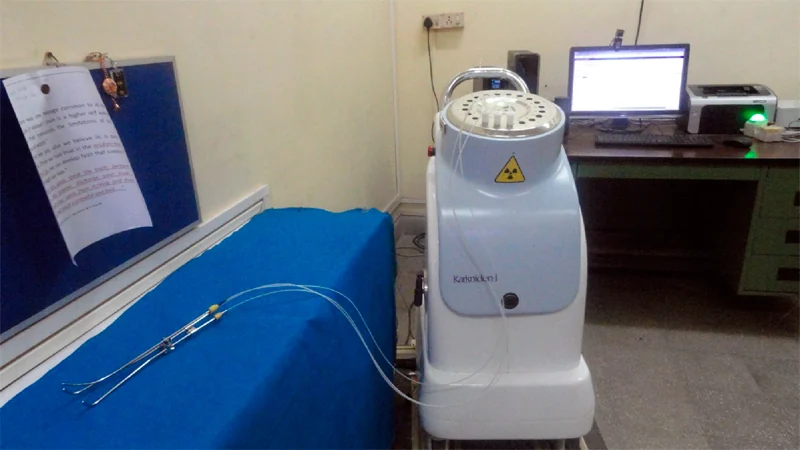
Brachytherapy is internal radiation treatment: seeds, ribbons, or capsules containing a source are placed in or near a tumor. It is a local treatment, aimed at a specific part of the body. That geometry matters because radiation intensity generally falls with distance from its source. Placing a source near the target can concentrate exposure there compared with tissues farther away, although nearby healthy tissue can also be affected. Radiation therapy works by damaging cellular DNA; sufficiently damaged cancer cells stop dividing or die, a process that unfolds over time rather than instantly [2].
The placement method depends on anatomy. An interstitial implant sits within tissue, as in an example such as prostate treatment; an intracavity source is placed within a body cavity, and an episcleral source can be attached to the eye. These are not interchangeable arrangements. One can picture a small lamp placed close to a page: the illuminated patch and falloff depend on where the lamp sits. Radiation is not visible light, but the thought experiment captures why source position is central to planning [1].
Temporary sources leave after a planned interval
In low-dose-rate brachytherapy, the source may remain in place for one to seven days, after which clinicians remove it along with the catheter or applicator. In high-dose-rate treatment, a source is introduced for a much shorter interval, typically minutes, and then withdrawn. A treatment course may involve repeated visits or sessions over days or weeks. The catheter or applicator may remain between sessions or be inserted each time, depending on the treatment plan [1].
A useful distinction is between the source and the delivery path. A catheter or applicator positions the source; it does not itself define how long the radioactive material stays. Once a temporary source is removed, the NCI explains that no radiation remains in the body from that implant, so radiation-related restrictions on proximity no longer apply. The treated area may still be tender, and ordinary recovery considerations remain separate from radiation exposure [1].
Permanent does not mean constant
With a permanent implant, the catheter is removed but the radioactive seeds stay in place. Their emissions weaken over time, so “permanent” describes the physical implant, not an unchanging level of radiation. Soon after placement, clinicians may advise limits on close contact or other precautions; the appropriate instructions depend on the source and clinical circumstances. This is why it would be misleading to treat every implant as if it had the same safety profile [1].
The contrast with temporary treatment is practical as well as physical. A temporary high-dose-rate source can deliver radiation during a controlled interval and be withdrawn, while a permanent source delivers a declining amount over a longer period. In either case, the purpose is to place radiation close to the intended region. The choice depends on factors including cancer type and location, health, and other treatments, rather than on a simple ranking of one source as better [2].
Protection follows the source’s presence
While a temporary source is in place, staff may use a private room, limit time nearby, or arrange brief visits according to the source and dose. These measures manage exposure from radiation emitted by the source; they do not mean that the patient is contaminated. Staff and visitors receive specific instructions, and any precautions after discharge depend on the treatment. For permanent implants, the source remains, so temporary safety measures may be needed early on while its emissions are stronger [1].
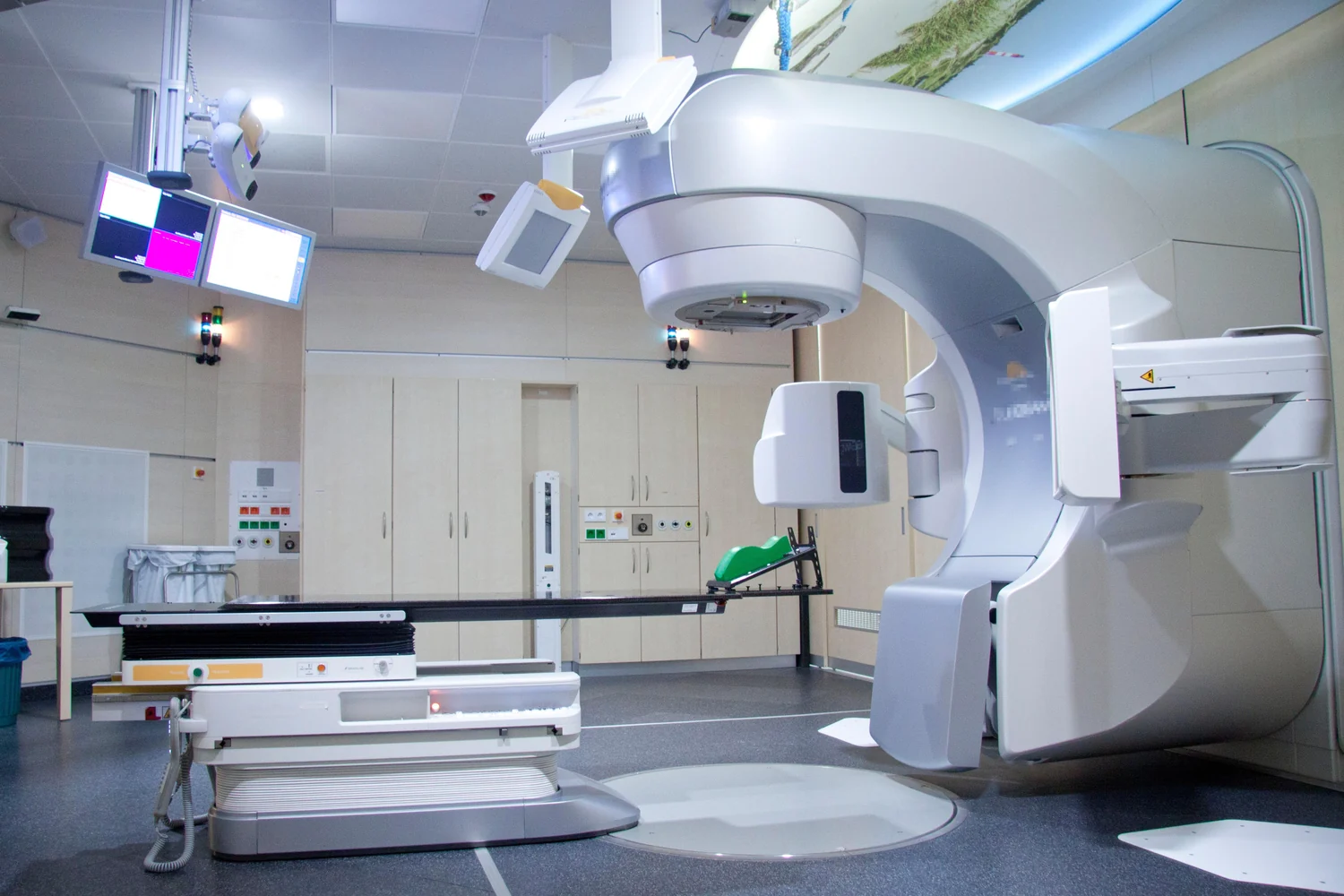
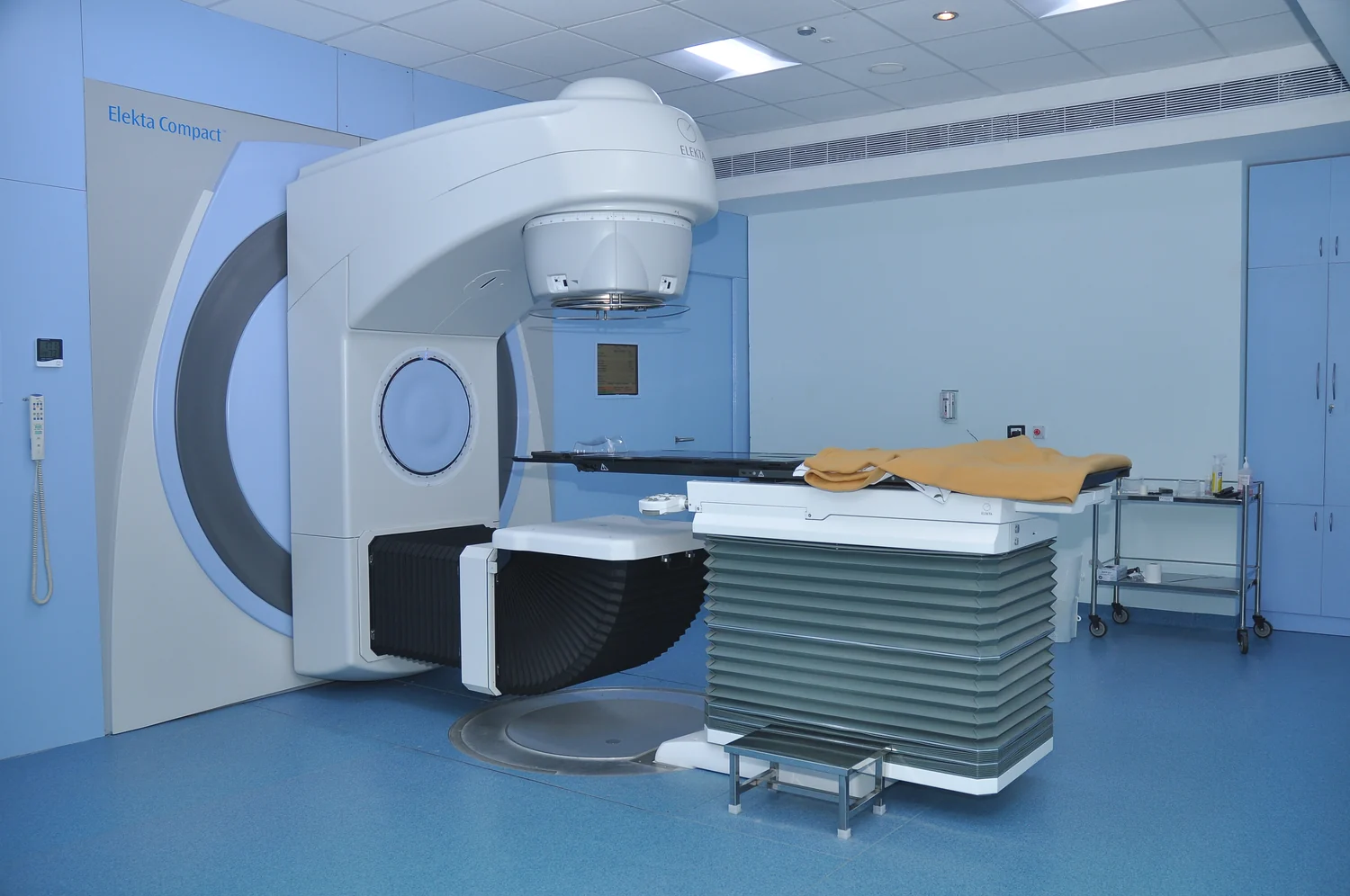
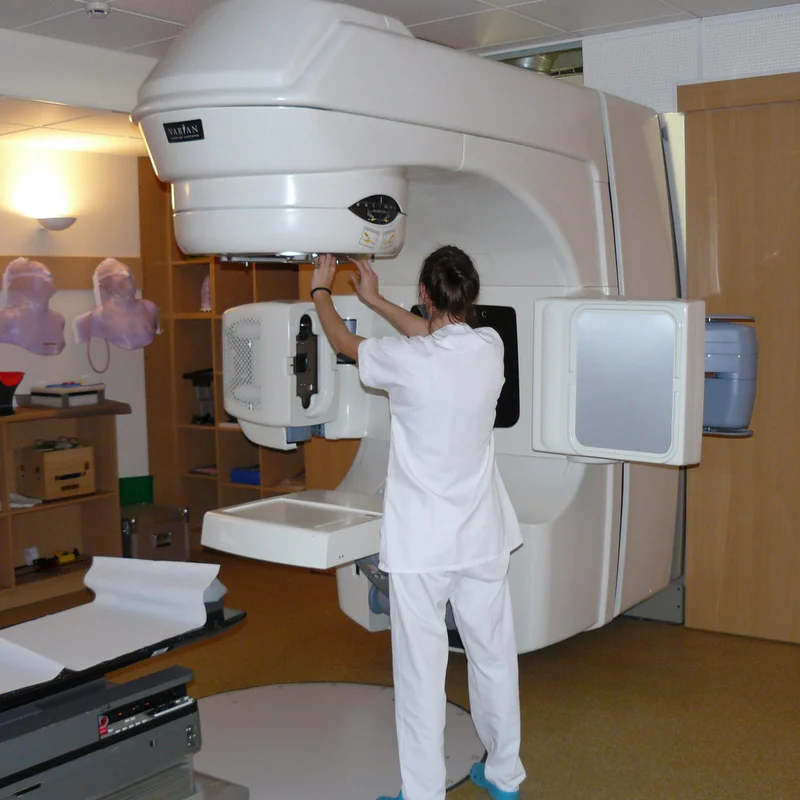
The broader lesson is that “radiation treatment” covers different physical arrangements. External beam therapy sends radiation from a machine toward a region; brachytherapy puts a solid source inside the body; systemic radiation can use a liquid source that travels in the blood [2]. Asking whether the source remains, where it sits, and when it is removed makes the terminology easier to understand. Those details connect the physics of distance and time to the practical safety instructions a care team provides.
Sources & further reading
- Brachytherapy National Cancer Institute
- Radiation Therapy to Treat Cancer National Cancer Institute
Prepared for the independent PSI Center reading library. About edition dates and source checking.
This explainer describes scientific principles. It does not assess individual treatment choices.