What changes when a radiation source is placed beside a tumor instead of across the room? The geometry changes first: the source can deliver radiation locally from inside the body, near the intended target. Brachytherapy uses that arrangement, with seeds, ribbons, or capsules positioned in or near a tumor. The idea is not simply “more radiation up close,” but a planned way to concentrate treatment in a particular region while accounting for surrounding tissue.
Distance becomes part of the treatment
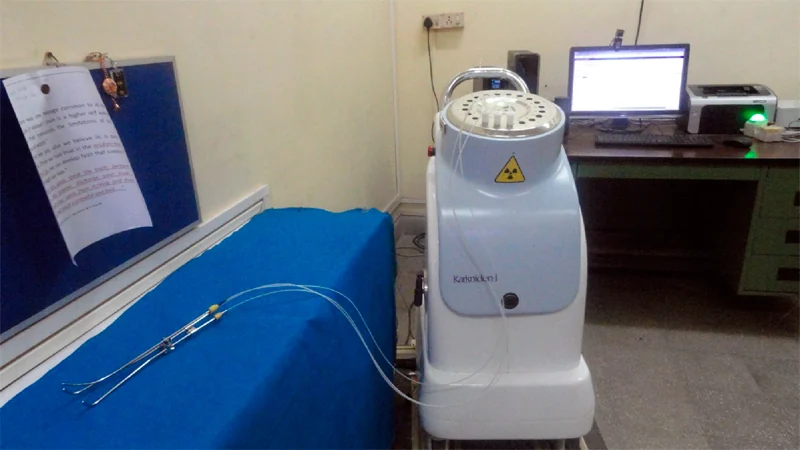
Brachytherapy is a type of internal radiation therapy and a local treatment: it targets a specific part of the body. The source may be introduced through a catheter or an applicator, then positioned within a tumor or in a nearby body cavity [1]. In interstitial treatment, for example, the source is placed within the tumor; intracavity treatment places it in a cavity, such as the vagina for some cervical or endometrial cancers.
A simple mental picture is a small lamp close to an object: moving it changes how illumination falls across nearby surfaces. Radiation planning also depends on spatial relationships, though it involves specialized physics and clinical calculations rather than ordinary light. The position of the source relative to the tumor and sensitive normal tissue is therefore central to how treatment is planned.
Local treatment, different from systemic delivery
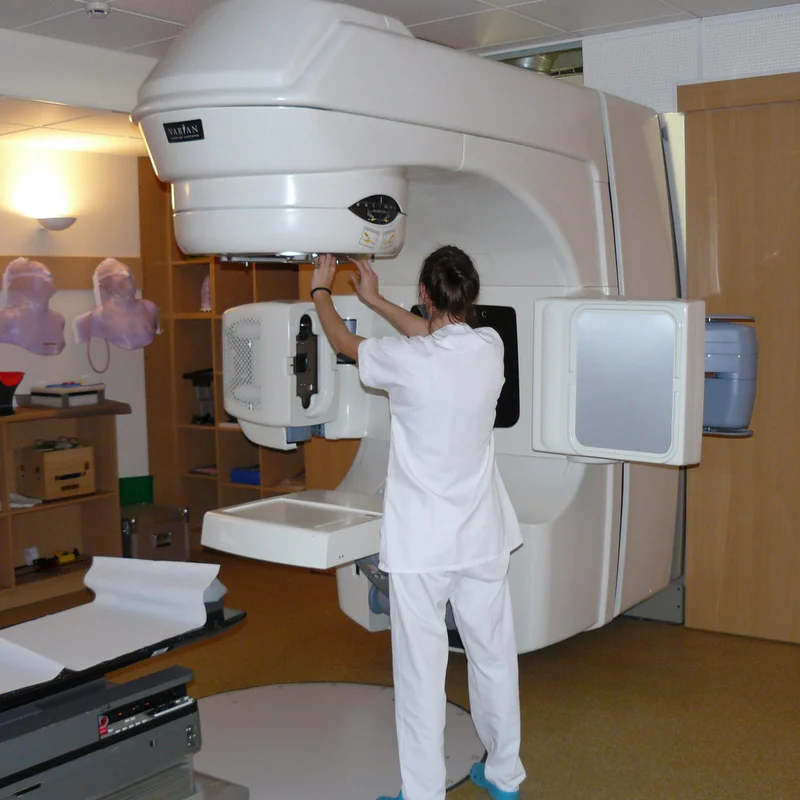
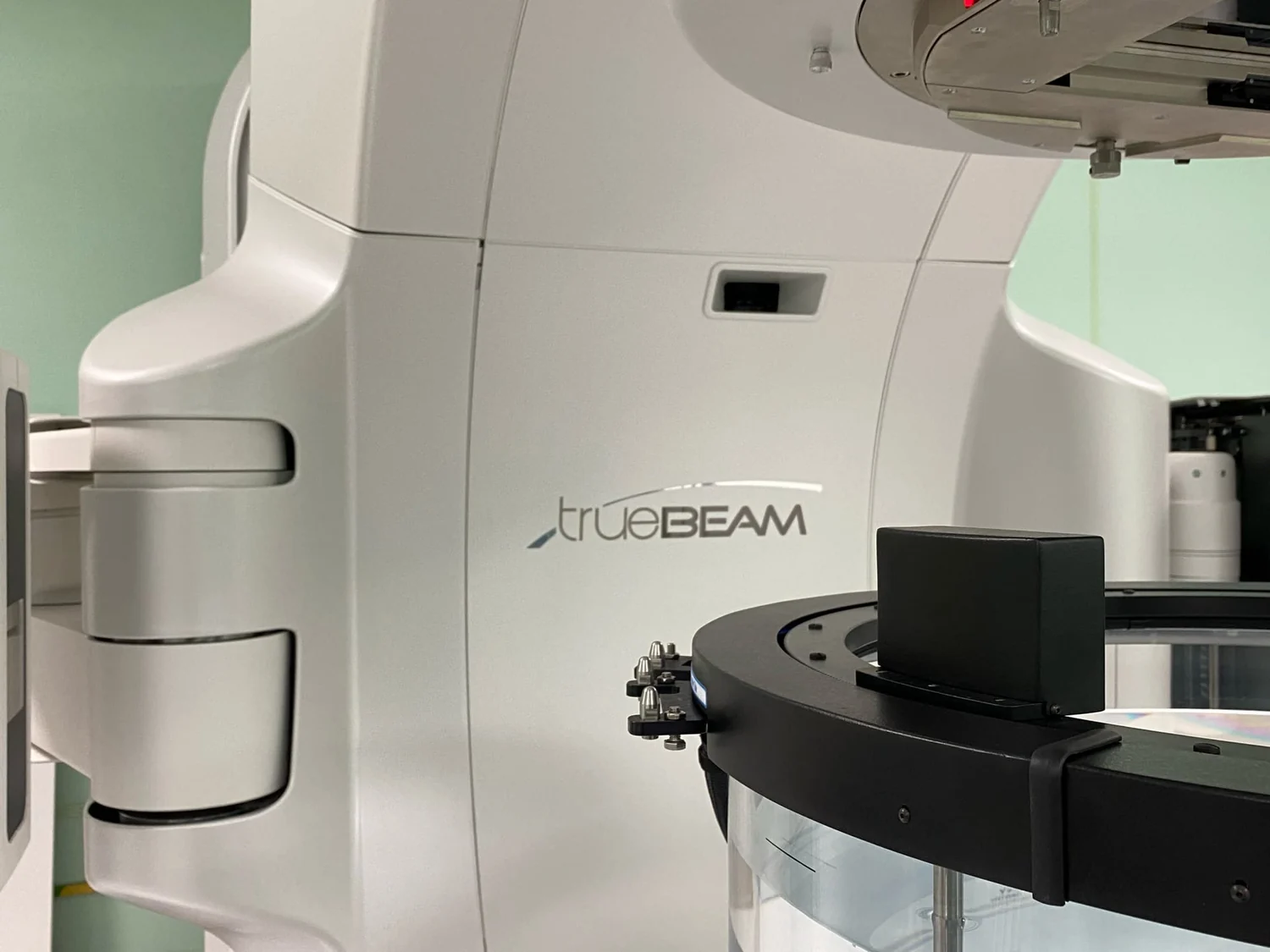
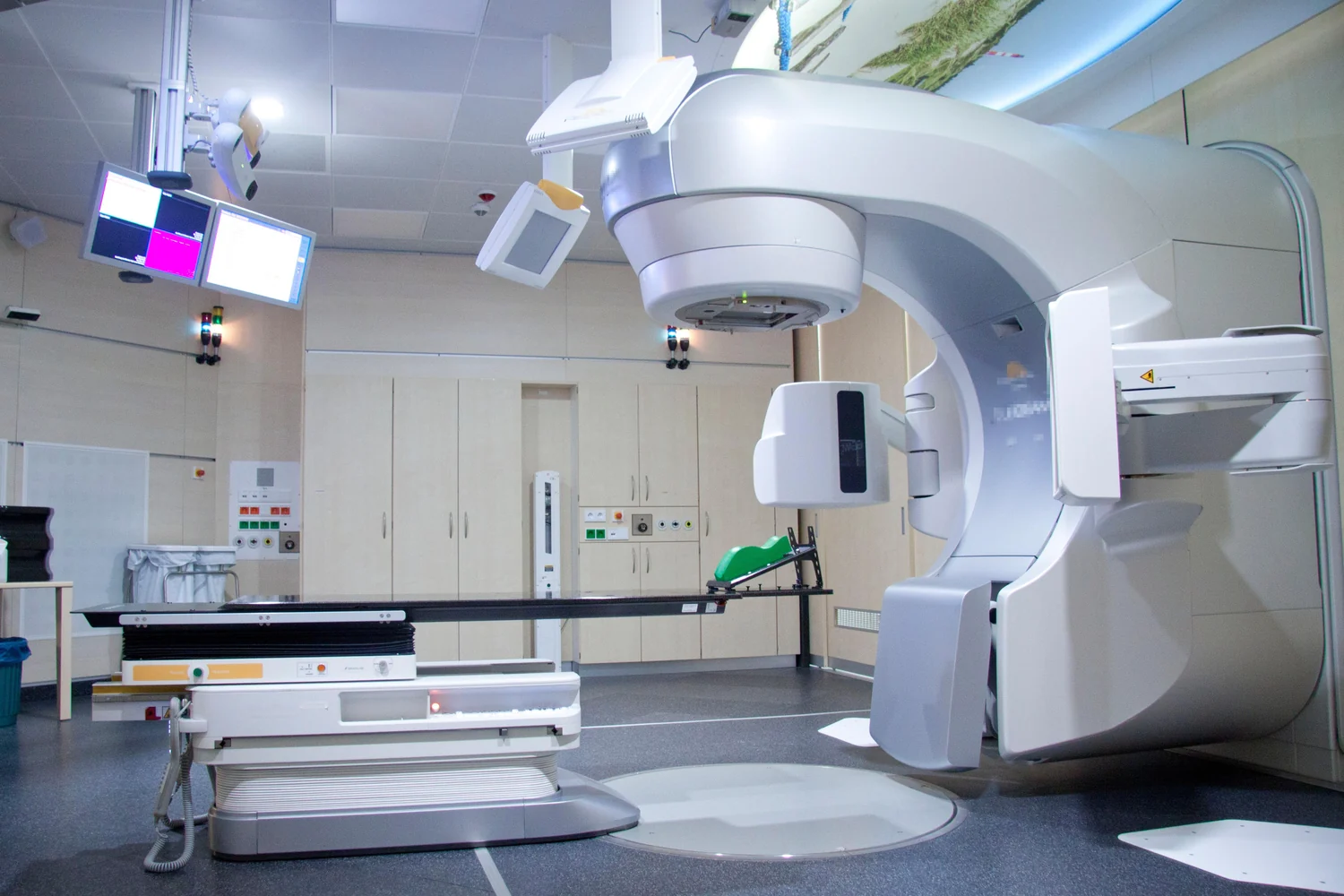
External beam radiation comes from a machine that aims radiation at a selected body region. Brachytherapy instead puts a solid source inside the body, while some internal radiation treatments use a liquid source that travels through the blood and can act systemically [2]. These approaches share the broad purpose of using radiation against cancer, but their delivery paths and areas of exposure differ.
Radiation can damage the DNA of cancer cells. When damage is beyond repair, cells stop dividing or die; the effects unfold over time rather than instantly [2]. Nearby healthy cells can also be affected, which is one reason the relationship between target and surrounding anatomy matters. Local delivery describes where treatment is directed; it does not mean that only cancer cells are exposed.
Temporary sources and lasting implants
The source’s residence time depends on the technique. In low-dose-rate brachytherapy, an implant may remain in place for days before removal; high-dose-rate treatment places the source for a shorter period and then removes it. Some permanent implants remain in the body while their radiation weakens over time [1]. The catheter or applicator used to position a temporary source is removed when the treatment course is complete.
These differences shape practical arrangements as well as physics. A temporary source is present only during the treatment interval; a permanent implant continues to emit radiation as it decays. For certain treatments, safety measures may be needed while radiation is being emitted, and the care team explains what applies to that source and setting [1]. This is not the same as a universal rule for every patient or every implant.
Planning weighs target and neighboring tissue
The choice of radiation approach depends on factors such as cancer type, tumor size and location, nearby sensitive tissues, general health, and other treatments [2]. Brachytherapy is used for selected cancers, including cancers of the prostate, cervix, breast, head and neck, and eye [1]. The method’s proximity can be useful, but it does not make the surrounding anatomy irrelevant.
Radiation may be combined with surgery, chemotherapy, or other treatment, and its timing can vary with the goal and cancer being treated [2]. The source’s placement, duration, and local context all contribute to the treatment design. Brachytherapy’s defining feature is its geometry: a radiation source is brought near the target, making location itself one of the tools used to shape a local treatment.
Sources & further reading
- Brachytherapy National Cancer Institute
- Radiation Therapy to Treat Cancer National Cancer Institute
Prepared for the independent PSI Center reading library. About edition dates and source checking.
This explainer describes scientific principles. It does not assess individual treatment choices.