If radiation passes through a person during cancer treatment, does any remain afterward? For external beam therapy, no: the machine sends radiation into a chosen region and stops emitting when the session ends. The patient does not become a continuing radiation source. The key is to distinguish radiation passing through tissue from radioactive material placed in or near the body, as can happen in brachytherapy. They use radiation for related medical goals but leave very different physical situations behind. [1]
A beam is energy in transit
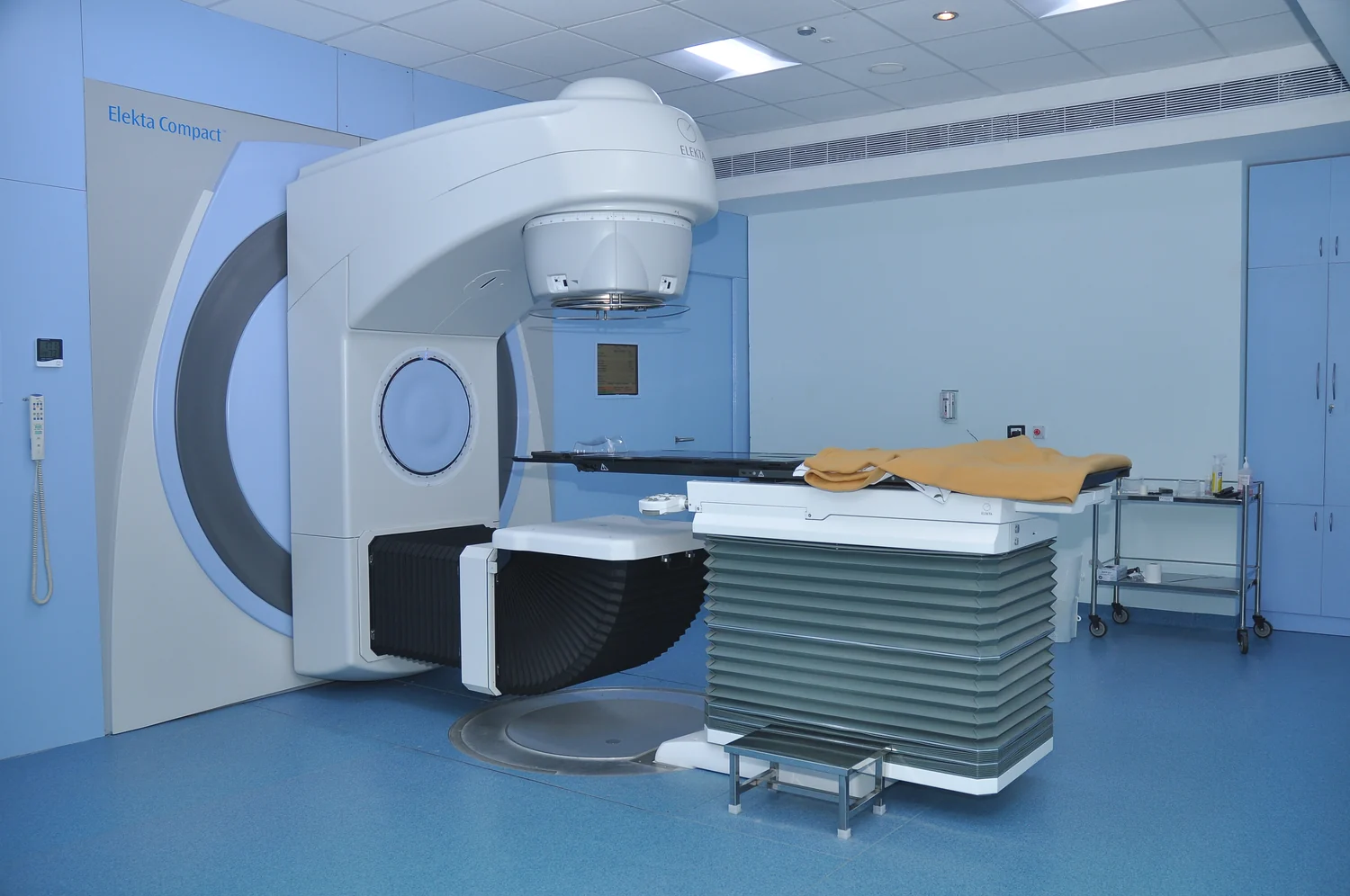
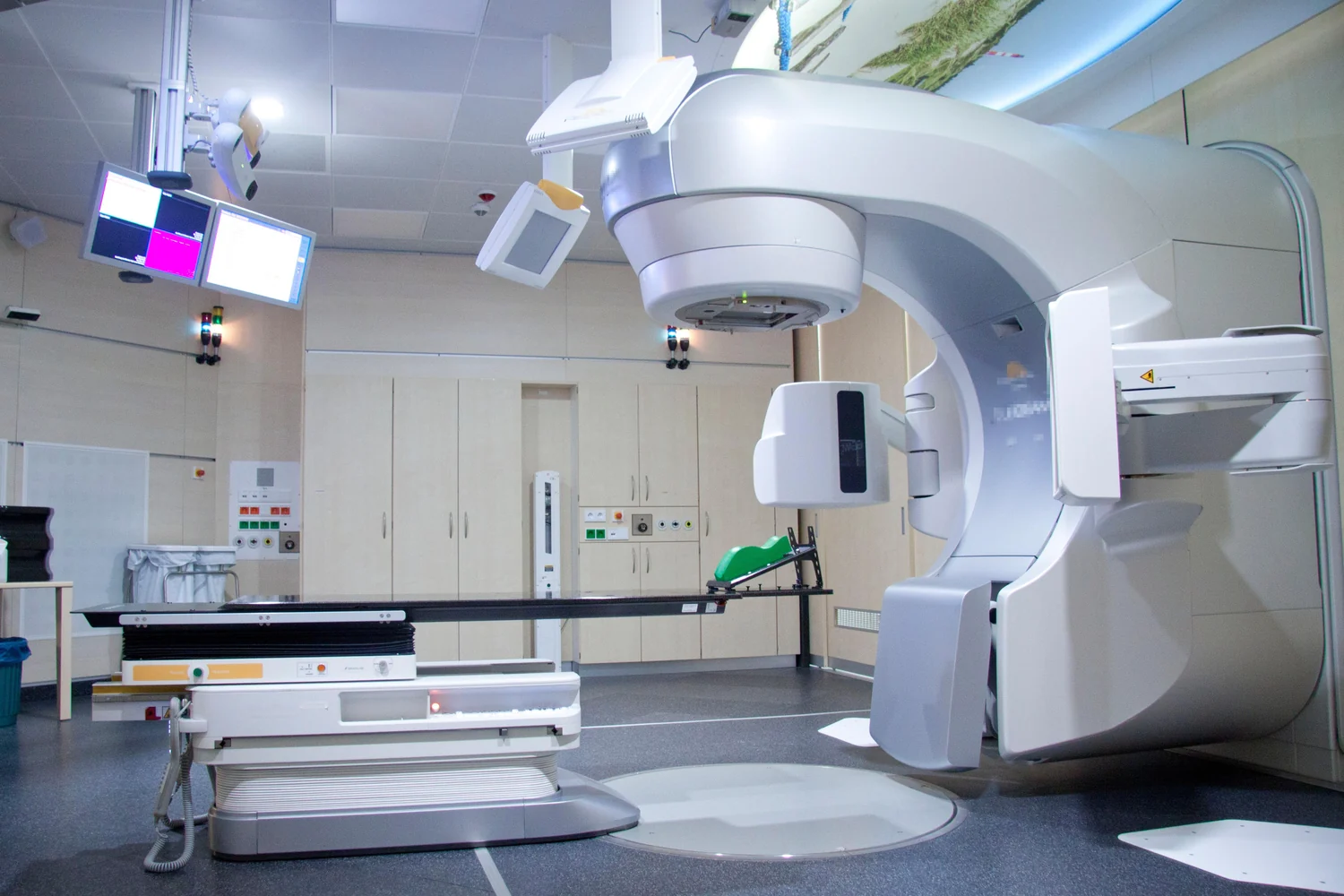
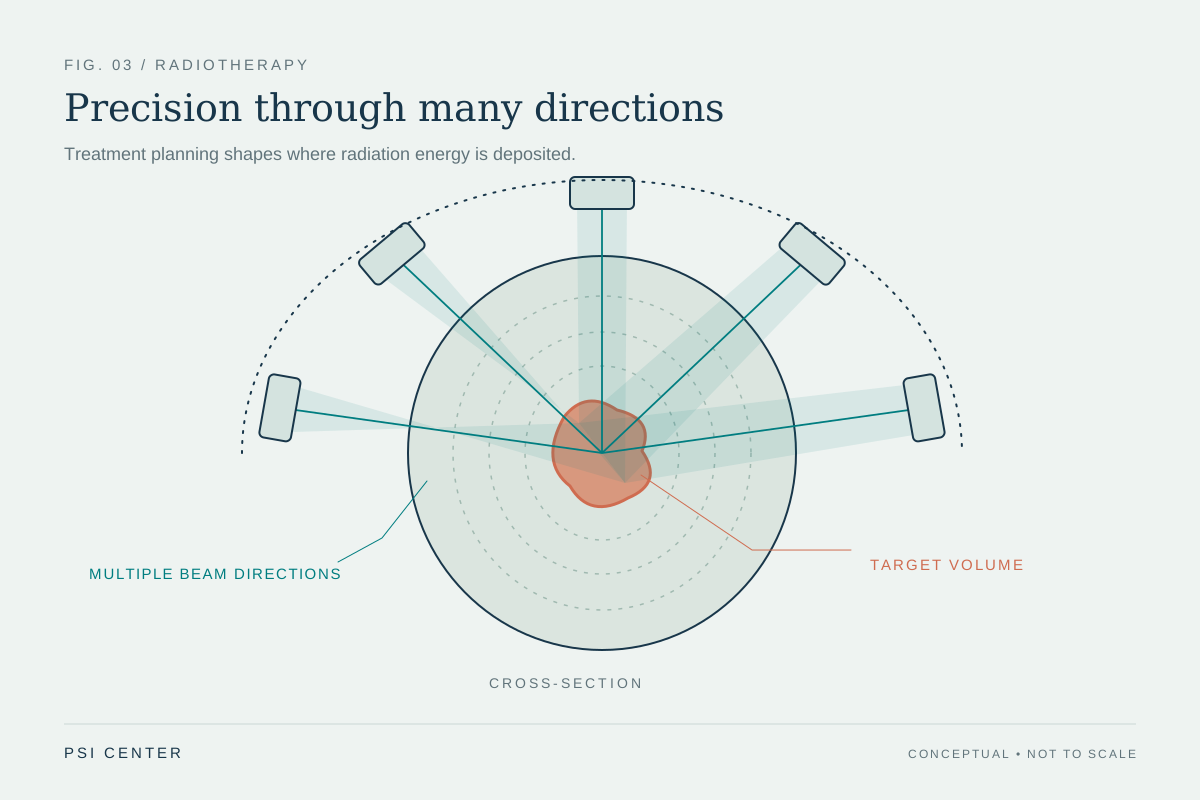
External beam radiation therapy is a local treatment: a machine aims a beam at a specific part of the body. Photon beams, the most common kind, can reach deep tumors. As they travel, they deposit energy in tissue and scatter some radiation along the path, including beyond the tumor. The treatment plan uses images and computer calculations to shape the dose toward the target while limiting exposure to nearby healthy tissue. [1]
A useful mental picture is sunlight entering a room through a window. When the light source is blocked, the room is no longer being illuminated by that beam; the objects it lit do not become lamps. Radiation therapy involves interactions with tissue and is far more energetic than visible light, but the distinction between a beam passing through and a source remaining behind is the relevant one. The treatment machine produces the external beam during the session; it does not leave radioactive material in the patient. [1]
What happens when the machine stops
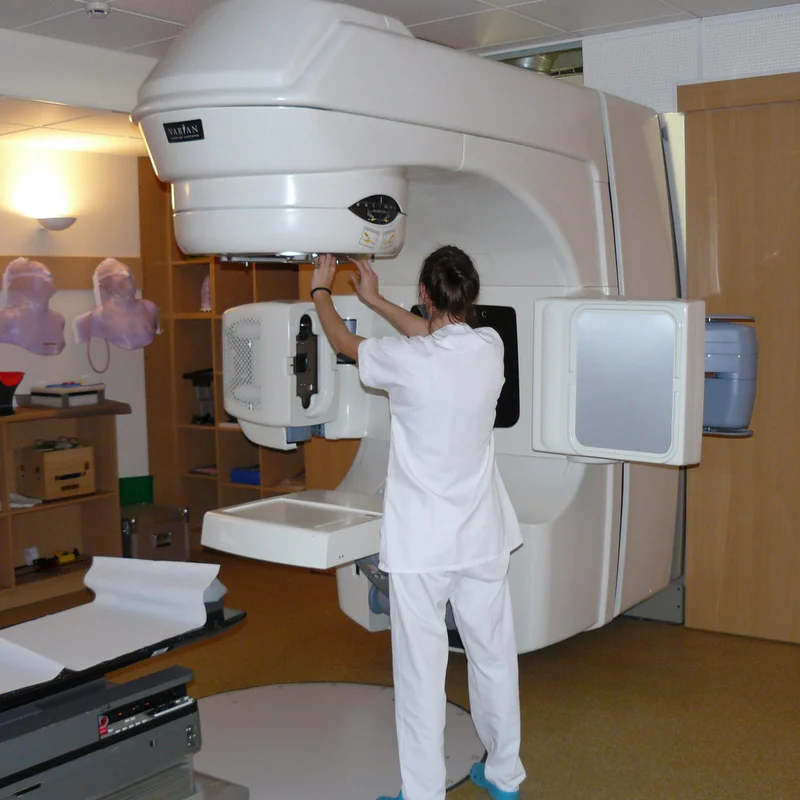
During a session, the treatment team positions the patient carefully, then operates the machine from outside the treatment room. The radiation is delivered for a short interval and the machine can be stopped. Once the beam is off, there is no continuing beam coming from the patient. The National Cancer Institute states that external beam therapy does not make a person radioactive and that it is safe to be around others, including pregnant people and young children. [1]
The word “radiation” can describe energy traveling through space or material that emits radiation. That broad usage can blur a practical difference. In external beam treatment, the patient is exposed to radiation from equipment. In a treatment that leaves radioactive material in the body, the source itself may emit radiation after placement. The first situation ends when the machine stops; the second depends on what source was used and whether it remains in place.
Why brachytherapy is different
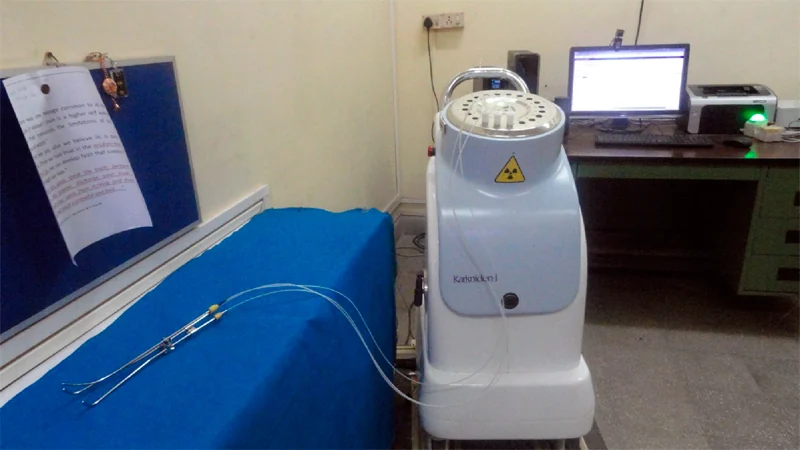
Brachytherapy is internal radiation therapy. A source held in seeds, ribbons, or capsules is placed in or near a tumor, often through a catheter or applicator. In some approaches, the source stays briefly and is removed; in others, a permanent implant remains. While a source is in the body and emitting radiation, there can be radiation coming from the patient, so safety measures may be needed. [2]
The details depend on the source and treatment. For low-dose-rate or high-dose-rate implants, the source and catheter or applicator are removed when treatment is finished; the NCI says there is no radiation in the body after removal. Permanent implants remain, but their radiation weakens over time. The source describes possible precautions early on, including limiting time near children or pregnant people. This is why the type of treatment, rather than the word “radiation” alone, determines whether contact precautions apply. [2]
The useful question is where the source is
For external beam therapy, the source is a machine outside the body. It directs radiation at a planned area, and it does not turn the treated person into a source afterward. For brachytherapy, the source is placed internally, and it can emit radiation while it remains active. This location-based distinction is more informative than imagining radiation as a substance that lingers after every treatment.
Cancer treatments differ in their schedules and technical details, so the care team’s instructions matter for a specific brachytherapy plan. But the general physics is straightforward: a switched-off external beam is not stored in the patient, while a radioactive implant can continue emitting radiation until it is removed or decays. The ordinary safety of being around someone after external beam treatment follows from that difference. [1]
Explore the physics: an explanatory diagram
Sources & further reading
- External Beam Radiation Therapy National Cancer Institute
- Brachytherapy National Cancer Institute
Prepared for the independent PSI Center reading library. About edition dates and source checking.
This explainer describes scientific principles. It does not assess individual treatment choices.