When someone says a radiation technology is “more precise” or “safer,” what would count as proof? Begin with the physical target and the outcome that matters. Radiation treatment is designed to deliver energy to a defined area, but beams interact with tissue along their paths. A claim becomes testable only when it states what exposure changes and how that difference benefits patients.
Define the target and the beam
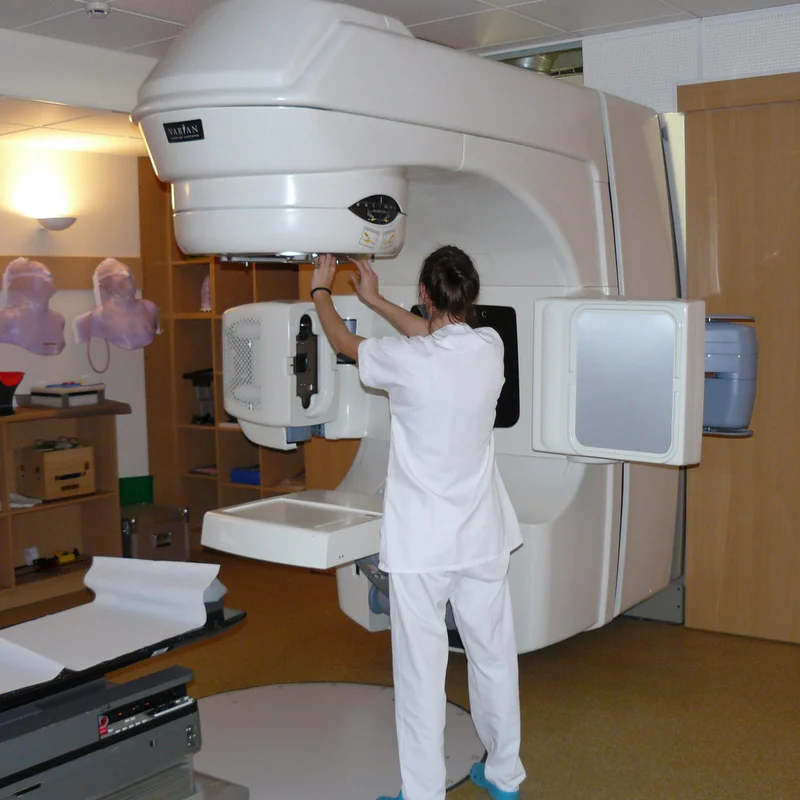
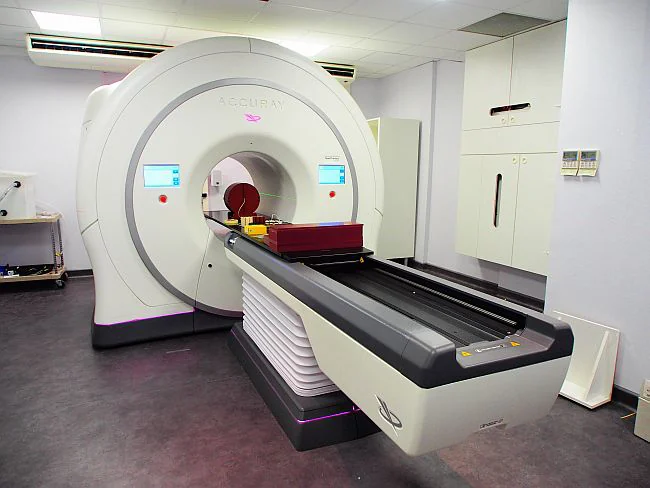
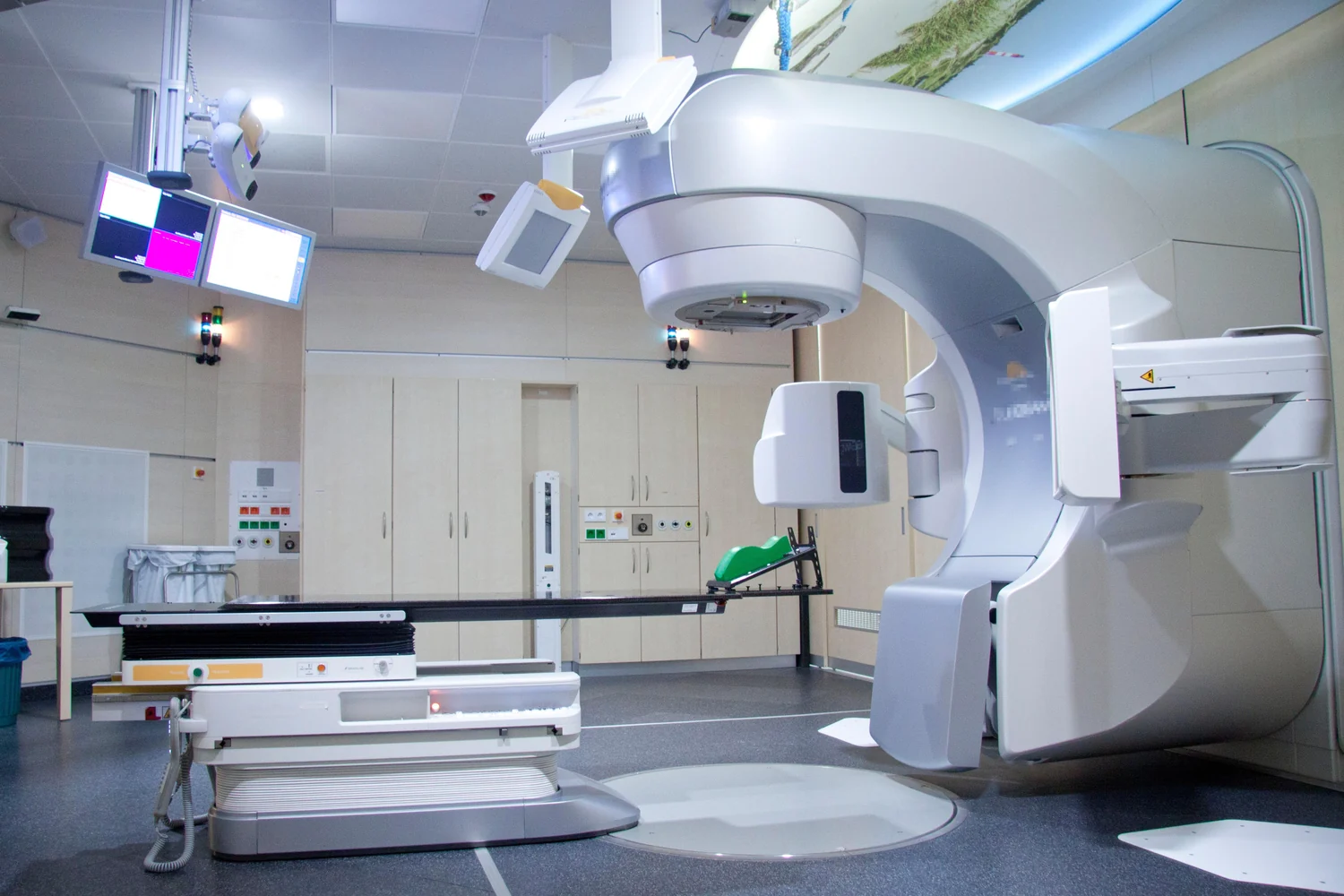
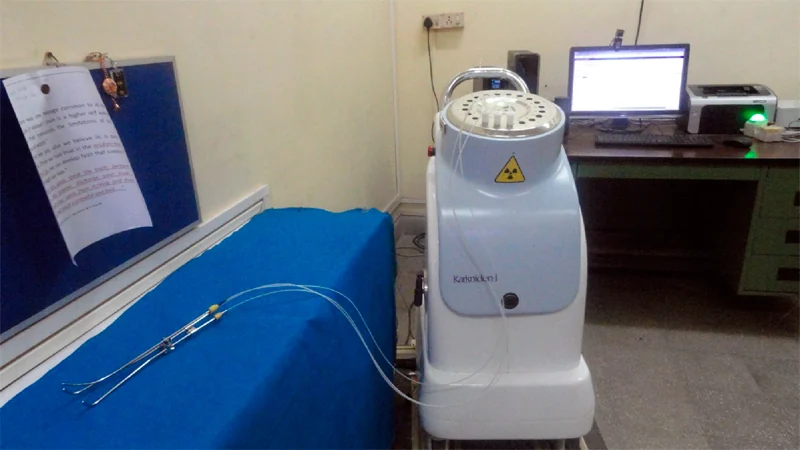
External beam radiation therapy uses a machine to aim radiation at a particular part of the body. It is a local treatment: a lung cancer treatment field, for example, targets the chest rather than the whole body [2]. The radiation may use photons, protons, or electrons. Photons can reach deep tumors but continue beyond them and scatter some radiation along their paths; electrons travel less far and are used for tumors at or near the surface [2].
That physical description gives a technology claim its first test. If a device is said to spare nearby tissue, ask which beam it uses, where the tumor sits, and what dose distribution was planned. Proton beams stop once they reach the tumor and may reduce normal-tissue exposure in some settings, but the National Cancer Institute notes that clinical trials are underway to compare proton and photon approaches [2]. A plausible difference in beam behavior is a rationale for testing, not evidence by itself of better patient outcomes.
Ask what “more precise” measures
Precision can refer to how accurately a machine aims, how well a plan conforms to a tumor’s shape, or how consistently the target is reached across sessions. These are related but distinct. Three-dimensional conformal radiation uses imaging and computer planning to shape beams from multiple directions. Intensity-modulated radiation therapy varies beam strength across smaller fields. Image-guided radiation adds scans during treatment to detect changes in tumor size or location and support adjustments [2].
A testable claim should name the measure: for example, whether the planned dose reaches the intended target, whether exposure to nearby tissue is reduced, or whether the change affects side effects or tumor control. A diagram showing beams converging is not enough to establish the dose received by a person. Planning images, delivery measurements, and clinical outcomes answer different parts of the question. The distinction helps prevent a technical improvement from being mistaken for a proven clinical advantage.
Compare like with like in people
Clinical trials test medical approaches in people, and different trial types answer different questions. Treatment trials evaluate ways to treat cancer; prevention, screening, and supportive-care studies examine other goals [1]. To test a radiation technology claim, researchers need a comparison that isolates the relevant difference. If one group receives a new beam method and another receives an established approach, the study can examine whether the method changes the outcomes it set out to measure.
The groups and outcomes must also fit the claim. A technology may alter how much normal tissue receives radiation without changing tumor control; alternatively, the relevant question may concern side effects, quality of life, or survival. A claim that a machine is better should specify which of these outcomes is expected to improve and over what period. Trial results should be read according to their design and measured endpoints, not expanded into claims the study did not test [1].
Keep early evidence in its proper lane
Early clinical research can answer whether a procedure can be delivered and whether immediate safety concerns emerge. It may not be large or long enough to show cancer effectiveness. The NCI notes that phase I trials commonly focus on safety and dose-related questions, while later phases test effectiveness and compare approaches. The phase of a study is therefore a clue to what conclusion it can support [1]. [3]
For radiation technologies, a useful set of questions is concrete: What tissue is targeted? What beam and plan are used? What is the comparator? Which patient outcome changed? How large and reliable is the evidence? External beam treatment aims to maximize the prescribed tumor dose while sparing nearby normal tissue, but the balance is specific to the treatment plan and cancer [2]. A technology claim earns confidence when its physical rationale and clinical results answer the same clearly stated question.
Sources & further reading
- Clinical Trials: What Are the Phases? National Cancer Institute
- External Beam Radiation Therapy National Cancer Institute
- Learn About Clinical Trials National Eye Institute
Prepared for the independent PSI Center reading library. About edition dates and source checking.
This explainer describes scientific principles. It does not assess individual treatment choices.