When a laser removes tissue, where does the light’s energy go? The answer is not simply “into the beam’s target.” Light can be absorbed, scattered or reflected as it travels through tissue, and only absorbed energy is directly deposited locally. Wavelength and tissue properties affect where that happens. Laser ablation—the removal or destruction of tissue—therefore depends on matching the light and its delivery to a defined treatment site.
Light must interact to deposit energy
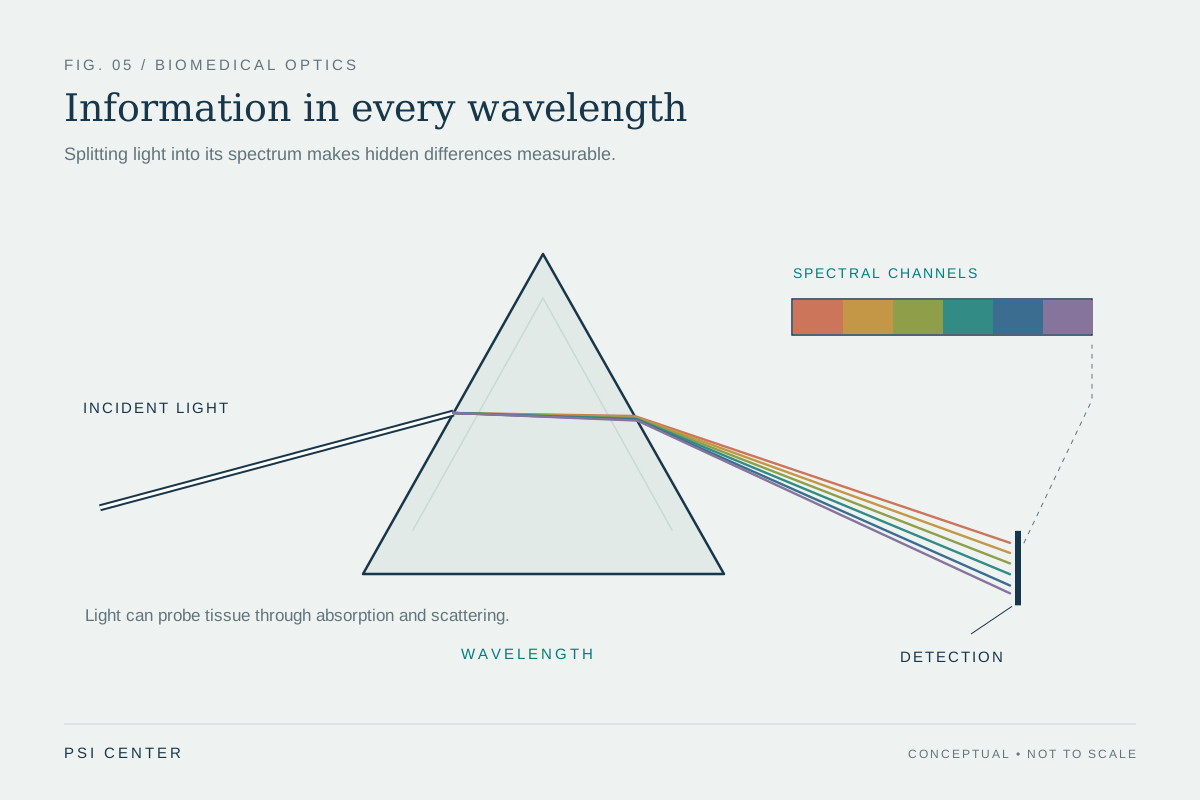
Light reaching tissue can be absorbed, scattered or reflected. Absorption transfers energy to molecules in the tissue; scattering redirects the light, and reflection sends some away from the surface. How far light penetrates before being absorbed depends on its wavelength and on what the tissue contains. A laser’s narrow beam can concentrate light spatially, but the tissue’s optical properties still determine where energy is deposited. [2]
For ablation, enough absorbed energy can heat or otherwise disrupt tissue so it is cut or destroyed. The treatment is local: its intended effect is concentrated at a particular site. The National Cancer Institute describes laser therapy as using an intense, narrow beam to remove or destroy cancer and abnormal cells, with the wavelength selected in relation to how cells absorb light. That is a practical use of the interaction between wavelength and tissue, not a claim that one color uniquely identifies every tumor. [1]
Delivery shapes the treatment zone
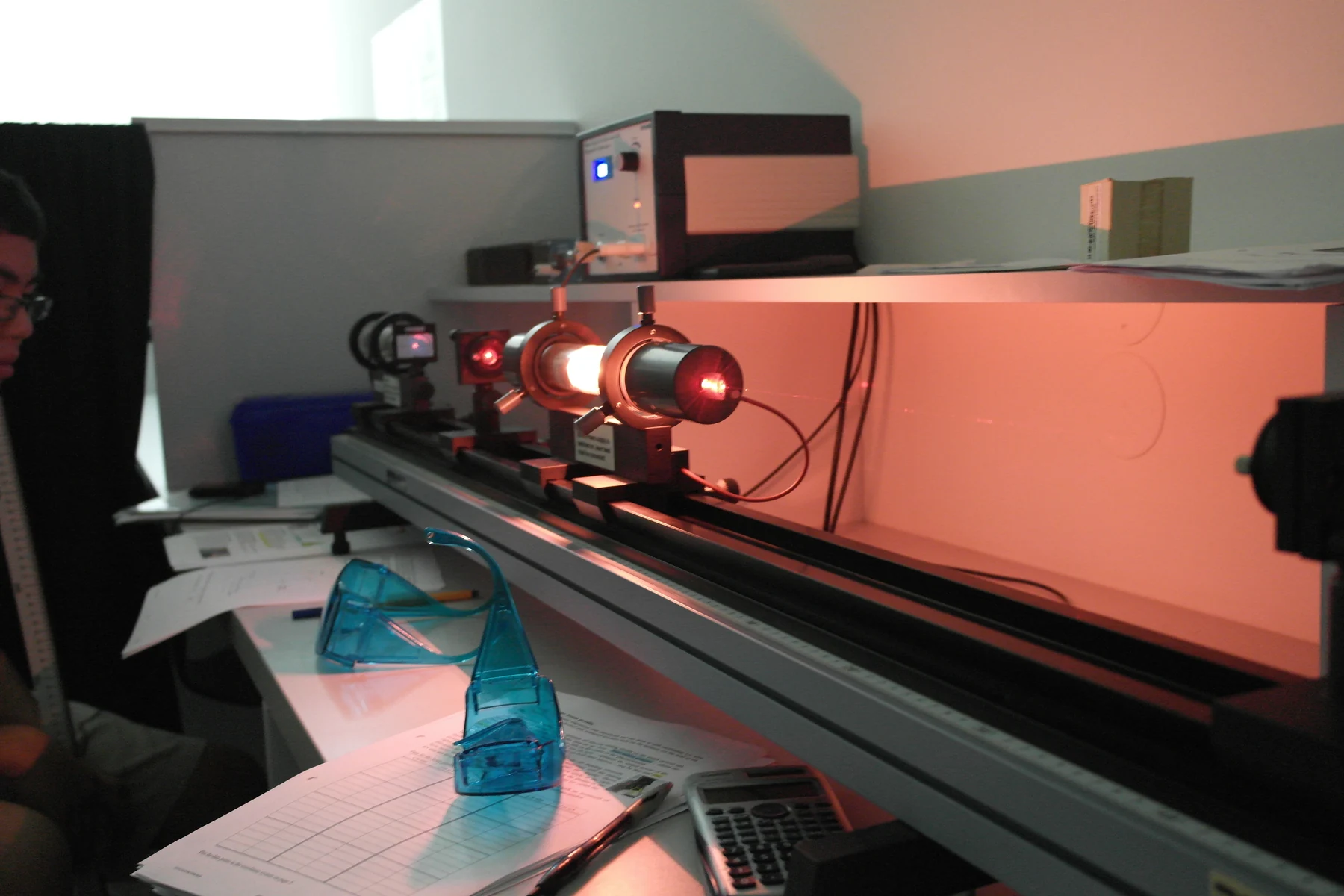
A laser can reach internal tissue through an endoscope, a narrow instrument that lets clinicians view inside the body. Optical fibers carry light through the instrument to the treatment site, where it can be aimed at tissue. The fiber’s route and the beam’s focus determine where illumination lands; wavelength and tissue absorption then influence how the energy spreads and is taken up. [1]
Different laser types have different uses. The NCI describes carbon dioxide and argon lasers as able to cut the surface without penetrating deeply, while Nd:YAG light is more often delivered through an endoscope to internal organs and can travel through fibers for laser interstitial thermal therapy. These examples show why “laser” is not a single treatment with a universal depth or effect. The source, wavelength and optical path all matter. [1]
Ablation is not the same as imaging
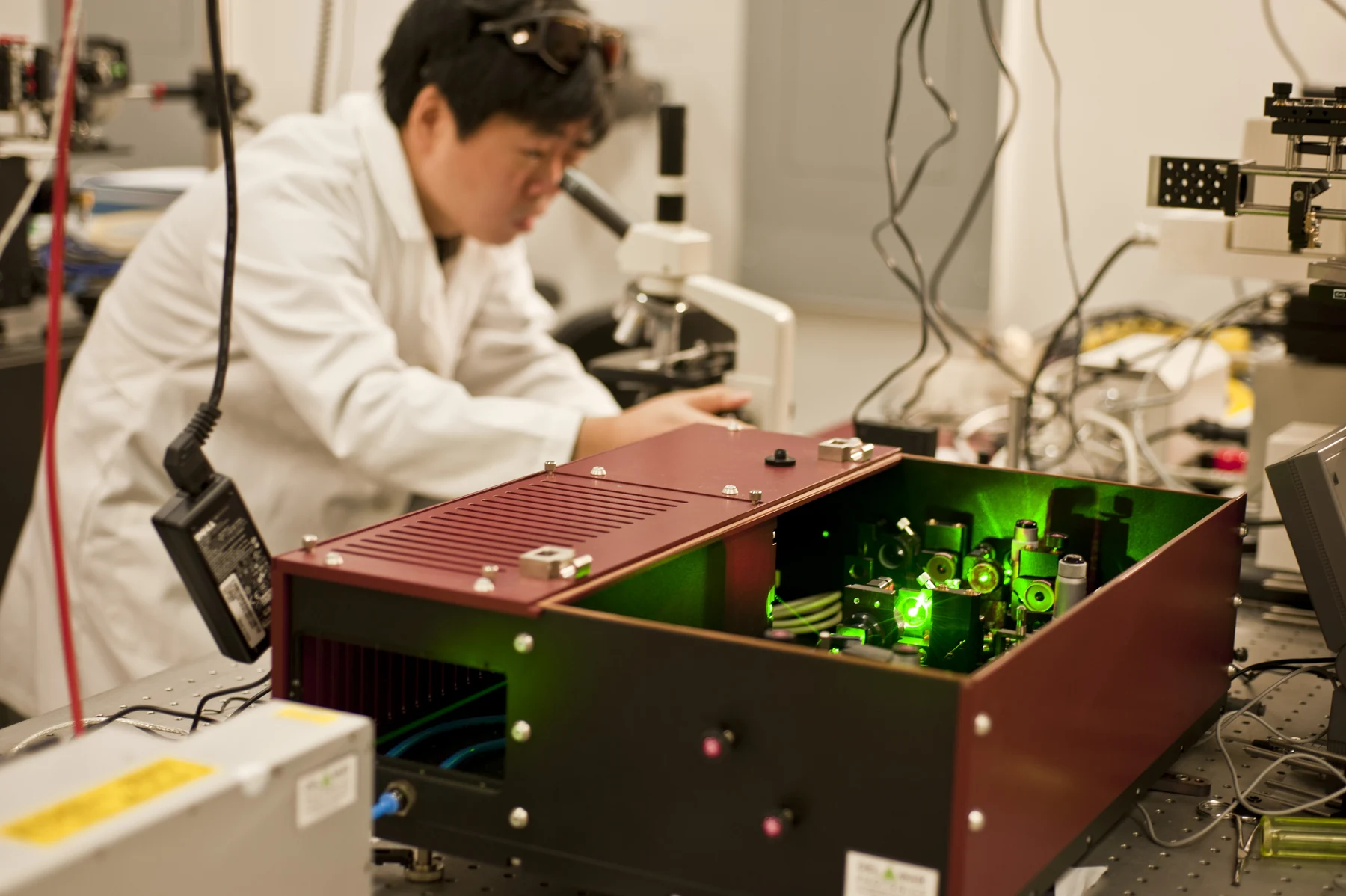
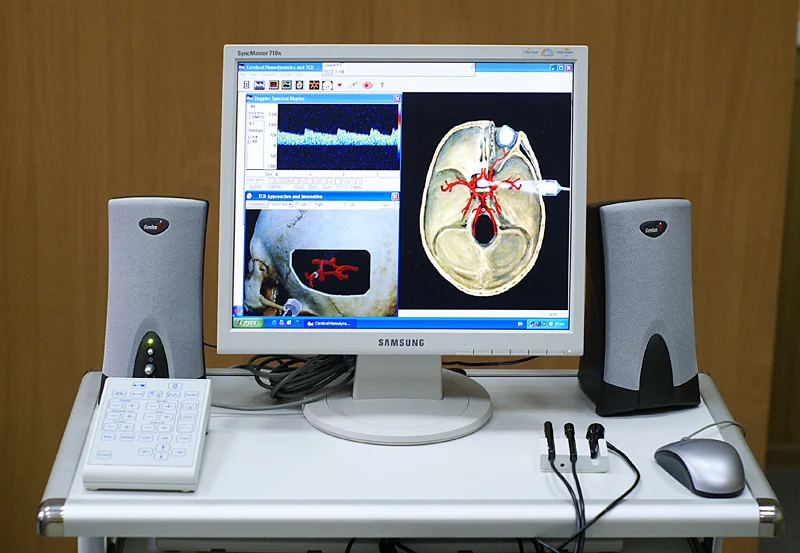
Optical imaging also uses light, but its goal is to collect information rather than destroy tissue. A detector may measure light that returns, passes through, scatters within or is emitted by a specimen. Different methods use these signals to visualize structures from cells to organs. Optical coherence tomography, for example, uses infrared light to form subsurface images; photoacoustic imaging uses absorbed laser pulses to generate ultrasound waves that can be detected. [2]
That distinction is useful when the same broad family of tools appears in both diagnosis and treatment. An imaging system seeks a signal that reveals tissue properties, usually at levels designed for measurement. Ablation deliberately deposits enough energy to alter or remove tissue. A laser pulse used to generate a detectable acoustic signal in photoacoustic imaging is not automatically an ablation treatment; what matters is the purpose and physical effect of the exposure.
Precision has limits
Concentrating light can help limit effects to a target, and lasers can seal small blood vessels during surgery, reducing bleeding. The NCI notes possible advantages such as less damage to normal tissue, shorter procedures and less scarring in some uses. It also describes drawbacks: specialized equipment and training are needed, treatment can be expensive, and effects may not last, so repeat treatment can sometimes be necessary. [1]
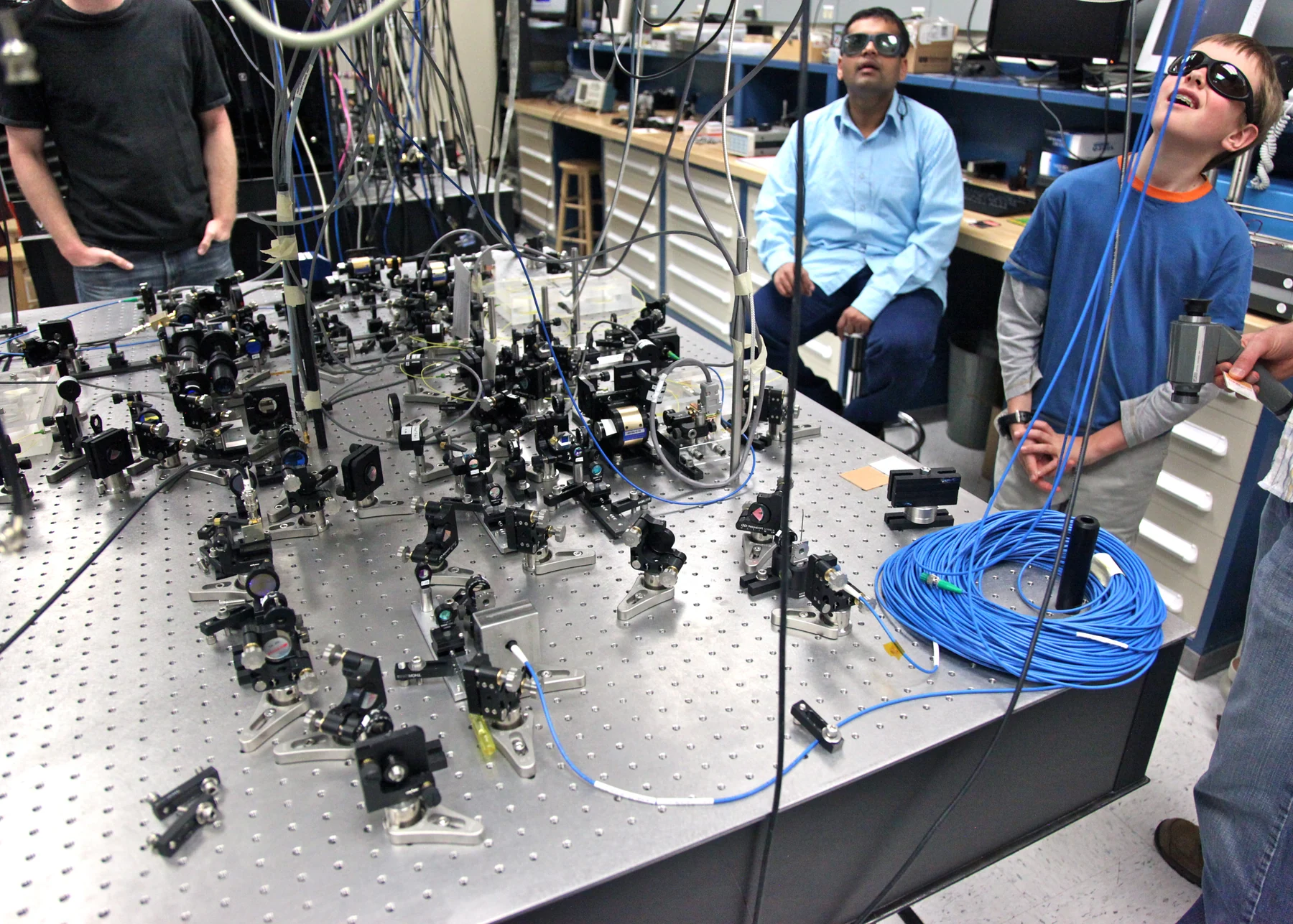
Optical imaging reminds us why precision depends on more than a narrow beam. Tissue can scatter light away from its original path, and varied absorption can affect how much reaches a chosen depth. Imaging techniques may measure these changes, while treatment planning must account for them to place energy where it is intended. Laser ablation is thus a controlled interaction between light and tissue, not a guarantee that all energy stops exactly at a visible boundary. [2]
Explore the physics: an explanatory diagram
Sources & further reading
- Lasers in Cancer Treatment National Cancer Institute
- Optical Imaging NIBIB
Prepared for the independent PSI Center reading library. About edition dates and source checking.
This explainer describes scientific principles. It does not assess individual treatment choices.