What changes when energy reaches an atom: does an electron leave, or does it move to a higher-energy state and stay? Those are different outcomes. Ionization creates charged particles by removing an electron; excitation changes an atom’s internal energy while keeping the electron bound. The distinction is a useful starting point for understanding plasmas, light emission, and the varied ways radiation interacts with matter.
Bound electrons and energy levels
An atom contains a positively charged nucleus surrounded by electrons. Electrons can occupy only certain allowed energy states, rather than any arbitrary energy. When an atom absorbs energy, one of its electrons may move into a higher state. This is excitation. The atom is then excited, but it remains electrically neutral if the electron is still bound to it.
Excited states usually do not last indefinitely. An electron can return to a lower energy state, releasing energy that may emerge as light or be transferred through collisions. The emitted light’s color depends on the energy difference between the states. Fluorescent lamps, for example, contain mercury plasma; the energized material emits light through atomic processes. This is one reason a glowing gas can reveal that energy is moving through matter. [1]
When an electron escapes
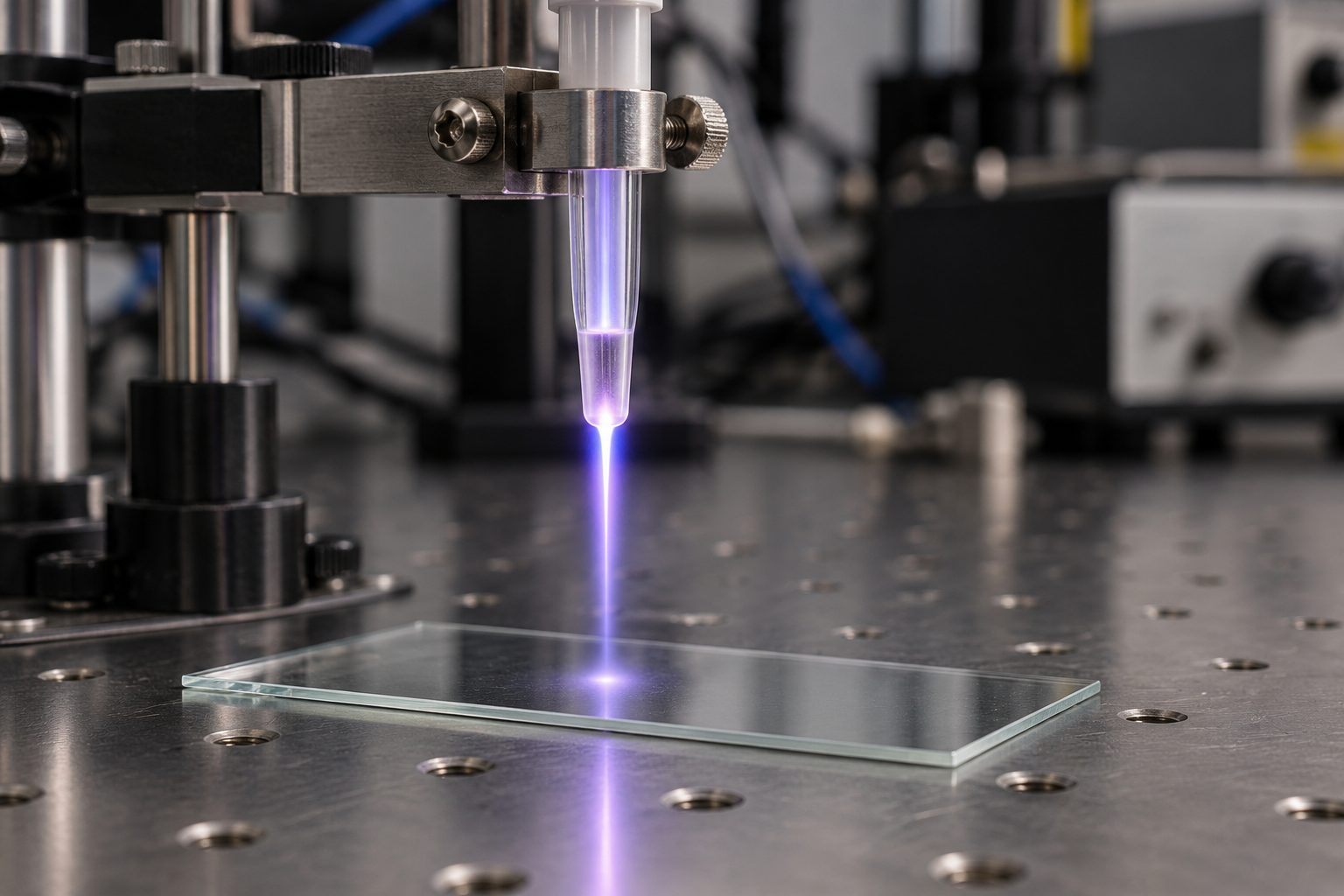
Ionization happens when enough energy is transferred to remove an electron from an atom or molecule. The departing electron is negative, and the atom left behind is a positive ion. Unlike excitation, this change creates separated charges. Those free electrons and ions can move and respond to electric and magnetic fields, which is why a sufficiently ionized gas can conduct current and is called plasma. [1]
The word “plasma” covers a range of conditions. It does not mean every particle is ionized: many plasmas are partially ionized and still contain neutral atoms or molecules alongside ions and free electrons. Lightning is a natural example; stars are hot plasmas. The balance among charged and neutral particles depends on how energy was supplied and on the environment, so the label describes a state of matter rather than one fixed temperature or appearance.
Ionizing radiation is about energy transfer
Radiation can carry energy as electromagnetic waves or particles. “Ionizing radiation” means radiation with enough energy, in the relevant interaction, to remove electrons and produce ions. X-rays and gamma rays are examples; visible light is non-ionizing. The distinction is not simply whether something is bright, hot, or called radiation. It concerns the energy available for atomic or molecular changes. [2]
Ionization can damage biological molecules, including DNA, depending on where and how energy is deposited. The National Cancer Institute identifies x-rays, gamma rays, and other high-energy forms among radiation that can damage DNA; it also notes that lower-energy non-ionizing forms such as visible light have not been found to cause cancer in people. The category does not by itself describe exposure level or risk, which also depends on circumstances. [2]
One atom, two different outcomes
Imagine transferring a modest amount of energy to a bound electron: it rises to a higher level, then may release the energy as light when it falls back. Transfer enough to overcome the binding energy, and the electron leaves, producing an ion. The first route can make light without creating a free charge; the second changes the atom’s charge state. A plasma contains many such charged particles, though it can also contain neutral ones.
These processes can occur together in complex settings, but keeping the terms separate prevents a common confusion. Excitation is not the same as ionization, and plasma is not synonymous with any glowing gas or with medical radiation. Medical MRI, for instance, uses magnetic fields and radio waves to measure proton behavior; it is not an ionizing x-ray procedure. [1] The atomic distinction gives a precise way to ask what energy has done to matter, whether the setting is a lamp, a lightning bolt, or a medical technology.
Sources & further reading
- About Plasmas and Fusion Princeton Plasma Physics Laboratory
- Radiation National Cancer Institute
Prepared for the independent PSI Center reading library. About edition dates and source checking.
This explainer describes scientific principles. It does not assess individual treatment choices.