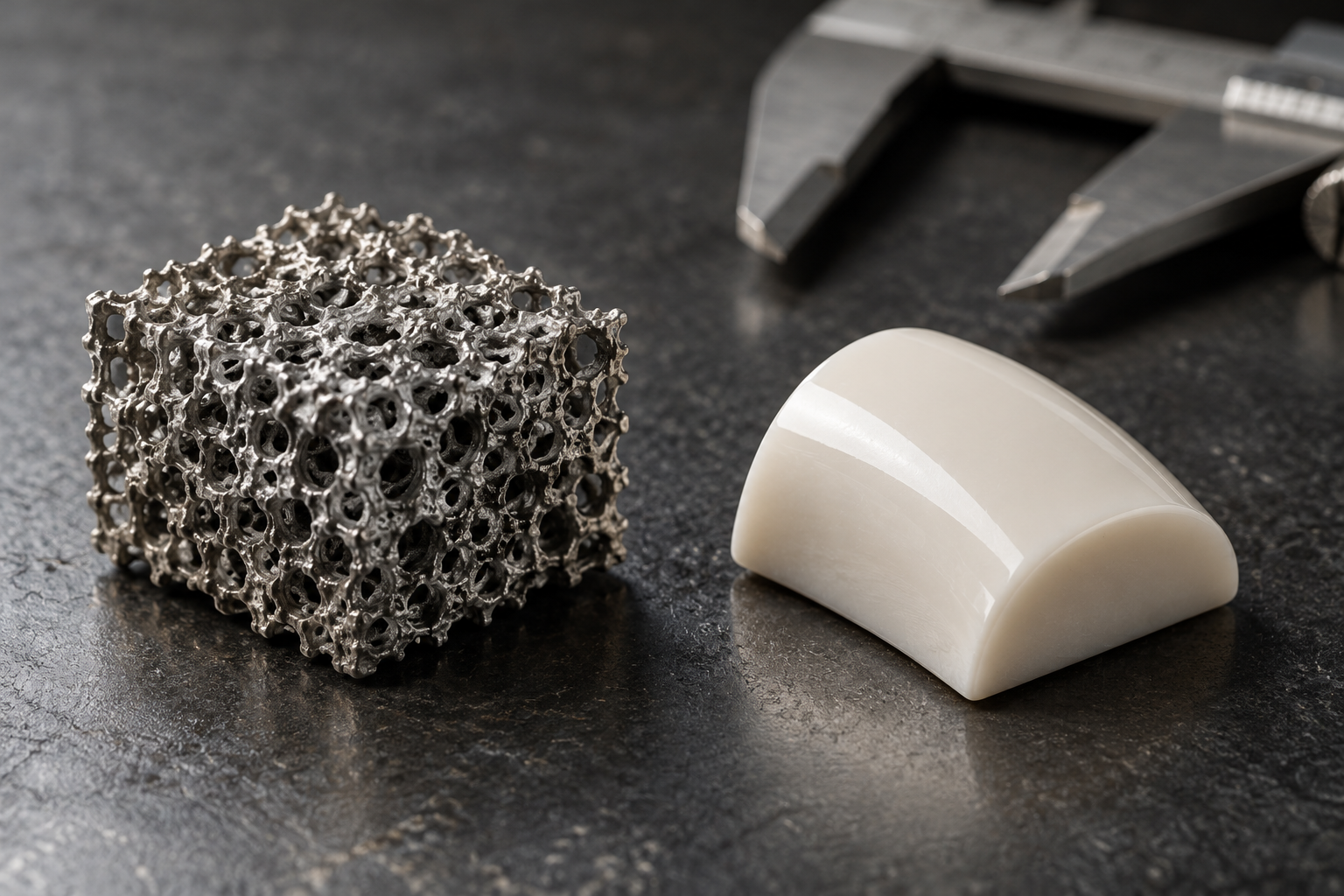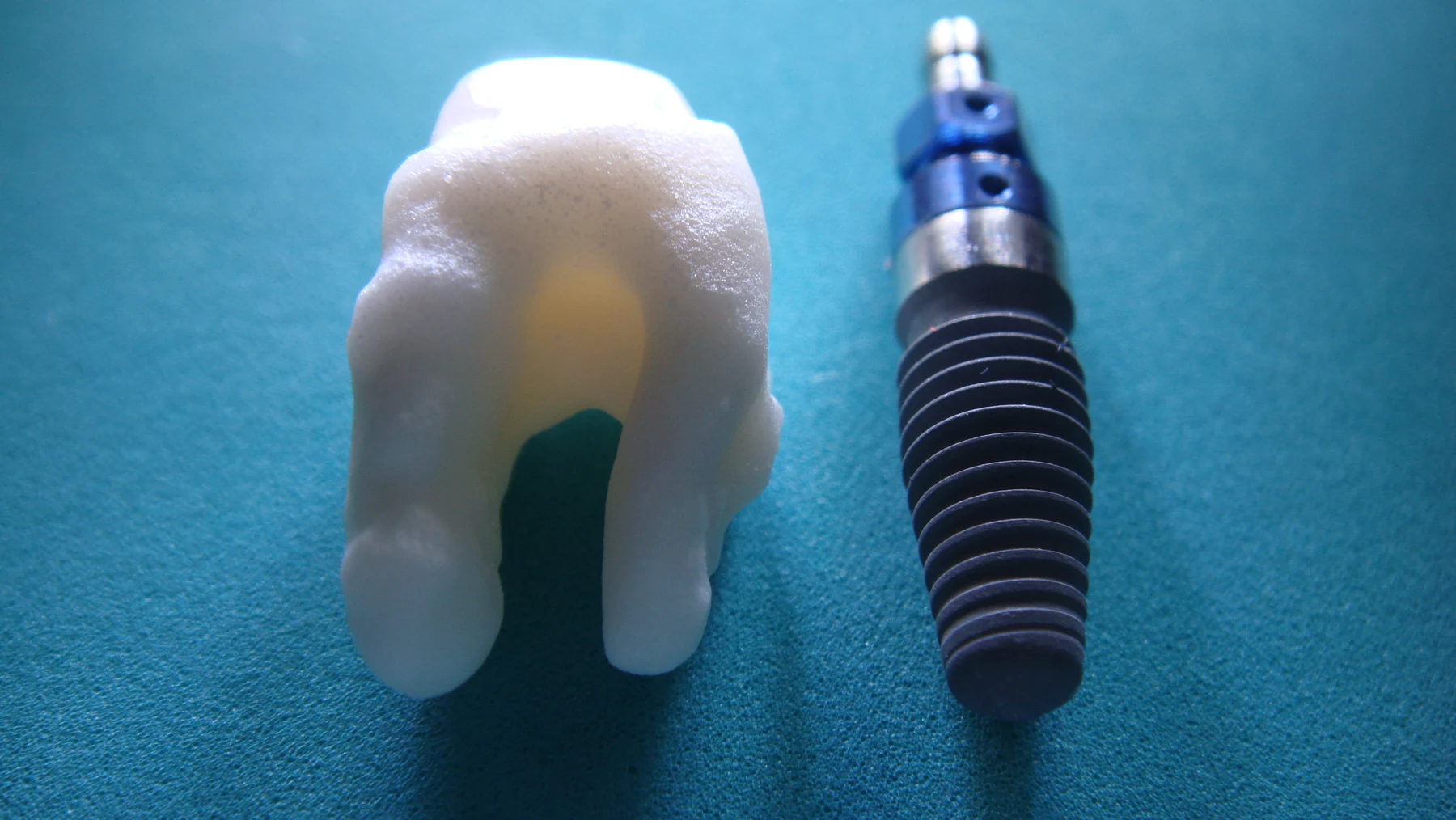
How can a medicine survive a journey through the body and arrive where it is needed? A drug does not travel through a neutral pipe: blood, enzymes, tissues, and immune cells all affect it. Biomaterials offer a way to shape that journey. They can package a therapeutic, shield it from some hazards, and influence where or when it is released. The carrier is not a magic address label, however; its behavior depends on both the material and the body it meets.
A protective package in a crowded bloodstream
Imagine a fragile therapeutic as a parcel moving through a busy city. In the bloodstream, it encounters changing chemistry and many tissues that may take it up or break it down. Some medicines can degrade before they reach their intended target; others may affect tissues beyond it. Encasing a therapeutic in a biomaterial carrier can help protect it during circulation and alter how it interacts with its surroundings. [1]
Carriers can be made from synthetic polymers or lipids, among other materials. Their size, surface chemistry, and structure influence how they behave in a biological environment. Researchers can modify some carriers so particular cell populations are more likely to take them up. That means influencing probabilities, not steering every particle to a single destination: the carrier still moves through a complex body, and its design does not guarantee that a drug reaches only the desired cells. [1]
The material helps set the release schedule
A carrier can affect not just where a drug goes but when it becomes available. One approach is to use a material that biodegrades: as the carrier breaks down, it releases the therapeutic it holds. Another is to design release in response to a biological cue, such as heat or acidity. The basic idea resembles a package that opens as its wrapping changes, though the trigger here is a feature of the local environment rather than a clockwork latch. [1]
That timing can matter because a medicine’s effect depends on exposure over time as well as the dose given. A material may slow or shape release, but controlled release does not automatically mean perfect control. The carrier must remain stable enough to do its job, then release the therapeutic in a useful way. Whether a design works depends on the specific drug, material, and biological setting; a plausible mechanism alone does not demonstrate a health benefit. [1]
Drug delivery can be built into a device
Not every biomaterial carrier travels freely through blood. A medical device or tissue scaffold can instead be coated or loaded with a therapeutic. For example, a device may carry an anti-inflammatory or anti-fibrotic drug, with release linked to the degradation of the material holding it. In this arrangement, the material and device serve two roles: one provides a physical structure, while the other helps manage local drug release. [1]
This is a different delivery problem from carrying a medicine through circulation. A local coating places the source of a drug at a particular device or tissue, whereas a circulating carrier must negotiate the wider route through the body. The material has to suit its surroundings and intended function. Biomaterials are also used in technologies ranging from dental fillings to implants, but the fact that a material has one medical use does not establish that every drug-carrying design is clinically proven. [1]
A test result is a signal, not a delivery vehicle
A useful contrast is a rapid diagnostic test. It turns a biological sample, such as a few drops of blood, urine, or saliva, into information that can help guide care. A point-of-care test is designed to provide that information near the patient, often within an hour or less. A biomaterial drug carrier, by comparison, transports a therapeutic or shapes its release. One reports a signal; the other changes how a medicine travels. [2]
The distinction also shows why a material’s job must be judged in context. A rapid test is assessed by how accurately it identifies a condition, including its sensitivity and specificity; a carrier raises different questions about stability, uptake, and release. Fast information can help clinicians make decisions, while delivery materials may alter exposure to a drug. Neither category should be credited with solving the other’s challenge. Better delivery is a design goal whose value depends on evidence for the particular therapeutic and application. [2]
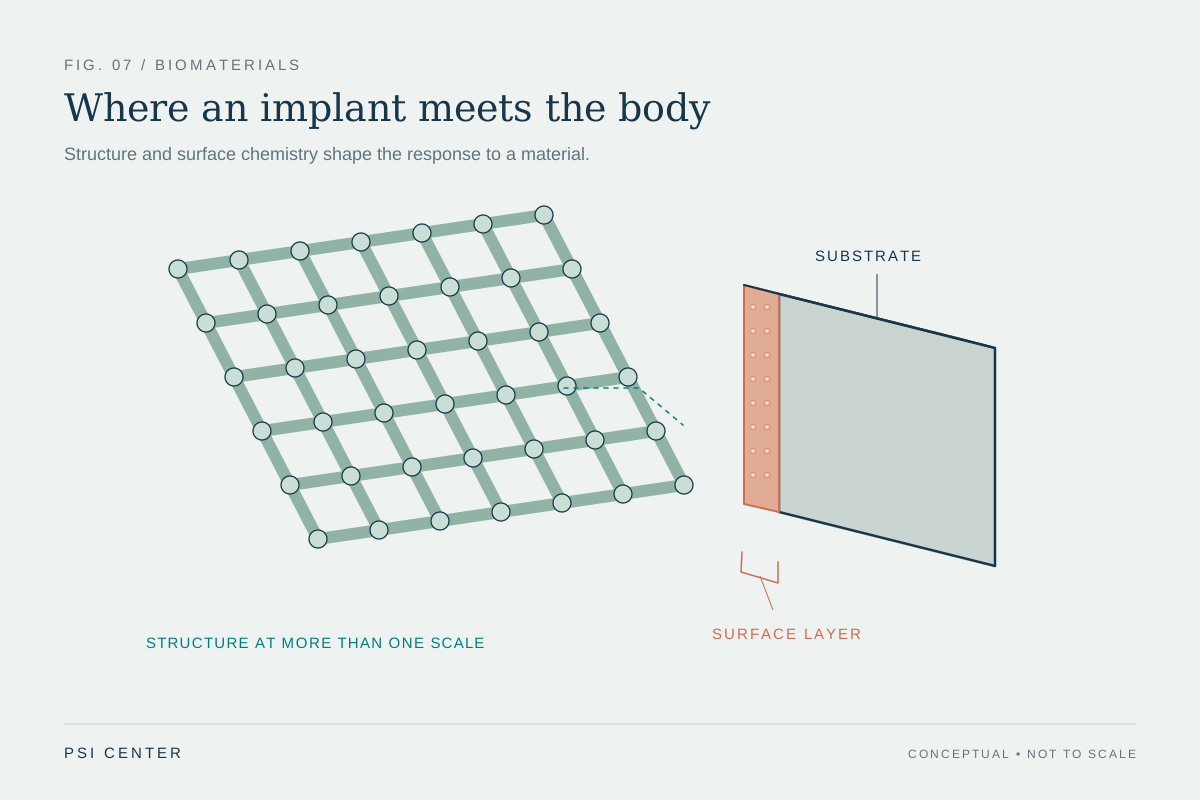
Explore the physics: an explanatory diagram
Sources & further reading
- Biomaterial Technologies NIBIB
- Rapid Diagnostics NIBIB
Prepared for the independent PSI Center reading library. About edition dates and source checking.
This explainer describes scientific principles. It does not assess individual treatment choices.